Blessed are the meek, for they shall inherit the earth.- Matthew 5:5

A. W. Tozer once wrote, The meek man is not a human mouse afflicted with a sense of his own inferiority. Rather he may be in his moral life as bold as a lion and as strong as Samson; but he has stopped being fooled about himself. He has accepted God’s estimate of his own life. He knows he is as weak and helpless as God declared him to be, but paradoxically, he knows at the same time that he is in the sight of God of more importance than angels. In himself, nothing; in God, everything. That is his motto.
Some confuse meekness with a wimpiness. They think that a meek person could be knocked down by a slap with a wet noodle. Others think that a meek person is always inoffensive to the point of compromise. This idea says that a meek person wants everyone to get along and to be liked by everyone no matter the cost. Another popular idea sees a meek person as a doormat. He is the one who is so weak-willed that he has no ones respect, not even his dog’s.
But that’s not the way the Bible speaks of a meek person.
First, know that Meekness is a fruit of the Spirit (Gal 5:23), therefore it is not a natural disposition, but a supernatural grace. Sometimes we see an especially nice and gentle person, and we see them as being meek. There are some people born this way, but this is not biblical meekness. The Bible commands Christians to be meek, and therefore there is an expectation that all who call Jesus Lord be meek:
Titus 3:1-2: Remind them [servants of the Lord] to be submissive to rulers and authorities, to be obedient, to be ready for every good work, to speak evil of no one, to avoid quarreling, to be gentle, and to show perfect courtesy toward all people.
Col. 3:12 Put on then, as God’s chosen ones, holy and beloved, compassion, kindness, humility, meekness, and patience,
Eph. 4:1-2 I therefore, a prisoner for the Lord, urge you to walk in a manner worthy of the calling to which you have been called, with all humility and gentleness, with patience, bearing with one another in love,
2Tim. 2:24-25 And the Lord’s servant must not be quarrelsome but kind to everyone, table to teach, patiently enduring evil, correcting his opponents with gentleness. God may perhaps grant them repentance leading to a knowledge of the truth,
Second, the Greek word for “meekness”-praus- is defined this way: “Not being overly impressed by a sense of one’s self-importance; gentle, humble, considerate, meek.”
So every Christian is called to be meek, or not overly impressed by a sense of our self-importance, but gentle and humble.
In any discussions regarding the Beatitudes, we must recognize that each one builds upon the one before.
We must first be poor in spirit (Matt. 5:3), knowing that we are sinners and cannot gain a righteous standing on our own in God’s eyes. We realize that we must come to God empty handed, asking for God’s mercy.
We must mourn over our sin (Matt 5:4). Because we have looked internally and have seen our spiritual poverty, we recognize how much we have offended a holy God and we mourn over this fact.
This realization of our unworthiness to receive mercy should have the result of making us humble and meek. We cannot be overly impressed with our self-importance when we view ourselves through the lens of Scriptures and the first two beatitudes.
Now this is where Jesus’ sermon really begins to turn up the heat and become really uncomfortable. Dr. Lloyd-Jones writes:
Now why is this? Because here we are reaching a point at which we begin to be concerned about other people. Let me put it like this. I can se my own utter nothingness and helplessness face-to-face with the demands of the gospel and the law of God. I am aware, when I am honest with myself, of the sin and the evil that are within me, and that drag me down. And I am ready to face both theses things. But how much more difficult it is to allow other people to say things like that about me! I instinctively resent it. We all of us prefer to condemn ourselves than to allow somebody else to condemn us. I say of myself that I am a sinner, it instinctively I do not like anybody else to say I am a sinner. That is the principle that is introduced at this point. So far, I myself have been looking at myself. Now, other people are looking at me, and I am in a relationship to them and they are doing certain things to me. How do I react to that? That is the matter which is dealt with at this point. I think you will aggress that this is more humbling and more humiliating than everything that has gone before. It is to allow other people to put the searchlight upon me instead of my doing it myself. [Studies in the Sermon on the Mount, p.54]
So, meekness relates to our reactions and attitudes towards others. In this, we are going to look at our meekness toward God and then in the next post our meekness toward other people.
First, our meekness toward God must include a submission to His will. There are times in our lives when things don’t turn out like we had hoped or planned. We are hurt, disappointed, and maybe even crushed and bitter. Meekness carries itself without murmuring or bitterness. Instead, it recognizes that the hand of God is good, even when we can’t see it as clearly as we would like to.
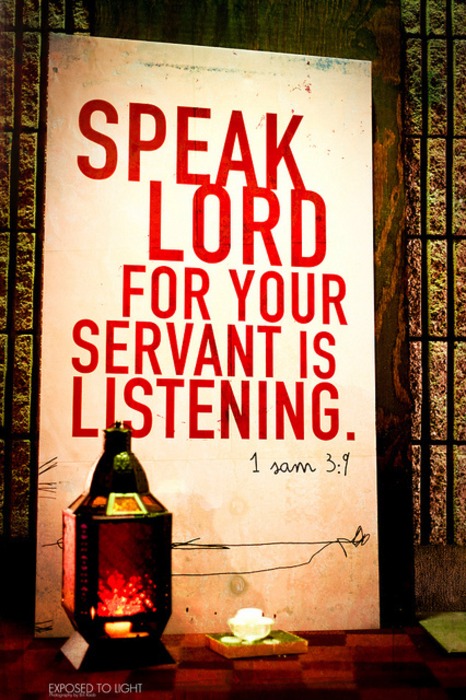
The meek heart recognizes that our heavenly Father is much more gracious and merciful than we deserve. Consider the response of old Eli (1Sam 3:18). We see a similar response in Mary (Luke 1:38).
Eli would have his whole family line wiped out. Mary’s dreams were radically altered ad she would live out her days with a cloud of scandal always over her head and whispers behind her back. But both accepted the will of the Lord with meekness.
Sometimes we can have the opposite attitude towards the will of God in our lives. We can have the attitude of Jonah (Jon 4:9). Like Jonah, we forget who we are, and how God has saved us out of the belly of hell and we declare with our attitudes, if not with our lips, that we deserve so much better.
So, our meekness toward God must include a submission to His will.
Secondly, our meekness towards God needs to be evident in our conformity to His Word. The spiritually meek desire their minds to be conformed to the mind of God. Conforming our minds to God’s Word means we do not quarrel with the instruction with the Word. Instead, the meek Christian wrestles with the corruptions and sins in his own heart.
How often it is the opposite. We can argue with the sermon, because we don’t like what God has said. We excuse it by getting mad at the preacher, or claim that “that’s just his interpretation of that verse.” In reality, we are not humbling ourselves before God’s Word. We are being proud and stiff-necked.
Consider the meek attitude of Cornelius in Acts 10:33. This gentile man was humble before the Word and ready to receive all that the Apostle Peter taught.
James 1:21 reminds us that we must put away our sins and all filthiness. That’s recognizing our spiritual poverty and mourning over our own sins, crying out to Jesus for forgiveness. But it doesn’t stop there. James 1:21 continues to say that we are to receive the implanted Word. It is this Word of God, implanted in us, that confronts us. The Word of God is not a part of us, it is outside of us. It needs to invade our hearts, to offend, to cut deeply, to get up in our face and speak the truth we refuse to see. When we allow that to happen, we must be meek. We must bow to the Word of God and stop arguing with it.
It’s time for an attitude check. How’s your attitude been with God? Don’t just look at the surface—go down deep. Be brutally honest.
Have you had a rotten attitude about your life and circumstances and shown it by being discontent? Do you believe you deserve better? You’re not being meek.
Have you gotten mad at God’s Word when it confronts your sin? When God calls you a liar, a spiritual harlot, a compromiser?
When God says through his Word that you have been a lazy servant, a disobedient slave or a luke-warm Christian, have you thought that God was talking to someone else, when he was looking right at you in his Word?
To be meek, we need to wrestle with our pride. We must go beyond a self-evaluation and allow God to evaluate us.
Next we will talk about how we meekly deal with others. But the basis for dealing with others is built upon our relationship with God. If can’t be meek in the presence of God, we will never be meek in the eyes of men.

 Always Reforming