
Is Your Worship Like Gold or Bronze?

Judah did evil in the sight of the Lord, and they provoked Him to jealousy more than all that their fathers had done, with the sins which they committed.” (1 Kings 14:22, NASB95)

He [Shishak king of Egypt] took away the treasures of the house of the Lord and the treasures of the king’s house, and he took everything, even taking all the shields of gold which Solomon had made. So King Rehoboam made shields of bronze in their place, and committed them to the care of the commanders of the guard who guarded the doorway of the king’s house.” (1 Kings 14:26–27, NASB95)

The demise of Israel came quickly after the reign of Solomon. Although one could argue that Solomon’s kingdom was the pinnacle of Israel’s fame, wealth, and honor, there can be no doubt that spiritually the kingdom was a shadow of what it was under David. Solomon may have had great wealth, and there is no doubt that he beautified the kingdom and made a glorious temple, but internally there was a rot that would eventually lead the divided nation into apostasy and exile.

In 1 Kings 14, Rehoboam, the son of Solomon, watched as all of the external signs of his father’s success dissipated right before his eyes. Through a youthful foolishness he lost ten of the twelve tribes in a rebellion, and along with these he lost the favor of the people. Instead of humbling himself and turning to the Lord, Rehoboam turned to false gods and idolatry, just as his father did through the influence of foreign women he married.

As a picture of how degraded Judah had become, 1 Kings 14:26-27 mentions the shields of Solomon. More than a mere passing note of interest, the shields are a visible lesson for all that will watch and learn. In his days as king, Solomon saw gold become so abundant that it was said that silver was as nothing (See 1Kings 10:14-29). To show off this wealth, he had 200 large shields of gold, each made from about 7 1/2 lbs. of gold. Additionally, he had 300 more smaller shields made from almost 4 lbs. of gold each. Together these shields would have been fashioned out of 2,625 lbs. of gold, which for Solomon was nothing since 1 Kings 9:14 states that one year’s worth of gold income was 666 talents, or about 25 tons (50,000 lbs.) of gold! What was the purpose of these shields? Together they acted as a visible symbol of Solomon’s great wisdom and wealth.

With that insight, 1 Kings 14:27 reveals a great truth. In the face of utter humiliation as a result of his outrageous idolatry, Rehoboam chose to put on the mask of a hypocrite instead of facing the truth with repentance and humble contrition. In Solomon’s days, silver was as nothing–how much less bronze! Now Solomon’s wayward son is grasping to keep up appearances. He has replacement shields made to cover the naked walls, but not of gold, which he no longer had. Instead they would be made of bronze. Why make these shields at all? With foreign invaders from Egypt stealing their wealth and ransacking the kingdom, you would think that Rehoboam would have been more concerned with greater issues. Instead, we find him seeking to make things look the same as they did during the days of his father’s reign. Bronze shields would appear gold-like, giving the impression that nothing had changed. But they had–massively, and to a greater extend than these shields alone. A cheap substitute had taken the place of the valuable. Instead of the precious worship of Yahweh, a fake and common worship had been swapped out as if they were the same. But they are not.

Instead of playing games with God, Rehoboam should have broke. He should have seen the loss of gold and prestige as an opportunity to go back to the basics of humble worship as his grandfather David had demonstrated. David, clothed in only a linen ephod danced before the Lord, not caring about anyone else but the pleasure of his God. May we be aware of this shift in our own lives and ministries as well, never replacing the gold of true worship with a cheap substitute, because God isn’t fooled. When God is trying to get your attention, don’t double down and act like nothing is wrong. Go to God.

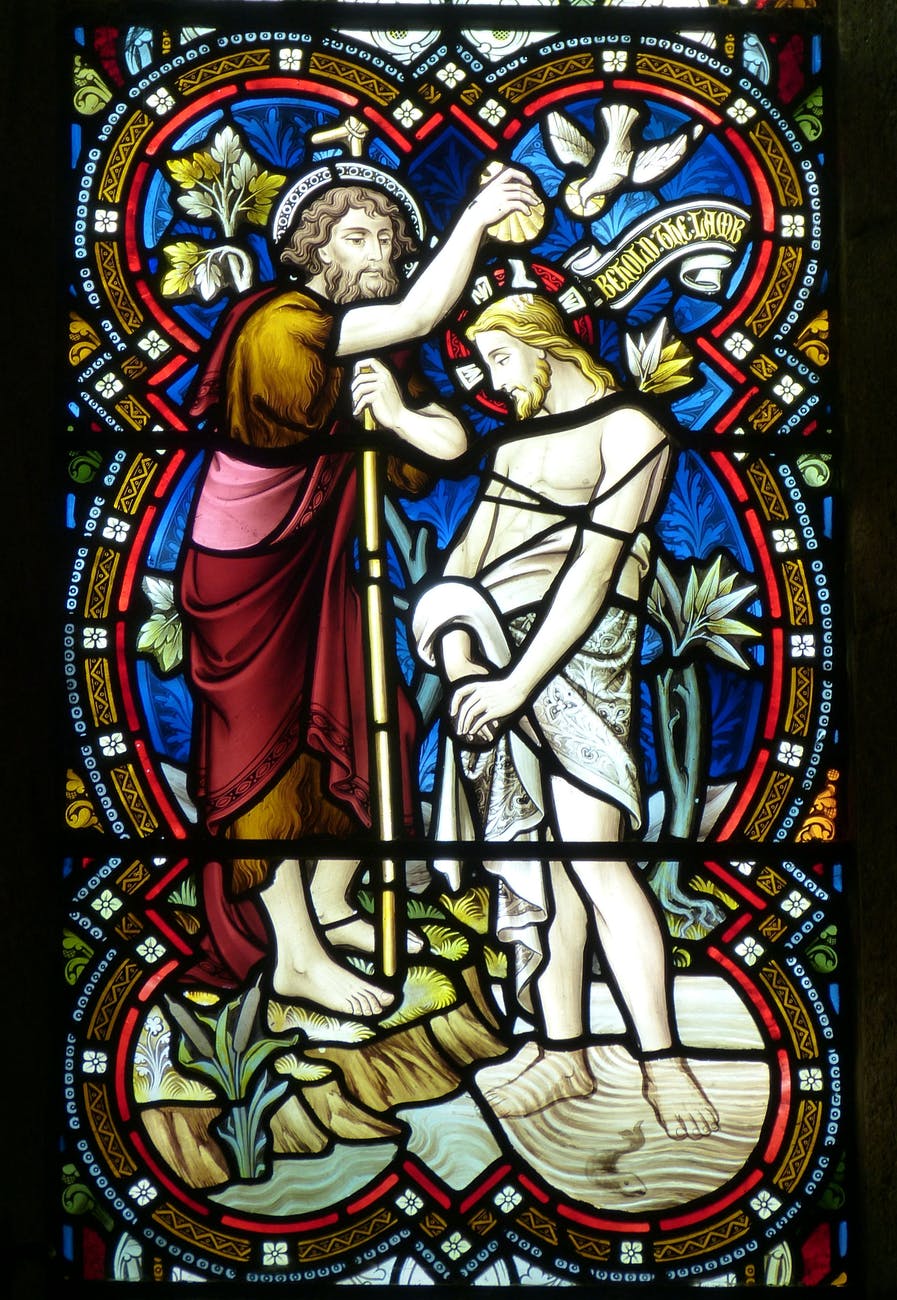
How Do You See Yourself?

As Jesus went on from there, He saw a man called Matthew, sitting in the tax collector’s booth; and He said to him, “Follow Me!” And he got up and followed Him.Then it happened that as Jesus was reclining at the table in the house, behold, many tax collectors and sinners came and were dining with Jesus and His disciples.When the Pharisees saw this, they said to His disciples, “Why is your Teacher eating with the tax collectors and sinners?”But when Jesus heard this, He said, “It is not those who are healthy who need a physician, but those who are sick.“But go and learn what this means: ‘I desirecompassion, and not sacrifice,’ for I did not come to call the righteous, but sinners.”

(Matthew 9:9–13, NASB95)

How do you view yourself? Pop culture feeds us many answers that you might find coming out of your mouth. But, for those who call themselves children of the living God, how do you see yourself?

Listen to great and godly people describe themselves, and you compare your answer with theirs:

  • The Great Augustine, bishop of Hippo wrote, “Lord, save me from that wicked man, myself.”
  • John Knox, the greatest preacher of the Scottish reformation, “In youth, in middle age, and now after many battles, I find nothing in me but corruption.”
  • John Wesley, the great Methodist preacher wrote, “I am fallen short of the glory of God, my whole heart is altogether corrupt and abominable, and consequently my whole life being an evil tree cannot bring forth good fruit.”
  • Augustus Toplady, the writer of the hymn “Rock of Ages” wrote, “Oh, that such a wretch as I should ever be tempted to think highly of himself. I am myself nothing but sin and weakness, in whose flesh naturally dwells no good thing.”
  • And finally, the Apostle Paul wrote of himself in 1 Timothy 1:15, “The saying is trustworthy and deserving of full acceptance, that Christ Jesus came into the world to save sinners, of whom I am the foremost.

Now, I know that Dr. Phil and Oprah, and our schools, and psychologists and lots of preachers even, tell us that we need to have a high self-esteem about our worth. We need to think positively and love ourselves before we can love anything or anyone else….How’s that working for us? We have more crime and more selfishness and more laziness and self-indulgence than ever before, and people are not more happy with more stuff, but less so.

No, we need to turn to the Bible for a correct view of ourselves. Romans 3:10-12 says, “as it is written: “None is righteous, no, not one; no one understands; no one seeks for God. All have turned aside; together they have become worthless; no one does good, not even one.

You see, the truth is, that people will not seek healing if they don’t know that they are sick. So, the first step in preaching the gospel to others and even ourselves is to declare this truth–Man is sinful and desperately wicked and spiritually dead. If we can grasp this and confess it before God, we can move on to respond to the good news of the gospel.

The Bible acts like a mirror revealing what our soul looks like to God. The world acts like a mirror too, but more like a fun-house mirror that distorts the truth and gives us a wrong impression about what we really look like. Don’t settle for the phony idea of who you are by looking to this world for answers. Instead open up the Bible and read about who God says you really are–both as a person who has rebelled against Him, and after being saved by Jesus Christ, as a person who has been forgiven and adopted by Him and is now His child forever. The truth matters and for the one who is willing to face the truth, heaven awaits.

The Glorious Trinity

I’ll never forget the day that I was teaching a lesson during the Sunday school hour at church on our doctrinal statement. Our church required that every prospective member go through twelve lessons to cover what we believe. I was on lesson two, on the doctrine of the Trinity. Each lesson began with the IFCA Doctrinal statement. The lesson began: “Doctrinal Statement:  We believe in one Triune God eternally existing in three persons: Father, Son, and Holy Spirit; co-eternal in being, co-identical in nature, co-equal in power and glory, and having the same attributes and perfections (Deut 6:4; 2Cor 13:14).”

It was not unusual for current members to attend this class to refresh their understanding of what we believe, and it was always good to see the interaction between newer attendees who were considering membership and long-time members who loved the church. In this particular class we had in attendance a couple of long-time members that preceded my coming as their pastor.

As I explained the lesson on the Trinity, one of the older members objected to something I said regarding my explanation of the distinction of Persons and the unity of Being and how some have used illustrations that actually taught heresy. She explained to me that she had been a long-time Sunday school teacher to our children and that she had explained the Trinity in terms that I had just said were invalid, of which she took offense. It was at this moment that this former Sunday school teacher grew quiet and then expressed her confusion because she didn’t intend to teach unbiblical ideas of God, and yet she had. 

What’s the big deal? Aren’t doctrines like the Trinity best left up to high-tower scholars locked up in libraries with their books? I mean, what does deep theological discussion have to do with evangelization, discipleship, and helping the single mom who is struggling to pay her bills and raise her kids? As a matter of fact, it makes a world of difference to all of these things, and more. This is because, when we evangelize, we must point people to the Savior-God. But how can we do so unless we know who He is and how He has worked righteousness on our behalf? Salvation is trinitarian! And discipleship requires teaching the Christian not only about holy living, but about the Holy God of the Bible, who is Trinity! And the struggling mom, why does it matter to her? Because if she is to find hope in this life, she must know that the God of the Universe cares for her—but to know that fact she must come to an understanding of the wonderous beauty of this God—who has revealed himself in the complexities of the Trinity. 

But even beyond all of these practical reasons for understanding this doctrine is this truth: if we have been redeemed by the God of the Bible, then we need to understand and know Him as He has revealed Himself in Scripture. He is not like us. He is Creator and we are creature. So, we may struggle and we may unable to understand the mystery at times, but we push forward to grasp his magnificence because as Christians, we long to see Him as He is, not as we make Him out to be.

As Kenneth Daughters, president of Emmaus Bible College has written:

“When the average Christian is asked about the Trinity, he is content to quote a brief definition. Were he challenged to contemplate the meaning of the Trinity, he would quickly struggle. Few Christians have ever taken the time or trouble to think deeply on the subject. To most it is as abstract as a complicated mathematical expression. How sad! Actually, the Trinity is God’s highest revelation of himself. Far from being a subject that is too deep to be relevant, God intended for man to order his world in light of it. All forms of unity and diversity in the universe find their source in the nature of God as triune.

It is impossible to adequately understand God without understanding him as triune. To try to relate to God as a mono-personal being is to ignore his revelation to us and to deny his beauty. Some consider the concept of the Trinity too difficult to comprehend, so they operate in a functional denial of God’s Trinitarian nature. Others attempt to understand the Trinity but fall short conceiving him in a modalistic or tritheistic form. Not only have they failed to understand God and relate to him properly but they also have no basis for accurately balancing the unity and diversity all about them.” 

Kenneth Daughters, “The Trinity and the Christian” in Understanding the Trinity, ed. John H. Fish III, 2003, (ECS Ministries: Dubuque, IA), 363.

Understanding the glorious doctrine of the Trinity is not meant to be first and foremost, utilitarian. We do not stare into the majestic beauty of the Trinity to find out what to “do.” In many ways, popular preaching and popular Christianity has become a self-help system that seeks to make you a better you. But the doctrine of the Trinity demands that we stop looking into our cellphone cameras and gaze upon the ineffable God who has revealed Himself in Scripture as Triune. 

Consider the ramifications of the Trinity for a moment. If Christ is not God, then our worship is idolatry. If the three Persons are three gods, then we are not monotheists, but polytheists, and the Scriptures are not true, for they tell us that there is only one God. And what if Jesus is only an exalted creature, as the Jehovah’s Witnesses claim? Then we are still lost in our sins because a creature cannot atone for the sins of men!

Athanasius, the great Bishop of the Church in Alexandria (295-373 A.D.), was called the “black dwarf” by his enemies who longed to see him forever banished from the face of the earth. His crime? He defended the deity of Christ against the attacks of Arius, who claimed that Jesus Christ was only an exalted creature, and not God. For his stand, Athanasius was exiled from his church five times during a period of about fifty years. At times it seemed like it was Athanasius against the world. But the stakes were too high, and he would not give in while he still had life and breath in him. The Arians, according to Athanasius, had slid into heresy in at least two ways. First, they had lowered the Person of Christ to the position of a mere creature, and thus denied the deity of Christ, thereby denigrating the Trinity. Second, they had elevated the humanity of Christ so that they justified the worship of Christ while still claiming that He was not God, which if true was an act of blasphemous idolatry. In effect, the Arian attack against the Trinity was an attack against God himself. No Christian should stand for this. 

John Calvin wrote, “A dog barks when his master is attacked. I would be a coward if I saw that God’s truth is attacked and yet would remain silent.” May we understand and know the true nature of God so as to defend the biblical doctrine of the glorious Trinity and may our knowledge drive us to the profound worship of  “the King of the ages, immortal, invisible, the only God, be honor and glory forever and ever. Amen.” (1Tim 1:17, ESV)

This article was originally published in the VOICE magazine (Sept/Oct 2019). Used by permission.

My Top Three Practical Books on Preaching

Last week I asked for you to send me any questions that you might have that I could answer in future blog posts. One question asked about my top three favorite preaching books. Since I love preaching, and spent 12 years teaching the subject at a seminary, I have amassed quite collection of books on the subject, making my task a lot harder.

So instead of trying to whittle down my top three from my collection, I thought that I would pick my top three in different areas of focus. Today I want to share with you my favorite books in the area of preaching mechanics. These three books excel in the nuts and bolts of preaching by making the process simple and taking out the highly technical language by instead approaching preaching from the practitioner’s point of view.

Here are my top three practical preaching books, in no particular order, along with a link to them in Amazon to make finding them easier.

12 Essential Skills for Great Preaching by Wayne McDill (Amazon)

Funny enough, this book was never assigned for my preaching classes while in seminary, nor was it on any recommended reading lists. As a matter of fact, I had never even heard of this book until I was given it as a gift from my pastor, who is also the author of the last book. This book is gold. It is so helpful that I made it a required reading book in my preaching clinic class and constantly was asked by students why they weren’t required to read this book earlier.

McDill has set up his book as a practical handbook with an essential skill being presented in each chapter along with a worksheet to help the expositor develop the skill they have just learned. Although it is good to read through the whole book, you will find that it will be a book you come back to over and over again as you seek to strengthen or develop in a particular area of weakness in your preaching.

Preaching That Changes Lives by Michael Fabarez (Amazon)

This book excels in teaching how to make a sermon proposition and outline much more applicational and helpful to the congregation. Very often seminary students that have no experience preaching will come out of seminary with skills in biblical languages, exegesis, hermeneutics, theology, and other technical skills (which they need), but struggle with how these fit into a sermon without overloading the congregation with unnecessary and technical details.

Fabarez teaches the reader how to think through the sermon as it relates to the listening audience. This should lead to a sermon outline that is both faithful to the text as well as points to what the text is calling the listener to do. For those who don’t believe that the preacher should make application of the text in their sermons, the forward by John MacArthur might help overcome their resistance.

Preaching with Passion by Alex Montoya (Amazon)

Pastor Alex Montoya taught at The Master’s Seminary for many years in pastoral ministries and taught several courses in Expository Preaching. This book is largely constructed from the framework of his preaching class notes.

Dr. Montoya is pastoral and practical in his book, seeking not only to instruct pastors who may have lost their passion in preaching, but he also aims to set the newer preacher’s heart aflame with practical discussions on what makes a pastor have passion, what kills his passion, and how passion can be developed in a sermon without it being a phony show or emotionally-driven using wonderful illustrations from his many decades of pastoral ministry.

Now its your turn. What have been your most helpful preaching books with this practical focus?

The Disaster of Failing to Be Trustworthy (weekend repost)

“Trusting in a treacherous man in time of trouble
is like a bad tooth or a foot that slips.”—Proverbs 25:19 (ESV)

I love how picturesque the proverbs are in describing truth in simple terms. The above proverb became very real to me recently when my wife twisted her knee when she slipped. As we walked back to the car from a trip to the hospital, her knee buckled and she was in great pain. For several weeks after that accident, she had to wear a brace to prevent her knee from giving out.

Read the rest of the post here: The Disaster of Failing to Be Trustworthy