
In an earlier post on Psalm 119:97-98, I shared two blessings of meditation upon the Word of God. You can read that post here.
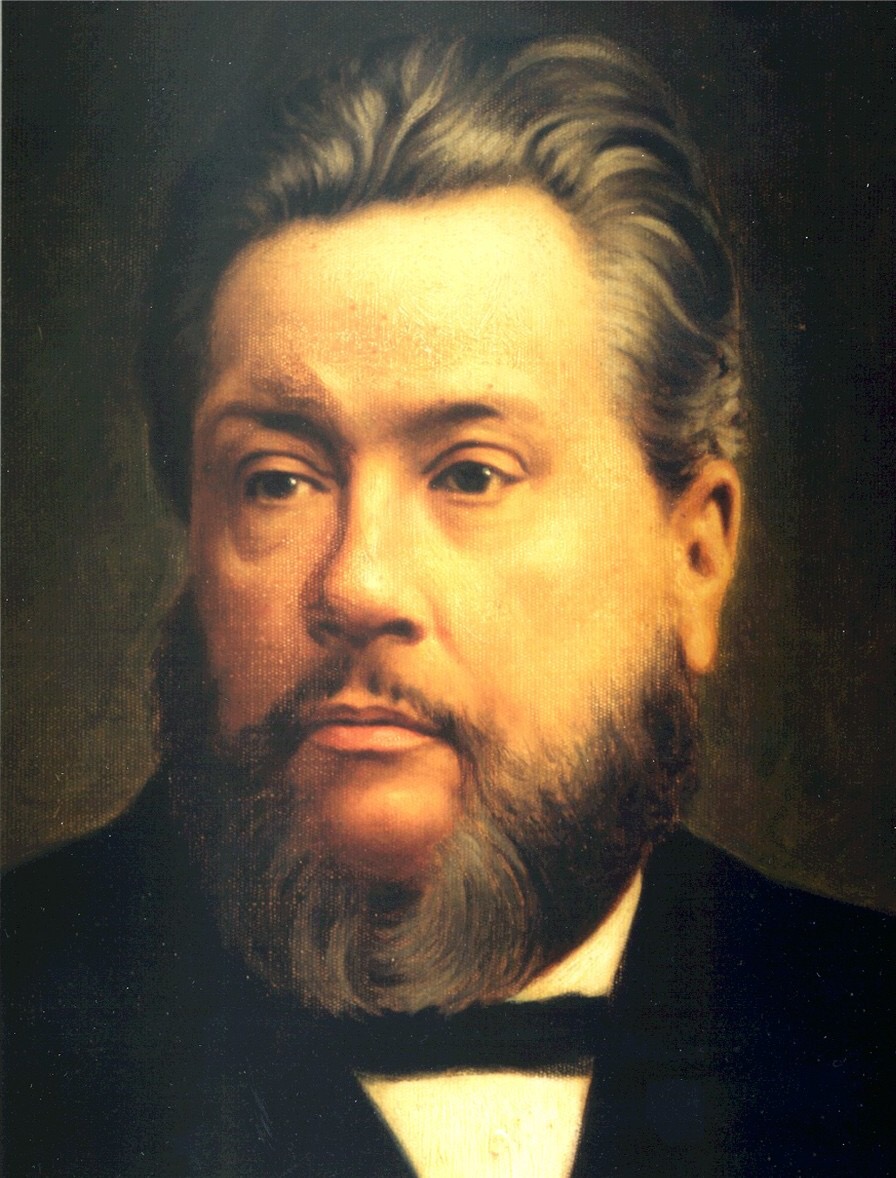
Spurgeon, always had great illustrations of spiritual truth from the world around him. Listen to how he relates failure to meditate on the Bible:
“A sudden glance at truth without meditation upon it bringeth nothing to perfection; as a hen that soon leaveth her nest never hatcheth her chicks.”
How can she? Patience is needed, and the quiet self-denial by which she renders up the warmth of her heart, otherwise her eggs will lie as dead as stones. The value of truth will never be known by those who look at it and hurry on: they must brood over it, and cover it with their heart’s love, or it will never become living truth to their souls. We must apply ourselves to a doctrine, giving our whole soul and heart to it, or we shall miss the blessing. Herein is wisdom.
Lord, when I hear a sermon, or read in a good book, let me not be as the partridge which sitteth on eggs and hatcheth them not; but make me to see life and power in thy word, and to rejoice over it as one that findeth great spoil.”[1]
Brood over the Word! Let it become living truth in your soul!
Last time in Psalm 119, I wrote that meditation upon the Scriptures:
- Provides an Increased Love for the Word (v. 97)
“Oh how I love your law! It is my meditation all the day.” (Psalm 119:97, ESV)
The psalmist declared his love for the Law of God. Like a baby longs for the pure milk of the Word, so too does a Christian long for the Word of God. The more he drinks deeply, the thirstier he becomes. As we consume the Word, we internalize it, like our bodies use milk to feed our bodies, so too the Word build us up in the true faith.
- It Also Provides Wise Counsel Against Enemies (v. 98)
“Your commandment makes me wiser than my enemies, for it is ever with me.” (Psalm 119:98, ESV)
As the psalmist built spiritual muscle, he found that he was able to overcome the schemes of his enemies. They may have tried to outwit him, but he found that his meditation upon the Word allowed him to avoid the traps they laid because he knew their schemes.
In this post, I want to lay out three more of the blessings which meditating upon the Scriptures provides
- It Provides Better Insight Than Worldly Teachers (v. 99)
“I have more understanding than all my teachers, for your testimonies are my meditation.” (Psalm 119:99, ESV)
Back in v. 98, the psalmist compared his wisdom to his enemies, in this next verse he compares his “understanding” of the Scriptures to his teachers.
The NASB says “insight” here. Of course, insight and understanding have the same meaning. His knowledge goes beyond the acquisition of mere knowledge. He sees deeper and understands more than simple knowledge.
The psalmist desires and has gained deep insight into the Word of God. Wanting to know more of God through knowing more of his Word is a very good thing! We should desire to “prosper” in this way! We should long to outpace our teachers in our insight into the Word of God, not in a prideful way, but in holy desire that sees that God continues to purify and instruct his people.
Back in Ps 119:99, we see the source of this deeper spiritual insight. What could it be? Would it be reading more theology books? Could it be reading through the Bible more than others? Could it be going to church more than others? All of these have value, but his source of insight is plain—it is meditation on the testimonies of the Lord—his holy Word.
You may remember that the leaders of the Jews were sometimes called the “teachers of Israel.” Nicodemus in John 3 was called this by Jesus. Even though they knew massive portions of the Old Testament by memory and knew the ins and outs of the Law and were careful to at least outwardly obey the Law, they often did not care about understanding the real meaning of God’s Word, and so they would do things like we see in Matt 15: 1-9. There it says:
“Then Pharisees and scribes came to Jesus from Jerusalem and said, “Why do your disciples break the tradition of the elders? For they do not wash their hands when they eat.” He answered them, “And why do you break the commandment of God for the sake of your tradition? For God commanded, ‘Honor your father and your mother,’ and, ‘Whoever reviles father or mother must surely die.’ But you say, ‘If anyone tells his father or his mother, “What you would have gained from me is given to God,” he need not honor his father.’ So for the sake of your tradition you have made void the word of God. You hypocrites! Well did Isaiah prophesy of you, when he said: “ ‘This people honors me with their lips, but their heart is far from me; in vain do they worship me, teaching as doctrines the commandments of men.’ ”” (Matthew 15:1–9, ESV)
Have you ever seen anyone guilty of doing what they did? It happens all the time. There are people who claim to be leaders in Christ’s Church who claim to know the Word, and yet, like the Pharisees and Sadducees, they ignore what it says and put on another layer of tradition to cover the truth up.
You, brothers and sisters in Christ, have more knowledge than these teachers, and you will grow more effective when you stay true to the Word of God and refuse to compromise. You will be wiser than liberal Bible professors that deny the inerrancy of Scripture and miracles. As you meditate on the Word, as you proper in your intake of the Scriptures, gaining wisdom and insight, you will be able to say profound things to the so called wise that will confound and frustrate them, all to the glory of God
2. It Provides Practical Wisdom for Life (v. 100)
“I understand more than the aged, for I keep your precepts.” (Psalm 119:100, ESV)
In general, the Bible has a positive outlook on those that are older and more experienced, and we should have this same attitude of respect and reverence for the elders among us. Do you remember Elihu in the book of Job? He was the young one among the group of Job’s friends/counselors.
After everyone had said their piece, and Job had responded, only then did Elihu speak. Why did he wait? Job 32:4 tells us, “Now Elihu had waited to speak to Job because they were older than he.” (Job 32:4, ESV). Elihu is a good example of a young man who had more wisdom than his elders. But, the younger need to learn his ways—he waited, he was respectful, and thoughtful. But he also did not stay silent when he needed to speak the truth!
In Job 12:12, Job himself said, “Wisdom is with the aged, and understanding in length of days.” (Job 12:12, ESV). Age and experience bring wisdom, and often there is nothing that will substitute for the understanding and experience of life. But old age does not automatically mean a person is wise! There are many foolish old men and women!
When the Lord spoke through the prophet Jeremiah, he showed that stubborn sinfulness bypassed the wisdom that the people should have had from God’s Word. You see, they may have known the Word, but they foolishly ignored it, even knowing the consequences they knew were coming.
Jeremiah 8:4-9 says:
“You shall say to them, Thus says the Lord: When men fall, do they not rise again? If one turns away, does he not return? Why then has this people turned away in perpetual backsliding? They hold fast to deceit; they refuse to return. I have paid attention and listened, but they have not spoken rightly; no man relents of his evil, saying, ‘What have I done?’ Everyone turns to his own course, like a horse plunging headlong into battle. Even the stork in the heavens knows her times, and the turtledove, swallow, and crane keep the time of their coming, but my people know not the rules of the Lord. “How can you say, ‘We are wise, and the law of the Lord is with us’? But behold, the lying pen of the scribes has made it into a lie. The wise men shall be put to shame; they shall be dismayed and taken; behold, they have rejected the word of the Lord, so what wisdom is in them?” (Jeremiah 8:4–9, ESV)
To know the Word and not obey it is knowledge without wisdom. This can lead to destruction! Jesus warned of this in Matt 7:24-27 in his parable of the wise man and the foolish man. What is the difference? One heard and obeyed, the other heard and did not obey! Who cares how old you are if you don’t obey the Lord?!
That is what Psalm 119:100 is saying. Read it again. It says, “I understand more than the aged, for I keep your precepts.” (Psalm 119:100, ESV). Do you see it? You might be a long time in a church, you might have read the Bible 100 times. You might have been born on the steps of the church and never missed a Sunday school class, but do you obey?
Do you want to be wiser than the aged? Do you want to be a wise old man or wise old woman? Then learn the Word, and meditate upon it so that you can obey it!
3. It Provides Help to Resist Evil Temptations (v. 101)
“I hold back my feet from every evil way, in order to keep your word.” (Psalm 119:101, ESV)
A major metaphor in the Bible for living life is the idea of a “pathway.” A path leads somewhere. It is the idea of making one’s way in life, making decisions about which direction to go as the road forks in two different directions.
Matthew 7:13-14 uses this imagery when it reveals that there are only two ways in this world. That is it, two ways—two destinations. Jesus said, ““Enter by the narrow gate. For the gate is wide and the way is easy that leads to destruction, and those who enter by it are many. For the gate is narrow and the way is hard that leads to life, and those who find it are few.” (Matthew 7:13–14, ESV)
The wide and easy way has many paths that criss-cross, making it seem like there are a lot of options out there that we can make in this life—many varying paths and many different choices. But Jesus lumps all of them together because the destination is the same—whether you choose to live for yourself, live as a good and moral person, or live somewhere in between. A life without faith in Jesus Christ is a life that will end in destruction.
Only the life lived in faith in Christ, lived as a humble disciple of the Lord, will find that they inherit eternal life. It might be hard, at times stressful and painful, but in the end, the road opens up into the presence of God himself.
The psalmist speaks in v. 101 of the “evil way,” the path, which is one doesn’t depart from, will lead to his or her destruction. How does one make sure they aren’t on this path that leads to destruction? The path is chosen in obedience to the Lord’s Word.
Think about it this way: In Vietnam there are 16.3 million acres of land that are still contaminated with landmines from the Vietnam War. More than 42,000 people have been killed by hidden mines since 1975.[2]
Can you imagine standing on the edge of a vast field in the Vietnamese countryside? Your eyes see many footpaths that cut across these fields, but you are aware of the danger of these hidden mines. How will you make your way across to the other side?
The Word of God is like a map, it lays out the path to take, where to turn, where to avoid, where to stop and wait and where to move quickly. The whole thing is laid out right here in this Book we call the Bible. How can we avoid the evil path that destroys, maims and brings immense pain and suffering in our lives and the lives of others? Follow the Word! Keep it!
How often we can foolishly set aside the Word and rush into life with reckless abandon. We say things like, “I know the Bible says I shouldn’t do this, but…” and then we justify our path and run into painful disaster.
Proverbs 5 is one of those paths that screams warnings about adultery, but how many have ignored all the warnings and been undone by its devastating wreckage? Listen to me, YOU ARE NOT DIFFERENT, YOU ARE NOT SPECIAL. YOU WILL BE DESTROYED BY YOUR SIN. It is true for me and you. Stay on the pathway God has laid out. Meditate on the path in the Word, and meditate upon the examples in Scripture of those who were foolish enough to ignore God and were destroyed because of it.
Conclusion
So can you see how practical and necessary meditation on the Bible is for the Christian life?
-
-
-
- It Provides Better Insight Than Worldly Teachers (v. 99)
- It Provides Practical Wisdom for Life (v. 100)
- It Provides Help to Resist Evil Temptations (v. 101)
-
-
In God’s Battle Plan for the Mind, David Saxton wrote:
“Though many believers excel at Bible study, some are not as skilled at putting the truth into actual practice. Reflexive meditation seeks to solve this unfortunate dilemma by asking, “What have I personally done with this truth that I have learned?” As Thomas Manton aptly expressed, “The fruit of study is to hoard up truth, but the fruit of meditation is to practice it.”[3]
Like Spurgeon’s hen, we need to sit upon the Scripture until it is fully hatched in our souls. To change the metaphor, the Holy Spirit will take our efforts, those seeds of his Word, and he will plant them deep in our hearts so that they will sprout up and grow strong and produce the fruit of the Spirit in our lives. It begins with the Word and meditation.
[1]C. H. Spurgeon, Flowers from a Puritan’s Garden, Distilled and Dispensed(New York: Funk & Wagnalls, 1883), 66.
[2]http://www.nbcnews.com/id/32236846/ns/world_news-asia_pacific/t/vietnam-land-mines-still-line-million-acres/#.Ww8PtC-ZNgc
[3]Saxton, David W.. God’s Battle Plan for the Mind: The Puritan Practice of Biblical Meditation (Kindle Locations 1005-1008). Reformation Heritage Books. Kindle Edition.


 love. In the past the task of theological reflection was often intertwined with the experience and character of the theologian, so that the result was an organic connection between themes like prayer, humility, suffering and community and the act of “doing” theology. My worry is that in our day, for many of us, we have unintentionally cultivated what might be called theological detachment: such a view produces a divide between spirituality and theology, between life and thought, between faith and agency.—Kelly Kapic, A Little Book for New Theologians, Kindle Loc. 41.
 Always Reforming