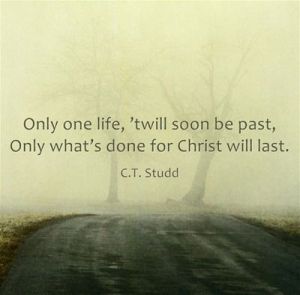
In my office I have an old grandfather clock that was given to me by my grandparents. On the face of the clock it says, Tempus Fugit, Latin for “time flies.” It’s so true, isn’t it? So, how can we make sure that we don’t waste our lives, but instead live for the Lord with joy and gladness? Moses instructs us in this psalm.
1Lord, you have been our dwelling place
in all generations.
2 Before the mountains were brought forth,
or ever you had formed the earth and the world,
from everlasting to everlasting you are God.
3 You return man to dust
and say, “Return, O children of man!”
4 For a thousand years in your sight
are but as yesterday when it is past,
or as a watch in the night.
5 You sweep them away as with a flood; they are like a dream,
like grass that is renewed in the morning:
6 in the morning it flourishes and is renewed;
in the evening it fades and withers.
7 For we are brought to an end by your anger;
by your wrath we are dismayed.
8 You have set our iniquities before you,
our secret sins in the light of your presence.
9 For all our days pass away under your wrath;
we bring our years to an end like a sigh.
10 The years of our life are seventy,
or even by reason of strength eighty;
yet their span is but toil and trouble;
they are soon gone, and we fly away.
11 Who considers the power of your anger,
and your wrath according to the fear of you?
12 So teach us to number our days
that we may get a heart of wisdom.
13 Return, O Lord! How long?
Have pity on your servants!
14 Satisfy us in the morning with your steadfast love,
that we may rejoice and be glad all our days.
15 Make us glad for as many days as you have afflicted us,
and for as many years as we have seen evil.
16 Let your work be shown to your servants,
and your glorious power to their children.
17 Let the favor of the Lord our God be upon us,
and establish the work of our hands upon us;
yes, establish the work of our hands![1]]
Before we get to the “practical” portion of living life with gladness and joy, we need to see that the basis of this type of living comes from a correct understanding of (1) The Timelessness of God (in verses 1-2); (2) The Temporariness of Man (in verses 3-6); (3) A Short Life Shortened by Sin (in verses 7-11); and finally, (4) How to Live Life with Gladness and Joy (verses 12-17).
1. The Timeliness of God (vv. 1-2)
The has proven to his children over and over that he is stable and faithful to men throughout all generations. He has shown this truth in special ways to Israel and Christ’s Church. Even before man, or even the earth and her majestic mountains were created, when there was no one to testify to his faithfulness, the Lord was the same. As Revelation 22:13 reminds us, he has no ending and beginning—he IS the alpha and omega. Psalm 102:25-27 says:
Of old you laid the foundation of the earth,
and the heavens are the work of your hands.
They will perish, but you will remain;
they will all wear out like a garment.
You will change them like a robe, and they will pass away,
but you are the same, and your years have no end.[2]
Our God is never-changing and unbound by time.
2. The Temporariness of Men (vv. 3-6)
Do you realize that man is just animated dust (v. 3)? We were made of the dust of the ground and we shall return to that dust when our life is removed from this body we inhabit. And if that isn’t bad enough, verses 4-6 reminds us that our time before God is only momentary and fleeting away. We are like the vapor of steam that rises in the morning when the sun hits the dew on the grass.
Do you see the comparison that is made in these first two sections of this psalm? God is eternal and timeless, and man is temporal and bound in time. It is like comparing a diamond to a styrofoam cup. One is eternally valuable and the other is only momentarily useful, but common, abundant and short-lived. This can be jarring and unsettling in our narcissistic world, but if we are to see things biblically, we need to set these matters in order correctly.
3. A Short Life Shortened by Sin (vv. 7-11)
Verses 7-8 are clear, this eternal god who has created everything sees all of our sins.No man escapes from his sovereign examination. And verses 9-11 teach us that God does not just watch with an indifferent eye, but he sees in order to judge our sins.
For Moses, the author of this psalm, he would have seen this truth firsthand in the life of Pharaoh. Having repeatedly ignored the command of God to let the Hebrew nation go in clear defiance to the judgments he and his nation experienced (Ex 10:28), Pharaoh personally faced the temporal wrath of the Lord in the angel of death visiting his own home and killing his own son. Some people, like Pharaoh, will face the horrible reality of the judgment of God in this life. They will reap what they have sown. And if they will not bow the knee in repentance to God, they will face him again in eternal judgment.
Some people have scoffed at the idea of God judging sin because they think that those who are not judged in this life must get away without facing the consequences for their sins against God. That is the way that the psalmist felt in Psalm 73. As he looked around, he became envious of the way the wicked not only seem to get away for their sin, but they seem to die happier than the righteous. Apparently, crime does pay! But then he came to his conclusion, “For behold, those who are far from you shall perish; you put an end to everyone who is unfaithful to you.[3]” It may take some time, but the Lord always gets his man and no one escapes the final judgment of God.
Life is short enough. But our sin drags us down and shortens the length of many lives. Seeking joy and gladness in sin is temporary solution that will never compensate for the misery that it brings.
4. How to Live Life with Gladness and Joy (vv. 12-17)
In this last section, we see some of the more practical aspects of this psalm. Below I have listed five applications of what Moses wrote in his psalm that can point our hearts to live life in a God-honoring way:
1. Remember that God is eternal and your life is short, so make it count! (v. 12)
Everyone has a finite number of days on this planet. If you think that you have forever to get busy for the Lord, you might be tempted to squander your short life. But if you focus and get busy in the work the Lord has for you, you will find the purpose the Lord has made you for.
2. Live with Heaven in mind (v. 13)
Do you really believe that Jesus is coming again? We can often see what we believe in the way that we live our daily lives. In Revelation 22:20, we not only see the Lord’s promise of his return, but we also get a glimpse of the Apostle John’s longing heart to see Jesus. That should make us more aware that when he comes, the Lord is going to hold us accountable for the few short years we lived for him (Matt 25:14-30). Somebody said that Christians are so heavenly minded that they are of no earthly good. But I think that we can be so earthly minded that we do no heavenly good.And when we are busy at our work in the fields of the Lord, we will find our joy, especially as we look forward to our great reward.
3. Find joy in your relationship with the Lord. (v. 14)
Have you ever eaten a fruit salad where a sweet piece of fruit makes another sweet piece of fruit seem like it’s not sweet at all? The world can be like that. We chase after cheap, temporary thrills and when the One true joy—Christ, is presented to us, we find that he isn’t so sweet to our souls. But we sometimes have been overly satisfied with the trinkets and baubles of the world instead of the treasure that is Christ. That is why some Christians can find no joy or gladness in the Lord. Entertainment has overshadowed the substance of Christ. But if we will pull back and focus on the Scriptures as they point us to the Lord, we will find that he is the sweetest joy of all (Jer 2:11-13).
4. Look at the blessings and not just the hardships of life (vv. 15-16)
Life is hard sometimes. An honest biblical view of the world would never deny that. But we are not called to Christ so that we can complain and grow bitter over this fact. Moses asked the Lord to help him and the people to see the blessings as well as the hardships, to literally “make them glad” (v. 15) and for the Lord’s goodness to be shown to his people. We need to pray that way as well when we feel that we are growing cold and unthankful.
5. Stay busy with God’s work (v. 17).
Finally, the psalmist ends asking for the Lord to establish the work of the people’s hands with divine favor. God has given us work to do, and we not only want the Lord to bless our work, but we also want the Lord to establish it as well. Can you imagine truing to rake leaves in a wind storm? Who wants to do that? We want our life and work to count for the glory of God so that when this short life ends, we will be satisfied and glad that God used our feeble work to further his great and glorious plan just a little bit. And that is a life that will end with joy!
[1] The Holy Bible: English Standard Version (Wheaton: Standard Bible Society, 2001), Ps 90:1–17.
[2] The Holy Bible: English Standard Version (Wheaton: Standard Bible Society, 2001), Ps 102:25–27.
[3] The Holy Bible: English Standard Version (Wheaton: Standard Bible Society, 2001), Ps 73:27.





 Always Reforming