How to Pray, pt. 1 (Matt 6:9a)

Prayer is a difficult thing to do. It may seem to be easy, and we can form words and make statements that seem to be prayers easily enough, but if we stop and consider a few things, we will see that true prayer is difficult.

Image

Consider this quote from Dr. Lloyd-Jones:

Man is at his greatest and highest when, upon his knees, he comes face-to-face with God….It is the highest activity of the human soul, and therefore it is at the same time the ultimate test of a man’s true spiritual condition. There is nothing that tells the truth about us as Christian people so much as our prayer life. Everything we do in the Christian life is easier than prayer….Prayer is undoubtedly the ultimate test, because a man can speak to others with greater ease than he can speak to God. Ultimately, therefore, a man discovers the real condition of his spiritual life when he examines himself in private, when he is alone with God….So that it is when we have left the realm of activities and outward dealings with other people, and are alone with God, that we really know where we stand in a spiritual sense. It is not only the highest activity of the soul, it is the ultimate test of our true spiritual condition. [Studies in the Sermon on the Mount, 322]

Obviously, the disciples sensed the difficulty of prayer themselves. In Luke 11:1 it says,“Now Jesus was praying in a certain place, and when he finished, one of his disciples said to him, “Lord, teach us to pray, as John taught his disciples.” After watching Jesus pray, and seeing their own lack-luster attempts, they ask Jesus to teach them. So, we have in Matthew 6:9-13 not only an answer to the negative idea of not praying like the hypocrites (see Matt 6:5), but the Lord’s model prayer was for teaching the Lord’s disciples, then and now, how to pray.

This prayer has a preface followed by six petitions. We will look at each one in turn and see what Jesus meant to teach us about prayer. Let’s begin by looking at the preface, or opening words of this prayer, “Our Father in heaven” or “Our Father who art in heaven.”


1. The Preface teaches us to draw near to God with holy reverence.

We are about to speak to the One who is “in heaven.” This is not an earthly conversation with another man, but a holy conversation in which the lowly creature is about to speak to his heavenly Creator. The hypocrite of our context has forgotten this. He speaks for his own pleasure and self-promotion forgetting that he is standing before the Lord’s presence.

Psalm 95:6: Oh come, let us worship and bow down; let us kneel before the Lord, our Maker!

When you come before the Lord in prayer, is it like you are John in Rev. 1:12-17? We are addressing this same Lord and God whom John fell dead at his feet. How can we rush flippantly and irreverently into his presence?

2. The Preface teaches us to draw near to God with confidence.

He is “our” Father. Luke’s version of this prayer (given on a different occasion) doesn’t include this word, but I am so glad that it is here. This prayer is not for the pagans and the unbelieving world. He is not their Father. Their father is Satan, the father of lies (John 8:44). But, because he is our Father we can have confidence as we draw near to Him. This confidence is based upon the finished work of our Savior Jesus Christ. The cross is the doorway by which we enter into the throne room of God with confidence.

Eph 3:12: [Christ Jesus] in whom we have boldness and access with confidence through our faith in him.

3. The Preface teaches us to draw near to God as Children to a Father.

This is closely related to the last point, but it is more intimate. Matt 7:9-11 says, “Or which one of you, if his son asks him for bread, will give him a stone? Or if he asks for a fish, will give him a serpent? If you then, who are evil, know how to give good gifts to your children, how much more will your Father who is in heaven give good things to those who ask him!”

Rom. 8:15 comforts and confirms this for us when it says, “For you did not receive the spirit of slavery to fall back into fear, but you have received the Spirit of adoption as sons, by whom we cry, “Abba! Father!”

Gal. 4:4-5 also calls all believers God’s adopted sons, “But when the fullness of time had come, God sent forth his Son, born of woman, born under the law,to redeem those who were under the law, so that we might receive adoption as sons.

Listen to Thomas Watson regarding this incredible reality:

See the amazing goodness of God, that he is pleased to enter into the sweet relation of a Father to us. He needed not to adopt us, he did not want [for] a Son, but we wanted [for] a Father. He showed power in being our Maker, but mercy in being our Father. That when we were enemies, and our hearts stood out as garrisons against God, he should conquer our stubbornness, and of enemies make us children, and write his name, and put his image upon us, and bestow a kingdom of glory; what a miracle of mercy is this! [A Body of Divinity]

4. The Preface teaches us to draw near to God, who is able and ready to help us.

Jesus assumes this by his own personal practice of prayer and his willingness to teach the disciples how to pray. He didn’t say to them, “Well, I’ll teach you, but remember, God helps those who help themselves.” Wrong. He is able and ready to help us. He is the same Father whom Jesus said he could call out to and who could easily send 72,000 angels to come to his side to deliver him from the cross.

Eph 3:20-21: Now to him who is able to do far more abundantly than all that we ask or think, according to the power at work within us [that is, the Holy Spirit (v. 16)], to him be glory in the church and in Christ Jesus throughout all generations, forever and ever. Amen.

God’s children need to recognize that prayer is not a duty, but a privilege. When we come to times of need, our Father ought to be our first resource that we go to.

We need to think about how each of these lessons impact our current way of praying. Do you draw near to God with holy reverence or with a flippant casual attitude? How does this show up in our choice of words and our hastiness to pray? Do we ever take the time to collect our thoughts before we enter his throne? Boldness does not mean rashness!

Do you draw near to God with confidence because He is our Father who is in heaven? There may be some who don’t have confidence when they approach God in prayer because He is a stranger, not a Father. Confidence comes in the relationship that we gain through our Savior. If you haven’t received Jesus Christ as your substitute, as your Savior, then you can do so today.

Do you draw near to God as children draw near to their loving Father? Put aside all twisted ideas of poor and evil fathers. We are speaking of our loving heavenly Father who drew near to us first. Do you seek His face, not merely to ask for your needs (although that is important), but also just to adore Him as Abba, Father?

Finally, do you draw near to God confident that he is able and ready to help you? This can be seen in the amount of time, effort and energy you spend in prayer as compared to your striving to achieve what you secretly believe God cannot or will not do.

How will your prayer change? Hopefully it will. Hopefully, as you think about these four lessons, you will be challenged to pray more fervently and actively in faith than you ever have before.

Exposing the False Prophets and Apostles of the New Apostolic Reformation (Links)

This past Sunday our church began diving into the book of Acts. In that message we began to look at the Apostolic foundation of Christ's church. By way of illustration and application I mentioned a troubling trend that is growing in “evangelicalism” in regard to this issue and the upswing of so-called modern apostles and fallible, errant prophets. To give you further background to some of the aberrations happening in churches today in this regard, I have gathered a few links that will hopefully be a starting point for better understanding and exposing the heretical teaching of the New Apostolic Reformation and their kin.


Solid Theological Studies Resources

20140203-084156.jpg
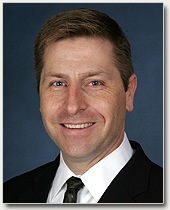
Mike Vlach, professor of Theology over at TMS is one of those guys that both is crazy smart and a good guy. His official bio over at TMS says:

Michael J. Vlach, Ph.D. is Professor of Theology at The Master’s Seminary in Sun Valley, California where he has been teaching full time since 2006.

Michael has a B.S. in Business Administration from the University of Nebraska and a Master of Divinity degree from The Master’s Seminary in Sun Valley, California. He also earned his Ph.D. in Systematic Theology from Southeastern Baptist Theological Seminary in Wake Forest, North Carolina.

Michael specializes in the areas of Systematic Theology, Historical Theology, Apologetics, and World Religions. His specific area of expertise concerns the nation Israel and issues related to refuting the doctrine of Replacement Theology. Dr. Vlach was awarded the “Franz-Delitzsch Prize 2008” for his dissertation, “The Church as a Replacement of Israel: An Analysis of Supersessionism.” He is also the author of five books:

Has the Church Replaced Israel?: A Theological Evaluation (B & H Academic, 2010)

20 Tips for Writing Seminary Papers (Theological Studies Press, 2010)

The Church as a Replacement of Israel: An Analysis of Supersessionism (Peter Lang, 2009)

Dispensationalism: Essential Beliefs and Common Myths (Theological Studies Press, 2008)

Philosophy 101: The Big Idea for the 101 Most Important People and Ideas in Philosophy (Theological Studies Press, 2007)

Dr. Vlach is also the Founder and President of TheologicalStudies.org, a cutting-edge website devoted to providing quality articles, news, and information related to Christian theology. Michael speaks regularly at churches and conferences and has appeared on several national radio and television broadcasts including The History Channel.

Michael is also a member of the Evangelical Theological Society and has taught various courses in Theology for Liberty University in Lynchburg, Virginia.

All that to say Mike knows his stuff. He’s blessed the Church with materials for study at his site www.theologicalstudies.org. Check it out.

“Beware of Light Thoughts of Sin”

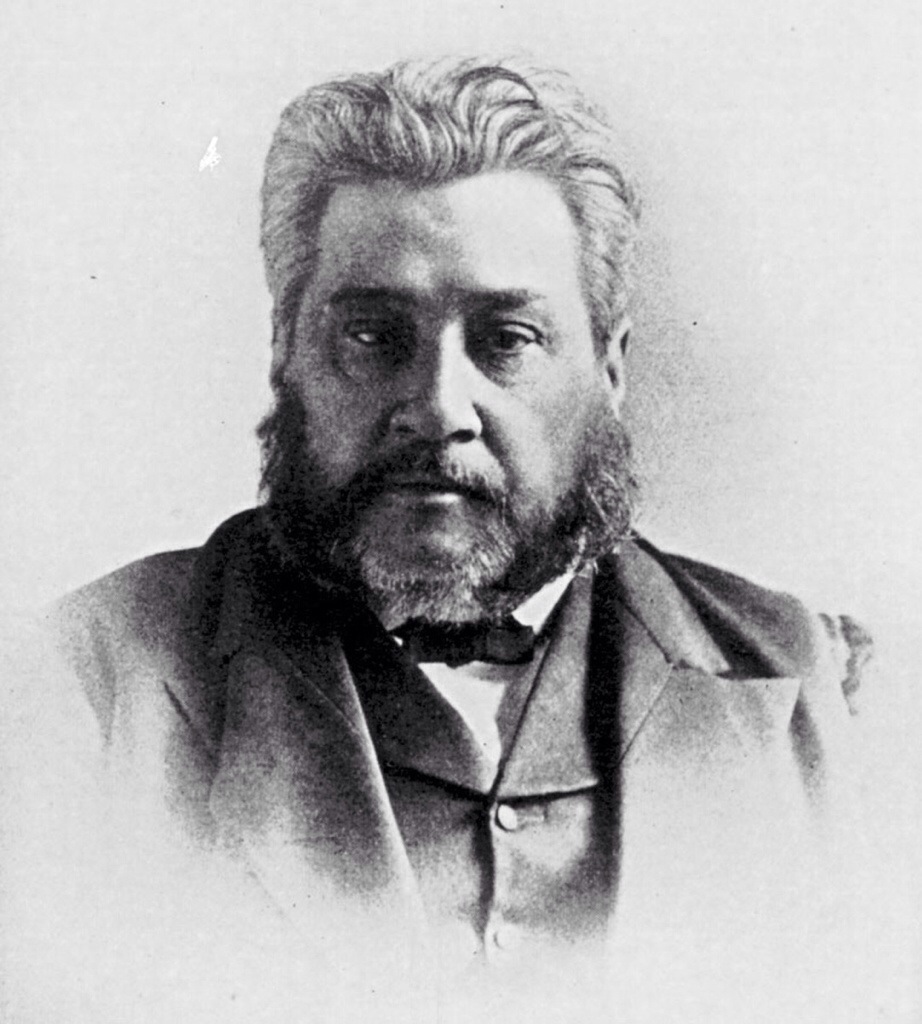
Spurgeon.jpg

Charles Haddon Spurgeon

“Beware of light thoughts of sin. At the time of conversion, the conscience is so tender, that we are afraid of the slightest sin. Young converts have a holy timidity, a godly fear lest they should offend against God. But alas! very soon the fine bloom upon these first ripe fruits is removed by the rough handling of the surrounding world: the sensitive plant of young piety turns into a willow in after life, too pliant, too easily yielding. It is sadly true, that even a Christian may grow by degrees so callous, that the sin which once startled him does not alarm him in the least. By degrees men get familiar with sin. The ear in which the cannon has been booming will not notice slight sounds. At first a little sin startles us; but soon we say, “Is it not a little one?” Then there comes another, larger, and then another, until by degrees we begin to regard sin as but a little ill; and then follows an unholy presumption: “We have not fallen into open sin. True, we tripped a little, but we stood upright in the main. We may have uttered one unholy word, but as for the most of our conversation, it has been consistent.” So we palliate sin; we throw a cloak over it; we call it by dainty names. Christian, beware how thou thinkest lightly of sin. Take heed lest thou fall by little and little. Sin, a little thing? Is it not a poison? Who knows its deadliness? Sin, a little thing? Do not the little foxes spoil the grapes? Doth not the tiny coral insect build a rock which wrecks a navy? Do not little strokes fell lofty oaks? Will not continual droppings wear away stones? Sin, a little thing? It girded the Redeemer’s head with thorns, and pierced His heart! It made Him suffer anguish, bitterness, and woe. Could you weigh the least sin in the scales of eternity, you would fly from it as from a serpent, and abhor the least appearance of evil. Look upon all sin as that which crucified the Saviour, and you will see it to be “exceeding sinful.”-Charles Haddon Spurgeon

The Necessity of the Holy Spirit in Preaching

Holy-Spirit-Stained-Glass-2-300x266

How utterly dependent we are on the Holy Spirit in the work of preaching! All genuine preaching is rooted in a feeling of desperation. You wake up on Sunday morning and you can smell the smoke of hell on one side and feel the crisp breezes of heaven on the other. You go to your study and look down at your pitiful manuscript, and you kneel down and cry, “God, this is so weak! Who do I think I am? What audacity to think that in three hours my words will be the odor of death to death and the fragrance of life to life (2 Cor 2:16). My God, who is sufficient for these things?”-John Piper [1]


“And I, when I came to you, brothers, did not come proclaiming to you the testimony of God with lofty speech or wisdom. For I decided to know nothing among you except Jesus Christ and him crucified. And I was with you in weakness and in fear and much trembling, and my speech and my message were not in plausible words of wisdom, but in demonstration of the Spirit and of power, so that your faith might not rest in the wisdom of men but in the power of God.” ( 1Cor 2:1-5 ESV)

The Apostle Paul spoke out boldly against the excesses of the Corinthian church’s abuses of the Spirit’s gifts and the counterfeit gifts being promoted as the Spirit’s work. Yet, he began his letter by confessing that his message was filled with the power of the Holy Spirit. The gospel message, considered foolish by this world, requires a messenger who will derive his power from the Spirit who sent him.

A biblical preacher needs to consider his task as a proclaimer of the supernatural message of our God and he must remember that the unbeliever is totally depraved, and that any human effort to affect his heart through methods and manipulation is foolish (1Cor 2:14). This is necessary because the radical depravity of man can only be overcome by the work of the Holy Spirit and not by our clever devices. Charles Spurgeon, related the effects of radical depravity on preaching:

“I shall not attempt to teach a tiger the virtues of vegetarianism; but I shall as hopefully attempt that task as I would try to convince an unregenerate man of the truths revealed by God concerning sin, and righteousness, and the judgment to come.”[2]

Without the Spirit, every message preached will fail to penetrate the sin-soaked hearts of man. Therefore biblical expositors who desire to remain faithful to the Lord and His Word cannot push the Holy Spirit to the outer rim of their theology, and treat Him as incidental and unnecessary in ministry. We cannot succeed without Him!

Therefore, I’d like to propose that every biblical expositor:

Must Be Committed to Biblical Power and Clarity
The undeniable fact is that preaching every week can become wearying if the pastor’s motivations are not right. If we seek to be true to our calling we must begin by searching our own hearts for the motive behind what we do in the pulpit. Do we preach to please the people or to proclaim the truth, come what may? When the crowds fail to knock down our doors, but instead flock to the church down the street that has a three-ring circus going on, do we begin to doubt the power of the Word preached? Does our theology of God’s power working through the instrument of His Word make its way into our pulpits Sunday after Sunday? The fact is, we must look to the source of the power that accompanies authentic biblical preaching: the Holy Spirit. This power comes in two ways:

Power in Prayer

E. M. Bounds wrote,

“What the Church needs to-day is not more machinery or better, not new organizations or more and novel methods, but men whom the Holy Ghost can use—men of prayer, men mighty in prayer. The Holy Ghost does not flow through methods, but through men. He does not come on machinery, but on men.”[3]

How dependent are you on God when you preach? How much time do you spend in prayer before you step into the pulpit? Paul not only said he was weak (1Cor 4:10), but he repeatedly asked for prayer: “Finally, brothers, pray for us, that the word of the Lord may speed ahead and be honored, as happened among you” (2Thess 3:1). Again and again Paul asked for prayer because he knew he was weak without God.

John Owen confronts us,

“A minister may fill his pews, his communion rolls, the mouths of the public, but what that minister is on his knees in secret before God Almighty, that he is and no more.”[4]

Secondly we find:

Power Centered in the Piercing Word

Hebrews 4:12-13 says,

“For the word of God is living and active, sharper than any two-edged sword, piercing to the division of soul and of spirit, of joints and of marrow, and discerning the thoughts and intentions of the heart. And no creature is hidden from his sight, but all are naked and exposed to the eyes of him to whom we must give account.”

Taken together, the thoughts and intentions of the heart are those deepest internal workings of the mind and those affections that are most hidden. According to Hebrews 4:13, this all-pervasive scrutiny of the Word, like a divine X-ray of the soul, penetrates every dark corner of the heart exposing everything that is hidden.

So powerful is God’s Word that Paul mentions the reaction of an unbelieving stranger when exposed to it: “…he is convicted by all, he is called to account by all,  the secrets of his heart are disclosed, and so, falling on his face, he will worship God and declare that God is really among you.” (1 Cor 14:24-25).

The power of preaching does not come from the preachers style, outline, education, vocabulary, sense of humor or style of dress. The power comes from the Word of God preached through the Holy Spirit.
This is no excuse for laziness in the study, but the God of heaven does not need our ability to parse Greek verbs to change the souls of men.

The Power of the Word In the Study

Study is described by Paul as labor, it is hard work (kopiao) “Let the elders who rule well be considered worthy of double honor, especially those who labor in preaching and teaching.” (1Tim 5:17). Study takes diligence (spoudazo-“persistent diligence” 2Tim 2:15)-“Do your best to present yourself to God as one approved, a worker who has no need to be ashamed, rightly handling the word of truth.”
John MacArthur has written,

“What is our responsibility? The answer is in Ps. 119:130; “The unfolding of Thy words gives light.” God’s words are unfolded to us first by discovery. Through diligent Bible study, we unfold or unwrap God’s truth. We discover that meditation with a view to applying the truth deepens its impact. Discovery and meditation, combined bring the brightest light of illumination to our hearts.”[5]

Hard study is not Spirit-quenching. It is quite the opposite, it is Spirit illumined and Spirit blessed.


Clarity Derived from the Spirit: Illumination of the Expositor

From the Pulpit to the Pew

Illumination is necessary for the expositor in his study, but this is only part of the influence that the Spirit has upon His Word. It needs to be acknowledged that no matter how talented the expositor may be, the reception of the message is dependent upon the Spirit’s work in illuminating the hearts and minds of those listening.

Sermons preached have little effect upon dead ears unless the Spirit moves to open up the hearer to the truths expressed in His Word. Although the preacher of the Word needs to be diligent and faithful to prepare a thoroughly biblical exposition of the text and assemble it into a sermon that includes application of the Word, this alone is not enough. We cannot forget that the Gospels refer to the disciples coming away from the words of Jesus four times with the phrase “did not understand” (Mk 9:32; Lk 9:45; Jn 8:27; 10:6) and multiple times the crowds were confused at the words of Jesus. Illumination is not a matter of intelligence, it is a matter of spiritual enablement.

For the pastor proclaiming the Word in the pulpit, the Spirit gives clarity to the hearers in His act of illumination of their hearts and minds to His Word. When we step into the pulpit if we are centered on the Word, dependent upon the Spirit and have been with God in our study, we will have the confidence of God.
When Christ is exalted and the message of the cross is declared from the pulpit with prayer, passion, and precision, there is power. Power because the preacher is not depending upon his own strength. Power because the preacher believes what he is preaching is the fragrance of life to life, and death to death (2Cor 2:16). Power because the preacher has labored in the study and has come away having encountered the risen Lord in the pages of the living Word. When this type of preacher steps behind the pulpit, God moves through the Spirit using some or all of these means to accomplish His purpose.

Steve Lawson has said,

“Both literally and figuratively, the preacher should always be pointing to the biblical text. This Word-centered focus in the pulpit is the defining mark of all true expositors. Those who preach and teach the Word are to be so deeply rooted and grounded in the Scriptures that they never depart from them, ever directing themselves as well as their listeners to its truths. Biblical preaching should be just that—biblical—and all who stand in the pulpit must show an unwavering, even relentless, commitment to the Scripture itself. As a practicing physician knows and prescribes medicine, so every preacher should be ever studying, learning, and dispensing heavy doses of the healing balm of God’s Word to all his patients. Whatever the ailment, there is but one cure for the soul—the Word of God applied by the Spirit of God to the human heart.”[6]

Brothers, don’t allow poor theology and hyper-emotionalism hijack from our churches the biblical ministry of the Holy Spirit!


[1] John Piper, The Supremacy of God in Preaching (Grand Rapids, Mich.: Baker Book House, 1990), 37-8
[2] C. H. Spurgeon, An All-Round Ministry (n.p., 1900;  reprint, Carlisle, Pa.: Banner of Truth Trust, 1994), 322.

[3] E. M. Bounds, Power Through Prayer (Grand Rapids, Mich.: Baker Book House, paperback ed. 1972), 7.

[4] Cited in I.D.E. Thomas, A Puritan Golden Treasury (Carlisle, Pa.: The Banner of Truth Trust, 1977), 192.

[5] John MacArthur Jr. Rediscovering Expository Preaching ( Dallas, Tex.: Word Publishing, 1992), 115.
[6] Steven J. Lawson, Famine in the Land: A Passionate Call for Expository Preaching (Chicago: Moody Publishers, 2003), 81-2.