Praying Persistently

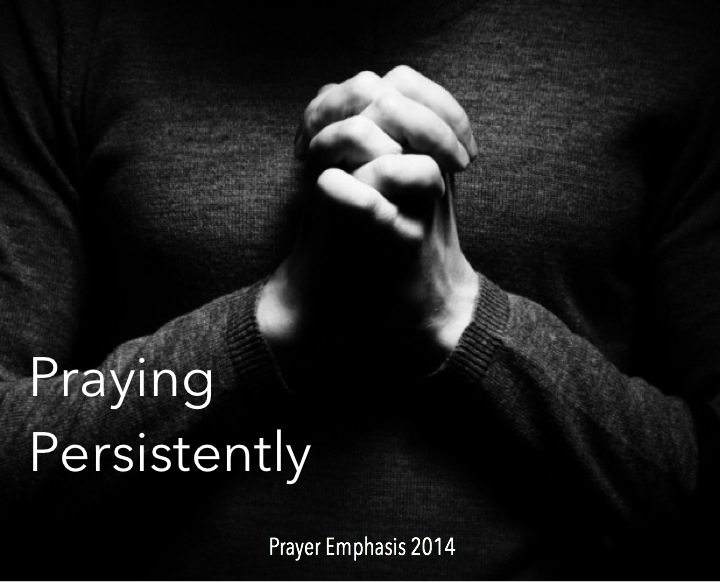
Praying Persistently

In one region of Africa, the first converts to Christianity were very diligent about praying. In fact, the believers each had their own special place outside the village where they went to pray in solitude. The villagers reached these “prayer rooms” by using their own private footpaths through the brush. When grass began to grow over one of these trails, it was evident that the person to whom it belonged was not praying very much. Because these new Christians were concerned for each other’s spiritual welfare, a unique custom sprang up. Whenever anyone noticed an overgrown “Prayer path,” he or she would go to the person and lovingly warn, “Friend, there’s grass on your path!

I suspect that we all have struggled at times to be consistent in our prayer times. Our paths begin to grow grass. In Matthew 7:7-11, we find ourselves in the middle of Jesus’ great Sermon on the Mount. In chapter six, the Lord gave an amazing lesson on prayer. But as you listen to what Jesus is teaching in the Sermon on the Mount the more you see that radical dependence that you and I need in prayer.

  • We need prayer because he calls us to forgive our enemies (6:14-15)
  • We need prayer because he says when we fast, it is to be with a humble heart (6:16-18)
  • We need prayer because he warns us of the lure of material possessions and how they can steal away our affection for the Lord (6:19-24)
  • We need prayer because Jesus told us that we aren’t supposed to get anxious, that he would provide for all of our needs (6:25-34)
  • We need prayer because we aren’t supposed to unfairly judge others, but rather we need to examine our own hearts to find healing and forgiveness for our own sins first (7:1-5).
  • We need prayer because we need to discern when those we preach the gospel to are so hard-hearted or against our efforts that we need to move on, all while keeping our own hearts tender and hoping that they will come to repentance (7:6).

Can you start to see why we need prayer? What the Lord is calling us to be and do is impossible without God. We can’t even hope to begin fulfilling these things without him, and that was only the last half of the Sermon!

At this point, those who were listening to Jesus’ message must have been feeling overwhelmed, wondering how they could be obedient. We can often feel this way and be tempted to give up. But I want us to see that we can’t give up. We need to wrestle with God in persistent prayer.

In my last post (here) we saw the power of God demonstrated to us in what he has done in his awesome works, including our salvation and forgiveness. From there we were able to see that we need to ask God with greater faith that he will provide for our needs. We need to develop that idea of asking God in dependence and with persistence. It is here that Jesus instructs them how—Ask, Seek, Knock. Let’s look at each on in order to find out how we can become more dependent upon the Lord.

“Ask, and it will be given to you; seek, and you will find; knock, and it will be opened to you.  For everyone who asks receives, and the one who seeks finds, and to the one who knocks it will be opened. Or which one of you, if his son asks him for bread, will give him a stone? Or if he asks for a fish, will give him a serpent?  If you then, who are evil, know how to give good gifts to your children, how much more will your Father who is in heaven give good things to those who ask him!” (Matt 7:7-11, ESV)

“Ask” your heavenly Father

Every one of these five verses speaks about asking, and all of them point to the fact that if we ask our heavenly Father, he will answer our needs. Implied in asking is the need for humility. We ask when we do not have. We are in need. It is what we see in Matt 5:3–the poor in spirit know they have nothing in themselves and they need to receive everything from God. Jesus assures us that when we acknowledge our need to him, we shall receive. Jesus illustrates this with the child who goes to his earthly father for something to eat. The staple diet of most people in Jesus’ time was bread and fish. Jesus says that just like a little child comes in dependence to her father for her food, so our infinitely kinder, gentler and more loving heavenly Father will give us all we need with great delight and joy! But we need to remember that we must come asking humbly and dependence upon him.

 “Seek” the Father’s will

This reminds us of Matt. 6:33, “But seek first the kingdom of God and his righteousness, and all these things will be added to you.” The desire to be dependent upon God progresses from asking God in humble dependence to growing in prayer while seeking God’s will. Seeking gives us a visual picture of looking for something that is not clearly before us.

It’s like a person looking for their eyeglasses. When I don’t have my glasses on, I can see enough to avoid running into a dresser or a door, but not well enough to find my glasses if they have fallen on the ground off of my night stand. A couple of times I put them somewhere to take a shower and I couldn’t find them. (Maybe my wife moved them for fun!). I need to keep on seeking them until I find them. I don’t sit down and say to myself, “Oh, well. I lost them. I hope I make it to work okay.”

Jesus is telling us, we need to keep on asking, but beyond asking, we need to be seeking—going to his throne and calling out to him with our needs. And if they include any steps of faith on our part, then we need to take them—seeking God’s will as we pray. So what needs should we pray for? Here I wrote about personal needs. We know about those, so I’ll move on to Kingdom needs. Remember that I said that personal needs are important. But think about this for a second. All of those personal needs will be fulfilled and vanish in the Kingdom. Not one will remain.

The needs of the Kingdom are eternally important. They will have an eternal impact. Souls will be changed forever because of these needs. Because of this we need to spend more time and energy seeking God for these types of needs. Listen to two men who knew the needs of heaven far better than most of us today. They were both pastors.

Richard Baxter put a sharp focus on what the Church has been called by our Master to do:

“We are seeking to uphold the world, to save it from the curse of God, to protect the creation, to attain the ends of Christ’s death, to save ourselves and others from damnation, to overcome the devil, and demolish his kingdom, to set up the kingdom of Christ, and to attain and help others to the kingdom of glory. And are these works to be done with a careless mind or lazy hand? O, see, then, that this work be done with all your might!”[1]

Jonathan Edwards likewise understood the great need of the Church in carrying out its mission. He said,

“Those that are about to undertake this work should do it with the greatest seriousness and consideration of the vast importance of the work, how great a thing it is to have the care of precious souls committed to them, and with a suitable concern upon their minds, considering the great difficulties, dangers, and temptations that do accompany it. It is compared to going to warfare.[2]

So how will we carry out this mission beyond our own personal needs? It will come with prayerful seeking the Lord’s face. It will come with a persistence in calling out to God for souls to be saved and for obstacles to be brought down. It will come as we pray for sinners to come under the conviction of the Holy Spirit and Jesus to be magnified in our lives in the face of trials and tribulation. If we were about to go out to war, we would pray and seek God’s help. Pick up your armor and sword. We are at war!

“Knock” with perseverance

The verbs in verse 7, “ask”, “seek” and “knock” are all present imperatives. That means that they are commands that we are to continue to do. Not just once, but persistently. That is why “knocking” is such a good picture of our need to be persistent. Jesus calls us to knock on prayer’s door persistently. Some of us pray like I knocked on doors to sell vacuum cleaners or encyclopedias (do they do that anymore?). We pray once and then we walk away, yet we expect for God to bless us richly. God still gives us good gifts, but he delights to give even more, especially if we would only ask him. James 4:2 says, in part, “You do not have because you do not ask.” We pray for the salvation of a friend, but we stop after a week. Or we pray for the church to grow, but our prayers are hit-and-miss. Jesus told the story of two people who were persistent in prayer in Luke 11 & 18. One was a man who wouldn’t go away until his friend loaned him some food for a visiting guest. The other was an old women who pestered a judge until he gave her justice.

When asking and seeking have not yielded God’s answer, DON’T STOP PRAYING! Be persistent. Keep on knocking on heaven’s door. The Lord who is good, and loves you more than anyone else on this earth will answer your prayer!

Some of you might ask “why?” If God hears our prayers, and we pray once, why doesn’t he just answer? Why does he make us pray so many times? It isn’t because he didn’t hear us the first time, or that he isn’t able to answer us the first time. He often doesn’t answer immediately for our benefit. Really? Yes! Here are a few reasons why God might not answer you immediately (assuming that you are not living in sin):

  1. By praying persistently, God teaches us dependence. A person who prays once or twice and then tries to fix it themselves shows that they do not depend upon God. Delayed answers cause us to grow in dependence.
  2. By praying persistently, God teaches us to seek his will and not our own. Sometimes we pray selfish prayers. When we pray over and over, we are forced to think about whether what we are praying for is truly God’s will. If not, we may change our prayers, or we may humble ourselves and submit to God’s will even if it is not ours.
  3. By praying persistently, God teaches us patience. God is not on our clock and his timing is perfect. He hears us, but the timing of our answer to prayer is not so important to him as teaching us patient dependence upon him.
  4. Persistent prayer requires a greater faith and a focused sense of need. It also requires that we depend upon God’s resources and not our own feeble efforts done in our own strength.

Have you found that your prayers are short-lived? Is it because you move on to do it in your own strength? Do you see how often that has made matters worse? Commit yourself to go to the Lord for all your needs, waiting patiently for him to answer you. Maybe you have found that your prayers are short-sighted. You pray, but not for the great things God has called us all to do. You haven’t prayed for a great harvest of souls. You haven’t prayed for the salvation of your family member who you believe would never get saved. You haven’t prayed for that obstacle to faith to be removed. You’ve prayed short-range, short-sighted, “safe” prayers. My friend—we have a big God. Pray big prayers. Don’t lose sight of what is eternal. Can I add a few more personal needs?

 Maybe God has been tugging at your heart about serving him in a greater way. Perhaps it has been in sharing Christ more. But you are afraid. You are unsure about stepping out of your comfort zone. Pray for the Lord to give you courage. Keep praying daily, even hourly. And then do it—share Christ in faith, trusting that he is with you and will help you speak.

Maybe God has been speaking about something more serious. Maybe its been about serving on the mission field or in full time ministry. Don’t think that you can’t do it. God is with you and if he calls you he will equip and strengthen you. Pray and ask others to pray. Then step out in faith!

Maybe God has been convicting you of something else that you have pushed aside and thought that it was impossible. Pray about it! And I don’t mean that as a throw-away statement meant to be an excuse to do nothing. I mean really pray about God’s will for your life. When we open that door it is exhilarating and exciting. Anything is possible!

When you get right down to it, if God is your God, then he is your Master. If you yield to his will, who knows how he will use you. Pray persistently and watch what he will do!


[1] Richard Baxter, The Reformed Pastor, p. 12.

[2] Jonathan Edwards, The Salvation of Souls, 51-52.

Prayer and the Power of God

Image

“To know God as the sovereign disposer of all good, inviting us to present our requests, and yet not to approach or ask of him, were so far from availing us, that it were just as if one told of a treasure were to allow it to remain buried in the ground.” —John Calvin

The sinfulness of man requires the power of God to overcome our nature, bringing us to Christ and setting us free from our sins, removing us from the kingdom of darkness and placing us into the kingdom of God, adopting us as sons of God and joint heirs with Christ, establishing both our ability to stand before the righteous throne of Almighty God as well as establishing our right to do so by virtue of Christ’s perfect righteousness imputed to our account. Therefore, our prayers are heard and answered upon this basis, seeing that God has opened up the doors of heaven, and by virtue of the cross of Jesus has welcomed us in.

In this post, I would like to briefly focus upon four prayer types: 1) Adoration and worship; 2) Thanksgiving; 3) Confession; and 4) Supplication and Petition. The first two I’ll merge together and only briefly touch on them. I want to focus more on Confession and Supplication/Petition as it relates to the Power of God in Prayer.

Adoration/Worship and Thanksgiving

The first two prayer types are prayers of response. When we pray with thanksgiving and adoration, we are responding to the acts of God which reflect his power to redeem, provide, create and sustain.

  • Adoration and Worship – Exodus 15
  • Thanksgiving – Psalm 138

In your life God has shown you his mighty power, whether it has been through salvation, provision, guidance, providential care, healing or some other way. Does your prayer life reflect this?

Confession

Confession is made with the belief that:

  • We have an omniscient God who knows our sin and we agree with him that we have transgressed his law. Prov. 5:21; Ps 51:3.
  • We have sinned against our holy God who cannot look upon sin and is just in punishing our iniquity. Ps 51:4, 11.
  • We have a merciful God who can remove the dark stain of sin through the blood of Christ’s substitutionary death upon the cross. Ps 51:7-10.

Some people, even Christians, live with the awful burden of past sins that they believe are unforgiven and unforgivable, even by God.

First Corinthians 6:9-11 is the hope of Christ and the power of God demonstrated to the worst of sinners. It says,

Or do you not know that the unrighteous will not inherit the kingdom of God? Do not be deceived: neither the sexually immoral, nor idolaters, nor adulterers, nor men who practice homosexuality, nor thieves, nor the greedy, nor drunkards, nor revilers, nor swindlers will inherit the kingdom of God. And such were some of you. But you were washed, you were sanctified, you were justified in the name of the Lord Jesus Christ and by the Spirit of our God.

Take your eyes off of your sin and put them on Christ!

Supplication and Petition

Supplications and petitions can be placed roughly into two categories:Personal prayer needs (for self and others) and Prayer for the Kingdom of God.

Biblical examples of personal prayers include:

  • For food (Matt 6:11)
  • For healing/trials (2Cor 12:7)
  • For persecution relief (Acts 12:6-19)
  • For pain and suffering (Psalms of David, Job)
  • For wisdom (James 1:5)

Prayer for the Work of the Kingdom, including:

  • For open doors of opportunity (Col 4:3)
  • For strength in times of persecution (Acts 4:29)
  • For boldness in the face of opposition (Acts 4:29)

In the area of supplications and petitions we can become reluctant to pray as we should. We need to answer the questions: Can he answer? and Will he answer? Consider the words of Jesus himself:

“And Jesus answered them, “Have faith in God. Truly, I say to you, whoever says to this mountain, ‘Be taken up and thrown into the sea,’ and does not doubt in his heart, but believes that what he says will come to pass, it will be done for him. Therefore I tell you, whatever you ask in prayer, believe that you have received it, and it will be yours.” (Mk 11:22-24)

“And Jesus said to him, “ ‘If you can’! All things are possible for one who believes.”” (Mk 9:23)

Do we use, “If the Lord wills” as an excuse for our lack of faith? Many things the Lord wills, but we often fail to ask (James 4:2). Sometimes we can be so afraid of falling into the error and heresy of prosperity gospel preachers that we fall short of a full dependence on God in prayer. We sanitize the words of Jesus and our prayer becomes anemic. Consider these verses:

“And without faith it is impossible to please him, for whoever would draw near to God must believe that he exists and that he rewards those who seek him.” (Heb 11:6)

 And whatever you ask in prayer, you will receive, if you have faith.” (Matt 21:22)

“Elijah was a man with a nature like ours, and he prayed fervently that it might not rain, and for three years and six months it did not rain on the earth. Then he prayed again, and heaven gave rain, and the earth bore its fruit.” (James 5:17-18)

Do these verses cause you to imagine what God could do? Do they set your heart racing? Or do you find yourself doubting, and adding exceptions? The ability for your prayers to be answered is not so much about who you are, as much as it is about who you believe God is!

Biblical Prayer and Fasting

Image

In his book on fasting entitled A Hunger for God, John Piper wrote, “What we hunger for most, we worship.” I put that quote up on Facebook, and some of you wrote that it made you think of food. You hunger most for food. We laugh, but that is too true, isn’t it? “What we hunger for most, we worship.”

Some hunger for sexual desires, like Amnon in 2Sam 13, who longed so much for his beautiful half-sister Tamar that he became physically ill until he fulfilled his lustful desire. Some hunger for possessions, like King Ahab in 1Kings 21, who longed for Naboth’s vineyard, but he wouldn’t sell it to him. So his wicked wife Jezebel had him murdered and Ahab was fulfilled. Some hunger for marriage, like King Solomon, who according to 1Kings 11:3, gathered for himself 700 wives and 300 concubines or secondary wives not caring about the fact that they were pagans who led his heart astray from the Lord.

So Piper is describing what the Bible so clearly describes, “What we hunger for most, we worship.”

But we need to be careful here, don’t we? Paul tells us in 1Corinthians 8:8, “Food will not commend us to God. We are no worse off if we do not eat, and no better off if we do.” So the issue is never what we eat or what we do not eat or whether we fast or whether we do not fast. The issue for Jesus always is our heart, is it not? So then, why should we even entertain fasting? Why have we set aside food to dedicate ourselves to prayer instead of eating? It is because fasting moves our attention off of the gift of food and on to the Giver.

Again, John Piper states for us the danger of forgetting this distinction and the danger for our souls if we do not stop and examine ourselves and our hungers:

The greatest enemy of hunger for God is not poison but apple pie. It is not the banquet of the wicked that dulls our appetite for heaven, but endless nibbling at the table of the world. It is not the X-rated video, but the prime-time dribble of triviality we drink in every night. For all the ill that Satan can do, when God describes what keeps us from the banquet table of his love, it is a piece of land, a yoke of oxen, and a wife (Luke 14:18–20). The greatest adversary of love to God is not his enemies but his gifts. And the most deadly appetites are not for the poison of evil, but for the simple pleasures of earth. For when these replace an appetite for God himself, the idolatry is scarcely recognizable, and almost incurable.

Jesus said some people hear the word of God, and a desire for God is awakened in their hearts. But then, “as they go on their way they are choked with worries and riches and pleasures of this life” (Luke 8:14). In another place he said, “The desires for other things enter in and choke the word, and it becomes unfruitful” (Mark 4:19). “The pleasures of this life” and “the desires for other things”—these are not evil in themselves. These are not vices. These are gifts of God. They are your basic meat and potatoes and coffee and gardening and reading and decorating and traveling and investing and TV-watching and Internet-surfing and shopping and exercising and collecting and talking. And all of them can become deadly substitutes for God.

You see, fasting doesn’t commend us to God. But it is a tool for us to test our heart attitudes about God. It does test our love and our hunger for God to see if we love Him more than these other things. I want us to look at the proper setting and definition of fasting.

Jesus’ general principle is found in Matthew 6:1, “Beware of practicing your righteousness before other people in order to be seen by them, for then you will have no reward from your Father who is in heaven.”

Previously in his great Sermon on the Mount in Matthew 6, Jesus gives us three examples of ways that we can be found guilty of practicing our faith for others to see us and admire us:

Giving (vv. 2-4) or our outward conduct

Praying (vv. 5-15) or our upward conversations

Fasting (vv. 16-18) or our inward cravings

Matt 6:16-18:“And when you fast, do not look gloomy like the hypocrites, for they disfigure their faces that their fasting may be seen by others. Truly, I say to you, they have received their reward. But when you fast, anoint your head and wash your face, that your fasting may not be seen by others but by your Father who is in secret. And your Father who sees in secret will reward you.

So, What Is Biblical Fasting?

Simply out, fasting is to refrain for food for a period of time. Biblical fasting is always accompanied with prayer. Now, I mean biblical fasting here, because several religions practice fasting, and people fast for medical and other purely non-religious reasons. Fasting in the Bible is required only in the Old Testament, for the Day of Atonement (Lev. 16:29-34; 23:26-32). This “self-affliction” was to accompany the offering of sacrifices for the nation of Israel. It was a national day of mourning for their sins. As such, eating was inappropriate. Since Jesus Christ has become our final sacrifice (Heb 10:12), we do not need a Day of Atonement. Therefore, the only obligatory day of fasting has been removed. So, fasting is not required by God.

Why did people in Bible fast?

Although there was only one obligatory day to fast, voluntary fasting was (and is) acceptable to God if done with the right heart attitude. Some examples of the reasons people fasted in the Bible:

  • When Mourning: 2Sam 3:35. David fasted after the death of Abner.
  • When in Grave Danger: Esther 4:16. Esther asked for prayer and fasting before she approached the king.
  • When Repentant: Jon 3:5, 7. The Ninevites repented before God in sackcloth and ashes for their sins, and God forgave them.
  • When Facing Important Decisions: Acts 13:2-3. Before the church at Antioch sent away Paul and Barnabas for their mission trip.
  • When Facing Intense Trials: Matt 4:2. As Jesus prepared to begin preaching, he was led into the wilderness where he fasted, prayed for 40 days and was tempted by Satan.

How Should We Approach Fasting?

First, remember that fasting is no obligatory, but voluntary. We are nowhere commanded to fast, although we may do so when we desire. The Pharisees fasted 2 times a week (Lk 18:12). But this was a tradition of men, not a requirement of God. And remember this important distinction–if you are tempted to become puffed up in your fasting, that of the two men in the Temple that day, one fasted and the other went home justified! Fasting does not justify us!!

Second, we must fast with the right intentions. Matt 6:16 shows us that there are some who practice religious activities to be seen by others. If you fast, ask yourself why you are doing it? If you fast, are you trying to look normal, or are you letting yourself look haggard so people will ask you about it? The Pharisees loved the attention they received. They even went so far as to rub ash on their faces to look more sullen and sickly. This can be the same temptation with all our spiritual disciplines. Do you do them to be seen by men? If you fast, are you trying to earn God’s favor? Fasting is not a bargaining chip for God. It’s not “I skipped food for three days Lord. YOU HAVE TO HEAR ME NOW!” Fasting doesn’t mean that if I give up meat, God will do what I say.

Finally, when we fast, we should see it as an opportunity to put all of our focus upon God, and not as an opportunity to pull attention to ourselves. You see, Jesus pointed out that the Pharisees drew attention to themselves with their sullen look. Instead, fasting ought to be seen as a time to look at the Giver of every good and perfect gift. We can forget about God sometimes, and when we fast, we take our eyes off of the gift of food and cast our eyes toward heaven to find communion with our Lord. This is why the Pharisees were such hypocrites. They took something which should have given God attention and used it for their own attention. The same is being done today.

Some Considerations regarding Fasting:

Fasting does not need to be a fast from food only. Some of you may not be able to fast from food for medical reasons. Perhaps you are weakened from sickness or you need to take medications or your doctor has said, “No fasting.” That is ok. God knows how weak our frame are!

But fasting is not only described in terms of food. If you look at 1Cor 7:5, Paul refers to a different kind of fast for married couples, a fasting from marital relations. Notice that this fasting referred to here is for a set time and for the purpose of prayer. It should be short and purposeful by agreement of both so as not to give an opportunity for temptation for either the husband or the wife.

Dr Martyn Lloyd-Jones wrote:

Fasting if we conceive of it truly, must not … be confined to the question of food and drink; fasting should really be made to include abstinence from anything which is legitimate in and of itself for the sake of some special spiritual purpose. There are many bodily functions which are right and normal and perfectly legitimate, but which for special peculiar reasons in certain circumstances should be controlled. That is fasting.

This means that food may not be a big deal for you, but perhaps TV or internet distracts you from the Lord and prayer. Maybe its sports or something else.

Remember Abraham? Look at Genesis 22:1-2. What did Abraham love? What did he hunger for? That promised son Isaac. And God gave him a good gift in Isaac. But now God asked him to sacrifice what he loved. Did he love God more than Isaac? Abraham set his eyes to obey the Lord. He took Isaac up the mountain and he bound him and took the knife to slay his beloved boy. But look at vv. 11-12. “now I know that you fear God, seeing that you have not withheld your son…” Abraham’s love for God was greater than his love for Isaac.

Now let me ask you, dear reader, what do you hunger for most? Who’s in charge? Is it your hunger or God? Hunger and thirst for Christ above all else.

Practicing Gentleness -Matt 5:5

In the last post on Matthew 5:5 (you can read it here) we started to define meekness (or gentleness) as God defines it. We saw that we must be meek toward God in his will and his Word. But this is only the beginning. Our meekness must extend to humanity. We must be meek toward others. But what does meekness look like practically? In this post I’d like to give you three practical character qualities of a meek Christian.

First, showing meekness is a godly response when others hurt us.

Psalm 38:12-15 says,

Those who seek my life lay their snares;
those who seek my hurt speak of ruin
and meditate treachery all day long.
But I am like a deaf man; I do not hear,
like a mute man who does not open his mouth.
I have become like a man who does not hear,
and in whose mouth are no rebukes.
But for you, O Lord, do I wait;
it is you, O Lord my God, who will answer. (ESV)

The meek in spirit do not rush to defend themselves when wronged; they instead wait upon the Lord. Some wrong responses when others hurt us:

1. We are a hot-head.

Eccl. 7:9, “Be not quick in your spirit to become angry, for anger lodges in the heart of fools.

Thomas Watson, “Meekness, like wet tinder, will not easily take fire.” This is the spirit of meekness. If you have a short fuse with your temper, this shows a lack of meekness.

Eph 4:26-27, “Be angry and do not sin; do not let the sun go down on your anger, and give no opportunity to the devil.”

Some may claim, using this verse, that anger is not a sin. Now I agree that not all anger is sin. But the anger that is not sin, is anger at sin—a holy anger. It was a holy zeal that provoked Jesus’ anger in John 2:14-17. This is not the case for the one who is hasty and selfish in his anger.

2. We are fork-tongued.

Eph 4:29-31, “Let no corrupting talk come out of your mouths, but only such as is good for building up, as fits the occasion, that it may give grace to those who hear. And do not grieve the Holy Spirit of God, by whom you were sealed for the day of redemption. Let all bitterness and wrath and anger and clamor and slander be put away from you, along with all malice.”

These verses speak of the sinful ways that the tongue is used and the godly responses that should take their place.

James 3:6, “And the tongue is a fire, a world of unrighteousness. The tongue is set among our members, staining the whole body, setting on fire the entire course of life, and set on fire by hell.”

Our tongues are the fire that is in our mouths and it is Satan that lights the match! Those that are meek do not use their tongues for striking out at those who have hurt them. As Eph 4:29 said, we are to use our tongues to build up, not tear down. This is the way of those who are meek in spirit.

Now, does anyone think that a person who can do this is weak?

Some may object that if we don’t do something to protect ourselves, then people will walk all over us and we will lose all respect in other’s eyes. But to overlook an offense done against us without reacting sinfully actually adds to the respect others have of us.

Prov. 19:11 says, “Good sense makes one slow to anger, and it is his glory to overlook an offense.”

Second, showing meekness is forgiving those who hurt us.

Mark 11:25, “And whenever you stand praying, forgive, if you have anything against anyone, so that your Father also who is in heaven may forgive you your trespasses.”

It has been said that a meek spirit is a forgiving spirit.

Forgiveness must be 3 things:

1. Our Forgiveness should be Actual-Not saying we forgive, while keeping a record of wrongs.

Isa 43:25 says, ““I, I am he who blots out your transgressions for my own sake, and I will not remember your sins.”

Friends, God forgives us.

Jeremiah 31:34 likewise says, “And no longer shall each one teach his neighbor and each his brother, saying, ‘Know the Lord,’ for they shall all know me, from the least of them to the greatest, declares the Lord. For I will forgive their iniquity, and I will remember their sin no more.”

God forgives us! And that should make a difference in our interactions with others around us who have sinned against us, shouldn’t it?

In Matt 18:21-35, we find the scenario where Peter thought that he was being very devout when he suggested to Jesus that they forgive the sins of others against him 7 times. For sure, this was more forgiving than most religious people would have been. But it didn’t line up with grace. Jesus then told them a story about forgiveness. You should read it on your own. The conclusion? We forgive, because God forgave us!

2. Our Forgiveness should be Total-All sins against us

Ps 103:1-5 is amazing. It says,

Bless the Lord, O my soul,
and all that is within me,
bless his holy name!
Bless the Lord, O my soul,
and forget not all his benefits,
who forgives all your iniquity,
who heals all your diseases,
who redeems your life from the pit,
who crowns you with steadfast love and mercy,
who satisfies you with good
so that your youth is renewed like the eagle’s.

God wiped out all our sins. He didn’t pass over the lesser ones and retain your guilt for the greater ones. Would you have God forgive your trespasses as you have forgiven others?

3. Our Forgiveness should be Habitual-Ongoing sin requires ongoing forgiveness on our part.

Isa 55:7 says, “let the wicked forsake his way, and the unrighteous man his thoughts; let him return to the Lord, that he may have compassion on him, and to our God, for he will abundantly pardon.”

God’s pardon of sin is abundant because our sins are abundant. The meek must likewise be constantly and abundantly pardoning sins that are done against us.

Thirdly, showing meekness is not demanding our rights.

The meek person does not make demands for his privileges, position or his status in life. Realizing that this is foreign in the world we live in, D.A. Carson paints a clear picture of the radical way living like this differs from the mainstream:

“Individually, each man tends to assume, without thinking, that he is at the center of the universe; therefore he relates poorly to the four billion others who are laboring under a similar delusion. But the meek man sees himself and all others under God. Since he is poor in spirit, he does not think more highly of himself than he ought to. Therefore he is able to relate well to others.”

Phil 2:3-8, reminds us that this command to be meek is firmly based upon the example of Christ The Christian who is meek, therefore, cannot be sensitive about himself. He can’t be always on the defensive about what others think and say about him. When a person is meek, he has come to the end of himself—he does not worry about what other people say about him.

1Pet 2:22-24 shows us the incredible strength that was evident in Jesus’ meekness. He was wronged like none of us have ever been wronged. Yet, he who surely had the right to speak, yet never did. But what are we to do?—Luke 14:11 says, “For everyone who exalts himself will be humbled, and he who humbles himself will be exalted.” Humble ourselves before God.

But, this is impossible you say? Yes, for the natural man.

But the natural man will not inherit the kingdom of God. Jesus told Nicodemus—John 3:5, “Truly, truly, I say to you, unless one is born of water and the Spirit, he cannot enter the kingdom of God.” Matt 5:5 says that the meek shall inherit the earth, though, not the kingdom of God. But there will be a day when this old earth will be renewed. It will be replaced by a New heaven and a New earth (Rev 21:1-4).

It is this New Heaven and New Earth that the meek shall inherit. None of us shall deserve it. But we shall receive it from the good hand of God. We are poor in spirit. We mourn over our sins. We are meek in the presence of God and men. In all three of these, we have taken the spotlight off of ourselves and placed it squarely where it belongs—on our Savior Jesus Christ. To Him alone be the glory!

Listening to the Lord Speak-Psalm 85:8 (Study Notes)

Image

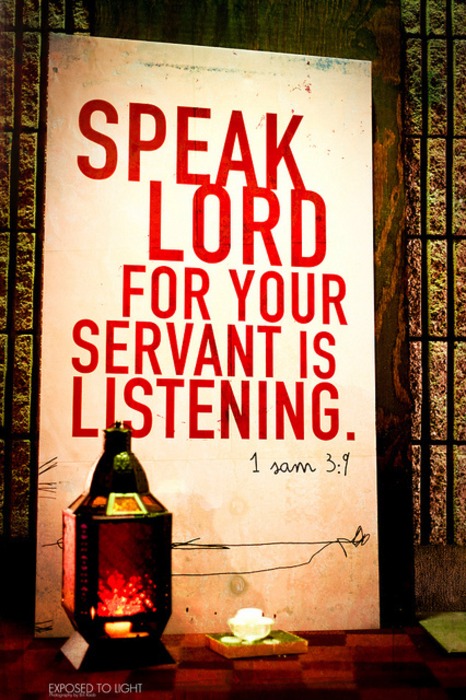
Summary: Having laid out his prayer reciting the past mercies of the Lord (vv. 1-3) and the present situation (vv. 4-7), the psalmist does what all followers of Christ need to do, he sits back and waits, listening for the voice of the Lord (v. 8). In this fast-paced, hectic world that we live in, stopping to listen to the Lord as He speaks to us in His Word through the Spirit is a difficult task. This lesson will seek to give practical ways in which we listen to the voice of the Lord from His Word, the Bible.

Lesson:

Stop and listen to the Lord (v. 8a; Ps 119:98-99)

  • Rom 12:2 – We need to be changed and renewed.
  • 1Kings 19:11-13 –We must stop and listen. The problem is not His speaking, but our listening. He will not normally force us to listen to him, but comes quietly and waits for us to listen.
  • “The reason we come away so cold from reading the Word is, because we do not warm ourselves at the fire of meditation.”[i]

Remove distractions

  • Environmental—Elijah (1Kings 19:1-13); Jesus (Matt 4:1-2, 12; 14:13, 23)
  • Business/busyness—Martha (Luke 10:38-41); Unnamed men (Luke 9:57-62)
  • Amusements—Time wasters (Eph 5:15-16; Matt 16:26)

Prepare your heart

  • Thankfulness and praise (Ps 95:2; 100:4)
  • Dependence (Ps 119:18; Jn 14:26)

Read small portions of Scripture slowly and methodically.

  • Slower is better.
  • Ps 1:2-3—Drawing up water and producing fruit is a slow and steady process.
  • Meditate on those passages. Meditation is rumination on truth. Illust. Cows chewing; tea bags steeping.
  • “Our age has been sadly deficient in what may be termed spiritual greatness. At the root of this is the modern disease of shallowness. We are all too impatient to meditate on the faith we profess….It is not the busy skimming over religious books or the careless hastening through religious duties which makes for a strong Christian faith. Rather, it is unhurried meditation on gospel truths and the exposing of our minds to these truths that yields the fruit of sanctified character.”[ii]
  • Read seeking to understand God’s message as it was intended for the original audience. You cannot understand what it means for you, until you understand what it means for “them.”
  • Having understood what God’s Word means, apply the meaning to your life with a heart of humble obedience (Josh 1:8; Jam 1:22-25; Heb 4:12-13).
  • “Take every word as spoken to yourselves. When the word thunders against sin, think thus: “God means my sins;” when it presseth any duty, “God intends me in this.” Many put off Scripture from themselves, as if it only concerned those who lived in the time when it was written; but if you intend to profit by the word, bring it home to yourselves: a good medicine will do no good, unless it be applied.”[iii]

[i] Thomas Watson, “How We May Read the Scriptures with Most Spiritual Profit,” in Puritan Sermons (1674; reprint, Wheaton IL: Richard Owen Roberts, 1981), vol. 2, 62.

[ii] Maurice Roberts, “O the Depth!” The Banner of Truth, July 1990, 2.

[iii] Watson, 65.