Help for New Expositors – Don’t Photobomb Jesus

photobombIsn’t it interesting that there are no physical descriptions in the Bible of what the Apostles or Jesus looked like. This is hard to believe in our self-driven culture where the Instagram selfie perfectly captures the ethos of our day.

There is one extra-biblical description of Apostle Paul found in The Acts of Thecla, where it says that Onesiphorus described Paul as “a man short in stature, with a bald head, bowed legs, in good condition, eyebrows that met, a fairly large nose, and full of grace. At times he seemed human, at other times he looked like an angel.”[1] It appears that Paul had a face for radio!

In our world, “image is everything” and yet, for those who stand before the world to proclaim the Word of God, we are simply called to be a faithful, unwavering voice of truth in a dry, wilderness of error and darkness (Mark 1:3; Amos 8:11).

When this is the case, we shouldn’t worry about being impressive or even whether anybody notices us. We shouldn’t be jockeying for prominence among the evangelical superstars or trying to be seen so we can move up the ladder of fame. This is exactly the opposite of what Jesus expects of his servants. Mark 10:42-45 shines brightly against the growing evil of popular Christianity and its longing for attention. It hurts to read Jesus’ words and think about how much modern evangelical Christianity ignores these words:

And Jesus called them to him and said to them, “You know that those who are considered rulers of the Gentiles lord it over them, and their great ones exercise authority over them. But it shall not be so among you. But whoever would be great among you must be your servant, and whoever would be first among you must be slave of all.” (Mark 10:42–44, ESV, emphasis mine)

It is when we open our mouths, when we speak the Word of God that people should be amazed–not at us, but at our great and awesome God. If we draw attention, let it be to our Lord and Savior. If we thunder and rail, let it be against sin as we call men to holiness. If we speak with great authority and power, let it be from the Scriptures alone and not ourselves. And when we leave a room where we have preached the mighty deeds of our God, and people stand back and say, “What a mighty God! O, how I want to know Him more!” may we be content to slide out of the room and rejoice that our God chose to use us, sinners saved by grace, to bring more people into His presence. SDG

[1] The Acts of Thecla 3. Translation by Bart D. Ehrman in Lost Scriptures: Books That Did Not Make It into the New Testament (Oxford: Oxford University Press, 2003), 114.


Premillennialism and Consistency in Hermeneutics-Walvoord

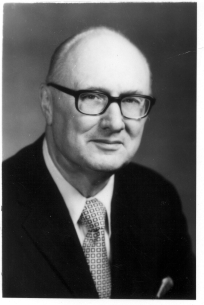
The debate between premillenarians and other millenarians hangs to a large extent upon the principles of interpretation of Scripture which each group employs. This is commonly recognized by all parties. The amillenarian Albertus Pieters states, “The question whether the Old Testament prophecies concerning the people of God must be interpreted in their ordinary sense, as other Scriptures are interpreted, or can properly be applied to the Christian Church, is called the question of spiritualization of prophecy. This is one of the major problems in biblical interpretation, and confronts everyone who makes a serious study of the Word of God. It is one of the chief keys to the difference of John Walvoordopinion between Premillenarians and the mass of Christian scholars. The former reject such spiritualization, the latter employ it; and as long as there is no agreement on this point the debate is interminable and fruitless.”3 In principles of interpretation the crux of the controversy is revealed.

The premillennial position is that the Bible should be interpreted in its ordinary grammatical and historical meaning in all areas of theology unless contextual or theological reasons make it clear that this was not intended by the writer. Amillenarians use the literal method in theology as a whole but spiritualize Scripture whenever its literal meaning would lead to the premillennial viewpoint. This is obviously a rather subjective principle and open to manipulation by the interpreter to sustain almost any system of theology. The conservative amillenarian claims to confine spiritualization to the field of prophecy and interpret other Scriptural revelation literally. Thus a conservative amillenarian would accept literally passages teaching the deity of Christ, the substitutionary atonement, the resurrection of Christ, and similar doctrines. They would denounce as heretics anyone who would tamper with these fundamental doctrines—as Origen, the father of amillenarianism, most certainly did. Conservative amillenarians would, however, feel perfectly justified in proceeding to spiritualize passages speaking of a future righteous government on earth, of Israel’s regathering to Palestine, and of Christ reigning literally upon the earth for a thousand years. Their justification is that these doctrines are absurd and impossible and that therefore they must be spiritualized. The wish is father of the interpretation, therefore, and amillennial interpretation of Scripture abundantly illustrates this.

-You can read the whole journal article at http://walvoord.com/article/150

Pastor like Paul, part 1

“You, however, have followed my teaching, my conduct, my aim in life, my faith, my patience, my love, my steadfastness, my persecutions and sufferings that happened to me at Antioch, at Iconium, and at Lystra—which persecutions I endured; yet from them all the Lord rescued me.”

‭‭2 Timothy‬ ‭3:10-11‬ ‭ESV‬‬

New York Magazine ran an article in January this year entitled “Yet Another Person Listens to GPS App and Drives Car Into Lake.” The story reads:

“A driver in Vermont steered his car right into Lake Champlain on Friday. The driver says he was using navigation app Waze, which apparently insisted that driving into the lake was the right way to go. “The app directed the drivers to turn onto the boat launch near the Coast Guard station,” the Burlington Free Press reports. “By the time they realized what was happening, the car had slid 100 feet onto the lake. The three people in the car managed to climb out.” Another passenger in the car described conditions as “dark and foggy.” The car remained at the bottom of the lake before it could be retrieved by divers. A Google spokesperson said that it would be “impossible to comment here without seeing the user’s driving file,” and that the company hadn’t “received permission to do so.” She also reminded people that while using Waze, they should still “use all environmental information available to them to make the best decisions as they drive.” As in, if it looks like a lake and quacks like a lake, don’t drive into it because it’s a lake. The unnamed driver certainly isn’t the first person to blindly follow technology to a watery end. In June 2017, there was a guy who drove into a lake in Massachusetts and blamed his GPS. He’s joined by a woman in Ontario who similarly navigated into a pond and … blamed her GPS.”[1]

The first nine verses of 2 Timothy 3 contain a detailed description of false teachers who seek to lead people astray spiritually. The warnings signs are there and we need to be vigilant. But now in the next two verses, Paul is going to turn things around and point to a positive example–himself. Paul is a faithful leader, one who will assure that Timothy is on the right path.

This call by Paul to Timothy to continue to follow his example acts as a strong counteraction against the false teachers from vv. 1-9. The activities of the deceivers are to be replaced by the continue example of timothy as he followed the Apostle Paul.

The verb “followed” (‘fully known” in KJV) means to give careful attention to something, “to conform to someone’s belief or practice by paying special attention, to follow faithfully, follow as a rule.” [2]

We are going to begin seeing how Timothy had been doing this with the Apostle Paul. Paul had been ministering for years, but there was a need for Timothy to continue to be faithful to practice what had been modelled for him so that he would be able to set an example for those who would follow him in the Church because Christian faith depends upon not only faithful discipleship, but on faithful disciples who continue in the pattern they have received.

1. Follow the Same Doctrine

The word here is “teaching” meaning that Timothy was well aware of the content of Paul’s doctrine. This teaching is the basis of everything else that will follow.

Everyone has doctrine, and the content of that doctrine affects one’s conduct, aim in life, faith, patience love, steadfastness and how they handle persecutions and suffering. Paul knows that if Timothy, or anyone veers from biblical doctrine in even a small way that this could lead to a massive shift in everything else.

Not long ago I read the sermon by the famous liberal pastor Harry Emerson Fosdick, entitled “Shall the Fundamentalists Win?” Fosdick, like many theological liberals, didn’t think that doctrine was a bid deal—as long as we can all just love one another and get along. Now remember, this was preached back in 1922, and yet it sounds like many liberal theologians today.

Read what he said in that sermon about those who would do what Paul said to Timothy, and guard the trust of doctrine:

“It is interesting to note where the Fundamentalists are driving in their stakes to mark out the deadline of doctrine around the church, across which no one is to pass except on terms of agreement. They insist that we must all believe in the historicity of certain special miracles, preeminently the virgin birth of our Lord; that we must believe in a special theory of inspiration…; that we must believe in a special theory of the Atonement—that the blood of our Lord, shed in a substitutionary death, placates an alienated Deity and makes possible welcome for the returning sinner; and that we must believe in the second coming of our Lord upon the clouds of heaven to set up a millennium here, as the only way in which God can bring history to a worthy [finale]. Such are some of the stakes which are being driven to mark a deadline of doctrine around the church…. It was a wise liberal, the most adventurous man of his day—Paul the Apostle—who said, “Knowledge puffeth up, but love buildeth up.” [3]

To Fosdick, and those like him, correct doctrine cannot be known and it is unbelievable and unacceptable for anyone to fight for such things as the deity of Christ, the virgin birth, the inerrancy of Scripture, miracles and the physical return of Christ. To him, love trumps everything else. Since Fosdick called the Apostle Paul a “wise liberal” like himself, let’s test that and see what Paul actually wrote about doctrine:

  • “I appeal to you, brothers, to watch out for those who cause divisions and create obstacles contrary to the doctrine that you have been taught; avoid them.” (Romans 16:17, ESV). Paul is warning the church in Rome that there are divisive men who want to argue—not about the truth, but cause division and obstacles to the doctrine already received by the church at large. They want to bring change to doctrine—it is not doctrine dividing here, it is heresy that is bringing division! Must a Christian sit back and do nothing while the truth is attacked? We must be on guard, Paul warned!
  • When addressing those who were immature in the faith, Paul wrote, “so that we may no longer be children, tossed to and fro by the waves and carried about by every wind of doctrine, by human cunning, by craftiness in deceitful schemes.” (Ephesians 4:14, ESV). What tosses the immature around? It is the changing of doctrine that Paul warns against. It throws the spiritual children of the church to the ground hoping to drag them away into the surf to drown them. It is human schemes and craftiness that wants to sound like reasonable dialogue and Christian love, but it is destruction masked as love.
  • “As I urged you when I was going to Macedonia, remain at Ephesus so that you may charge certain persons not to teach any different doctrine,” (1 Timothy 1:3, ESV). When Paul was made aware of false teachings in the Ephesus, he didn’t call Timothy to get along with them because they simply had a difference of opinion. He didn’t say, sit down and get to know them. Paul, the supposedly wise liberal called upon Timothy to rebuke them and command them to stop teaching this “different doctrine.”

You see, Paul was not a theological liberal! He was a fundamentalist—he held to the doctrine as delivered to him by Jesus Christ himself. He believed it all, every word!

And this doctrine he had taught in every church, synagogue, marketplace and home he could. And that was what Paul told Timothy to do himself. “Until I come, devote yourself to the public reading of Scripture, to exhortation, to teaching.” (1 Timothy 4:13, ESV)

Paul’s ministry was a Christ-centered ministry because it was a Bible-centered ministry. Liberalism wants to put a wedge between people and the Bible because the devil knows that if people are taught the Bible they will be taught about Christ.

Paul told Timothy—you know that as you followed me, that I have taught the Bible—I read it, I explain it, I apply it. Do the same. His word to Timothy is his word to us as well. Read it, explain it, apply it.

[1] http://nymag.com/selectall/2018/01/waze-app-directs-driver-to-drive-car-into-lake-champlain.html

[2] BDAG, parakoloutheo.

[3] http://historymatters.gmu.edu/d/5070/

2 Blessings of Biblical Meditation

biblicalmeditation

What is Biblical Meditation?

Most of the time, when we hear about meditation today, we think of eastern forms of meditation–that meditation that is practiced by Hinduism, Buddhism and other eastern religions. In those religions, the practitioner is called upon to empty the mind, to find a sense of what they often call “mindfulness.”

We do not have the time to address this dangerous and unbiblical practice, but let me just say that this is not what the Bible is talking about when it speaks of meditation.

The words in Hebrew and Greek which are used in the Bible speak of a lingering thoughtfulness which turns the thoughts of God’s Word over and over again. It can be likened to a cow’s chewing of her cud, seeking to extract as many nutrients from the grass as she can.

In his excellent book, God’s Battle Plan for the Mind: The Puritan Practice of Biblical Meditation, David Saxton gives us a good starting definition of biblical meditation in contrast to unbiblical meditation:

“…Biblical meditation does not seek to empty one’s thoughts. Rather, it seeks to fill one’s thoughts with Scripture, fastening them to the objective truths of God’s Word. Rather than seeking to arrive at a plane of self-actualization, biblical meditation seeks to think God’s thoughts after Him. It seeks to grow in appreciation that all of life is lived before a great and mighty God. Biblical meditation realizes that thoughts reveal beliefs. Whether we wish to admit it or not, our thoughts define our religion.”[1]

That last sentence is important. Here it is again, “Whether we wish to admit it or not, our thoughts define our religion.” You see, in a sense, we don’t need to learn to meditate because everyone already does. We meditate all the time. Saxton goes on to write:“As the heart is, so will be the thoughts. An unconverted person—a natural person—will also have reflections, but these are consistent with his nature.” Everyone meditates on something, whether it is right, wrong, or neutral.” [2]

What do we meditate upon is the real question! Says Saxton, “There is a meditation that is sinful and wicked, and that is when we meditate upon things that are wicked (Pss. 7:14; 36:4; Prov. 12:2)…. There is a meditation that is holy and godly, and that is when we meditate upon things that are holy and heavenly.”[3]

What are some of the benefits of Christian Meditation?

Psalm 119:97-98 give us two benefits. Those verses say, “Oh how I love your law! It is my meditation all the day. Your commandment makes me wiser than my enemies, for it is ever with me.” (Psalm 119:97–98, ESV)

  1. It Provides an Increased Love for the Word (v. 97) 

Oh how I love your law! It is my meditation all the day.” (Psalm 119:97, ESV)

The Word of God is a cool drink to the thirsty soul. Better yet, it is like milk to a newborn baby. First Peter 2:2-3 says, “Like newborn infants, long for the pure spiritual milk, that by it you may grow up into salvation— if indeed you have tasted that the Lord is good.” (1 Peter 2:2–3, ESV)

We are commanded here to long for the Word like a newborn baby longs for milk. But nobody teaches a baby to long for milk. They might need help in other things, but a newborn is born with a longing for milk. And Peter here is clearly stating that those who do not long for the Word have not tasted and seen that the Lord is good (v. 2)!

We should never outgrow a love for the Word. At first as babes in Christ, our love may be ravenous, but it isn’t usually too deep. Over time, it should grow deeper, and our souls should begin to require more nutrients—meat!

In Hebrews 5:12-13, the writer rebukes those Christians who had not become dissatisfied with simply milk. He says, “For though by this time you ought to be teachers, you need someone to teach you again the basic principles of the oracles of God. You need milk, not solid food, for everyone who lives on milk is unskilled in the word of righteousness, since he is a child.” (Hebrews 5:12–13, ESV)

You see, we need to grow in our love for the Word, and this growth includes more than reading it, it must include meditating on it deeply–thinking about its application to our lives and what God would have us think or be or do because of his Word. We meditate upon those things which we feel most deeply about. For the psalmist, it is the law of God, because within it he comes to know God himself.

Have you ever done this? I remember that several times, someone in our family has

donuts doughnuts food foodporn

Photo by Snapwire on Pexels.com

started talking about donuts—especially the hot donuts at Krispy Kreme. It’s probably beginning right now—you are meditating on those hot glazed donuts. The way they melt in your mouth. With some cold milk or hot coffee to perfectly compliment that sugary treat. Before long, we are on our way, sometimes late at night, to Krispy Kreme.

We meditate upon those things that we feel most deeply about. A baby longs for milk. A Christian longs for the Word of God. He longs to pore over it, to think about it, to study it, to fulfill its commands. You can’t keep a true Christian from his Bible. That has been proven by those who have been willing to die in order to have a copy.

It isn’t really about the book though. Our love for the Word is produced by a love of our God and a desire to know him more fully. Our love for God drives our love for the Word. Show me a person who doesn’t love the Bible, and I don’t care what they say, they don’t really love God.

2. It Provides Wise Counsel Against Enemies (v. 98)

“Your commandment makes me wiser than my enemies, for it is ever with me.” (Psalm 119:98, ESV)

At first, it might seem like verse 98 is a bit boastful because they claim that the psalmist is wiser than others because of his knowledge and meditation on the Word. But the boast isn’t in his own wisdom, but rather in the wisdom acquired from God’s Word.

Listen to what Paul wrote about the wisdom of God in Romans 11:33-34, “Oh, the depth of the riches and wisdom and knowledge of God! How unsearchable are his judgments and how inscrutable his ways! “For who has known the mind of the Lord, or who has been his counselor?”” (Romans 11:33–34, ESV)

So, the question he asks is “who has known the mind of the Lord?” What does 1Corinthians 2:16 say? ““For who has understood the mind of the Lord so as to instruct him?” But we have the mind of Christ.” (1 Corinthians 2:16, ESV)

That is a staggering thought. It doesn’t mean that in our own minds we have obtained all the thinking and thoughts of God. What it does refer to is the fact that in the Scriptures, through the illuminating power of the Holy Spirit of God, we can think God’s thoughts after him as revealed in the Scriptures.

The very next verse in 1 Corinthians begins chapter 3, which is a rebuke of those Christians in Corinth who had not taken advantage of the Word and were like spiritual children, they are “mental midgets.” In other words, you can’t call upon the wisdom of God if you haven’t first put it into your head, and then it needs to be meditated upon.

Meditation upon the Word leads to wisdom. Simple knowledge without reflection will profit less than knowledge which has been illustrated and applied. The enemies, which the psalmist says he is wiser than, either do not know the Scriptures, or they know and do not practice what it says. Either way, the power of the Word of God is not available to them.

Proverbs 16:18 says, “Pride goes before destruction, and a haughty spirit before a fall.” (Proverbs 16:18, ESV). David had learned this, probably from the Word as well as by experience. He may have taught it to Solomon, his son, who put it in the book of Proverbs. One example of the downfall of pride can be seen in a time of great turmoil in the life of Israel when David’s son Absalom had overthrown his father’s government and David chose to flee instead of fighting.

When David’s wise counselors Hushai and Ahithophel were sought for the next step, Hushai, who was secretly still serving David, played on Absalom’s massive pride and gave him bad counsel. You can read the whole account in 2 Samuel 16:15-17:23.

absolamdeathAbsalom was putty in Hushai’s hands. Why? Not because Absalom wasn’t cunning or a great war strategist as his father David, he was both of these things. Hushai was wiser than his shrewd enemy Absalom because he knew what the Word of God says about the proud, and he used this truth to his advantage. But that took deep thinking about his situation and how the Word of God applied to it.

Psalm 1:1-2 speaks about the two types of counsel that are available in this world—either wicked or righteous. We need to understand that it is the counsel of the Scriptures which gives us the help we need form our enemies. And since the attacks of our enemies come at a time when there is usually not time to have a Bible study, we need to be gathering a supply of wisdom in our arsenal for the day when the enemy attacks.

In Ps 119:98, the psalmist says that the commandment “is ever with me.” That is what we would expect of a weapon, isn’t it? What good is a weapon of war back in the safe confines of the home? A sword needs to be strapped to the thigh to be ready for battle. So too we must be ready.

Psalm 119:11 reminds us, “I have stored up your word in my heart, that I might not sin against you.” (Psalm 119:11, ESV)

The storage of the Word of God is good for self, but it is also good for counsel to protect us from our enemies both internal and external enemies.

Conclusion:

So, what can we do to begin getting these blessings? We must begin with prayer. At the beginning of this post I told you that we didn’t need to learn you how to meditate because we already meditate upon many things all on our own. And that is true.

But we are not in glorified bodies, and we do not have glorified minds yet. And so, we must battle our own flesh so that we may have the strength and focus we need to meditate on the glories of Scripture. Our spirits may be willing, but our flesh is weak!

William Bridge explained, “If you would meditate on God, and the things of God, go then to God for this skill of meditation. Friends, there is an art, and a divine skill of meditation, which none can teach but God alone. Would you have it, go then to God, and beg of God these things.[1]

[1]Saxton, David W.. God’s Battle Plan for the Mind: The Puritan Practice of Biblical Meditation (Kindle Locations 2705-2707). Reformation Heritage Books. Kindle Edition.

[1]Ibid. (Kindle Locations 452-454).

[2]Ibid., (Kindle Locations 373-375). Quote is from Wilhelmus à Brakel, “Spiritual Meditation,” in The Christian’s Reasonable Service, ed. Joel R. Beeke, trans. Bartel Elshout (Grand Rapids: Reformation Heritage Books, 1995), 4:26.

[3]Ibid., (Kindle Locations 380-382). Quote is from Calamy, Divine Meditation, 2–3.

Help for New Expositors: Using Biblical Illustrations vs. Using Cross References. What’s the Difference?

ipad_preach

In my personal library I have over a dozen books whose sole purpose is to provide me with sermon illustrations. In my Logos library I have several more. But honestly, most of them sit on the shelf collecting dust. It’s not that I’m against using sermon illustrations, or that I don’t use them myself. I use them and I think that they are an important component of preaching. The problem is that sermon illustration books are often old, overworked books that lack originality and are often outdated. That means that I am always on the hunt for good illustrations. One source for illustrations is the Bible itself.

Using the Bible for illustrations has great benefits. Using one part of the Bible to illustrate another allows us to help our congregation to see parts of the Bible that we might not be preaching in for a while. This “cross-pollination” is particularly helpful for newer believers who have little or no knowledge of the Bible.

Another benefit is that using the Bible for illustration keeps the hearers in mind in the biblical world. Sometimes a contemporary illustration can help the hearer “see” the biblical truth in modern terms, but it also has the danger of distracting the listener with thoughts we had not considered. For instance, an illustration drawn from a contemporary movie might cause a listener to begin thinking about other scenes in the movie we have not reference, or even that we have given a blanket endorsement of a movie when we only intended to refer to a small part.

One last benefit of using the Bible for illustration is that the Scriptures contain a massive amount of material for illustration. Not only do we have the illustrations used by prophets, Apostles and the Lord Jesus himself, but we have the lives of biblical characters from which we can draw more illustrations. There is no need to buy that cheesy outdated sermon illustration book when you have the only Spirit inspired illustration book in the Bible itself!

But sometimes new expositors get confused about the difference between a biblical illustration and a cross-reference. The confusion is understandable because they seem to be the same thing on the surface. The big difference between the two can be summed up in the purpose for each.

Cross-References

A cross-reference is normally used when we are seeking to strengthen a sermon point or sub-point in our sermon. There are times when we have made a point that is present in the main text we are expositing, but it may be that the English text does not clearly show the stress we need it to make. We might choose to bring in linguistic insights and grammar, but we might introduce more confusion if we do that. Instead, a good couple of cross-references will help to undergird and strengthen the idea from other places in the Bible to show that this theological idea is found elsewhere in Scripture.

We need to be careful that when we use cross-references that they are what Dr. Montoya at The Master’s Seminary calls “the jugular texts.” These are Scripture references that are clear and powerful in stating what we are trying to prove. If we want to prove that God loves the world, we would go to John 3:16, if we want to prove that Jesus is the only way to heaven, we might go to John 14:6. If we wanted to state that tongues is speaking in a known human language, we would go to Acts 2:5-11. The point is that we go to the strongest and clearest texts to prove our point and we read the section that makes the point. We must not abuse the authorial intent of these cross-reference passages, but we do not need to go into the background or other information in detail in order to quote them. The purpose is to undergird and strengthen a theological idea or sermon point.

An excellent place to find cross-references other than those in the margins of most Bibles is The Treasury of Scripture Knowledge.

Biblical Illustrations

The purpose of biblical illustrations is to illustrate. That may seem obvious, but it needs to be said. That means that we are predominantly looking for examples of the concept we are trying to illustrate in the narrative and some didactic sections of the Bible. The lives of Bible characters serve well as examples both negatively and positively. Another place to find illustrations is from the teaching illustrations given by Jesus, the Apostles and the prophets. Jesus was a master illustrator, and he used both the Old Testament as well as nature to paint pictures of deep spiritual truths. Study these so you can see how they did it, and use their illustrations for the same things they did. Think about the parables, the agricultural illustrations, and the nature illustrations used by all the great biblical teachers. God has given all of these for our benefit as teachers.

Because biblical illustrations can be lengthy (particularly narrative sections), many times it will be necessary to summarize a story’s details in order to bring out the main idea you are illustrating. For example, if you wanted to use the Joseph story in Genesis to illustrate the sovereignty of God over all things including his use of evil for good, you wouldn’t want to read the multiple chapters that it takes to cover that narrative. Instead you would summarize the highlights of Joseph’s life and then read the “jugular text” of Gen 50:20 to summarize the main idea. This is a biblical illustration.

Although biblical illustrations and cross-references have many overlapping qualities, the two serve difference purposes. Both have their place in a biblical exposition, but for the sake of clarity we need to know the difference.