
How Do You See Yourself?

As Jesus went on from there, He saw a man called Matthew, sitting in the tax collector’s booth; and He said to him, “Follow Me!” And he got up and followed Him.Then it happened that as Jesus was reclining at the table in the house, behold, many tax collectors and sinners came and were dining with Jesus and His disciples.When the Pharisees saw this, they said to His disciples, “Why is your Teacher eating with the tax collectors and sinners?”But when Jesus heard this, He said, “It is not those who are healthy who need a physician, but those who are sick.“But go and learn what this means: ‘I desirecompassion, and not sacrifice,’ for I did not come to call the righteous, but sinners.”

(Matthew 9:9–13, NASB95)

How do you view yourself? Pop culture feeds us many answers that you might find coming out of your mouth. But, for those who call themselves children of the living God, how do you see yourself?

Listen to great and godly people describe themselves, and you compare your answer with theirs:

  • The Great Augustine, bishop of Hippo wrote, “Lord, save me from that wicked man, myself.”
  • John Knox, the greatest preacher of the Scottish reformation, “In youth, in middle age, and now after many battles, I find nothing in me but corruption.”
  • John Wesley, the great Methodist preacher wrote, “I am fallen short of the glory of God, my whole heart is altogether corrupt and abominable, and consequently my whole life being an evil tree cannot bring forth good fruit.”
  • Augustus Toplady, the writer of the hymn “Rock of Ages” wrote, “Oh, that such a wretch as I should ever be tempted to think highly of himself. I am myself nothing but sin and weakness, in whose flesh naturally dwells no good thing.”
  • And finally, the Apostle Paul wrote of himself in 1 Timothy 1:15, “The saying is trustworthy and deserving of full acceptance, that Christ Jesus came into the world to save sinners, of whom I am the foremost.

Now, I know that Dr. Phil and Oprah, and our schools, and psychologists and lots of preachers even, tell us that we need to have a high self-esteem about our worth. We need to think positively and love ourselves before we can love anything or anyone else….How’s that working for us? We have more crime and more selfishness and more laziness and self-indulgence than ever before, and people are not more happy with more stuff, but less so.

No, we need to turn to the Bible for a correct view of ourselves. Romans 3:10-12 says, “as it is written: “None is righteous, no, not one; no one understands; no one seeks for God. All have turned aside; together they have become worthless; no one does good, not even one.

You see, the truth is, that people will not seek healing if they don’t know that they are sick. So, the first step in preaching the gospel to others and even ourselves is to declare this truth–Man is sinful and desperately wicked and spiritually dead. If we can grasp this and confess it before God, we can move on to respond to the good news of the gospel.

The Bible acts like a mirror revealing what our soul looks like to God. The world acts like a mirror too, but more like a fun-house mirror that distorts the truth and gives us a wrong impression about what we really look like. Don’t settle for the phony idea of who you are by looking to this world for answers. Instead open up the Bible and read about who God says you really are–both as a person who has rebelled against Him, and after being saved by Jesus Christ, as a person who has been forgiven and adopted by Him and is now His child forever. The truth matters and for the one who is willing to face the truth, heaven awaits.
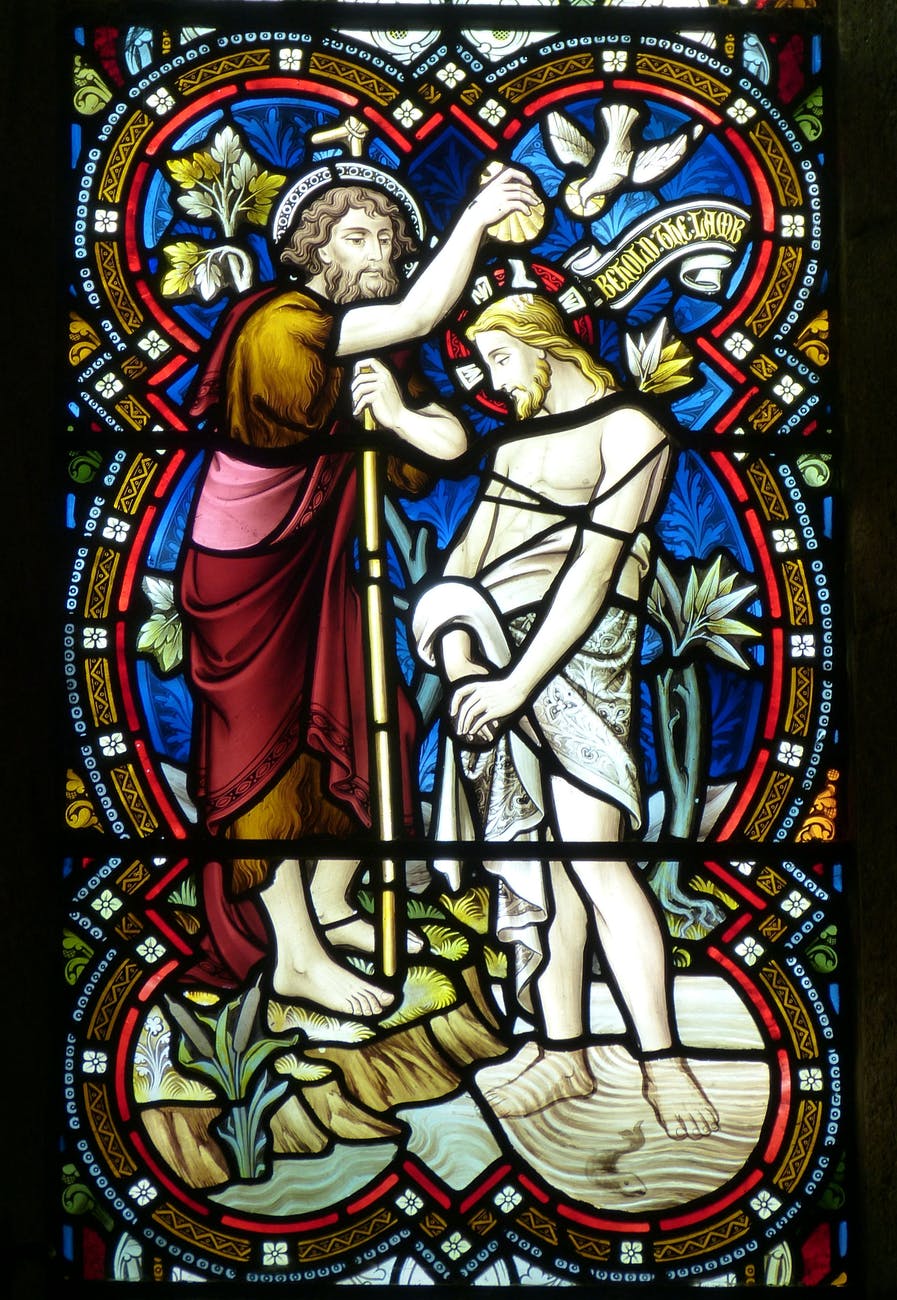
The Glorious Trinity

I’ll never forget the day that I was teaching a lesson during the Sunday school hour at church on our doctrinal statement. Our church required that every prospective member go through twelve lessons to cover what we believe. I was on lesson two, on the doctrine of the Trinity. Each lesson began with the IFCA Doctrinal statement. The lesson began: “Doctrinal Statement:  We believe in one Triune God eternally existing in three persons: Father, Son, and Holy Spirit; co-eternal in being, co-identical in nature, co-equal in power and glory, and having the same attributes and perfections (Deut 6:4; 2Cor 13:14).”

It was not unusual for current members to attend this class to refresh their understanding of what we believe, and it was always good to see the interaction between newer attendees who were considering membership and long-time members who loved the church. In this particular class we had in attendance a couple of long-time members that preceded my coming as their pastor.

As I explained the lesson on the Trinity, one of the older members objected to something I said regarding my explanation of the distinction of Persons and the unity of Being and how some have used illustrations that actually taught heresy. She explained to me that she had been a long-time Sunday school teacher to our children and that she had explained the Trinity in terms that I had just said were invalid, of which she took offense. It was at this moment that this former Sunday school teacher grew quiet and then expressed her confusion because she didn’t intend to teach unbiblical ideas of God, and yet she had. 

What’s the big deal? Aren’t doctrines like the Trinity best left up to high-tower scholars locked up in libraries with their books? I mean, what does deep theological discussion have to do with evangelization, discipleship, and helping the single mom who is struggling to pay her bills and raise her kids? As a matter of fact, it makes a world of difference to all of these things, and more. This is because, when we evangelize, we must point people to the Savior-God. But how can we do so unless we know who He is and how He has worked righteousness on our behalf? Salvation is trinitarian! And discipleship requires teaching the Christian not only about holy living, but about the Holy God of the Bible, who is Trinity! And the struggling mom, why does it matter to her? Because if she is to find hope in this life, she must know that the God of the Universe cares for her—but to know that fact she must come to an understanding of the wonderous beauty of this God—who has revealed himself in the complexities of the Trinity. 

But even beyond all of these practical reasons for understanding this doctrine is this truth: if we have been redeemed by the God of the Bible, then we need to understand and know Him as He has revealed Himself in Scripture. He is not like us. He is Creator and we are creature. So, we may struggle and we may unable to understand the mystery at times, but we push forward to grasp his magnificence because as Christians, we long to see Him as He is, not as we make Him out to be.

As Kenneth Daughters, president of Emmaus Bible College has written:

“When the average Christian is asked about the Trinity, he is content to quote a brief definition. Were he challenged to contemplate the meaning of the Trinity, he would quickly struggle. Few Christians have ever taken the time or trouble to think deeply on the subject. To most it is as abstract as a complicated mathematical expression. How sad! Actually, the Trinity is God’s highest revelation of himself. Far from being a subject that is too deep to be relevant, God intended for man to order his world in light of it. All forms of unity and diversity in the universe find their source in the nature of God as triune.

It is impossible to adequately understand God without understanding him as triune. To try to relate to God as a mono-personal being is to ignore his revelation to us and to deny his beauty. Some consider the concept of the Trinity too difficult to comprehend, so they operate in a functional denial of God’s Trinitarian nature. Others attempt to understand the Trinity but fall short conceiving him in a modalistic or tritheistic form. Not only have they failed to understand God and relate to him properly but they also have no basis for accurately balancing the unity and diversity all about them.” 

Kenneth Daughters, “The Trinity and the Christian” in Understanding the Trinity, ed. John H. Fish III, 2003, (ECS Ministries: Dubuque, IA), 363.

Understanding the glorious doctrine of the Trinity is not meant to be first and foremost, utilitarian. We do not stare into the majestic beauty of the Trinity to find out what to “do.” In many ways, popular preaching and popular Christianity has become a self-help system that seeks to make you a better you. But the doctrine of the Trinity demands that we stop looking into our cellphone cameras and gaze upon the ineffable God who has revealed Himself in Scripture as Triune. 

Consider the ramifications of the Trinity for a moment. If Christ is not God, then our worship is idolatry. If the three Persons are three gods, then we are not monotheists, but polytheists, and the Scriptures are not true, for they tell us that there is only one God. And what if Jesus is only an exalted creature, as the Jehovah’s Witnesses claim? Then we are still lost in our sins because a creature cannot atone for the sins of men!

Athanasius, the great Bishop of the Church in Alexandria (295-373 A.D.), was called the “black dwarf” by his enemies who longed to see him forever banished from the face of the earth. His crime? He defended the deity of Christ against the attacks of Arius, who claimed that Jesus Christ was only an exalted creature, and not God. For his stand, Athanasius was exiled from his church five times during a period of about fifty years. At times it seemed like it was Athanasius against the world. But the stakes were too high, and he would not give in while he still had life and breath in him. The Arians, according to Athanasius, had slid into heresy in at least two ways. First, they had lowered the Person of Christ to the position of a mere creature, and thus denied the deity of Christ, thereby denigrating the Trinity. Second, they had elevated the humanity of Christ so that they justified the worship of Christ while still claiming that He was not God, which if true was an act of blasphemous idolatry. In effect, the Arian attack against the Trinity was an attack against God himself. No Christian should stand for this. 

John Calvin wrote, “A dog barks when his master is attacked. I would be a coward if I saw that God’s truth is attacked and yet would remain silent.” May we understand and know the true nature of God so as to defend the biblical doctrine of the glorious Trinity and may our knowledge drive us to the profound worship of  “the King of the ages, immortal, invisible, the only God, be honor and glory forever and ever. Amen.” (1Tim 1:17, ESV)

This article was originally published in the VOICE magazine (Sept/Oct 2019). Used by permission.