Christ’s Intense Love in the Storms of Life

Jesus Lover of My Soul— Charles Wesley (1740)

Jesus, lover of my soul, let me to Thy bosom fly,

While the nearer waters roll, while the tempest still is high.

Hide me, O my Savior, hide, till the storm of life is past;

Safe into the haven guide; O receive my soul at last.


Other refuge have I none, hangs my helpless soul on Thee;

Leave, ah! leave me not alone, still support and comfort me.

All my trust on Thee is stayed, all my help from Thee I bring;

Cover my defenseless head with the shadow of Thy wing.


Wilt Thou not regard my call? Wilt Thou not accept my prayer?

Lo! I sink, I faint, I fall—Lo! on Thee I cast my care;

Reach me out Thy gracious hand! While I of Thy strength receive,

Hoping against hope I stand, dying, and behold, I live.


Thou, O Christ, art all I want, more than all in Thee I find;

Raise the fallen, cheer the faint, heal the sick, and lead the blind.

Just and holy is Thy Name, I am all unrighteousness;

False and full of sin I am; Thou art full of truth and grace.


Plenteous grace with Thee is found, grace to cover all my sin;

Let the healing streams abound; make and keep me pure within.

Thou of life the fountain art, freely let me take of Thee;

Spring Thou up within my heart; rise to all eternity.

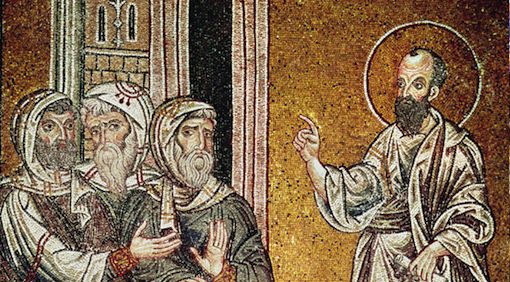
Pastor Like Paul, part 5

close-to-corinth

“You, however, have followed my teaching, my conduct, my aim in life, my faith, my patience, my love, my steadfastness,”–2 Timothy‬ ‭3:10‬ ‭ESV‬‬

The Christian faith depends upon not only faithful discipleship, but on faithful disciples who continue in the pattern they have received. In their last four posts in this series we looked at 5 ways we need to follow (or strive to be) a godly Christian leader:

  1. Follow the Same Doctrine
  2. Follow the Same Conduct
  3. Follow the Same Purpose
  4. Follow the Same Faithfulness
  5. Follow the Same Patience

You can read part 1 here,  part 2 herepart 3 here and part 4 here. In this post we will look at “the greatest of these…”

6. Follow with the Same Love

The KJV uses the word “charity” here, which doesn’t mean what you give to less fortunate people, but a selfless act of love that is shown to others in the spirit of God’s love for us. This is that word Greek word for love known as agape.

The best way to define what Paul meant by follow his love, is to define his live by his own words and life. So, I compiled a list of ten features of love as described and modelled by Paul.

  1. Love is shown at the cross: “but God shows his love for us in that while we were still sinners, Christ died for us.” (Romans 5:8, ESV)
  2. Love includes patience: “Love is patient and kind; love does not envy or boast; it is not arrogant” (1 Corinthians 13:4, ESV); “with all humility and gentleness, with patience, bearing with one another in love,” (Ephesians 4:2, ESV)
  3. Love must be pursued: “Pursue love, and earnestly desire the spiritual gifts, especially that you may prophesy.” (1 Corinthians 14:1, ESV); “So flee youthful passions and pursue righteousness, faith, love, and peace, along with those who call on the Lord from a pure heart.” (2 Timothy 2:22, ESV)
  4. Love must be our motivation: “Let all that you do be done in love.” (1 Corinthians 16:14, ESV); “For the love of Christ controls us, because we have concluded this: that one has died for all, therefore all have died;” (2 Corinthians 5:14, ESV)
  5. Love confronts sin: “For I wrote to you out of much affliction and anguish of heart and with many tears, not to cause you pain but to let you know the abundant love that I have for you.” (2 Corinthians 2:4, ESV); “Rather, speaking the truth in love, we are to grow up in every way into him who is the head, into Christ,” (Ephesians 4:15, ESV)
  6. Love forgives: “So I beg you to reaffirm your love for him.” (2 Corinthians 2:8, ESV)
  7. Love sacrifices: “I will most gladly spend and be spent for your souls. If I love you more, am I to be loved less?” (2 Corinthians 12:15, ESV) ; “But we were gentle among you, like a nursing mother taking care of her own children. So, being affectionately desirous of you, we were ready to share with you not only the gospel of God but also our own selves, because you had become very dear to us.” (1 Thessalonians 2:7–8, ESV)
  8. Love discerns truth from error:And it is my prayer that your love may abound more and more, with knowledge and all discernment,” (Philippians 1:9, ESV)
  9. Love unifies Christians: “complete my joy by being of the same mind, having the same love, being in full accord and of one mind.” (Philippians 2:2, ESV) ; “And above all these put on love, which binds everything together in perfect harmony.” (Colossians 3:14, ESV)
  10. Love works hard in service:remembering before our God and Father your work of faith and labor of love and steadfastness of hope in our Lord Jesus Christ.” (1 Thessalonians 1:3, ESV)

That, my friends, helps us put the cookies on the lower shelf when we say, how can I show someone love, doesn’t it? Love is practical, painful and it must be pursued. Paul told Timothy, that he needed to continue to follow his example of loving in these ways, and so do we!

Brothers, we are leading others. The question is, where are we leading them? Are we leading them toward Christ, or away from him? Are we setting examples in our faithfulness, patience and love, or are we showing them instead an example of faithlessness, impatience and selfishness? If we fail we will not only feel remorse over wasted time, but we will also recreate our poor example in others, and worst yet, we will stand before the Lord and give an account for how we led others. May God help us to set the pace for those around us to follow Christ with their whole lives, just as we seek to do the same.


Belief Must Lead to Trust and Hope

Portrait of John Calvin

“The power of God, the Holy Spirit, the forgiveness of sins, and so on, are spiritual things which the eye cannot see. When they are recounted to us it is not enough to believe that they are true, unless from this belief we derive motives for trust and hope, so that we not only think of God as almighty but also acknowledge him as the one who supports us with his power, and so that we receive the Holy Spirit not only in our mind’s eye but in his power.”–John Calvin, Institutes of the Christian Religion: Calvin’s Own ‘Essentials’ Edition, Kindle Loc. 3894.

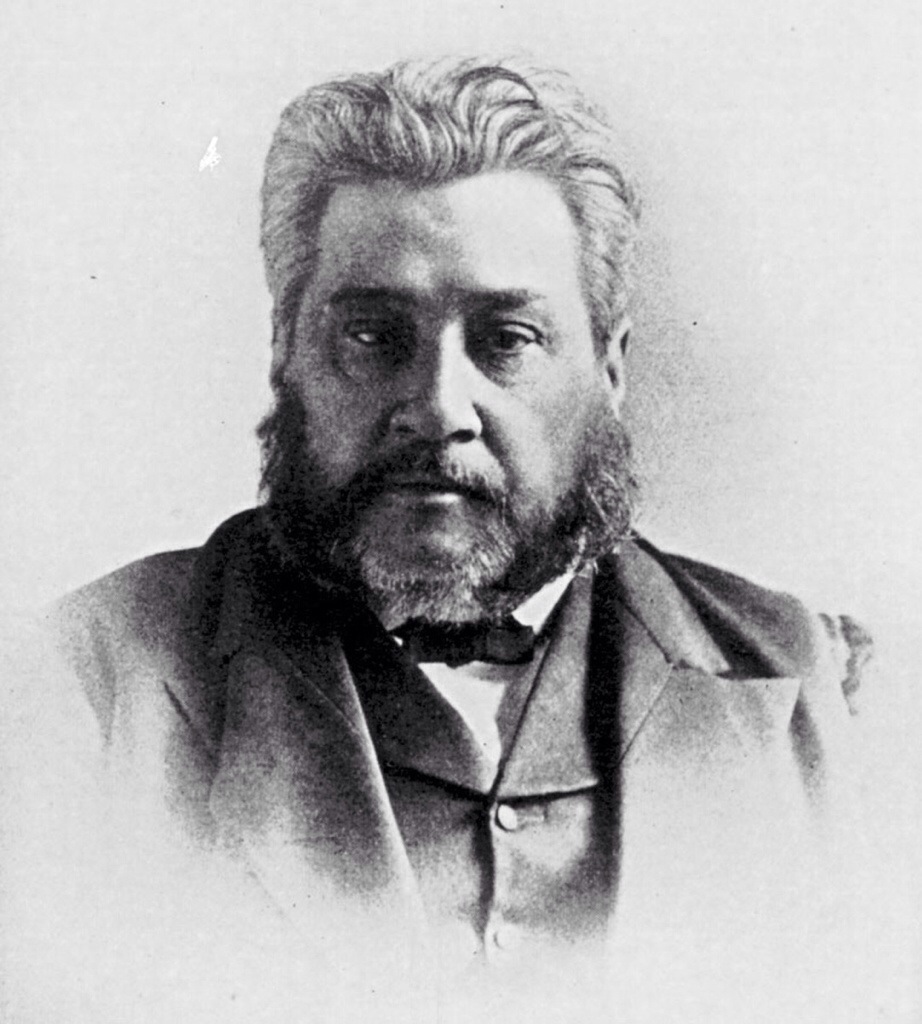
Here is a fountain filled with blood: use it, saint, use it.

C. H. Spurgeon.jpg

“A very present help.” — Psalm 46:1

Covenant blessings are not meant to be looked at only, but to be appropriated. Even our Lord Jesus is given to us for our present use. Believer, thou dost not make use of Christ as thou oughtest to do. When thou art in trouble, why dost thou not tell him all thy grief? Has he not a sympathizing heart, and can he not comfort and relieve thee? No, thou art going about to all thy friends, save thy best Friend, and telling thy tale everywhere except into the bosom of thy Lord. Art thou burdened with this day’s sins? Here is a fountain filled with blood: use it, saint, use it. Has a sense of guilt returned upon thee? The pardoning grace of Jesus may be proved again and again. Come to him at once for cleansing. Dost thou deplore thy weakness? He is thy strength: why not lean upon him? Dost thou feel naked? Come hither, soul; put on the robe of Jesus’ righteousness. Stand not looking at it, but wear it. Strip off thine own righteousness, and thine own fears too: put on the fair white linen, for it was meant to wear. Dost thou feel thyself sick? Pull the night-bell of prayer, and call up the Beloved Physician! He will give the cordial that will revive thee. Thou art poor, but then thou hast “a kinsman, a mighty man of wealth.” What! wilt thou not go to him, and ask him to give thee of his abundance, when he has given thee this promise, that thou shalt be joint heir with him, and has made over all that he is and all that he has to be thine? There is nothing Christ dislikes more than for his people to make a show-thing of him, and not to use him. He loves to be employed by us. The more burdens we put on his shoulders, the more precious will he be to us.

“Let us be simple with him, then,

Not backward, stiff, or cold,

As though our Bethlehem could be

What Sinai was of old.”

Morning and Evening, May 3, Evening

Choked by the Weeds of Bitterness?

“The poisonous weed of bitterness thrives in the deep soil of unresolved anger.

It must be pulled up by its roots, not just snipped off at the top.

Hebrews 12:15 states that a root of bitterness can spring up and cause trouble, causing many to be defiled. You cannot nurture the bitterness plant and at the same time keep it concealed. The bitter root bears bitter fruit. You may think you can hide it … live with it … grin and bear it, but you cannot. Slowly, inexorably, that sharp, cutting edge of unforgiveness will work its way to the surface. The poison seedling will find insidious ways to cut into others. Ironically, the one who suffers most is the one who lashes out at those around him. He becomes victim of the giant he refused to slay.”—Charles R. Swindoll, Killing Giants, Pulling Thorns (Grand Rapids, Mich.: Zondervan Publishing House, 1994), pp. 26–27.