God’s Purpose for Our Lives

Banksy in Boston: F̶O̶L̶L̶O̶W̶ ̶Y̶O̶U̶R̶ ̶D̶R̶E̶A̶M̶S̶ CANCELLED, Essex St, Chinatown, Boston//embedr.flickr.com/assets/client-code.js

The Lord will fulfill his purpose for me; your steadfast love, O Lord, endures forever. Do not forsake the work of your hands. (Psalm 138:8, ESV)

Sometimes many in the Christian Church are worried about God’s will and purposes for their lives. The aboce verse reminds us that even though our own future may be unclear, “the LORD will fulfill his purpose for me…” This is a reference to the intimate nature of God’s love for his people. God is “high and lifted up,” yet he is also “Immanuel, God with us.”

Yet, some still worry that perhaps God’s will includes elements that are distasteful and painful or that his will is not in alignment with what we might think is in our best interests.  The second line of verse 8 (“your steadfast love, O Lord, endures forever”) directs our attention to the covenantal love and goodness of our God and Savior. Because of this, even when his will does include pain and suffering or seems, from our point of view, to lead where we do not want to go, we are assured that he will never “forsake the work of [his] hands.” The Lord’s ways are always the best. Leave your future in his stronger and wiser hands.

Confessions of a Bibliophile-Keith Mathison

Below is a great reminder about the need for Christians to read good material. At Grace Baptist Church (gbcwilmington.org) we have a little book table that offers several quality book titles. If you haven’t yet, you should check it out. 

According to the Oxford English Dictionary, a bibliophile is “A lover of books; a book-fancier.” Although this is a helpful definition, I’m not entirely sure I want to refer to myself as a “fancier” of anything. I’m from Texas. We either like something or we don’t. We don’t “fancy” things. It’s…unnatural.
However, I do love books, or perhaps, I should say more precisely, I love to read. Always have. When I was a child, I devoured books. Tom Sawyer, the Hardy Boys, anything I could find. When visiting relatives, I would read whatever they happened to have on the shelves, whether Reader’s Digest or Dr. Seuss. I enjoyed them all, but I was especially in love with offbeat stories.
It was not only children’s fiction that interested me. My family owned an old set of the World Book Encyclopedia. I used to sit and read the articles in those volumes for hours on end. When I was maybe ten or eleven, I found an old copy of the complete works of Edgar Allan Poe. I don’t remember what the first story in the book was, but it was odd, and that appealed to me. Looking back now, as interesting as Poe may be to a person attracted to offbeat stories, I wouldn’t recommend reading his complete works straight through. Side effects may include nightmares.
Sometimes I have read books for the wrong reasons. During my first semester of college, I ran across a three-volume work titled The Gulag Archipelago by Aleksandr Solzhenitsyn, a harrowing, often firsthand account of the Soviet Union’s concentration camp system. When I took it to the counter to check it out, the librarian said to me in a rather obnoxious way that no one who started that book ever finished all three volumes, and then he informed me that I would never finish it either. I took that as a challenge and proceeded to plow through two thousand pages of dense narrative on a very unpleasant subject. Although I finished it simply to prove someone wrong, it turned out to be a great book.
Our sovereign Father ultimately used my love of reading to bring me to faith and repentance. As a teenager, I was pathologically shy and withdrawn and depressed (perhaps another reason not to read the works of Poe at the age of ten). I was a complete nihilist without being aware that there was a term for my worldview. I don’t remember exactly when, but at some point during my last years of high school, an elderly gentleman from Gideons International was on campus handing out pocket size New Testaments. He gave me a red one. I put it in my backpack and later tossed it in my desk. A year or so later, when I had just about reached the end of my rope, I saw that little New Testament in my desk and decided to read it. I stayed up all night reading and re-reading it. That night I placed my faith in Jesus Christ.
My love of reading did not change, but from this point forward, the content of my reading shifted. I read and re-read the Bible. I went to Christian bookstores and began reading Christian history and theology. For many years, I did not read fiction (unless it was assigned for a class) because I was so busy reading other things. Because I was not led to Christ by another Christian, I was on my own for a while and did end up reading a lot of Christian books that led me down some dead-end paths. God worked this for good too, however.
Our God is a God who has revealed Himself in a book, in words. We learn about God and His will, therefore, by reading. We learn by reading and reflecting on His Word. We also learn by reading and thinking with the church. This means we read and reflect on the insights of our brethren, those who are still with us and those who have gone on before us. We may also learn by reading with discernment the works of those who have spent time “reading” God’s general revelation. This includes works of science, philosophy, history, poetry, and literature.
If I might offer a word of advice and encouragement to my fellow bibliophiles, it is this: As Ecclesiastes reminds us, “Of making many books there is no end” (12:12). Millions of books have been published, and thousands more are published every year. We cannot read them all, so it is best to read the good ones. If you don’t know which books are the good ones, seek the advice of mature Christians. Find recommended reading lists by churches and ministries you trust.
Finally, while we read to learn about our God and His works of creation and redemption, we must not allow a love of reading to supplant our love for Christ. If we do, our books, even our Christian books, become nothing more than idols. All the reading in the world, if it does not ultimately promote our love of Christ and our brethren, is nothing but futility.

This post was originally published in Tabletalk magazine.

Theological Commitments of the Biblical Gospel: Preserving True Saints to the End

eternal-security

Preservation of the True Saints

This doctrine will have an impact when we come across a person (whether inside or outside of the church) who says that they received Christ as Savior at an earlier time, but that they have “backslidden” or lost their salvation and need to be saved again (or similarly, “rededicate my life to Christ”). But as we are assured in Rom 8:28-39 and other passages (Jn 6:37; 10:27-29; 17:12; 18:9; 1Cor 1:8-9; Phil 1:6; 1Thess 5:23-24; 2Thess 3:3; 2Tim 1:12; 4:18; Heb 7:25), our assurance of salvation is based upon the bedrock of the gospel. This is primary.

But a close corollary that cannot be missed is the need to walk in newness of life (Rom 6:4), bearing fruit in keeping with repentance (Matt 3:8), renewing our minds to conform to Christ (Rom 12:1-2; Col 3:10), putting off the old self, putting indwelling sin to death and putting on the new man(Rom 6:6; Eph 4:2; Col 2:11; 3:9), walking in the Spirit and not in the flesh (Rom 8:4; Gal 5:25).

All of these together, and more, mean that a person redeemed by Christ is a new creation and should not walk in their former manner of life. If that has not happened, then that person may need salvation for the first time and has not come to grips with the fulness of the truth of the gospel. Another possibility is that they are a true believer, but they have been disobedient to the Lord for an extended period of time, are immature, and in need of loving correction and to be discipled.

The bottom line is this: many of those in America who profess to be Christians know little to nothing about the true gospel and are in need of salvation. Some have been “Christianized” through exposure to the church, but their lives demonstrate a rebellion to our King. They too must be evangelized.

Those who are sincere and broken will need further conversation and observation to conclude their spiritual state, along with many gospel conversations that will either bring them to Christ or bring them to stability and point them toward maturity.

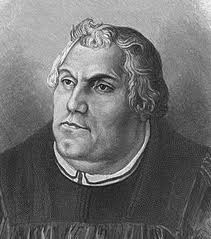
Just Do Better…Tell that to Martin Luther!

Martin Luther.jpg

Is salvation merely a message of “do better?” Is Christianity simply a moralistic religion that teaches that all we need to do is obey God? That is what the self-righteous Pharisees thought, and it is what many people in churches think. To them, Christianity is a list of rules that can be kept–albeit with a lot of sacrifice. But is that what Jesus taught?

In Romans 1:17, the Apostle Paul wrote, “For in it the righteousness of God is revealed from faith for faith, as it is written, “The righteous shall live by faith.”” (Romans 1:17, ESV). This text traumatized Martin Luther before his conversion to Christ. Here was a man that sincerely wanted salvation. He had dedicated his life to holy living in a monastic community where he sacrificed on a daily basis. Yet his soul was tortured. Here are Luther’s own words, written a year before his death on March 5, 1545 following a long life of joyful blessing in true salvation through Jesus Christ.

I had indeed been captivated with an extraordinary ardor for understanding Paul in the Epistle to the Romans. But up till then it was … a single word in Chapter 1 [:17], “In it the righteousness of God is revealed,” that had stood in my way. For I hated that word “righteousness of God,” which according to the use and custom of all the teachers, I had been taught to understand philosophically regarding the formal or active righteousness, as they called it, with which God is righteous and punishes the unrighteous sinner.

Though I lived as a monk without reproach, I felt that I was a sinner before God with an extremely disturbed conscience. I could not believe that he was placated by my satisfaction. I did not love, yes, I hated the righteous God who punishes sinners, and secretly, if not blasphemously, certainly murmuring greatly, I was angry with God, and said, “As if, indeed, it is not enough, that miserable sinners, eternally lost through original sin, are crushed by every kind of calamity by the law of the decalogue, without having God add pain to pain by the gospel and also by the gospel threatening us with his righteous wrath!” Thus I raged with a fierce and troubled conscience. Nevertheless, I beat importunately upon Paul at that place, most ardently desiring to know what St. Paul wanted.

At last, by the mercy of God, meditating day and night, I gave heed to the context of the words, namely, “In it the righteousness of God is revealed, as it is written, ‘He who through faith is righteous shall live.’ ” There I began to understand [that] the righteousness of God is that by which the righteous lives by a gift of God, namely by faith. And this is the meaning: the righteousness of God is revealed by the gospel, namely, the passive righteousness with which [the] merciful God justifies us by faith, as it is written, “He who through faith is righteous shall live.” Here I felt that I was altogether born again and had entered paradise itself through open gates. Here a totally other face of the entire Scripture showed itself to me.… And I extolled my sweetest word with a love as great as the hatred with which I had before hated the word “righteousness of God.” Thus that place in Paul was for me truly the gate to paradise. [Emphasis added]

The “gates of paradise” were opened up to Luther because he no longer depended upon his own law-keeping to satisfy the perfect demands of God. He saw salvation as a gracious act of God alone. Christ was perfectly righteous, fulfilling the whole law in our place. He died in our place and we are justified because of his perfect life and substitutionary death.

The hamster wheel of self-righteous deeds done in order to save ourselves is endless and endlessly disappointing. But the worst thing is that it does not end in heaven, but hell. The one who rejects the perfect finished work of Christ on the cross in favor of his or her imperfect works should expect nothing more, and will get nothing less.

7 Take-Aways From Jesus’ Discipleship Lesson in Matthew 10:15-25

“Truly, I say to you, it will be more bearable on the day of judgment for the land of Sodom and Gomorrah than for that town. “Behold, I am sending you out as sheep in the midst of wolves, so be wise as serpents and innocent as doves. Beware of men, for they will deliver you over to courts and flog you in their synagogues, and you will be dragged before governors and kings for my sake, to bear witness before them and the Gentiles. When they deliver you over, do not be anxious how you are to speak or what you are to say, for what you are to say will be given to you in that hour. For it is not you who speak, but the Spirit of your Father speaking through you. Brother will deliver brother over to death, and the father his child, and children will rise against parents and have them put to death, and you will be hated by all for my name’s sake. But the one who endures to the end will be saved. When they persecute you in one town, flee to the next, for truly, I say to you, you will not have gone through all the towns of Israel before the Son of Man comes. A disciple is not above his teacher, nor a servant above his master. It is enough for the disciple to be like his teacher, and the servant like his master. If they have called the master of the house Beelzebul, how much more will they malign those of his household.” (Matthew 10:15–25, ESV)

  1. Be courageous as you go into the world because you go as an ambassador of God (vv. 16, 20).
  2. Cruel hatred is often a part of a faithful witness (vv. 17-18).
  3. Through great trials will come great opportunities for the gospel (v. 18).
  4. In the pain and fear, never forget that God has not left you (v. 19).
  5. Faithfulness to Christ can drive a wedge in a family (vv. 21-22), but you must stand firm with Christ.
  6. In the midst of persecution, don’t lose sight of the Second Coming of Christ (v. 23).
  7. Being like Jesus is not only reflected in love and holiness, but it also includes great suffering (vv. 24-25).