“This is not a moment for timid souls. Boldness comes easily when you are in the presence of those who agree with you; it is difficult when you are standing alone in the midst of people who seek your demise. Boldness behind a pulpit is one thing; boldness in a city council meeting is another. Boldness is seen most clearly when you have burned the bridge that would have enabled you to retreat to safety.”
Erwin Lutzer, We Will Not Be Silenced: Responding Courageously to Our Cultures Assault on Christianity, 120.
We are at a critical point in the history of the world and the Church. Should the Lord tarry, our children will look back on these dark and trying days and judge whether we were courageous in the face of great opposition or see evidence of compromise and capitulation. What will make the difference? Can I suggest a few things from Acts 4:8-12, where the disciples ran into their first major confrontation with aggression?
“Then Peter, filled with the Holy Spirit, said to them, “Rulers of the people and elders, if we are being examined today concerning a good deed done to a crippled man, by what means this man has been healed, let it be known to all of you and to all the people of Israel that by the name of Jesus Christ of Nazareth, whom you crucified, whom God raised from the dead—by him this man is standing before you well. This Jesus is the stone that was rejected by you, the builders, which has become the cornerstone. And there is salvation in no one else, for there is no other name under heaven given among men by which we must be saved.” (Acts 4:8-12)
1. The disciples were filled with the Spirit.
This is the only way a group of Christ-followers who were cowering behind locked doors only a few days before could be so radically different. Courage and boldness is not for those of this type of personality. Boldness and courage filled the hearts of those filled with the Spirit.
2. The disciples testified to Jesus Christ.
The evangelical church is scattered and divided about a lot of things today—spiritual gifts, baptism modes, music, methodology, women in ministry, and more. Don’t get me wrong, hese are all incredibly important things. But the primary need for standing firm against the onslaught of the enemy is the gospel message. The heart and focus must highlight the cross of Jesus Christ and the atoning work accomplished. Everything else must be seen in its subordinate place.
3. The disciples upheld the importance of the resurrection of Christ.
The resurrection points to the acceptance of the sacrifice of Christ on our behalf. It is not tangential, but central. The resurrection of Christ points to our own future resurrection and glorification. If you grasp this, then courage is sure to come because nothing—NOTHING—can stop you. Not even death.
4. The disciples never forgot that Jesus was rejected too.
If you forget that they hated Jesus, you might be tempted into the sin of seeking to please man. But if you remember that they hated our Lord and crucified the Lord of glory, then we will not be surprised when they hate us as well—no matter how winsome or loving or kind we might be.
5. The disciples knew that there is no other hope for the world than Jesus.
If a person could be saved through Islam, or Mormonism, or liberation theology, then it would be much easier to just quietly practice our faith privately without any care about others because they’ll eventually get to heaven too. But the message of Jesus was clear—He is the only way to the Father. And that should embolden us because although some people might want to silence us or shout us down, we can’t be silent if we truly love them.
Brothers and sisters, don;t lose heart. Jesus is coming soon, but we have work to do and we can’t allow the shouts of the world to drown us out.
IFCA, I Fight Christians Anywhere. At times in the history of fundamentalism fighting fundamentalist meant fighting with other Christians over tertiary issues and the traditions of men. I think we can all agree that many times this was unbiblical and regretful. Afterall, 1 Timothy 3:3 says that an elder or pastor is not to be “quarrelsome” (ESV), a “striker” (KJV) or “pugnacious” (NASB). This word refers to a violent bully who pushes people around with either his fists or his words. Fundamentalism has had its share of those who could be described as pugnacious. Fighting about length of hair and skirts, Bible versions and musical styles has divided the church and diverted attention away from the real enemy.
But, in some ways, the pendulum has swung too far in the other direction. In trying to get away from the caricature of the fighting fundamentalist, all too many Christians have forgotten that a few chapters later, Paul also wrote “Fight the good fight of the faith…” (1Tim. 6:12). Jude appealed to his audience to “contend for the faith” that was being threatened by false teachers who had crept into the church. Too many in the Church have forgotten—either that we are in a spiritual war, or who our true enemy is. In Ephesians 6:10-12, Paul reminded the Church about both of these critical truths.
“Finally, be strong in the Lord and in the strength of his might. Put on the whole armor of God, that you may be able to stand against the schemes of the devil. For we do not wrestle against flesh and blood, but against the rulers, against the authorities, against the cosmic powers over this present darkness, against the spiritual forces of evil in the heavenly places.” (Ephesians 6:10–12, ESV)
Be Aware of Your Enemy—v. 12
Our enemy hates us. Look at the word “struggle” in verse 12. This word speaks of wrestling, of hand to hand combat. This is not a battle, but a war. A war made up of many, many bloody battles. We must know what we are facing. Satan wants to destroy us. Consider how he pushed the limits of Job, destroying everything in his life. But he didn’t stop there. Satan wanted to destroy Job’s faith in God himself. He is ruthlessly evil. The angel of the Lord left Jacob with a limp when he wrestled with him (Gen. 32:25-32). The Lord’s purpose in trials is to teach us. But the devil does not want to leave you with a limp, he wants to destroy you: (Jn 10:10), “The thief comes only to steal, and kill and destroy….” One saint of old said, “Consider that the devil does not sleep, but seeks our ruin in a thousand ways.”
Our Enemy is Spiritual
He cannot be seen, heard or experienced with our five senses. He disguises himself as one of God’s angels (2Cor. 11:14, “No wonder, for even Satan disguises himself as an angel of light” (2 Cor. 11:14, NASB95). Being a spirit being, he has been alive since the creation and has had the opportunity to watch and learn human behavior. He is the greatest philosopher, sociologist and theologian. He knows what makes humans tick and even worse, how to man-fish. He too is a fisher of souls.
Our Enemy is Organized
Because Satan is neither omnipresent nor omniscient, he must use his demonic horde to do his bidding. But this is not a mob of crazed demonic creatures. Wickedness leads men to rebel, but as at Babel, it also leads them to organize. “Rulers, powers, world forces, spiritual forces” (v. 12) —all of these designations portray an organized hierarchy of demonic angels. We may not know exactly how they are ordered, but we know that the enemy is organized for maximum effect.
Be Prepared for Battle—v. 11
Be Armored
“Put on the full armor” not just selected pieces. Later in this chapter Paul describes each piece of armor, but for now, we need to know that we cannot pick and choose. To do so would be disastrous because would leave us exposed to attack. Think about a police officer heading into a riot. As he surveys his equipment, which would he choose? A bullet-proof vest or a riot helmet? What will happen if he chooses one over the other? What about if he chose a shield and not boots? We too need to be armored, not choosing some, but all of the armor that God provides.
Be Anchored
“Stand firm” is a reference to not being moved in our doctrinal stance. Ephesians 4:11-14 says:
“And He gave some as apostles, and some as prophets, and some as evangelists, and some as pastors and teachers, for the equipping of the saints for the work of service, to the building up of the body of Christ; until we all attain to the unity of the faith, and of the knowledge of the Son of God, to a mature man, to the measure of the stature which belongs to the fullness of Christ. As a result, we are no longer to be children, tossed here and there by waves and carried about by every wind of doctrine, by the trickery of men, by craftiness in deceitful scheming;” (Eph 4:11–14, NASB95)
A lack of biblical discipleship leads to many things, including the immaturity of believers who will be like children who are rocked upon the shore by the waves of doubt and deception. Those who have drifted in their faith have brought disaster to their lives, and to the lives of many others. Paul warned Timothy of this happening in Ephesus: “keeping faith and a good conscience, which some have rejected and suffered shipwreck in regard to their faith. Among these are Hymenaeus and Alexander, whom I have handed over to Satan, so that they will be taught not to blaspheme” (1Tim. 1:19–20, NASB95).
Be Alert—1Pet 5:8; 2Cor 2:11
First Peter 5:8 speaks about the need to be “sober minded.” This is not something that our age is known for, and this lack of sobriety is all too often a mark of much of the church. We are easily distracted, silly, and fascinated with the trivial. In 2 Corinthians 2:11, Paul likewise warned, “so that no advantage would be taken of us by Satan, for we are not ignorant of his schemes.” (2 Cor. 2:11, NASB95) Those who are outwitted and ignorant are also perfect descriptions of many Christians and churches. In the Bible we have a manual for warfare. War against our great enemies, the World, the flesh and the Devil. Know these enemies and their schemes!
Be Strong in the Lord—v. 10
Human Strength Fails
Second Corinthians 12:7-10 is a glorious text. It reads:
“Because of the surpassing greatness of the revelations, for this reason, to keep me from exalting myself, there was given me a thorn in the flesh, a messenger of Satan to torment me—to keep me from exalting myself! Concerning this I implored the Lord three times that it might leave me. And He has said to me, “My grace is sufficient for you, for power is perfected in weakness.” Most gladly, therefore, I will rather boast about my weaknesses, so that the power of Christ may dwell in me. Therefore I am well content with weaknesses, with insults, with distresses, with persecutions, with difficulties, for Christ’s sake; for when I am weak, then I am strong.” (2 Cor. 12:7–10, NASB95)
How we need to be reminded of this! When we fail to pray, we have forgotten this. When we become puffed up in our spirituality, we have forgotten our weakness. When our experiences and victories are worn like a medal on our chest, we have forgotten where our vvictory comes from.
Human Philosophies Fail
We can easily be taken off track by forgetting which war we are supposed to be fighting. We can begin fighting with each other, fighting against the Church, fighting against unbelievers that need Jesus, and fighting with political weapons of war. Our strategies and dependence upon human strength show where we have chosen to use another way to fight than the way that Jesus calls us to fight.
Human Courage Fails
Joshua 1:6-9describes the time after forty years of wandering in the wilderness for the generation that failed to trust God and enter the Promised Land to conquer it. As Joshua lead the next generation to enter the land, the Lord spoke these words of encouragement:
“Be strong and courageous, for you shall give this people possession of the land which I swore to their fathers to give them. “Only be strong and very courageous; be careful to do according to all the law which Moses My servant commanded you; do not turn from it to the right or to the left, so that you may have success wherever you go. This book of the law shall not depart from your mouth, but you shall meditate on it day and night, so that you may be careful to do according to all that is written in it; for then you will make your way prosperous, and then you will have success. Have I not commanded you? Be strong and courageous! Do not tremble or be dismayed, for the Lord your God is with you wherever you go.”” (Josh. 1:6–9, NASB95)
When men go to battle, it is not glorified as it is in the movies and the recruitment posters. War is ugly. It is fierce and cold. But it is sometimes necessary in this fallen world. When you go into spiritual battle, it will be incredibly tempting to retreat back into your comfort zone, into your cozy world where you could forget about the reality of the devil and his demonic attacks. He would love that. He would love for you to put down your weapons and stop fighting, mocking you as a fighting fundamentalist. Or even better, to turn your weapons on others who are not the enemy because confusion is better than apathy to him. But that is not an option. We must gird up our loins for battle and march forward with the Lord into war. He will go before us. Never forget that. He fights for us. This will give you courage.
Fundamentalism is a dirty word to those in the world, but also one which is despised by many within the Church. Fundamentalism is rejected because some who have used this descriptor have swapped out biblical fidelity for cultural baggage and the traditions of men. Others have rejected it because they have given sway to the fear of man. Some have decided that it is too late to salvage the label for any good.
Whatever your opinion may be regarding the term fundamentalist, we should note this: those who are unswerving in their commitment to Christ and His Word must not fear men, but instead must be willing to pick up the Sword of the Word of God and engage the enemy of our souls and his wicked system. Some may call you a fighting fundamentalist, but this is preferable to one day hearing the Lord call you unfaithful.
This post is adapted from the article of the same title in The Voice, Jan-Feb 2020. Used with permission.
In the U.S. Memorial Day is a holiday which is normally celebrated with picnics and barbecues, a long way from the its intended purpose. Memorial Day was originally set aside as a day to remember or memorialize the men and women who have fought to defend our country in the armed services. The Vietnam Veterans Memorial Wall in Washington D.C. currently has 58,272 names of those who died or remain missing in the Vietnam War.
“A New York art dealer admitted Monday she took part in a 15-year scam that fooled art enthusiasts into buying more than $80 million of counterfeits imitating famous artists like Jackson Pollock and Willem de Kooning.
Glafira Rosales, 57, of Sands Point, pleaded guilty in U.S. District Court in Manhattan, telling Judge Katherine P. Failla that for parts of two decades she teamed with others to sell counterfeits of various expressionist artists including Pollock, Mark Rothko and Robert Motherwell.” [1]
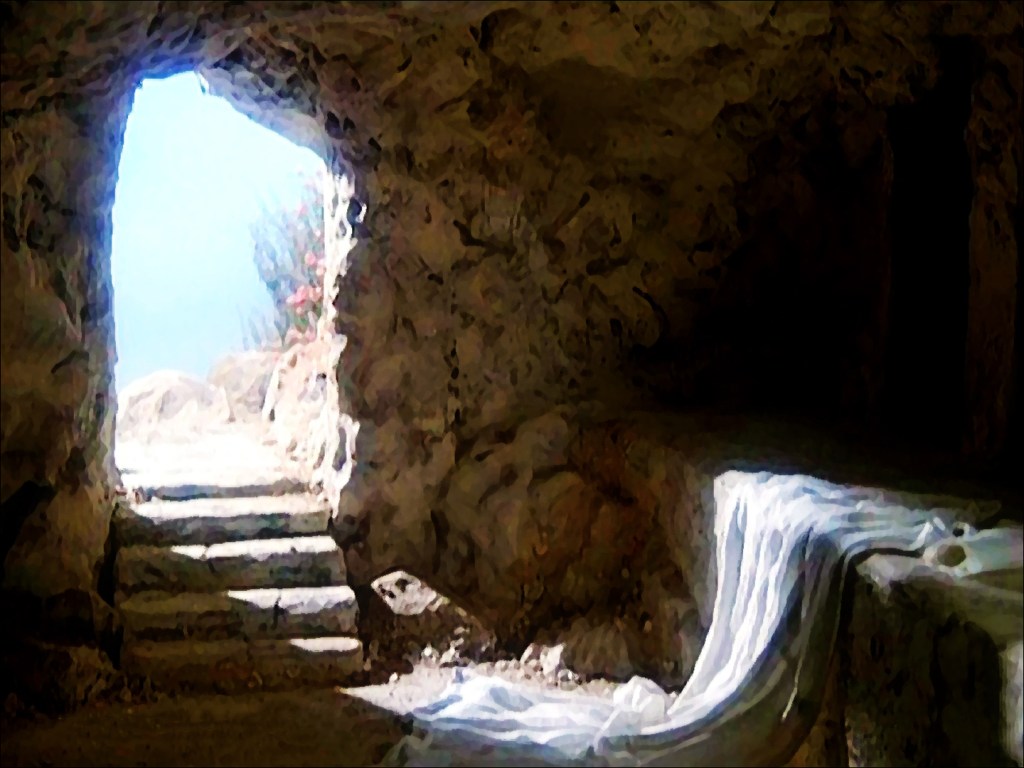
My point in bringing up this old news story is to demonstrate the reality of fakes, and specifically how it relates to two groups of people in Matthew 27. The passage reads, “The next day, that is, after the day of Preparation, the chief priests and the Pharisees gathered before Pilate and said, “Sir, we remember how that impostor said, while he was still alive, ‘After three days I will rise.’ Therefore order the tomb to be made secure until the third day, lest his disciples go and steal him away and tell the people, ‘He has risen from the dead,’ and the last fraud will be worse than the first.” Pilate said to them, “You have a guard of soldiers. Go, make it as secure as you can.” So they went and made the tomb secure by sealing the stone and setting a guard.” (Matthew 27:62–66, ESV)
Each one makes the claim to be true. The religious leaders set themselves up against Jesus and his disciples. Even in death these men are still slinging mud. But who is the fake? Who are the imposters? In this article I want to examine each one, the chief priests and the Pharisees versus Jesus. Each one claimed to speak for God. Each one claimed to be righteous. Each one desired to have the hearts of the people follow them. But who was truly worthy? Let’s investigate.
Who Had Righteous Courage? (v. 63)
“Sir, we remember how that impostor said, while he was still alive, ‘After three days I will rise.’” (Matthew 27:63, ESV)
Proverbs 28:1 says, “The wicked flee when no one pursues, but the righteous are bold as a lion.”Jesus had been publicly humiliated, beaten, and crucified. His disciples hid themselves and were nowhere to protest his arrest or death. Then came a request by the chief priests and Pharisees that must have seemed humorous to Pontius Pilate. He knew these men were jealous of Jesus’ ministry. He knew that this was why they forced his hand to put him to death. And now he is dead. So why are they so fearful still? They may not be fearful of Jesus himself, but they are clearly still fearful that his teaching and influence has not died with him. They are fearful that he would be remembered and that his disciples would not scatter. And I think there is added fear here. I think that in the back of their minds they are fearful that Jesus just might truly rise from the dead. The disciples seem to have forgotten Jesus many words about his resurrection, but the religious leaders did not. And he had done so many miracles that clearly showed that he had power. They even claimed that it was power from the devil himself.
And then of course, there was Lazarus. Hadn’t he died in nearby Bethany? But now he was raised from the dead by Jesus. They had plans to kill him and put him back in the grave. But if Jesus had the power to raise him, could he possibly raise himself from the dead as well? They wouldn’t wait to see. Their fear drove them.
Compare the chief priests’ and scribes’ fear to the courage of Jesus who committed himself to the Father all the way to his death on that bloody cross. Look with me at his righteous courage in the Garden of Gethsemane:
“Then Jesus went with them to a place called Gethsemane, and he said to his disciples, “Sit here, while I go over there and pray.” And taking with him Peter and the two sons of Zebedee, he began to be sorrowful and troubled. Then he said to them, “My soul is very sorrowful, even to death; remain here, and watch with me.” And going a little farther he fell on his face and prayed, saying, “My Father, if it be possible, let this cup pass from me; nevertheless, not as I will, but as you will.” And he came to the disciples and found them sleeping. And he said to Peter, “So, could you not watch with me one hour? Watch and pray that you may not enter into temptation. The spirit indeed is willing, but the flesh is weak.” Again, for the second time, he went away and prayed, “My Father, if this cannot pass unless I drink it, your will be done.” And again he came and found them sleeping, for their eyes were heavy. So, leaving them again, he went away and prayed for the third time, saying the same words again. Then he came to the disciples and said to them, “Sleep and take your rest later on. See, the hour is at hand, and the Son of Man is betrayed into the hands of sinners. Rise, let us be going; see, my betrayer is at hand.”” (Matthew 26:36–46, ESV).
Look at his boldness as he is being arrested in vv. 55-56 of this same chapter: “At that hour Jesus said to the crowds, “Have you come out as against a robber, with swords and clubs to capture me? Day after day I sat in the temple teaching, and you did not seize me. But all this has taken place that the Scriptures of the prophets might be fulfilled.” Then all the disciples left him and fled.” (Matthew 26:55–56, ESV). Over and over again Jesus showed that he has nothing to hide. He committed himself to follow God the Father throughout his life.
So, who is the fraud? Who is the imposter? Is it Jesus or is it this gang of false teachers? You decide!
Who Spoke Unvarnished Truth? (vv. 63-64)
“Sir, we remember how that impostor said, while he was still alive, ‘After three days I will rise.’ Therefore order the tomb to be made secure until the third day, lest his disciples go and steal him away and tell the people, ‘He has risen from the dead,’ and the last fraud will be worse than the first.’” (Matthew 27:63–64, ESV)
This time, let us start with Jesus in this comparison. In verses 63-64, the chief priests and Pharisees refer to Jesus’ words. They call them lies. They call him an imposter and his disciples are thieves and liars–ready to steal his body to promote his lies.
But Jesus’ words are only lies and deceit if they don’t prove to be true. Jesus would be a liar and a deceiver if he didn’t rise from the dead as he claimed he would. He would be a false prophet. He would not be all that he claimed. And notice the reference to his first fraud in verse 64? What was that? It was his claim to be the Messiah! The chief priests and scribes are telling Pilate that Jesus claimed to be the Messiah and he actually was able to fool people into believing him. But to them, his death proved that it was a lie. Now, if the disciples stole the body the people would be fooled again. They would think he had actually risen from the dead.
But Jesus had never been shown to be anything but 100% truthful. He was never shown to have lied, ever. He was never shown in any way to have sinned, ever. And you know that they checked with everyone to dig up some dirt. But nothing. Jesus was always truthful. Look at their claim a little closer. Notice that they have heard of Jesus’ claim to rise from the dead. If you go back and check all of the times that Jesus spoke of his death and resurrection, he did it secretly, only before his disciples. When he did speak of it openly, he did so with veiled references.
For example, look at Matt 26:61 where it says, “This man said, ‘I am able to destroy the temple of God, and to rebuild it in three days.’” (Matthew 26:61, ESV). Notice the claim. Did the chief priests and scribes know he was referring to his death and resurrection? If they did, they didn’t say anything at the trial. And the only other times Jesus spoke to these men about his resurrection was when they asked for a sign to prove he was the Messiah. Do you remember his answer? The only sign they would receive was the sign of Jonah, three days in the belly of the fish. That’s a veiled reference to his death and resurrection.
Perhaps Judas told them. Judas, the one they had bribed to betray Jesus. You see, everywhere we turn we find evidence of their deception and duplicity. What had Jesus said of them? Look at John 8:39-47. Again Jesus’ truthfulness shines against the darkness of their souls. He called them out not only as liars, but as murderers. And he connected them to their father–Satan.
Who was the imposter and fraud? Was it the Son of Man who has never been proven to ever have sinned or spoken any lies, or these religious leaders who are implicated in bribery, lying, murder, coercion and blasphemy?
Who Demonstrated Heavenly Power? (vv. 65-66)
“Pilate said to them, ‘You have a guard of soldiers. Go, make it as secure as you can.’ So they went and made the tomb secure by sealing the stone and setting a guard.” (Matthew 27:65–66, ESV)
Once again, let’s begin with the chief priests and Pharisees in our comparison to find out who is the fraud and who is genuine. The chief priests and Pharisees are the most powerful men in Judaism at the time. But notice that they need to go before Pilate to ask for soldiers and permission. They must have hated doing this because they hated Rome. Pilate was a constant reminder to the Jews that they were not truly a free people, but were subjects of Caesar. And they needed his permission for any military action, as we see here. And we also see their weakness in what they are doing. In John 20:19 we find the disciples hiding behind locked doors for fear of their lives. But the Jews put up Roman soldiers and a seal of Rome in addition to the large stone door, to stop these supposed grave-robbers.
There is no hint that they are trusting God in this. As a matter of fact, these men never seem to seek for power from God to accomplish their goals. They only know human force. Which isn’t surprising since they are carnal in their thinking. So, they do their human best. “Go make it as secure as you can” are Pilate’s words. And they do. They put a seal on the door of the tomb. They set Roman guards on a rotation. How would Galilean peasants get through that?
Like thread exposed to fire, that’s what this was to Jesus. A Roman seal and a couple of guards? Was this a joke? Every human being on earth could have pressed against that rock and it wouldn’t have made a difference. If Jesus was sent from God as the Messiah-King, and if he could conquer death by rising again from the dead, how could a sword or spear stop him? Jesus can’t be stopped. Not then and not now!!
Who had righteous courage, who spoke unvarnished truth and who demonstrated heavenly power? The chief priests and Pharisees claimed to have these virtues, but they didn’t.
Jesus does. He is righteously courageous like the Lion of Judah, the Lamb of God who has taken away the sin of the world. He is unvarnished truth. Jesus is the TRUTH. HE embodies truth. Heavenly power. The grave could not stop him. He conquered sin on that cross. And he did it for us. So, who is the imposter and fraud? Clearly it was not Jesus! Rejoice, rejoice, O saints! Rejoice in Jesus our risen Lord!
“So when Martha heard that Jesus was coming, she went and met him, but Mary remained seated in the house. Martha said to Jesus, “Lord, if you had been here, my brother would not have died. But even now I know that whatever you ask from God, God will give you.” Jesus said to her, “Your brother will rise again.” Martha said to him, “I know that he will rise again in the resurrection on the last day.” Jesus said to her, “I am the resurrection and the life. Whoever believes in me, though he die, yet shall he live, and everyone who lives and believes in me shall never die. Do you believe this?” She said to him, “Yes, Lord; I believe that you are the Christ, the Son of God, who is coming into the world.”John 11:20–27
The glory of God and the love of God are not in conflict with one another. Some theologians try to pit one against the other saying that the sovereignty of God (intimately tied to His glory) cannot override His love for humanity., and therefore the love of God willingly overrides His sovereignty so that God actually submits to the will of His creatures.
John 11 is an interesting test of this idea. In verses 4-6 it says, “But when Jesus heard it he said, “This illness does not lead to death. It is for the glory of God, so that the Son of God may be glorified through it.” Now Jesus loved Martha and her sister and Lazarus. So, when he heard that Lazarus was ill, he stayed two days longer in the place where he was.”]
In these verses we have the glory of God shown in His sovereign decision to allow the life of Lazarus to be overcome by death, with the divine purpose of God being glorified through His resurrection of Lazarus. To some Christians and many unbelievers, this is unthinkable—even monstrous. But this is because the unregenerate mind and the immature Christian mind attribute all discomfort, pain, trial, and even death, as only evil and that the only good that comes is from the avoidance of these things.
But the pain and suffering that occurs in this world is only a small part of the much bigger picture. And not only this, but the pain and suffering as well as the joy unspeakable that are available to humanity either through grace or denial of the offer of salvation are infinite. The present world and its pains and joys are only a small sampling of a greater reality that all of humanity shall experience personally one day.
Jesus, looking beyond the suffering and eventual death of His friend Lazarus knows that a greater lesson needs to be grasped and through the truth He will bring glory to His Father.
So, instead of rushing to the scene to be at His friend’s side, Jesus stayed two days longer to assure His disciples that Lazarus was dead and buried by the time they reached Bethany.
This means that when we are tempted to cry out “Why?” In our trials, we must not push aside the glory of God and begin to question the love of God. The Lord’s mind is vast and His plans are more infinitely complex that we can know or imagine; therefore we must never doubt His love.
Mary and Martha were correct in placing all of their hope in Jesus’ power to heal their brother. The issue was simply timing. Jesus could have healed Lazarus while he was sick (Jn 11:21-27, 32); or immediately after he had died; or long after he died in the future Day of resurrection (v. 24).
The sisters had hoped that the healing would be before his death, but after he had died, they found some comfort in the future resurrection when he would be raised from the dead.
But Jesus gave them immediate resurrection while also pointing them to the reality of the greater day of resurrection that they would still need to look forward to and hope in. We too must cling to this very same hope even without our own personal experience with an immediate healing or resurrection. Jesus proved to Mary and Martha, and by extension to us as well, that He is able to raise the dead—because He raised Lazarus from the dead, and He rose from the grave by His own power.
So the next time you find yourself doubting God’s love or not understanding how such pain could bring God glory, remember Lazarus. You might never understand God’s reasoning, but you must know this—God desires to be glorified and His love for us is infinite. Both are true and both are never super versed by His perfect plans.


 Always Reforming