How God’s Sovereignty Affects Our Attitude in the Present Circumstances (part 2)

When the earth totters, and all its inhabitants, it is I who keep steady its pillars. Selah I say to the boastful, ‘Do not boast,’ and to the wicked, ‘Do not lift up your horn; do not lift up your horn on high, or speak with haughty neck.’ ” For not from the east or from the west and not from the wilderness comes lifting up, but it is God who executes judgment, putting down one and lifting up another.

(Psalm 75:3–7, ESV)

When I read passages like Hebrews 11, I can’t help but think that the Christians of yesterday were made of different stuff than today’s Christians. Do you sense that today’s churches are filled with Christians who say they’d die for Christ, but begin fidgeting in their seats when the sermon goes long? If my observations are correct, then how can we hope to endure true and sever trials? I think Pslam 75 goes a long way to helping us see the benefits of resting in the sovereignty of God.

Yesterday’s post demonstrated that trials and difficulties 1. Make us aware that God is always near us, 2. Give us a thankful heart, and 3. Teach us patience. You can read the full post here: How God’s Sovereignty Affects Our Attitude in the Present Circumstances (part 1)

4. IT ALLOWS US TO RELAX (v. 3)

When the earth totters, and all its inhabitants, it is I who keep steady its pillars. Selah” (Psalm 75:3, ESV)

Jesus warned us against the sin of anxiety in his Sermon on the Mount (Matt 6:25ff). When we become anxious over anything, we really put aside the fact that God is sovereign—he is in control.

Look at verse 3 above—that is not describing you!! But how many times do we feel like the world will stop and all the plates we are spinning will come crashing down if we don’t do it all?

Here’s a reality check. In Acts 17, Paul is describing our God who was unknown to the Greek philosophers in Athens. In verse 24-25 he said, “The God who made the world and everything in it, being Lord of heaven and earth, does not live in temples made by man, nor is he served by human hands, as though he needed anything, since he himself gives to all mankind life and breath and everything.

Did you make the world and everything in it?

Are you the Lord of the heaven and earth?

Do you need a place to sleep, food to eat, and water to drink?

Do you give to all mankind life and breath and everything?

No? Then you aren’t God, and you can relax. God is in control.

5. IT HUMBLES OUR PRIDE (vv. 4-5)

I say to the boastful, ‘Do not boast,’ and to the wicked, ‘Do not lift up your horn; do not lift up your horn on high, or speak with haughty neck.’ ”” (Psalm 75:4–5, ESV)

The sin of Satan that brought about his fall is also the sin that his children excel in. It is amazing that in the end days, the arrogance and pride of Satan, the Antichrist and the False Prophet will manifest itself in leading a proud and arrogant world to face the King of Kings, the Creator of All in battle! We wonder how such blind foolishness could exist, but pride blinds us from the truth!

In verses 4-5, it refers to “lifting up your horn” and this is a metaphor for stiff-necked rebellion. It pictures a beast of burden that refuses to allow the owner to place a harness or yoke upon his neck. He refuses to allow his master to control him in any way.

Speaking with a haughty neck is similar, except the picture is of a human who speaks with arrogant pride that seems to be oblivious to the existence of God who will take into account every word spoken (Matt 12:36).

As one Scottish Pastor wrote,

“Pharaoh reacted to God’s command to let his people go by saying, “Who is God that I should obey him?” Nebuchadnezzar endeavored to set his throne and kingdom above him whose throne and kingdom are forever and ever. Herod listened to the adulations of his degenerate admirers: “It is the voice of a god and not of a man.” Coming nearer to our own time, we have read of how Adolf Hitler gazed at a picture of himself riding proudly on a white horse, a picture which bore the blasphemous title, “In the beginning was the Word.” Then in a voice that deliberately mocked Christ, the eternal King, He exclaimed, “I am providence.”

But Pharaoh and his hosts are swept to destruction; Nebuchadnezzar becomes the companion of “the beasts of the field”; Herod is devoured by worms, and Hitler becomes a suicide. “Those that walk in pride God is able to abase.” “He shall cut off the spirit of princes; he is terrible to the kings of the earth.” “All the horns of the wicked will I cut off.”

-Murdoch Campbell as quoted in Boice, 628-29.

Although the Lord is clearly speaking to the wicked, we cannot allow the application of this truth pass us by as if we also do not struggle with pride at times as well. When we are going through deep waters and hard trials, we can begin to practice a sort of pride—similar to what Job exhibited. Job was a righteous man, but he was not perfect man. He was so convinced of his righteousness that he went too far. He began to call upon God to judge him! Look at Job 23:1-7 when you have some time.

When we come under severe trial, it is important to put aside your pride and see your need. Look to Jesus, not to your own righteousness. Only in Him will you find your help and relief. Pride seeks to “un-God” God. Humility in trials sees Him sitting upon His throne as He is.

6. IT PLACES OUR TRUST IN GOD (vv. 6-7)

For not from the east or from the west and not from the wilderness comes lifting up, but it is God who executes judgment, putting down one and lifting up another.” (Psalm 75:6–7, ESV)

In verse 5, the Lord has finished speaking. Now, the priest or Asaph is speaking. He begins with a reminder to put our trust in God.

The wicked thought that their promotion and help would come from the surrounding nations. In reading through the books of Kings and Chronicles you can see the testimony of how many nations, Israel included, depended upon political alliances and partnerships. Some of these were useful for defending against larger and stronger nations. Some were used to overcome nations in acts of war.

But the Lord is saying to Asaph and his readers that defense and war do not come by the number of alliances and the sizes of your armies. Your resources are no guarantee of your success. After all, Egypt was the largest and most powerful nation on earth, and they were defeated by their Israelite slaves without raising a single weapon! 

So, who can guarantee our successes and our failures? Verse 7 tells us clearly. God executes judgment—putting down his enemies, and God raises up those whom he chooses to.

Thus we, his people, should not depend upon our resources apart from God as if they can lift us up or guarantee our success. This is the lesson that Jesus was teaching in his parable of the rich fool (Lk 12:15-21). Right after this teaching, what did Jesus teach? About not being anxious, but to depend upon our good God—trusting him as our good heavenly Father.

When we are in need, which doesn’t necessarily mean financial need, we tend to depend upon God more. We should allow the trial to do this and cause us to grow in our trust in the Lord.

How God’s Sovereignty Affects Our Attitude in the Present Circumstances (part 1)

In his famous hymn “This is My Father’s World”, Maltbie Babcock wrote these comforting words:

This is my Father’s world, O let me ne’er forget/ That though the wrong seems oft so strong, God is the ruler yet. This is my Father’s world: The battle is not done; Jesus who died shall be satisfied, And earth and heav’n be one.

This stanza pulls together two truths that confront us in this world—“the wrong seems oft so strong” and “God is the ruler yet.” In the next three post I want to address this from the biblical perspective of Psalm 75. Over each of the next three posts I will lay out a total of Nine Ways in Which the Sovereignty of God in Dealing with the Wicked Affects Our Attitude Toward our Present Circumstances. Let’s begin…

1. It Makes us Aware That God is Always Near Us (v. 1A)

Psalm 75:1a “We give thanks to you, O God; we give thanks, for your name is near.

The reason for the psalmist’s thankfulness was that the “name” of God was near. The “name” of course, points to the presence of God himself.
David wrote about this nearness in Psalm 139:1-12 when he spoke of the Lord intimately knowing mankind from when he knit us in our mother’s womb as well as every other aspect of our lives. There is nowhere that we can hide or be hidden from his presence.

This is a comforting reality in times of need and pain. God really is right here with us. He hears your prayers. He sees your enemies as they attack. He sees it all.

2. It Gives us a Thankful Heart (v.1b)

Psalm 75:1b “We recount your wondrous deeds.

Along with his nearness was a legacy of remembering that brought forth a thankful heart.

Remembering and reciting aids in developing a thankful heart. We are forgetful people, aren’t we? The Lord knew this, and so he constantly calls his people throughout the Scriptures to remember, even instructing them to set up memory aids, special dates, rites, and festivals. In the Church Age, Christ instituted the Lord’s Supper to be done “in remembrance of him.” Why? Because as monumental as the cross of Christ is for our eternity, we still forget about it if left to ourselves.

Psalm 78:4 speaks about the need for parents to recite these memories to their children. It says, “We will not hide them from their children, but tell to the coming generation the glorious deeds of the Lord, and his might, and the wonders that he has done.

We can grow anxious and weary when we forget that God is in control. We can begin to see ourselves as helpless, awash in the chaos of the world, victims of chance. But if you sit down and read through the pages of Scripture, you will quickly begin to see that God has always been in control. Reminding yourself of this fact will change your outlook radically.

3. It Teaches Us Patience (v. 2)

Psalm 75:2 “At the set time that I appoint, I will judge with equity.

Here we have a change of speakers—the song has moved from Asaph speaking (or the priest who led the singing) to God himself speaking. The Lord says that “at the set time that I appoint…” This language in Hebrew refers to seasonal time, not clock time. Clock time spins fast. Seasons don’t work by a clock. Fruit doesn’t ripen according to your watch. God doesn’t punch-in to work.

Let there be no mistake, God will judge—he says so. But he will judge at the set time that he appoints. We can’t say “Amen” to God’s sovereignty and then be impatient when he doesn’t act on our schedule, can we? We can’t be like Martha, Lazarus’ sister, who got so upset that Mary wasn’t helping her prepare the food in the kitchen that she stomped right into the middle of Jesus’ teaching time and demanded that the LORD command her sister to help her! It appears Martha thought Jesus needed a little help leading the world. He doesn’t.

When you become impatient and wonder when God will judge, remember that God is in control as he has always been. Be still and know that he is God.

The Need for Modern Reformers in the Local Church (weekend repost)

Although we Protestants say that we don’t venerate the saints, you wouldn’t know it the way some pastors fawn over Luther, Calvin, Knox, Spurgeon, and other reformers. Don’t get me wrong, I think those men were used mightily of God, in spite of their flaws and personal sin.

But what I wonder about is how it is that so many pastors who would look up to these men and admire them for their courage and boldness are so cowardly in their own churches when they are called upon by the testimony of the Word of God to stand firm against a potential revolt by those who do not want biblical change.

Read the rest of the post here: The Need for Modern Reformers in the Local Church

The Need for Modern Reformers in the Local Church

“The problem with preachers today is that nobody wants to kill them anymore!”

Steven J. Lawson
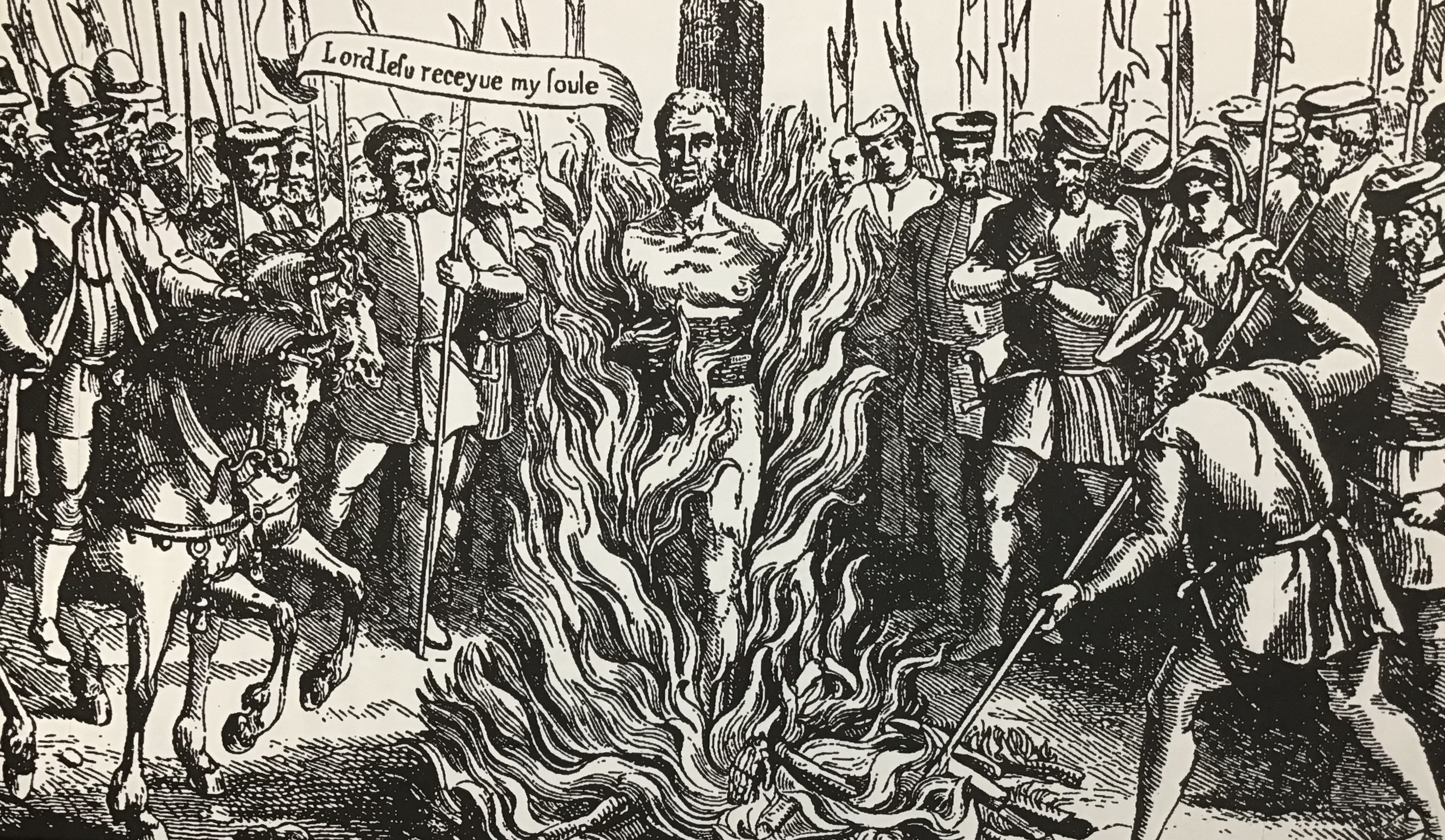
Bishop Hooper burned at the stake for the gospel.

Although we Protestants say that we don’t venerate the saints, you wouldn’t know it the way some pastors fawn over Luther, Calvin, Knox, Spurgeon, and other reformers. Don’t get me wrong, I think those men were used mightily of God, in spite of their flaws and personal sin.

But what I wonder about is how it is that so many pastors who would look up to these men and admire them for their courage and boldness are so cowardly in their own churches when they are called upon by the testimony of the Word of God to stand firm against a potential revolt by those who do not want biblical change.

When Gideon was called to pull down the idols in his town, he may have been overcome by the fear of man, but at least he did it, even if under the cover of night. And when they found out what he did, they wanted to kill him.

When Josiah came to understand how far Judah had fallen away from obedience to the Law, he immediately began to purge Judah and Jerusalem of its idolatrous high places and reinstated the reform that was necessary to please the Lord. This led to a need to rebuild and reorder the temple so that proper worship could be restored.

And the church today is in need of men who are ready and willing to make the changes that are needed in their local churches where unbiblical practices have found a nesting place for ages. For fear of confrontation, loss of income, or prominent families, or a simple fear of losing your job, pastors remain silent in the face of unrepentant sin and all manner of false practices. Unregenerate men are allowed to remain on elder and deacon boards, unhealthy and unbiblical curriculum and programs continue to function so as to avoid a conflict with a women’s ministry head or the parents of the youth. The call for entertainment in church continues to ring louder as the Word of God is given less time to work in the hearts that need it.

Yes, we admire Luther’s stand at the Diet of Worms where he refused to recant. We applaud Spurgeon for being unwilling to give in to the New Measures that sought to entertain the goats. We are in awe of Whitefield who preached the gospel wherever he could garner an audience. We rejoice at the courage of John Rogers and the other Marian martyrs who refused to stop preaching under Bloody Mary of Tudor, and were burned at the stake for it. But will we stand today? Where is our courage? Where is our godly resolve to trust God in the face of angry adversity within and outside of the church? Brothers! Be strong and very courageous!

Don’t Envy the Temporary Success of the Wicked

Sometimes it is so hard for Christians to see the unabated success of the wicked in the face of some significant trials and struggles. If the troubles weren’t bad enough, it is made worse when the unbelievers around us point out how foolish we are for clinging to hope in Jesus when we could simply make it easier on ourselves and do what it seems like everyone else is doing to get ahead.

In Psalm 49, the sons of Korah wrestled with this very issue and want to help us to endure by clinging to the Lord. To do this, they inject a massive dose of truth that we can easily forget. To begin with, they need to get our attention:

Hear this, all peoples! Give ear, all inhabitants of the world, both low and high, rich and poor together! My mouth shall speak wisdom; the meditation of my heart shall be understanding. I will incline my ear to a proverb; I will solve my riddle to the music of the lyre.” (Psalm 49:1–4, ESV)

With the false health-wealth and prosperity gospel out there, many people all over the world are convinced that they can have all the wealth and riches that this world offers and heaven too. With Joel Olsteen, Hillsong Church, TBN preachers, and other snake-oil salesmen selling a false gospel for profit, it seems as if you are losing out if you don’t get a piece of the action. It’s not that the Lord is against wealth, but those that would seek to do anything to gain it, or who make it their god and driving desire in life become shipwrecked in their faith.

To address this tendency to seek pleasure and success apart from God, the psalmist slaps his readers with the truth to awaken us from the stupor that can overcome us. He writes:

Why should I fear in times of trouble, when the iniquity of those who cheat me surrounds me, those who trust in their wealth and boast of the abundance of their riches? Truly no man can ransom another, or give to God the price of his life, for the ransom of their life is costly and can never suffice, that he should live on forever and never see the pit. For he sees that even the wise die; the fool and the stupid alike must perish and leave their wealth to others. Their graves are their homes forever, their dwelling places to all generations, though they called lands by their own names. Man in his pomp will not remain; he is like the beasts that perish. This is the path of those who have foolish confidence; yet after them people approve of their boasts. Selah Like sheep they are appointed for Sheol; death shall be their shepherd, and the upright shall rule over them in the morning. Their form shall be consumed in Sheol, with no place to dwell. But God will ransom my soul from the power of Sheol, for he will receive me. Selah

(Psalm 49:5–15, ESV)

Below are 4 Great Truths that We Can Take to the Bank Regarding those Who Have Made Success and Money Their God.

  1. Great Wealth Cannot Buy Spiritual Freedom.Truly no man can ransom another, or give to God the price of his life, for the ransom of their life is costly and can never suffice, that he should live on forever and never see the pit.” (Psalm 49:7–9, ESV)
  2. Great Power Cannot Stop Death.
    • Everyone dies.For he sees that even the wise die; the fool and the stupid alike must perish and leave their wealth to others.” (Psalm 49:10, ESV)
    • Everyone is buried.Their graves are their homes forever, their dwelling places to all generations, though they called lands by their own names. Man in his pomp will not remain; he is like the beasts that perish. This is the path of those who have foolish confidence; yet after them people approve of their boasts. Selah” (Psalm 49:11–13, ESV)
    • Everyone is raised up: The wicked to eternal death, and the righteous to eternal life.Like sheep they are appointed for Sheol; death shall be their shepherd, and the upright shall rule over them in the morning. Their form shall be consumed in Sheol, with no place to dwell. But God will ransom my soul from the power of Sheol, for he will receive me. Selah” (Psalm 49:14–15, ESV)
  3. Nobody Will Take Anything With Them.For when he dies he will carry nothing away; his glory will not go down after him.” (Psalm 49:17, ESV)
  4. The Wicked Rejoice in Temporary Pleasures. For though, while he lives, he counts himself blessed —and though you get praise when you do well for yourself— his soul will go to the generation of his fathers, who will never again see light.” (Psalm 49:18–19, ESV)

Therefore, Get Understanding! With this truth and clarity comes the reality of where we need to focus. “Man in his pomp yet without understanding is like the beasts that perish.” (Psalm 49:20, ESV). Do not be like a dumb beast that simply lives for its next meal. Instead seek the living God who is worth more than silver or gold.