I suspect that we all have struggled at times to be consistent in our prayer times. In Matthew 7:7-11 (quoted above), Jesus is in the middle of his great Sermon on the Mount. In chapter six, the Lord gave an amazing lesson on prayer. But as you listen to what Jesus is teaching in the Sermon on the Mount the more you see that radical dependence that you and I need in prayer.
“Missions is not the ultimate goal of the church. Worship is. Missions exists because worship doesn’t.”
—John Piper
Satan wants to cause disruptions and disunity among missionaries to make their ministry ineffective, and ruin their testimonies, which if not quickly dealt with, could cause many to reject the gospel.
There can be a tendency to think of missionaries as superheroes and put them on a pedestal, but the truth is that they are just like all other Christians with every weakness and temptation that you struggle with. Like you and me, they too need to depend on the Lord so that He can work through them. God truly does use the weak and foolish of this world to confound the wise (1 Cor. 1:27).
Missionaries need your prayers.
Some examples of things you can pray for:
Dependence on God.
For strong, godly marriages.
For health problems- these can cause discouragement and might press missionaries to eventually leave the field.
For the difficulties of language and culture learning.
That the message of the gospel of grace (not works) would be clearly understood
Missionaries are often surrounded by Satanic forces through witchcraft and rituals of the local people.
Frustration that comes from with lack of privacy, lack of results, unfamiliar foods, extreme climates.
Open communication and good relationships with coworkers.
Loneliness, including separation from family and friends.
Making new friends in a new culture and language.
Missionary children- for social, educational and spiritual development.
Bible translation- Satan doesn’t want God’s Word to spread into other languages and it is a real spiritual warfare to get the Word of God into a new language.
Eight Ideas for Reaching Your Mission Field (Other Cultures in Your Back Yard)
1. Take your neighbors a plate of cookies with a tract in their own language. If you give a non-disposable plate they are almost sure to return it, possibly with a gift of their own. Then continue the relationship.
2. Get the young people of your church involved. Many teenagers are taking foreign language classes in school or have learned it at home. Challenge them to memorize their testimony in this foreign language and go from there.
3. Hand out copies of the Gospel of John in the language of your neighbors and those at work or leave in your work break room, hospital waiting rooms, laundromats and other public places for people to pick up and read.
4. Pray specifically for families and couples to be saved and discipled. The family is so important and will lead to other members being brought to Christ
5. Consider starting some informal soccer games on Saturday and involve the children or maybe even adults. Bring a cooler of cold water. Take a break, give out the water and share the gospel. In many countries, soccer (or football as it is called in other places) is a favorite.
6. If you have a ministry in your church that teaches in another language, pray fervently for that ministry to grow. We can plant and water, but it is God who will bring the growth.
7. If you speak a foreign language, volunteer to be a translator for gospel materials. You must have good grammar and spelling, but the needs are endless!
8. If you speak the language, help with outreach events, paying particular attention to those who come and speak in a foreign language.
Some encouraging quotes to help fuel your prayer for missions:
“Expect great things from God; attempt great things for God” — William Carey, who is called the father of modern missions
“If a commission by an earthly king is considered an honor, how can a commission by a Heavenly King be considered a sacrifice?” — David Livingstone
“Some wish to live within the sound of a chapel bell; I wish to run a rescue mission within a yard of hell.” — C.T. Studd
“Someone asked, ‘Will the heathen who have never heard the gospel be saved?‘ It is more a question with me whether we — who have the gospel and fail to give it to those who have not — can be saved.” — Charles Spurgeon
“Missions is the overflow of our delight in God because missions is the overflow of God’s delight in being God.” — John Piper
“People who do not know the Lord ask why in the world we waste our lives as missionaries. They forget that they too are expending their lives … and when the bubble has burst, they will have nothing of eternal significance to show for the years they have wasted.” — Nate Saint, missionary and martyr
“We must be global Christians with a global vision because our God is a global God.” — John Stott
“It is not in our choice to spread the gospel or not. It is our death if we do not.” — Peter Taylor Forsyth
I remember once getting a missionary newsletter in the mail from a pastor in a foreign country that clearly was stretching the truth. In baptist circles, they might say he was speaking “evangelastically.” This missionary wrote glowingly of the tens of thousands that had come to salvation, and about the thousands that he had baptized as a result. Then, a little harder to find, he mentioned that his church had added new members–but only a tiny handful. His whole congregation was about two dozen people.
Now I don’t begrudge the hard work of evangelism. The spiritual soil in some places is harder than others. My issue is when a person claims that thousands of souls are saved but the church has only two dozen people. Where did the rest go? Something isn’t right. In the decision-driven mindset, this may work, but when I read my Bible I don’t see these things. But I guess when you are writing home to supporters, the fear of man drives you to report big numbers to show you are doing your job. It’s a shame because God doesn’t expect men to convert souls. That’s His prerogative.
“Then he left there and went to the house of a man named Titius Justus, a worshiper of God, whose house was next to the synagogue. Crispus, the leader of the synagogue, believed in the Lord with all his household, and many of the Corinthians when they heard were believing and being baptized.” (Acts 18:7-8, NASB95)
Outside of the synagogue the Lord brought the gospel of salvation to some important people that would affect the ministry in Corinth. Verse 7 mentions Titius Justus, a man with a Roman name, but who had become a convert to Judaism. God had saved him through the gospel that Paul preached. Since Paul had anathematized the synagogue, a meeting place would be needed. How blessed that the Lord saved the guy who lived right next door!
Furthermore, verse 8 tells us of the salvation of a man named Crispus who was saved along with his whole family. This man was a ruler of the synagogue, meaning that he had responsibilities in the synagogue and would have been thought of as important and highly regarded by all Jews in the city. His salvation would have been a huge blow to the Jews in Corinth. And then the end of verse 8 mentions that many others were saved and baptized in the city. The church had begun!
Growing up my mom had a vegetable garden in our backyard. I remember one year she let me and my brother plant watermelon seeds. We were responsible for weeding, watering and doing all the yardwork, a job we did nearly every weekend. It wasn’t normally very fun. But harvesting the fruit of our labors was always a joy! It made the hard work worth it all. Farmers know this truth well, and Paul used this image for those who serve God.
In 1 Corinthians 3:6-9, Paul wrote this to the church he planted there some years later: “I planted, Apollos watered, but God was causing the growth. So then neither the one who plants nor the one who waters is anything, but God who causes the growth. Now he who plants and he who waters are one; but each will receive his own reward according to his own labor. For we are God’s fellow workers; you are God’s field, God’s building.” (1 Corinthians 3:6-9, NASB95)
Just like God makes watermelon seeds grow into watermelons, it is God alone who brings people to salvation. But like the farmer, we labor with him. Have you ever had the privilege of leading a sinner to God’s throne of grace, resulting in their salvation? There is nothing better! God provides this blessing to those who are faithful to share his gospel message faithfully.
Is salvation merely a message of “do better?” Is Christianity simply a moralistic religion that teaches that all we need to do is obey God? That is what the self-righteous Pharisees thought, and it is what many people in churches think. To them, Christianity is a list of rules that can be kept–albeit with a lot of sacrifice. Don’t think so? How many times have you heard someone say their wayward son or daughter “just needs to get back to church?” Is that all they need? Is that what Jesus taught?
Is salvation merely a message of “do better?” Is Christianity simply a moralistic religion that teaches that all we need to do is obey God? That is what the self-righteous Pharisees thought, and it is what many people in churches think. To them, Christianity is a list of rules that can be kept–albeit with a lot of sacrifice. Don’t think so? How many times have you heard someone say their wayward son or daughter “just needs to get back to church?” Is that all they need? Is that what Jesus taught?
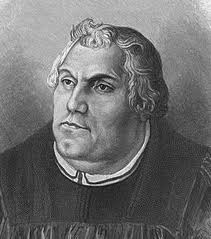
In Romans 1:17, the Apostle Paul wrote, “For in it the righteousness of God is revealed from faith for faith, as it is written, “The righteous shall live by faith.”” (Romans 1:17, ESV). This text traumatized Martin Luther before his conversion to Christ. Here was a man that sincerely wanted salvation. He had dedicated his life to holy living in a monastic community where he sacrificed on a daily basis. Yet his soul was tortured. Here are Luther’s own words, written a year before his death on March 5, 1545 following a long life of joyful blessing in true salvation through Jesus Christ.
I had indeed been captivated with an extraordinary ardor for understanding Paul in the Epistle to the Romans. But up till then it was … a single word in Chapter 1 [:17], “In it the righteousness of God is revealed,” that had stood in my way. For I hated that word “righteousness of God,” which according to the use and custom of all the teachers, I had been taught to understand philosophically regarding the formal or active righteousness, as they called it, with which God is righteous and punishes the unrighteous sinner.
Though I lived as a monk without reproach, I felt that I was a sinner before God with an extremely disturbed conscience. I could not believe that he was placated by my satisfaction. I did not love, yes, I hated the righteous God who punishes sinners, and secretly, if not blasphemously, certainly murmuring greatly, I was angry with God, and said, “As if, indeed, it is not enough, that miserable sinners, eternally lost through original sin, are crushed by every kind of calamity by the law of the decalogue, without having God add pain to pain by the gospel and also by the gospel threatening us with his righteous wrath!” Thus I raged with a fierce and troubled conscience. Nevertheless, I beat importunately upon Paul at that place, most ardently desiring to know what St. Paul wanted.
At last, by the mercy of God, meditating day and night, I gave heed to the context of the words, namely, “In it the righteousness of God is revealed, as it is written, ‘He who through faith is righteous shall live.’ ” There I began to understand [that] the righteousness of God is that by which the righteous lives by a gift of God, namely by faith. And this is the meaning: the righteousness of God is revealed by the gospel, namely, the passive righteousness with which [the] merciful God justifies us by faith, as it is written, “He who through faith is righteous shall live.” Here I felt that I was altogether born again and had entered paradise itself through open gates. Here a totally other face of the entire Scripture showed itself to me.… And I extolled my sweetest word with a love as great as the hatred with which I had before hated the word “righteousness of God.” Thus that place in Paul was for me truly the gate to paradise. [Emphasis added]
The “gates of paradise” were opened up to Luther because he no longer depended upon his own law-keeping to satisfy the perfect demands of God. He saw salvation as a gracious act of God alone. Christ was perfectly righteous, fulfilling the whole law in our place. He died in our place and we are justified because of his perfect life and substitutionary death.
The hamster wheel of self-righteous deeds done in order to save ourselves is endless and endlessly disappointing. But the worst thing is that it does not end in heaven, but hell. The one who rejects the perfect finished work of Christ on the cross in favor of his or her imperfect works should expect nothing more, and will get nothing less.
Don’t point people to hell with “do better” sermons. Don’t say that your lost neighbor needs to be invited to church when you need they need to be regenerated by Christ. Don’t confuse fruits of righteousness with earning points with God so he will somehow love and favor you more.
Christ alone is enough. Faith in him alone saves. This is all “marvelous, infinite, matchless grace.”


 Always Reforming