That is what you must do with your sermons, make them red-hot; never mind if men do say you are too enthusiastic, or even too fanatical, give them red-hot shot, there is nothing else half as good for the purpose you have in view. We do not go out snow-balling on Sundays, we go fire-balling; we ought to hurl grenades into the enemy’s ranks.—C.H. Spurgeon, The Soul Winner: How to Lead Sinners to the Saviour; Fleming H. Revel edition, 69.
evangelism
Theological Commitments of the Biblical Gospel: Preserving True Saints to the End

Preservation of the True Saints
This doctrine will have an impact when we come across a person (whether inside or outside of the church) who says that they received Christ as Savior at an earlier time, but that they have “backslidden” or lost their salvation and need to be saved again (or similarly, “rededicate my life to Christ”). But as we are assured in Rom 8:28-39 and other passages (Jn 6:37; 10:27-29; 17:12; 18:9; 1Cor 1:8-9; Phil 1:6; 1Thess 5:23-24; 2Thess 3:3; 2Tim 1:12; 4:18; Heb 7:25), our assurance of salvation is based upon the bedrock of the gospel. This is primary.
But a close corollary that cannot be missed is the need to walk in newness of life (Rom 6:4), bearing fruit in keeping with repentance (Matt 3:8), renewing our minds to conform to Christ (Rom 12:1-2; Col 3:10), putting off the old self, putting indwelling sin to death and putting on the new man(Rom 6:6; Eph 4:2; Col 2:11; 3:9), walking in the Spirit and not in the flesh (Rom 8:4; Gal 5:25).
All of these together, and more, mean that a person redeemed by Christ is a new creation and should not walk in their former manner of life. If that has not happened, then that person may need salvation for the first time and has not come to grips with the fulness of the truth of the gospel. Another possibility is that they are a true believer, but they have been disobedient to the Lord for an extended period of time, are immature, and in need of loving correction and to be discipled.
The bottom line is this: many of those in America who profess to be Christians know little to nothing about the true gospel and are in need of salvation. Some have been “Christianized” through exposure to the church, but their lives demonstrate a rebellion to our King. They too must be evangelized.
Those who are sincere and broken will need further conversation and observation to conclude their spiritual state, along with many gospel conversations that will either bring them to Christ or bring them to stability and point them toward maturity.
Theological Commitments of the Biblical Gospel: Unable to Resist God’s Calling

Resistance to the Gospel
If a person is elect, what assures that they will actually answer this divine call? The Arminian/semi-Pelagian, seeing everything through the lens of libertarian free-will, assumes that man can walk away from the drawing of the Spirit of God. But clear and straightforward passages such as the so-called “golden chain of redemption” in Rom 8:28-30 show that the process once begun by God cannot be thwarted:
“And we know that for those who love God all things work together for good, for those who are called according to his purpose. For those whom he foreknew he also predestined to be conformed to the image of his Son, in order that he might be the firstborn among many brothers. And those whom he predestined he also called, and those whom he called he also justified, and those whom he justified he also glorified.” (Romans 8:28–30, ESV)
Again, if the Lord God is sovereign in all things, he must have the power to overcome the deadness of sin and the resistance that inevitably comes from the naturally sinful desires of the elect before they are regenerate. The one who rejects the irresistible calling of God point to the observable reality of those who on a daily basis reject the gospel call of the evangelist.
But this general or universal declaration of the world to be saved is not the call of salvation we are speaking of here. This universal call is, of course rejected every day by many. We are speaking here of the “electing call” of God. This is the act of the Spirit of God moving, changing, provoking the will of the sinner so that all at once he sees his guilt before a holy God and his spiritual predicament, he also sees his need for a Savior, and he sees the beauty of Christ and how irresistible the call to come and drink of the living waters is.
Dr. Lloyd-Jones says of this doctrine:
And again I could refer you to Ephesians 1:18 and to 1 Thessalonians 1:5 once more, and to Philippians 2:13. In other words, there are proofs positive of this statement that it is the internal operation of the Holy Spirit upon the soul and the heart of men and women that brings them into a condition in which the call can become effectual. And when the Spirit does it, of course, it is absolutely certain, and because of that some people have used the term—which I do not like myself—irresistible grace. I do not like the term because it seems to give the impression that something has happened which has been hammering at a person’s will and has knocked him down and bludgeoned him. But it is not that. It is that the Holy Spirit implants a principle within me which enables me, for the first time in my life, to discern and to apprehend something of this glorious, wondrous truth. He works upon my will. ‘It is God that worketh in you both to will and to do.’ He does not strike me; He does not beat me; He does not coerce me. No, thank God, what He does is operate upon my will so that I desire these things and rejoice in them and love them. He leads, He persuades, He acts upon my will in such a way that when He does, the call of the gospel is effectual, and it is certain, and it is sure. God’s work never fails, and when God works in a man or woman, the work is effective. [1]
When Paul and Silas approached the women who worshipped by the river in Philippi, it says in Acts 16:14 that “The Lord opened [Lydia’s] heart to pay attention to what was said by Paul.” The Lord did not destroy her volition, but as the Sovereign Lord, he overcame her inability to see and understand and believe so that she paid attention to the gospel and believed.
Those who say that they believe in the sovereignty of God yet, because of love, God allows man to have a free will to choose or reject him is biblically, theologically and logically flawed. If God gives up his sovereignty in the area of salvation, he is not truly sovereign, because God cannot ordained the end without ordaining the means. God’s saving grace overcomes the internal resistance by changing the will of those whom he will save so that they have ears to hear and eyes to see and a heart to behold the glories of Christ, the One who died to set them free from their sins.
[1] David Martyn Lloyd-Jones, God the Holy Spirit (Wheaton, IL: Crossway Books, 1997), 73.
God and the Fool

“The fool says in his heart, “There is no God.” They are corrupt, doing abominable iniquity; there is none who does good. God looks down from heaven on the children of man to see if there are any who understand, who seek after God. They have all fallen away; together they have become corrupt; there is none who does good, not even one.” (Psalm 53:1–3, ESV)
These words, quoted by the Apostle Paul in the third chapter of his letter to the Romans, are a stark reminder that the spirituality of this age that we live in is not a genuine seeking for the One true God, but rather is a seeking after another idol that can alleviate the void that is felt outside of God.
Even though the fool says in is heart that there is no God, his claim is contrary not only to the facts, but his raging against the God that he says does not exist shows that he does not believe his own words.
From God’s perspective, as he looks not only down on humanity, but looks into the darkened hearts of men, he does not see anyone who truly desires a relationship with him. Truth be told, humankind would be completely satisfied in pushing their Creator out of the picture totally—filling the void of their soul with anything else that they can find or create. In our futility and desperation, we have grown in our corruption. We even claim to be morally good, while God’s own estimation is much different.
Without the saving grace of Jesus Christ, we are living in a mass delusion. We are living as if there is no God, as if there was no moral standard except for the one that we have made, and that we are good according to our arbitrary standards. No wonder God calls us fools.
Jesus Christ is our only hope. He is the answer to our greatest need. He is our Creator, our Savior and Justifier. He takes out the hardened heart in men that is like stone, and he gives us a new heart that is tender toward him. He puts his Spirit in us so that we can grieve once again over our foolishness, and rejoice over the forgiveness that we have received. He gives us eyes to see his beauty and the beauty around us and ears to hear his voice as he calls and leads us.
Do you know this Jesus? He is God. He is Savior and Lord. He is calling to sinners and fools to depart from your sin and folly and call out to him for mercy. He will surely give it.
Just Do Better…Tell that to Martin Luther!
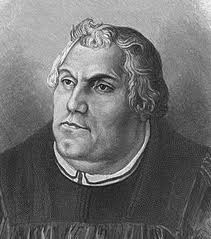
Is salvation merely a message of “do better?” Is Christianity simply a moralistic religion that teaches that all we need to do is obey God? That is what the self-righteous Pharisees thought, and it is what many people in churches think. To them, Christianity is a list of rules that can be kept–albeit with a lot of sacrifice. But is that what Jesus taught?
In Romans 1:17, the Apostle Paul wrote, “For in it the righteousness of God is revealed from faith for faith, as it is written, “The righteous shall live by faith.”” (Romans 1:17, ESV). This text traumatized Martin Luther before his conversion to Christ. Here was a man that sincerely wanted salvation. He had dedicated his life to holy living in a monastic community where he sacrificed on a daily basis. Yet his soul was tortured. Here are Luther’s own words, written a year before his death on March 5, 1545 following a long life of joyful blessing in true salvation through Jesus Christ.
I had indeed been captivated with an extraordinary ardor for understanding Paul in the Epistle to the Romans. But up till then it was … a single word in Chapter 1 [:17], “In it the righteousness of God is revealed,” that had stood in my way. For I hated that word “righteousness of God,” which according to the use and custom of all the teachers, I had been taught to understand philosophically regarding the formal or active righteousness, as they called it, with which God is righteous and punishes the unrighteous sinner.
Though I lived as a monk without reproach, I felt that I was a sinner before God with an extremely disturbed conscience. I could not believe that he was placated by my satisfaction. I did not love, yes, I hated the righteous God who punishes sinners, and secretly, if not blasphemously, certainly murmuring greatly, I was angry with God, and said, “As if, indeed, it is not enough, that miserable sinners, eternally lost through original sin, are crushed by every kind of calamity by the law of the decalogue, without having God add pain to pain by the gospel and also by the gospel threatening us with his righteous wrath!” Thus I raged with a fierce and troubled conscience. Nevertheless, I beat importunately upon Paul at that place, most ardently desiring to know what St. Paul wanted.
At last, by the mercy of God, meditating day and night, I gave heed to the context of the words, namely, “In it the righteousness of God is revealed, as it is written, ‘He who through faith is righteous shall live.’ ” There I began to understand [that] the righteousness of God is that by which the righteous lives by a gift of God, namely by faith. And this is the meaning: the righteousness of God is revealed by the gospel, namely, the passive righteousness with which [the] merciful God justifies us by faith, as it is written, “He who through faith is righteous shall live.” Here I felt that I was altogether born again and had entered paradise itself through open gates. Here a totally other face of the entire Scripture showed itself to me.… And I extolled my sweetest word with a love as great as the hatred with which I had before hated the word “righteousness of God.” Thus that place in Paul was for me truly the gate to paradise. [Emphasis added]
The “gates of paradise” were opened up to Luther because he no longer depended upon his own law-keeping to satisfy the perfect demands of God. He saw salvation as a gracious act of God alone. Christ was perfectly righteous, fulfilling the whole law in our place. He died in our place and we are justified because of his perfect life and substitutionary death.
The hamster wheel of self-righteous deeds done in order to save ourselves is endless and endlessly disappointing. But the worst thing is that it does not end in heaven, but hell. The one who rejects the perfect finished work of Christ on the cross in favor of his or her imperfect works should expect nothing more, and will get nothing less.
 Always Reforming