
Fuzzy Thinking Produces Confusing Sermons

Wutt?

“The great failure of much preaching is fuzzy thinking. The preacher is not quite clear about his subject and the ideas that express it. His language is imprecise. The progression of his thought meanders in search of a line of direction. The basis for this vague and uncertain communication in an expository sermon is a failure to identify the text writer’s central idea and how he expresses it. If the preacher is unsure of his thoughts, the audience will be even more unsure of what he is saying. The key to clear thinking is the careful use of precise language…

Becoming a skilled word crafter calls for the capacity for critical thinking. By critical thinking we mean analyzing thoughts, sorting out ideas, distinguishing one concept from another, evaluating arguments, and making judgments about the best way to express ideas. It requires levels of precision and craftsmanship not necessary to casual thinking. You want to find the words that exactly express the idea. You want to distinguish it from ideas that are similar but not quite the same, such as various words for preaching: proclaim, declare, exhort, bear witness. It is this kind of thinking that is so needed among preachers today.” – Wayne McDill, 12 Essential Skills for Great Preaching, 75.
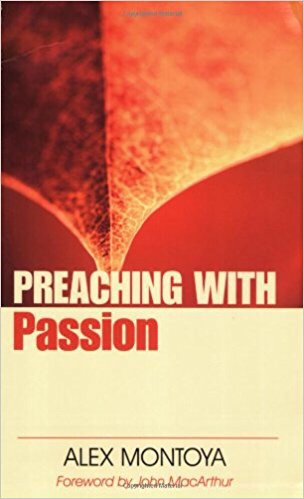
Preaching with a Tender, Compassionate Heart

There have been times in my ministry when an icy chill has come over my heart, when my soul no longer weeps, when my sermons no longer connect, and when the act of preaching becomes a drudgery. I know that I have then lost compassion for people. That is when I retreat to a small taco stand in the barrio of East Los Angeles, to a place where real people live. I order a cup of coffee and sit with my back against the wall. Then I watch, I observe, I read, and I listen intently for the heart cry.

A group of gang-bangers come in for a snack-one in four will die before the age of eighteen; two of the others will end up in prison. All are doomed to a hard life. A young mother comes in with her brood of youngsters. It is obvious that they are poor. They share drinks. They live in poverty; some will never see a forest or snow. An old drunk staggers in, begging for a meal. He is quickly thrown out. That was somebody’s baby boy. A mother at one time cradled that man and nursed him. The poor specimen of humanity has children. His wife is somewhere out there. They have long since disowned him, but they have not forgotten him. He is still somebody’s daddy. For all I know, he could have been my own.

I look, I listen until I hear their cries, until their souls cry out to me, “Please help, I’m perishing!” until the tears pour forth from my melted heart! I am in love with humanity once again. Now I am fit to ascend the pulpit, to weep with those who weep, to laugh with those who laugh, and to bring a living Word-Christ-to a needy people. Now I can preach with passion, for now I have compassion.— Dr. Alex Montoya, Preaching with Passion

Help For New Expositors: The Four P’s of a Balanced Sermon

esv_studybibleExpository preaching is both an art and a science. But we must beware of the danger of making our sermons either too light or too dense in regards to our content. Those expositors that are more cerebral can easily slide into a lecture mentality that sees the pulpit as a lecture and each Sunday as an opportunity to dump all of their exegetical research upon their unwary members. Those who have been given the “gift of gab” can think that simply because they can fill the allotted teaching time with witty speech, good stories and lots of application are being faithful to preach when they are most often simply pandering to the baser desires of their listeners.
A helpful way to know how to organize a well-balanced sermon is to follow the rule of the Four P’s–Point, Proof, Picture and Practice. Every sermon point should include all of the “P’s” as a general rule. There are some exceptions, but as a general rule, these should be followed for most sermons.

  1. Point-Whether you have 2, 3, 4, or more, you need to have main points which point to your thesis statement (sometimes called a propositional statement). If you just read a passage, talk about it a little bit, throw in some illustrations and application randomly as they come to mind, this is not biblical exposition. The mind of the listener needs clarity to aid its understanding and organization helps with this. Stay your point, and then…
  2. Proof-Prove your point. If you state that your sermon thesis is “Three Unimpeachable Evidences that Jesus is the Son of God,” then one of your points may be–“Jesus forgave sins.” Your proof will be the exegetical proof taken from the given text for this sermon. This might include cross-references to strengthen the doctrinal truth or it might include word studies or contextual information to make clear the meaning of the passage. Whatever you include, this part of the sermon should only include information that adds clarity and argues the idea of the main point. In other words, your long study of the Greek post-positive de should be left in your study, unless it is necessary to understand this main point.
  3. Picture-Simply put, this is an illustration. Your illustration should direct your hearers to think about the main idea of your point in a concrete way. It might continue an example from Scripture or history, or it might be a more contemporary picture of what this main idea looks like today.
  4. Practice-This is application. Application follows illustration logically because we cannot apply what we do not fully understand, and illustrations help with clarifying the ideas we have presented. The application seeks to help the hearer put into practice what the biblical text says they should feel, believe or do.

Every one of these P’s should be present for each main point of a sermon to continue to help the sermon move along with clarity, timelines and purpose. All put together, they explain the text, illustrate the main concepts and show the hearer how they should be applied.

Spurgeon on Preaching with Emotion

That is what you must do with your sermons, make them red-hot; never mind if men do say you are too enthusiastic, or even too fanatical, give them red-hot shot, there is nothing else half as good for the purpose you have in view. We do not go out snow-balling on Sundays, we go fire-balling; we ought to hurl grenades into the enemy’s ranks.—C.H. Spurgeon, The Soul Winner: How to Lead Sinners to the Saviour; Fleming H. Revel edition, 69.

Preach for the Common Man!

20140804-112114-40874973.jpg

There are times when I encounter a young expositor (or wannabe) who feels that his knowledge (or at least his ability to parrot someone else’s knowledge) must be on display in his sermons; so he speaks in such a way that the man in the pew cannot understand him, and he feels all the more spiritually superior than most for his erudition.

I am a simple preacher. I can wax eloquent too. But why? To prove that I have degrees hanging on my walls? As I think of all the godly men that I respect, both currently and in history, those men used simple language, but spent time in deep study and deeper prayer. They sought to preach for the benefit and edification of the people, not to lift themselves up.

Apparently, Richard Baxter, a most eminent Puritan, would agree with me. More importantly, I think I am in the company of my Savior, who taught with clarity and power to the common man.

“All our teaching must be as plain and simple as possible. This doth best suit a teacher’s ends. He that would be understood must speak to the capacity of his hearers. Truth loves the light, and is most beautiful when most naked. It is the sign of an envious enemy to hide the truth; and it is the work of a hypocrite to do this under pretense of revealing it; and therefore painted obscure sermons (like painted glass in windows which keeps out the light) are too oft the marks of painted hypocrites. If you would not teach men, what do you in the pulpit? If you would, why do you not speak so as to be understood? I know the height of the matter may make a man not understood, when he hath studied to make it as plain as he can; but that a man should purposely cloud the matter in strange words, and hide his mind from the people, whom he pretendeth to instruct, is the way to make fools admire his profound learning, and wise men his folly, pride, and hypocrisy. Some men conceal their sentiments, under the pretense of necessity, because of men’s prejudices, and the unpreparedness of common understandings to receive the truth. But truth overcomes prejudice by the mere light of evidence, and there is no better way to make a good cause prevail, than to make it as plain, and as generally and thoroughly known as we can; it is this light that will dispose an unprepared mind. It is, at best, a sign that a man hath not well digested the matter himself, if he is not able to deliver it plainly to others.”

—Richard Baxter, The Reformed Pastor