Help For New Expositors: A Simplified Sermon Preparation Checklist

Checklist

Over a decade ago, I was frustrated with my lack of methodology in sermon preparation. It seemed that every time I sat down to prepare a message, that I started in a slightly different way or I would do things in a different order. I was taught the exegetical method in seminary, but there are some things that only practice and experience can teach. I knew that I needed some sort of a form or checklist to help me move from one stage of preparation to the next. I don’t use this as much any more, but it served as a great training resource until I was so used to the movements of sermon prep that I didn’t need it any more. Below is what I came up with. If it helps you, great! If you have any questions about how each part functions, let me know in the comments. (By the way, my version has check boxes after each step, so I could get the satisfaction that comes from finishing each step with a “check.”)


Text: ____________________ Date to Preach _____________


1. Read the text in its context.  (Read 25x. Hash marks:)____________

Take notes on observations, questions, and cultural/historical issues that you need addressed later in your study.

2. Read the text 1x in alternative versions:

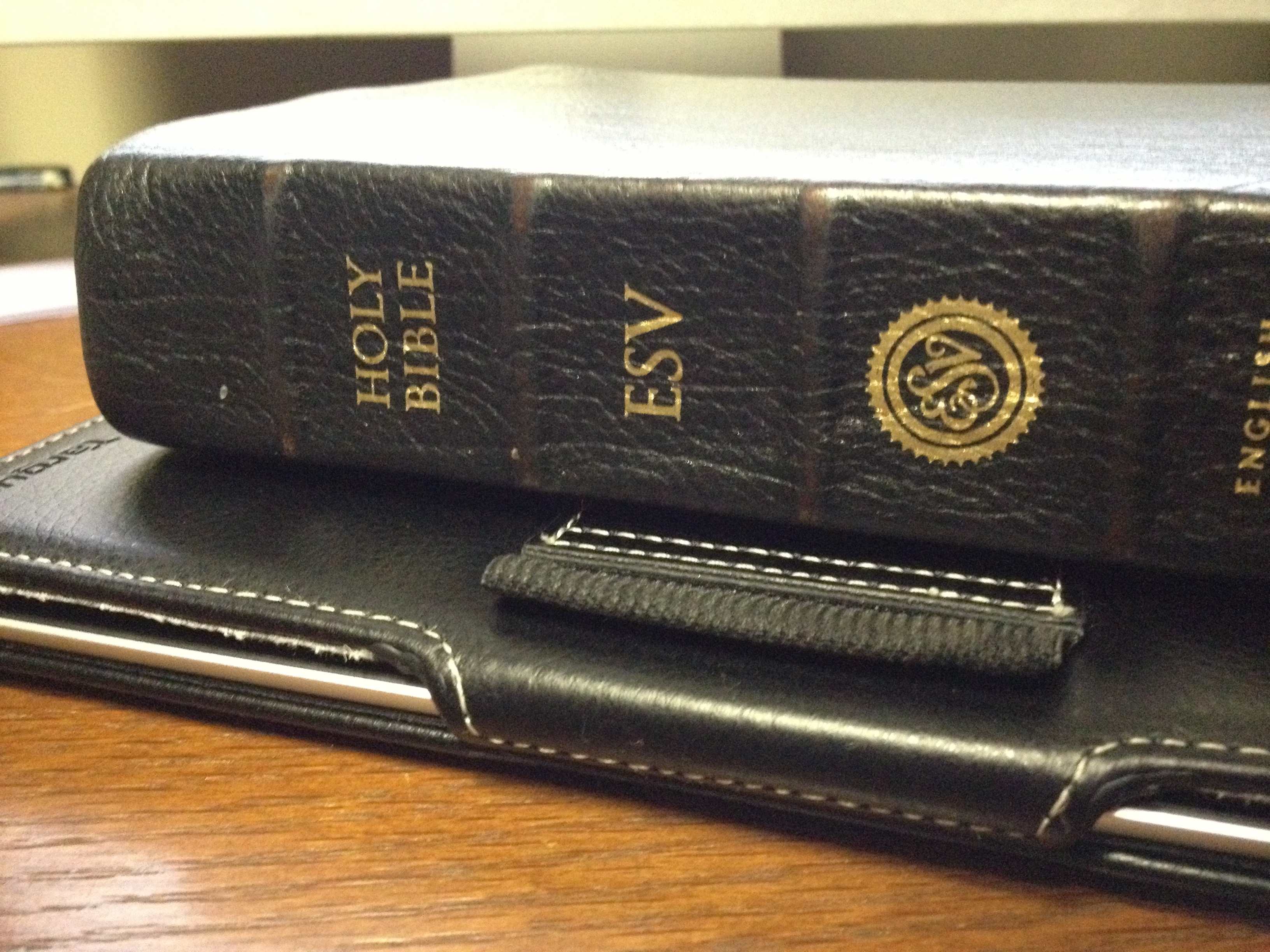
    • ESV
    • NASB
    • NIV
    • KJV
    • NKJV
    • NLT
    • The Message

3. Translate the text from the original language.

4. Diagram the text (either line or block). Understand the relationship of phrases and words to one another.

5. What is the major theme of the passage? 

6. Read available commentaries on the passage.

    • _____________________
    • _____________________
    • _____________________
    • _____________________
    • _____________________
    • _____________________

7. Outline the passage (Exegetical outline)

8. What is the doctrinal focus here? ________________

9. Form the preaching proposition.

10. Outline the proposition (Homiletical outline)

11. Clothe it with illustrations and applications.

12. Form introduction, conclusion and title.

Biblical Balance in Worship that Is Not Disconnected from Time

ipad_preach

“Good worship does not engage in the arrogance of modernity, which disconnects from the past, nor does it participate in the idolatry of traditionalism, which lives in the past. Rather, we should begin with the great classical worship that at one time was contemporary and has now become tried and true, and then build upon it, being ready to absorb that which is excellent in the present. Good worship is offered in spirit and in truth, honors Christ, and facilitates the praise of God’s people and the communication of the gospel to the lost. It is connected to the past without living in the past, contextualized in the present without accommodating the present, and setting a pattern to shape the future instead of becoming dated in the future.”

–Harry L. Reeder, III;  Embers to a Flame, 34-35.

Three Reasons to Preach Christ Crucified

saving-drowning-man

“For the word of the cross is folly to those who are perishing, but to us who are being saved it is the power of God.” (1Corinthians 1:18)

1. Because It is Not Popular (v. 18)

Not only is it not popular, it is moronic (moria in Greek). Consider the fact that the gospel of Jesus Christ demands that we say to sinners that a poor and humble Jewish man was God, and that he was nailed to a cross to die a criminals death despite his perfect innocence. We proclaim that this Man was not only a man, but that he is God in the flesh. That he is perfect and sinless and that he was born of a virgin. Furthermore, we proclaim that all of humanity is lost and that each individual man, woman and child is a wretched sinner. We proclaim that Christ is the only hope for humanity and that all other claims are lies from the pit of hell and all who seek salvation in any other name are doomed to eternal damnation. We proclaim that Jesus Christ has done all that is necessary for our salvation, and that he rejects all attempts to earn salvation on our own. He, being the King demands our allegiance and one day every knee shall bow and every tongue shall confess that He is Lord.

Brothers, when we proclaim this, the world will overwhelmingly reject us as fools of the worst kind. We will be called bigots, intolerant, and uneducated religious zealots. And that is why so many bow to the pressures and soften their message. Paul was keenly aware of the propensity of men to soften the blow of the gospel by using soothing words that made the hearer feel at ease. He said in 1Cor 2:1-5 that he purposely made it his aim to proclaim the unvarnished gospel of Jesus Christ crucified. Today, preachers everywhere are trying to make Jesus look cool. They are trying to make Christianity attractive. They are doing just what Paul avoided.

The cross was not cool. It was brutal and bloody.

The call of Christ is not popular. True Christianity will never court the world. But pastors will continue to attempt to make our precious faith more palatable in order to gain the popularity of the world. This is nothing but pride. Nobody should enter the ministry or the pulpit in order to make his own name great. Isaac Watts wrote, “When I survey the wondrous cross on which the Prince of glory died; My riches gain I count but loss, and pour contempt on all my pride.” PREACH CHRIST BECAUSE IT IS NOT POPULAR!

2. Because They Are Perishing (v. 18)

When we preach the message of the cross, the world sees it as folly because they do not see the danger to their souls. Sometimes they fail to see the danger because they do not see it in our eyes and do not hear it in our voices as we proclaim cold truth from our pulpits. Brothers, do you feel the truth of Hell? Do you remember the days when you were among the brood of vipers?  Do you recall that you were once a vessel prepared for destruction? Have you forgotten that you were on the precipice of the bottomless pit and you were ready in due time to slip into eternal fire separate from God to be tormented for all eternity? HAVE YOU FORGOTTEN?

When we remember our own dying state we will be quick to point people to the only remedy for their souls—the cross of Christ. When we remember that they are perishing, we will not care about their mocking and their cries for ear-tickling sermons—we will give them what we know they need. Wrote Thomas Brooks, “The damned shall live as long in hell as God himself shall live in heaven.” That fact alone should drive us to preach Christ crucified.

Check your hearts, brothers. Do you feel the terror of hell and do you cry out with Paul on Sunday mornings: (2Cor. 2:15-16) “For we (!) are the aroma of Christ to God among those who are being saved and among those who are perishing, to one a fragrance from death to death, to the other a fragrance from life to life. Who is sufficient for these things?” PREACH CHRIST BECAUSE THEY ARE PERISHING!

3. Because It is the Power of God (v. 18)

Power in the pulpit. Power evangelism. Power encounters. Pastors want power. But the power of God is not found in the usual places. It is not found in business models or worldly philosophy (v. 22). It is not found in charismatic dramatics or signs and wonders (v. 22).  It isn’t found in confrontation with demons and the occult. The power of God was displayed on the cross, where God sent His Son to be crushed for our iniquities. Jesus became sin on our behalf, so that we might become the righteousness of God! That is power!!!

Concerning the justification of God, John Calvin said, “Wherever the knowledge of it is taken away, the glory of Christ is extinguished, religion abolished, the Church destroyed, and the hope of salvation utterly overthrown.” This is the power of the cross. Why is the Church so weak and utterly incapable of making an impact in our nation? It has left this message behind and taken up the banners of politics, pop psychology, health and wealth, and so many other empty promises.

The Roman Catholic system, the Emerging movement, the Seeker Sensitive movement and the Liberal mainline denominations have all shown us what becomes of those who lay aside the cross of Christ. But it hasn’t stopped many men from flirting with those compromising  philosophies. Richard Baxter, “If a hardened heart is to be broken, it is not stroking but striking that must do it.” The only thing that can cut another stone is a diamond, the hardest gem on earth. In order to cut the hardest heart, we must use the sharpest tool. That is the gospel of Jesus Christ!

In Heb. 4:12 we are reminded, “For the word of God is living and active, sharper than any two-edged sword, piercing to the division of soul and of spirit, of joints and of marrow, and discerning the thoughts and intentions of the heart.”

Brothers, in our churches the temptation can be overwhelming to give up expository preaching in favor of sugar coated sermons that aim to please the itching ears of people. We reason in our hearts that once we have them in our churches we can preach the gospel to them, we just need to ease them into it. Don’t fall for this pragmatic lie! You are merely a tool in God’s hand. He uses you as His minister to wield His weapon of choice. You cannot change the soul of a man in any way. It is the Word of God preached—the Gospel alone that brings a sinner to his knees.

PREACH CHRIST BECAUSE THE MESSAGE OF THE CROSS IS YOUR ONLY POWER!

Thessalonian Lessons in Church Planting

Churchplanting

The Church of Thessalonica was established during Paul’s second missionary journey. It is chronicled in Acts 15:36-18:22. In this post I want to walk through this journey and then apply a few lessons that can be applied to church planting.

Paul’s journey began in Antioch, were Paul and Barnabas had a sharp disagreement over John Mark, as to whether he should join them on their trip or not. Apparently John Mark had abandoned them on a previous trip and Paul did not think it was a good idea to depend upon him. Barnabas took John Mark and went to the island of Cyprus while Paul took Silas as his partner (Acts 15:36-41).

Meanwhile Paul and Silas headed to the region of Galatia to encourage the churches that Paul and Barnabas had established in the first missionary journey (Acts 15:36). The first stop mentioned was in Derbe and then on to Lystra. At Lystra Paul took Timothy with him on his journey (Acts 16:1-5).”

From Galatia Paul traveled with Silas and Timothy through the region called Phrygia, moving in a Northwest direction, avoiding Asia Minor (modern Turkey) because the Holy Spirit had forbidden that Paul should go there (Acts 16:6).

Paul then decided to go above Asia Minor into a Roman province called Bithynia, but Paul and his party were once again forbidden by the Spirit from going into this region (16:7). That meant that North and South were out of bounds to travel in. They could go back or they could press on toward Mysia along the northern border of Asia and Mysia until they reached Troas, which they did (Acts 16:8).

It was while in Troas that the Lord revealed to Paul his mission. He was given a vision of a Macedonian man who called out to him to come over and help him. Paul would have recognized this man as Macedonian from his traditional hat and clothing that had been a mark of the Macedonian people for centuries before and carries on even to today.

Although Macedon is not as well known to most of us today outside of the biblical references to it, it is important for us to know a little about its history.

The Macedonian kingdom was the “greatest empire ever known to human history.” [1] It was the empire of Alexander III also known as Alexander the Great.

Before he died at the age of 33, Alexander had succeeded in extending his kingdom from Egypt in the south to the Indus River in India to the east. His father, Philip II conquered the Greek city states and taught his son well many strategies that served him well as he sought to conquer the rest of the world. Alexander conquered Asia Minor, Phoenicia, Palestine, Egypt, Babylonia and India.

Alexander’s armies are pictured in Daniel 7:6 as a swift leopard with four wings. It says, “After this I looked, and behold, another, like a leopard, with four wings of a bird on its back. And the beast had four heads, and dominion was given to it.” The speed of the army was represented by the leopard’s speed amplified by four wings. The four heads refer to what happened after Alexander’s death. Since he died so young, possibly by poisoning, no plan of succession was in place.

After much turmoil, the kingdom was divided among his four generals into four kingdoms, with Antipater receiving the former Macedonian kingdom and Greece. At Antipater’s death, Cassander had the opportunity to take control and he solidified his position by marrying Alexander’s half-sister, the daughter of King Philip II. Her name? Thessaloniki.

In 316 BC Cassander founded a new city by consolidating 26 towns into the new city he called Thessalonica. This prestigious city would go through many more changes and wars by the time Paul would enter into it. When Paul came, it was a jewel to the Romans and had a population of about 200,000, which was quite large for a city in its day.

Let’s go back to Acts 16. Now we can see God’s purpose in not allowing Paul to go to Mysia or Asia or Bithynia! He wanted them to go to Macedon to bring the gospel message to the Gentiles!

Notice in verse 10 that it says “we” (cp. v.8 says “they”). What we find here is that in Troas Paul picked up another traveling companion—the author of Acts and the Gospel named for him—Luke! Paul went from Troas (in Mysia) across the island of Samothrace to the mainland of Macedonia and the city of Neapolis (16:11).

From Neapolis Paul and his friends went to the Roman colony of Philippi, named after Alexander the Great’s father King Philip II (16:12). In this city, Paul and his company met Lydia and led her to Christ. Later they were beaten with rods and thrown into jail after casting the demon out of a slave girl. (16:13-24) Welcome to Macedonia!

While in jail, God intervened and a jailer and his family were saved (16:25-40). From Lydia and the jailer’s family and any other’s saved on that trip to Philippi Paul established the first church in Europe. The letter we call Philippians was written to them.

Source: http://www.biblestudy.org/maps/apostle-paul-second-missionary-journey-map.html

Source: Biblestudy.org

Acts 17:1-9 tells us about the establishment of the Thessalonian church. Leaving Philippi, Paul passed through Amphipolis and Apollonia, probably because they were so small (17:1) and moved to the city of Thessalonica, where a synagogue had been established by the Jewish population.”

In these 9 verses, I’d like to make three observations about the work that Paul did in planting this church and make some applications for our lives.

1. Paul “reasoned from the Scriptures with a Purpose (vv. 2-4).
Paul’s time in Thessalonica was short—he knew that. He was not on a vacation or sight seeing trip. He was literally on a mission. Because of that purpose, Paul’s time was focused, purposeful and methodical.
Verse 2 says he“reasoned”with the Jews. This word in Greek is dilegomai and it is where we get our word “dialogue.” Paul “dialogued” with them. He had deep, meaningful conversations with them about the Scriptures and their meaning. But it had a purpose and an aim. they didn’t argue about Jonah’s whale or who the Nephilim in Genesis 6 are. Paul made a bee-line to the cross and Jesus.”
Paul wanted to show them from the Old Testament that Jesus is the long-awaited Messiah (v. 3). And Paul was seeking to change the hearts and minds of his listeners (v.4)! His mission had a purpose. Remember the way that Paul talked to King Agrippa? Acts 26:24-29. Paul preached for change!”
Studying the Bible and going to church is good. Listening to sermons and reading Christian books is good. But to what end do we do these things? Is it to seek holiness in our lives? It is to grow in Christ? Why do we share Christ? Is it to see people saved?”

2. Faithful gospel proclamation will also attract opposition from our enemy and those blinded by sin (vv. 5-9).

In a sense, these gospel preachers were turning the “world upside down” by preaching their message about King Jesus. We need to be honest. Most people like the status quo. We don’t like it when people rock the boat. And we love our sin. Listen to John 3:19-20. It says, “And this is the judgment: the light has come into the world, and people loved the darkness rather than the light because their works were evil. For everyone who does wicked things hates the light and does not come to the light, lest his works should be exposed.”

Paul was trying to build a lighthouse in the darkness of Thessalonica. But the darkness wasn’t about to just roll over and let that happen. It fought back. So, we must wage war!” We too need to fight like Paul—reasoning, preaching the gospel, and persuading with the truth.

Second Corinthians 10:3-6 says,“For though we walk in the flesh, we are not waging war according to the flesh. For the weapons of our warfare are not of the flesh but have divine power to destroy strongholds. We destroy arguments and every lofty opinion raised against the knowledge of God, and take every thought captive to obey Christ, being ready to punish every disobedience, when your obedience is complete. “

3. Finally, Jesus must be trusted to build his own church (Matt 16:18).

It is easy to give up and be discouraged by adversity and the roadblocks that we encounter. To see all the failures and not the victories. Afterall, Paul followed Jesus’ commands and went to Macedonia, just as he said. Yet in Philippi he was beaten then jailed. Next in Thessalonica a mob formed and attacked their friend Jason in his home. When Paul left Thessalonica, he was probably only there from 3-6 months, but they had to move on!”

But a church was planted in Thessalonica. And it grew and matured…even with the absence of Paul! God gave life to that seed of a church and although Paul left when it was a weak little seedling, God would cause it to grow.”

We certainly can learn from this. We need to work hard, and work smart, but we must learn as well to trust Jesus with the results. After all, it is HIS church.
 

[1] Green, Gene L. The Letters to the Thessalonians. The Pillar New Testament Commentary. Grand Rapids, MI; Leicester, England: W.B. Eerdmans Pub.; Apollos, 2002; p. 9.

The Necessity of the Holy Spirit in Preaching

Holy-Spirit-Stained-Glass-2-300x266

How utterly dependent we are on the Holy Spirit in the work of preaching! All genuine preaching is rooted in a feeling of desperation. You wake up on Sunday morning and you can smell the smoke of hell on one side and feel the crisp breezes of heaven on the other. You go to your study and look down at your pitiful manuscript, and you kneel down and cry, “God, this is so weak! Who do I think I am? What audacity to think that in three hours my words will be the odor of death to death and the fragrance of life to life (2 Cor 2:16). My God, who is sufficient for these things?”-John Piper [1]


“And I, when I came to you, brothers, did not come proclaiming to you the testimony of God with lofty speech or wisdom. For I decided to know nothing among you except Jesus Christ and him crucified. And I was with you in weakness and in fear and much trembling, and my speech and my message were not in plausible words of wisdom, but in demonstration of the Spirit and of power, so that your faith might not rest in the wisdom of men but in the power of God.” ( 1Cor 2:1-5 ESV)

The Apostle Paul spoke out boldly against the excesses of the Corinthian church’s abuses of the Spirit’s gifts and the counterfeit gifts being promoted as the Spirit’s work. Yet, he began his letter by confessing that his message was filled with the power of the Holy Spirit. The gospel message, considered foolish by this world, requires a messenger who will derive his power from the Spirit who sent him.

A biblical preacher needs to consider his task as a proclaimer of the supernatural message of our God and he must remember that the unbeliever is totally depraved, and that any human effort to affect his heart through methods and manipulation is foolish (1Cor 2:14). This is necessary because the radical depravity of man can only be overcome by the work of the Holy Spirit and not by our clever devices. Charles Spurgeon, related the effects of radical depravity on preaching:

“I shall not attempt to teach a tiger the virtues of vegetarianism; but I shall as hopefully attempt that task as I would try to convince an unregenerate man of the truths revealed by God concerning sin, and righteousness, and the judgment to come.”[2]

Without the Spirit, every message preached will fail to penetrate the sin-soaked hearts of man. Therefore biblical expositors who desire to remain faithful to the Lord and His Word cannot push the Holy Spirit to the outer rim of their theology, and treat Him as incidental and unnecessary in ministry. We cannot succeed without Him!

Therefore, I’d like to propose that every biblical expositor:

Must Be Committed to Biblical Power and Clarity
The undeniable fact is that preaching every week can become wearying if the pastor’s motivations are not right. If we seek to be true to our calling we must begin by searching our own hearts for the motive behind what we do in the pulpit. Do we preach to please the people or to proclaim the truth, come what may? When the crowds fail to knock down our doors, but instead flock to the church down the street that has a three-ring circus going on, do we begin to doubt the power of the Word preached? Does our theology of God’s power working through the instrument of His Word make its way into our pulpits Sunday after Sunday? The fact is, we must look to the source of the power that accompanies authentic biblical preaching: the Holy Spirit. This power comes in two ways:

Power in Prayer

E. M. Bounds wrote,

“What the Church needs to-day is not more machinery or better, not new organizations or more and novel methods, but men whom the Holy Ghost can use—men of prayer, men mighty in prayer. The Holy Ghost does not flow through methods, but through men. He does not come on machinery, but on men.”[3]

How dependent are you on God when you preach? How much time do you spend in prayer before you step into the pulpit? Paul not only said he was weak (1Cor 4:10), but he repeatedly asked for prayer: “Finally, brothers, pray for us, that the word of the Lord may speed ahead and be honored, as happened among you” (2Thess 3:1). Again and again Paul asked for prayer because he knew he was weak without God.

John Owen confronts us,

“A minister may fill his pews, his communion rolls, the mouths of the public, but what that minister is on his knees in secret before God Almighty, that he is and no more.”[4]

Secondly we find:

Power Centered in the Piercing Word

Hebrews 4:12-13 says,

“For the word of God is living and active, sharper than any two-edged sword, piercing to the division of soul and of spirit, of joints and of marrow, and discerning the thoughts and intentions of the heart. And no creature is hidden from his sight, but all are naked and exposed to the eyes of him to whom we must give account.”

Taken together, the thoughts and intentions of the heart are those deepest internal workings of the mind and those affections that are most hidden. According to Hebrews 4:13, this all-pervasive scrutiny of the Word, like a divine X-ray of the soul, penetrates every dark corner of the heart exposing everything that is hidden.

So powerful is God’s Word that Paul mentions the reaction of an unbelieving stranger when exposed to it: “…he is convicted by all, he is called to account by all,  the secrets of his heart are disclosed, and so, falling on his face, he will worship God and declare that God is really among you.” (1 Cor 14:24-25).

The power of preaching does not come from the preachers style, outline, education, vocabulary, sense of humor or style of dress. The power comes from the Word of God preached through the Holy Spirit.
This is no excuse for laziness in the study, but the God of heaven does not need our ability to parse Greek verbs to change the souls of men.

The Power of the Word In the Study

Study is described by Paul as labor, it is hard work (kopiao) “Let the elders who rule well be considered worthy of double honor, especially those who labor in preaching and teaching.” (1Tim 5:17). Study takes diligence (spoudazo-“persistent diligence” 2Tim 2:15)-“Do your best to present yourself to God as one approved, a worker who has no need to be ashamed, rightly handling the word of truth.”
John MacArthur has written,

“What is our responsibility? The answer is in Ps. 119:130; “The unfolding of Thy words gives light.” God’s words are unfolded to us first by discovery. Through diligent Bible study, we unfold or unwrap God’s truth. We discover that meditation with a view to applying the truth deepens its impact. Discovery and meditation, combined bring the brightest light of illumination to our hearts.”[5]

Hard study is not Spirit-quenching. It is quite the opposite, it is Spirit illumined and Spirit blessed.


Clarity Derived from the Spirit: Illumination of the Expositor

From the Pulpit to the Pew

Illumination is necessary for the expositor in his study, but this is only part of the influence that the Spirit has upon His Word. It needs to be acknowledged that no matter how talented the expositor may be, the reception of the message is dependent upon the Spirit’s work in illuminating the hearts and minds of those listening.

Sermons preached have little effect upon dead ears unless the Spirit moves to open up the hearer to the truths expressed in His Word. Although the preacher of the Word needs to be diligent and faithful to prepare a thoroughly biblical exposition of the text and assemble it into a sermon that includes application of the Word, this alone is not enough. We cannot forget that the Gospels refer to the disciples coming away from the words of Jesus four times with the phrase “did not understand” (Mk 9:32; Lk 9:45; Jn 8:27; 10:6) and multiple times the crowds were confused at the words of Jesus. Illumination is not a matter of intelligence, it is a matter of spiritual enablement.

For the pastor proclaiming the Word in the pulpit, the Spirit gives clarity to the hearers in His act of illumination of their hearts and minds to His Word. When we step into the pulpit if we are centered on the Word, dependent upon the Spirit and have been with God in our study, we will have the confidence of God.
When Christ is exalted and the message of the cross is declared from the pulpit with prayer, passion, and precision, there is power. Power because the preacher is not depending upon his own strength. Power because the preacher believes what he is preaching is the fragrance of life to life, and death to death (2Cor 2:16). Power because the preacher has labored in the study and has come away having encountered the risen Lord in the pages of the living Word. When this type of preacher steps behind the pulpit, God moves through the Spirit using some or all of these means to accomplish His purpose.

Steve Lawson has said,

“Both literally and figuratively, the preacher should always be pointing to the biblical text. This Word-centered focus in the pulpit is the defining mark of all true expositors. Those who preach and teach the Word are to be so deeply rooted and grounded in the Scriptures that they never depart from them, ever directing themselves as well as their listeners to its truths. Biblical preaching should be just that—biblical—and all who stand in the pulpit must show an unwavering, even relentless, commitment to the Scripture itself. As a practicing physician knows and prescribes medicine, so every preacher should be ever studying, learning, and dispensing heavy doses of the healing balm of God’s Word to all his patients. Whatever the ailment, there is but one cure for the soul—the Word of God applied by the Spirit of God to the human heart.”[6]

Brothers, don’t allow poor theology and hyper-emotionalism hijack from our churches the biblical ministry of the Holy Spirit!


[1] John Piper, The Supremacy of God in Preaching (Grand Rapids, Mich.: Baker Book House, 1990), 37-8
[2] C. H. Spurgeon, An All-Round Ministry (n.p., 1900;  reprint, Carlisle, Pa.: Banner of Truth Trust, 1994), 322.

[3] E. M. Bounds, Power Through Prayer (Grand Rapids, Mich.: Baker Book House, paperback ed. 1972), 7.

[4] Cited in I.D.E. Thomas, A Puritan Golden Treasury (Carlisle, Pa.: The Banner of Truth Trust, 1977), 192.

[5] John MacArthur Jr. Rediscovering Expository Preaching ( Dallas, Tex.: Word Publishing, 1992), 115.
[6] Steven J. Lawson, Famine in the Land: A Passionate Call for Expository Preaching (Chicago: Moody Publishers, 2003), 81-2.