My Three Top Preaching Books That Inspire

The weekly proclamation of the Bible in the church can have a wearying effect on the preacher over time so that he can find himself needing to be refreshed and revived in his duties. These three books that I have chosen to highlight inspire the reader to be a faithful expositor. These are the kinds of books that you can’t read for very long and not feel the desire to step into a pulpit and preach your heart out. I give them to you in no particular order.

Between Two Worlds by John Stott (Amazon)

John Stott has a way with words that both informs and inspires. Listen how he describes the need to for the preacher to be immersed in the text he is preparing to preach:

“Sooner or later the time for more concentrated preparation arrives. What should the preacher do now? Read the text, re-read, re-read it, and read it again. Turn it over and over in your mind, like Mary the mother of Jesus who wondered at all things the shepherds had told her, pondering them in her heart (Luke 2:18-19). Probe your text, like a bee with a spring blossom, or like a hummingbird probing a hibiscus flower for its nectar. Worry at it like a dog with a bone. Suck it as a child sucks on an orange. Chew it as a cow chews the cud.”

Between Two Worlds, p. 220

For me, the best part of the book is summarized in the title. Stott masterfully explains how the preacher’s job is to be the bridge between the world of the Bible and the modern world we live in. We do this through the faithful study, explanation, and application of the Bible. This concept is simple, but one that too many expositors fail to understand or accomplish. When this truth is grasped it will excite the man of God as he realizes that God is going to powerfully use His Word to minister to those that are gathered on Sunday to sit under his preaching.

Preaching: How to Preach Biblically by John MacArthur and the Faculty of The Master’s Seminary (Amazon)

This book was originally published under the title Rediscovering Expository Preaching, and it has had a massive impact upon the conservative evangelical church whether it knows it or not. Not only did many pastors read this book and become inspired to dig deeper in their preaching, but many men became convicted when they recognized that they were ill-equipped to carry out the ministry they believed they were called to do. The result was that many of them left their churches to pursue proper training in the necessary skills for preaching that they did not have. Many others read the book while still undecided about ministry and were drawn to go and get training to become an expository preacher.

When I was a seminary student several of my classmates were impacted by this book and pointed to it as the main reason they came to seminary. Years later as a professor, I was still encountering this as a somewhat common reason that men were influenced to be trained. The ripples of the impression that this book has had will only be fully known in eternity.

Because the book was written by several professors, each chapter is written from the point of view of the expertise of each man. The chapters introduced the skill set of each scholar but are presented with the pastoral warmth of seasoned men who have many years in the church as well as education.

The Supremacy of God in Preaching by John Piper (Amazon)

In this small book Piper demonstrates that truly powerful preaching is that which is done for the glory of God alone. This emphasis is a needed antidote in a narcisisstic age that is drawn toward ear-tickling preaching. Drawing on the lives of great preachers of the past and his own journey, John Piper shows that the only help that this world needs is for the man of God to faithfully point it to Christ.

While not truly a book on how to preach, this book aids the pastor who may find that over time his ministry and preaching has drifted toward the rocky shores of man-centered theology. Piper helps the preacher look into the ascended glory of God and see that his task is much more than filling Sunday mornings with a self-help speech for thirty minutes. True Christians hunger to hear from God and to see Christ exalted. God has ordained the act of preaching as the means by which their souls will find satisfaction. 

My Top Three Practical Books on Preaching

Last week I asked for you to send me any questions that you might have that I could answer in future blog posts. One question asked about my top three favorite preaching books. Since I love preaching, and spent 12 years teaching the subject at a seminary, I have amassed quite collection of books on the subject, making my task a lot harder.

So instead of trying to whittle down my top three from my collection, I thought that I would pick my top three in different areas of focus. Today I want to share with you my favorite books in the area of preaching mechanics. These three books excel in the nuts and bolts of preaching by making the process simple and taking out the highly technical language by instead approaching preaching from the practitioner’s point of view.

Here are my top three practical preaching books, in no particular order, along with a link to them in Amazon to make finding them easier.

12 Essential Skills for Great Preaching by Wayne McDill (Amazon)

Funny enough, this book was never assigned for my preaching classes while in seminary, nor was it on any recommended reading lists. As a matter of fact, I had never even heard of this book until I was given it as a gift from my pastor, who is also the author of the last book. This book is gold. It is so helpful that I made it a required reading book in my preaching clinic class and constantly was asked by students why they weren’t required to read this book earlier.

McDill has set up his book as a practical handbook with an essential skill being presented in each chapter along with a worksheet to help the expositor develop the skill they have just learned. Although it is good to read through the whole book, you will find that it will be a book you come back to over and over again as you seek to strengthen or develop in a particular area of weakness in your preaching.

Preaching That Changes Lives by Michael Fabarez (Amazon)

This book excels in teaching how to make a sermon proposition and outline much more applicational and helpful to the congregation. Very often seminary students that have no experience preaching will come out of seminary with skills in biblical languages, exegesis, hermeneutics, theology, and other technical skills (which they need), but struggle with how these fit into a sermon without overloading the congregation with unnecessary and technical details.

Fabarez teaches the reader how to think through the sermon as it relates to the listening audience. This should lead to a sermon outline that is both faithful to the text as well as points to what the text is calling the listener to do. For those who don’t believe that the preacher should make application of the text in their sermons, the forward by John MacArthur might help overcome their resistance.

Preaching with Passion by Alex Montoya (Amazon)

Pastor Alex Montoya taught at The Master’s Seminary for many years in pastoral ministries and taught several courses in Expository Preaching. This book is largely constructed from the framework of his preaching class notes.

Dr. Montoya is pastoral and practical in his book, seeking not only to instruct pastors who may have lost their passion in preaching, but he also aims to set the newer preacher’s heart aflame with practical discussions on what makes a pastor have passion, what kills his passion, and how passion can be developed in a sermon without it being a phony show or emotionally-driven using wonderful illustrations from his many decades of pastoral ministry.

Now its your turn. What have been your most helpful preaching books with this practical focus?

The Need for Modern Reformers in the Local Church

“The problem with preachers today is that nobody wants to kill them anymore!”

Steven J. Lawson
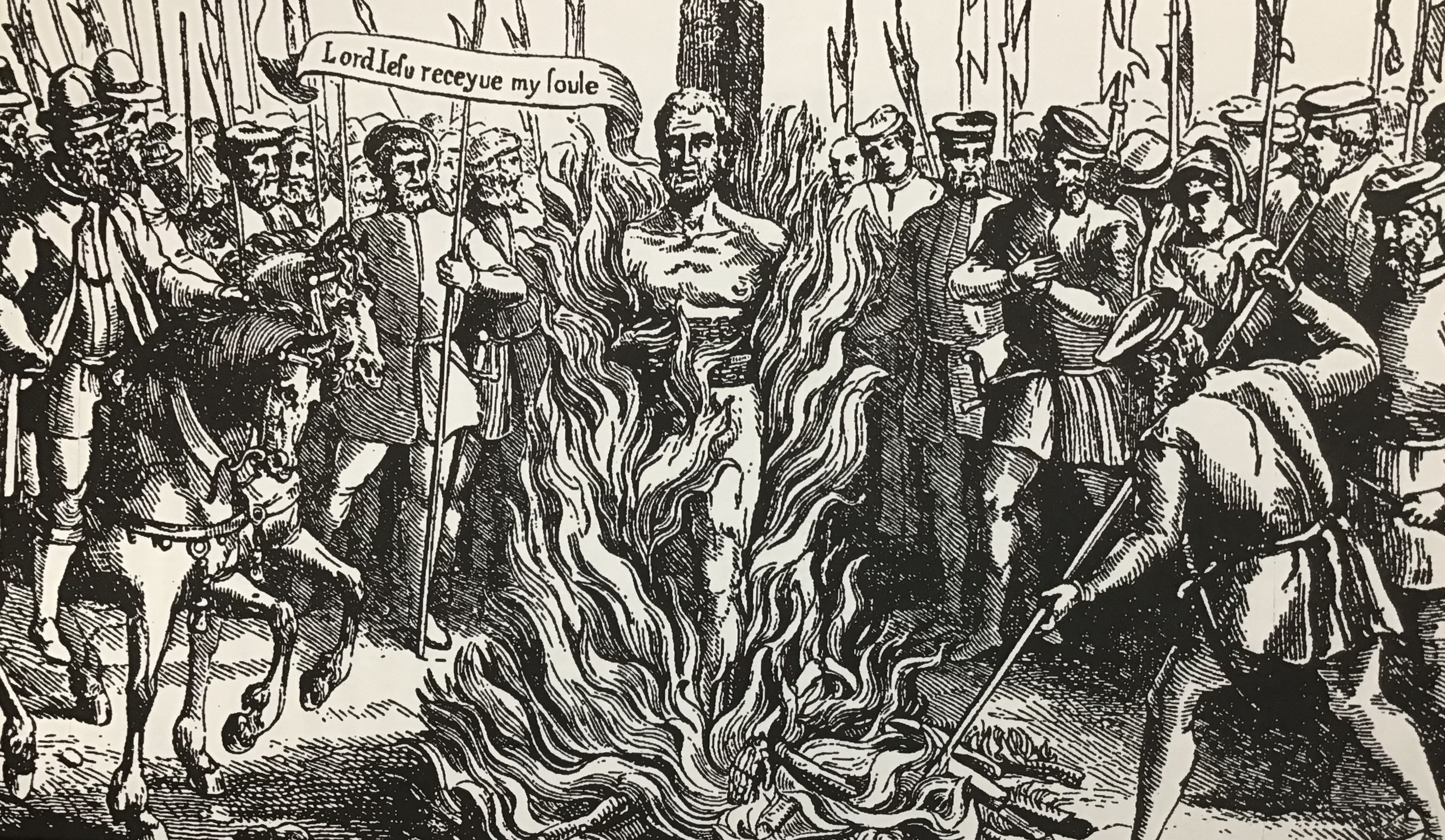
Bishop Hooper burned at the stake for the gospel.

Although we Protestants say that we don’t venerate the saints, you wouldn’t know it the way some pastors fawn over Luther, Calvin, Knox, Spurgeon, and other reformers. Don’t get me wrong, I think those men were used mightily of God, in spite of their flaws and personal sin.

But what I wonder about is how it is that so many pastors who would look up to these men and admire them for their courage and boldness are so cowardly in their own churches when they are called upon by the testimony of the Word of God to stand firm against a potential revolt by those who do not want biblical change.

When Gideon was called to pull down the idols in his town, he may have been overcome by the fear of man, but at least he did it, even if under the cover of night. And when they found out what he did, they wanted to kill him.

When Josiah came to understand how far Judah had fallen away from obedience to the Law, he immediately began to purge Judah and Jerusalem of its idolatrous high places and reinstated the reform that was necessary to please the Lord. This led to a need to rebuild and reorder the temple so that proper worship could be restored.

And the church today is in need of men who are ready and willing to make the changes that are needed in their local churches where unbiblical practices have found a nesting place for ages. For fear of confrontation, loss of income, or prominent families, or a simple fear of losing your job, pastors remain silent in the face of unrepentant sin and all manner of false practices. Unregenerate men are allowed to remain on elder and deacon boards, unhealthy and unbiblical curriculum and programs continue to function so as to avoid a conflict with a women’s ministry head or the parents of the youth. The call for entertainment in church continues to ring louder as the Word of God is given less time to work in the hearts that need it.

Yes, we admire Luther’s stand at the Diet of Worms where he refused to recant. We applaud Spurgeon for being unwilling to give in to the New Measures that sought to entertain the goats. We are in awe of Whitefield who preached the gospel wherever he could garner an audience. We rejoice at the courage of John Rogers and the other Marian martyrs who refused to stop preaching under Bloody Mary of Tudor, and were burned at the stake for it. But will we stand today? Where is our courage? Where is our godly resolve to trust God in the face of angry adversity within and outside of the church? Brothers! Be strong and very courageous!

The Place of Theology in Sermons

The recent State of Theology study by Ligonier ministries puts into quantifiable results the fact that the Evangelical Church is astoundingly ignorant and misinformed about the basic doctrines of the Christian faith. It isn’t hard to understand this when sermons continue to get shorter and substance grows thinner. Moralism, stories, pop psychology, and video clips fill up the time given for preaching and the results are predictable.

How can we beef up the theological content of our sermons while not overwhelming our congregations with long dissertations and dry lectures? As in many things in life, we must strike a balance. How can we do that?

  1. Preach the text. Expositional preaching is not the same as a theological diatribe. Every text contains theology, but not every theological message is expositional. Stick to the text and explain the passage by making the theology in it clear.
  2. Make sure you understand the depth and breadth of the theology in the text. As the one expounding the passage, you must know the greater concepts of theology inside and outside of the passage. Pull out that systematic theology and refresh yourself with the broader and more full ideas involved in the particular theological concept you are addressing. This will guard you from saying something contradicted elsewhere in Scripture.
  3. Be clear about the theological idea before you preach on it. Nothing makes a muddy sermon than not knowing what you are talking about. If you can explain the main idea of a theological concept to a 10 year old, you understand it well. Break it down into bite-sized ideas and use illustrations or similes in order to communicate to different levels of spiritual maturity.
  4. Don’t be afraid of using theological terms, but be sure to define them. Don’t avoid using words like justification, atonement, even hypostatic union, but make sure that you define the word and idea. But be careful that in defining a word, you don’t oversimplify a complicated concept for the sake of being clever.
  5. Connect the theology with living for Christ. God places theological concepts in his Word because they are important, but it is the job of the expositor to mine the riches and point out the practical application of each idea to life. Show them the riches of theology and make them thirst for more. The Puritans were masters at this!

As we add theology each Sunday we will serve up rich, meaty spiritual meals that will satisfy and strengthen the congregation. Your church doesn’t have to be near a seminary, highly educated, or even made up of mature believers to do this. Start at whatever level your church is at spiritually, and then move them toward greater maturity and theological precision with patience and love. Not only will they thank you for it, you will be inoculating the church against false doctrine and false teacher as well, making your job as a shepherd so much easier.

Help for New Expositors: Application in the Sermon

Getting the correct meaning of the text is first and foremost when you are preparing a sermon or Bible study. If you get that wrong, then everything else will be wrong. But the exegesis is only the beginning of sermon preparation. For the listener to gain any benefit from the exposition, the expositor will need to adequately illustrate and apply the text. Since application is a necessary element that newer expositors can struggle with, I’ve laid out seven helps for making sure that you get the application right.

  1. Apply the text. I say this because there are some young preachers who actually believe that it is not necessary to include application in the sermon. You can call it “implications,” but the fact remains that you are to bring the Word of God to bear upon the hearts and lives of your hearers. When John the Baptist preached in the wilderness, he applied the text specifically to his hearers–to the crowd, soldiers and tax collectors (Lk 3:10-14).
  2. Find the universal principles. These are the timeless principles which are true at all times for different groups of people. For instance, God tell his people that he will never leave them, that he will provide for them and protect them. He also says that they are not to worship any other gods. God’s people are also told that they are to love, pray, be patient and not anxious, etc. God is described throughout Scripture as never changing, and so his character is immutable. This can lead us to certain conclusions about him. He always keeps his promises, therefore the righteous will inherit life, and the unrighteous will be judged. These are just a few examples.
  3. Meditate on how you will respond to the text. Sometime a lack of application is a sign that the preacher has not meditated long on the text. Ask yourself the following questions to help: Does this text impact your life?What will you now do, believe, be thankful for or repent of because of this text? So what? Why did God inspire and preserve this passage of Scripture? If you can’t answer these questions for yourself, neither will your listener know what to do either.
  4. Think about your listeners. Knowing your audience will go a long way to help you think through the application and how it will affect their lives. Who are they? (Careers, education, marital status, children, etc.) What are they going through right now? (joys, trials, spiritual life) How will this text impact them when they hear it? Will it help them? How?
  5. Be pointed and specific. Don’t fall into the trap of just telling people to “pray more” or “read your Bible more” or “have more faith.” Tell them how. Be specific enough that they have a few ideas about how they can apply the text—this is helpful for the newer believer. Give the bigger theological picture so that the more mature believers can see other application in their own lives outside of your suggestions.
  6. Use “You” in your application. Don’t shy away from being the messenger of God. He is speaking to them through you.Don’t let a fear of man soften what the Lord has said. You may include yourself (“we”), but you must also speak directly.
  7. Point people to the Cross and the Holy Spirit. We don’t want to err into moralistic preaching that simply calls people to be good. The Bible does teach morality, but it does so by addressing the heart and God’s work through justification and sanctification. Don’t take a short cut and simply tell your hearers to “be good.” Also, preach the need for Christ to unbelievers who are unable to obey since they are unregenerate. Make sure you remember that your audience is mixed. Finally, preach the necessary power of the Holy Spirit for the believer to change. We cannot change in our own power. Don’t frustrate Christians with a command they cannot do by themselves. Teach them to depend upon the Lord for change.