The Glory of God: Lessons from Lazarus’ Resurrection

Jesus said, ‘Remove the stone.” Martha, the sister of the deceased, said to Him, “Lord, by this time he smells, for he has been dead four days.’ Jesus said to her, ‘Did I not say to you that if you believe, you will see the glory of God?’” (John 11:39–40, LSB) 

Mary and her sister Martha must have sat together, grieving in their home as they waited for Jesus. Why was He delayed? They knew He loved them and had informed Him of Lazarus’s sickness in time for Jesus to rush in and heal their brother. What happened?

The fact that both sisters told Jesus the same thing, almost verbatim, leads me to believe they had discussed this very truth: if Jesus had been there, Lazarus would not have died (see vv. 21, 32). In fact, it seems the gathered mourners may have overheard their conversation and reached the same conclusion, but they used it as proof that Jesus was a sham (v. 37) or not powerful enough to prevent Lazarus’ sickness from leading to death.

However, instead of stopping the sickness, Jesus allowed the illness to take His friend’s life. Not only did Jesus wait long enough for the disease to do its damage, but he also missed the funeral and burial. Lazarus had been dead for four days, and in the Middle East, decomposition of bodies begins quickly. 

The question of whether Jesus could heal a sick friend was settled in the minds of Mary and Martha but remained uncertain for the watching crowd. However, Jesus didn’t want to just heal a sick man; He aimed to demonstrate that His power surpassed that of an ordinary doctor. The crowd was intrigued by a man who could supposedly heal the blind (a more complicated healing) but seemed unable to heal a sick man (a simpler task typically handled by doctors and basic medical remedies).

Christ saw and knew all of this. If He healed Lazarus, people would likely dismiss the healing. If He raised him immediately from the dead, some might argue that Lazarus hadn’t truly died. However, after four days in the tomb and being already decomposed, there could be no doubt that this was a case beyond the ability of anyone but God. A miracle was necessary.

I enjoy watches and clocks, especially the beautiful mechanical clockworks that demonstrate precision and craftsmanship. I have a few clocks on which I have performed some minor repairs, creating the wonderful “tick-tock” sound in my study that I enjoy. I’m not sure if there will be clocks in the eternal state, but I do know that God won’t be constrained by them as we are now. God’s timing doesn’t align with ours.

Mary and Martha wanted Jesus to stop death. The crowd doubted He could do it. Jesus delayed. All of these aspects often puzzle us because we tend to believe that God wants things to happen our way and in our time. But in this account, Jesus shattered that notion.

God does things in mysterious ways that I don’t understand, and probably never will. He lets disaster happen and then causes the circumstances to work out perfectly. He makes our manure work out to be fertilizer for the flowers to grow. I’d avoid the mess, but our infinitely wise God knows better.

But even more important than how everything turns out for you and me is what it teaches us about God. In verse 40, Jesus pulls back the curtain and shows us why everything needed to happen this way. He said, “Did I not say to you that if you believe, you will see the glory of God?” Why wait and let Lazarus die, causing such grief for these two sisters He loved? Why wait and endure all the suffering and expense of a funeral? Because God wanted to teach His children something. The lesson? “If you believe, you will see the glory of God.”

I don’t think Jesus was speaking only about the glory He would receive in that moment from bringing Lazarus back to life. I believe He was referring to the greater glory when He speaks and the dead in Christ will rise, bringing about the resurrection of all the dead (Jn 5:25-32). The brief glimpse of what He did before all those people that day was merely a sample of what is to come. On that day, all who believe will witness the glory of God in a way this world has never seen.

So, dear reader, what are you facing today? Be careful not to grumble and complain against God for leading you through it. I know you might believe you had a better plan for your day, but trust me, you don’t. God has a perfect purpose for why you are experiencing whatever you are going through. Trust Him; He knows what He’s doing. 

Sitting with the Scoffers or the Wise?

“How blessed is the man who does not walk in the counsel of the wicked, Nor stand in the way of sinners, Nor sit in the seat of scoffers! But his delight is in the law of Yahweh, And in His law he meditates day and night. And he will be like a tree firmly planted by streams of water, Which yields its fruit in its season And its leaf does not wither; And in whatever he does, he prospers.” Ps 1:1–3 (LSB)

I believe that Psalm 1 sits at the beginning of the sacred psalter because it lays before its readers (and singers) a theme that is apparent throughout—that there are two significant influences upon the hearts of man, the influence of the wicked and the godly.

The blessed man or woman has discriminating tastes in what comes into his or her mind and heart. Discernment means that the godly do not give space to the counsels of those who hate God and His word. They don’t travel with them, nor stand and converse, nor will they sit and take counsel together. The blessings of the righteous are not simply that they receive the Word (His law) and meditate upon them. Yes, this is true. But the blessings also include the omission of the poisonous influences of the wicked as well.

This is essential for many modern Christians to consider because we often like to “have our cake and eat it too,” as the saying goes. In an outmoded time and place, Christians used to speak and write about the need for Christians to be “consecrated.” By this, they meant that followers of Christ were to be set apart and declared holy. As unattainable as it might be, perfect purity was still longed for and sought after. I don’t remember when I last heard a sermon on consecration, nor did I hear another Christian reference this seemingly antiquated idea.

Has “consecration” been rightly relegated to the dustbin of concepts we have “grown out of” as modern Christians who fear being called “fundamentalists” more than being called “worldly?” Have we matured to the point when we can have a heaping dose of wicked counsel alongside a large scoop of sound doctrine and be unharmed?

This type of thinking reminds me of a video I recently saw of two boys bailing water out of a sinking boat. One was bailing the water out of the boat, while the other was unintentionally adding water to another part of the little boat. No matter how hard they tried, they couldn’t get the boat to stay afloat.

Let’s be honest. I have heard Christians claim that they can watch filthy things at the movies and on TV and that it doesn’t affect them spiritually. Maybe they are somehow stronger spiritually than most. But Psalm 1 seems to say that the blessed one won’t do that. They won’t sit down with the ones who will mock Christ and learn from them. They won’t walk with the ones who justify sin. And they won’t stand as if one of the unregenerate and converse as if our worlds and eternal destinies are the same—because they aren’t.

I’m not advocating for a legalistic set of rules and acceptable practices for Christians. That’s been done and has failed miserably. But I am saying that some of us need to consider what we permit to influence our thinking and lifestyles. We can’t hope to be totally separated, as the Amish have tried and failed, because that isn’t what Christ has called us to do. We can’t escape the world by isolationism. Instead, we need to be set apart as holy, preferring the company of God and His people and the Word to the company and wisdom of this world. By this, I don’t mean we physically separate or stay apart from interacting with our unbelieving neighbor. We dare not do that for the sake of the gospel and for the influence of this world. However, there is a big difference between engaging with people as Jesus did and engaging in their sinful activities, which Jesus did not do.

I think as we do this, we will see our lives, our families, and our churches grow more spiritually healthy and vibrant, like trees planted by streams of water. And as we grow in spiritual health, the taste of the world’s wisdom will begin to fade away and lose its allure.

Words as Weapons

Pastors are among those who are the most prolific in their use of words and speech. Whether teaching, preaching, counseling, or writing, the words that an average minister uses in a given week must be in the tens of thousands, if not hundreds of thousands.

When those words are good and wholesome, then those who receive them do so as a refreshing stream from a cool brook (Prov. 18:4). But when words are weaponized and used in order to afflict pain, they can be like the thrust of a sword that cuts deeply (Prov. 12:18). For anyone who has been cut to ribbons, you understand this picture well.

The use of words is so powerful, that in today’s Wall Street Journal, Gerard Baker wrote an opinion piece regarding the way that words are used in times of war to bring about courage, as well as how they can be used as propaganda to destroy and confuse.

“John F. Kennedy said of Winston Churchill that he “mobilized the English language and sent it into battle.” From Pericles to Abraham Lincoln, words have often been as effective as armaments in shoring up a people’s defenses, reinforcing an army’s resolve, or inspiring a unit’s bravery. But in war, as in peace, words can also be used to demoralize and disorient. They can be used—and have been—more deviously by the enemy, and its quill-, microphone- and laptop-carrying enablers and propagandists, to obfuscate and confuse, to seed doubt in a just cause.”(1)

James 3:1 is a particularly strong passage for those who teach the Word of God because it is a warning to us. Since we trade in the use of words, we can become adept at it—wordsmiths who fashion sentences and paragraphs along logical lines of argumentation. In service to King Jesus, this is excellent. It is when we use these skills to smith words of destruction and pridefully destroy others that we must be careful of and when we make a blade to cut others to shreds, we must repent.

I must admit that I somewhat understand the struggle of men like Martin Luther, who was coarse in his language at times. He was in a fierce battle, and when in battle, we can lay aside niceties and civility because we are in the heat of fending off a virulent enemy. Luther lived in a time that demanded much from him—and yet it did not excuse Luther from the sin he committed by his tongue and pen, and it does not excuse me—or you.

In many ways, we must exhibit the grace of our Savior who went to battle with the powers of darkness and yet did not sin. He gave not an inch to the enemy—either in his ministry or his heart. We must follow as closely to our Lord in this as we possibly can. As Christ’s own, we are not at liberty to use the tactics of the enemy when we speak, write, and teach. We cannot use words that bite and tear, and ultimately destroy those for whom Christ died. If we do so, we do not walk in the pathway of Christ.

It is not “anything goes” in these days of moral warfare. We must take the higher ground, we must speak truth at all costs but always seasoned with salt. The grace of Christ must always emerge from our lips, and we must not speak as if we belong to the enemy—whether in the pulpit, at our keyboards, or in our homes. May Jesus Christ be sovereign over our mouths as much as our hearts.

(1) (Gerard Baker, Wall Street Journal, Opinion 11/7/2023, https://www.wsj.com/articles/hamas-defenders-wield-words-as-weapons-91713cee?st=an53x27bv366061&reflink=article_copyURL_share)

Preaching to Be Forgotten and For God to Be Glorified (weekend repost)

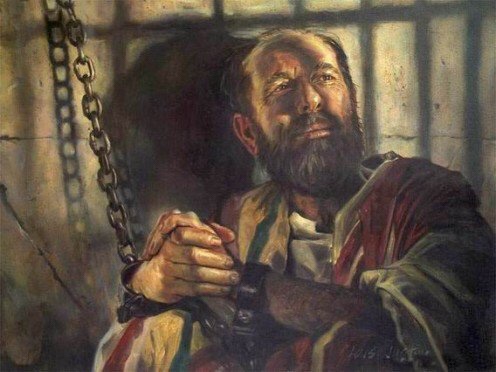
What did Paul mean when he wrote of his “weakness…in fear and much trembling?” Clearly, Paul was connecting his preaching to these things (“…my speech and my message…”). I think that Paul’s words here are a much-needed correction to the celebrity culture within the Western church today.

The Apostle to the Gentiles stood before this church in Corinth as a weak man. He did not have the polish and trappings that the false teachers of Corinth had, and to many, this was a severe disadvantage. Although they might not say it this way, there are many who would imply strongly that the message is secondary to the method. If you don’t have a media empire pushing your message, then the world won’t listen and you’ll be ineffective. I wonder how Paul would have responded to that sort of thinking. Well, we don’t have to wonder because his Spirit-inspired words are given to us.

Read the full post here: Preaching to Be Forgotten and For God to Be Glorified

Preaching to Be Forgotten and For God to Be Glorified

“And I was with you in weakness and in fear and much trembling, and my speech and my message were not in plausible words of wisdom, but in demonstration of the Spirit and of power, so that your faith might not rest in the wisdom of men but in the power of God.” 1 Corinthians 2:3–5 (ESV)

What did Paul mean when he wrote of his “weakness…in fear and much trembling?” Clearly, Paul was connecting his preaching to these things (“…my speech and my message…”). I think that Paul’s words here are a much-needed correction to the celebrity culture within the Western church today.

The Apostle to the Gentiles stood before this church in Corinth as a weak man. He did not have the polish and trappings that the false teachers of Corinth had, and to many, this was a severe disadvantage. Although they might not say it this way, there are many who would imply strongly that the message is secondary to the method. If you don’t have a media empire pushing your message, then the world won’t listen and you’ll be ineffective. I wonder how Paul would have responded to that sort of thinking. Well, we don’t have to wonder because his Spirit-inspired words are given to us.

In his commentary on these verses, Alan Johnson clarifies what Paul is saying: “…[Paul’s] proclamation (wider than only preaching) of the “mystery” of God, namely, Jesus Christ as the crucified One, was in keeping with the sole focus on the cross because Paul consistently, deliberately presented himself not self-confidently but in self-effacement, not in strength as a “successful” person but in weakness and fear, with much trembling (v. 3).”  (Alan F. Johnson, 1 Corinthians, vol. 7, The IVP New Testament Commentary Series (Westmont, IL: IVP Academic, 2004), 62.)

Paul isn’t working to build his brand. He isn’t seeking to launch a well-strategized media plan that incorporates all the latest channels for all the up-and-coming evangelical elites. He isn’t buddying up to those more popular false teachers in order to share the limelight while justifying this as focusing on the majors and overlooking areas of disagreement in the name of “grace.” Nope. Paul is not about Paul. He unashamedly points to himself as a weak and fearful man. His words were perceived by the Corinthians as implausible and foolish–because that was what the unvarnished gospel sounds like to unregenerate ears. Paul didn’t seek to “fix” it.

And since Paul wasn’t trying to boost his own brand, he didn’t care what others thought about him so long as they saw Jesus. Paul was weak–he didn’t feign weakness to seem more spiritual. He was scared–but God was his strength. He wasn’t practiced and polished in his delivery, intentionally–so that people wouldn’t walk away impressed with this servant’s speech, but so they would walk away worshipping his God.

Paul focused on the cross in his life, message, and methods. In our glitzy evangelical world of super conferences, social media blitzes, and multi-books deals, we are all too often a faint shadow of this servant of God. May we join with George Whitefield in saying, “Let my name die everywhere, let even my friends forget me, if by that means the cause of the blessed Jesus may be promoted.”