Praying for Missions

“Missions is not the ultimate goal of the church. Worship is. Missions exists because worship doesn’t.”

—John Piper

Satan wants to cause disruptions and disunity among missionaries to make their ministry ineffective, and ruin their testimonies, which if not quickly dealt with, could cause many to reject the gospel.

There can be a tendency to think of missionaries as superheroes and put them on a pedestal, but the truth is that they are just like all other Christians with every weakness and temptation that you struggle with. Like you and me, they too need to depend on the Lord so that He can work through them. God truly does use the weak and foolish of this world to confound the wise (1 Cor. 1:27).

Missionaries need your prayers.

Some examples of things you can pray for:

  1. Dependence on God.
  2. For strong, godly marriages.
  3. For health problems- these can cause discouragement and might press missionaries to eventually leave the field.
  4. For the difficulties of language and culture learning.
  5. That the message of the gospel of grace (not works) would be clearly understood 
  6. Missionaries are often surrounded by Satanic forces through witchcraft and rituals of the local people.
  7. Frustration that comes from with lack of privacy, lack of results, unfamiliar foods, extreme climates.
  8. Open communication and good relationships with coworkers.
  9. Loneliness, including separation from family and friends. 
  10. Making new friends in a new culture and language.
  11. Missionary children- for social, educational and spiritual development.
  12. Bible translation- Satan doesn’t want God’s Word to spread into other languages and it is a real spiritual warfare to get the Word of God into a new language.

Eight Ideas for Reaching Your Mission Field (Other Cultures in Your Back Yard)

1. Take your neighbors a plate of cookies with a tract in their own language. If you give a non-disposable plate they are almost sure to return it, possibly with a gift of their own. Then continue the relationship.

2. Get the young people of your church involved. Many teenagers are taking foreign language classes in school or have learned it at home. Challenge them to memorize their testimony in this foreign language and go from there.

3. Hand out copies of the Gospel of John in the language of your neighbors and those at work or leave in your work break room, hospital waiting rooms, laundromats and other public places for people to pick up and read. 

4. Pray specifically for families and couples to be saved and discipled. The family is so important and will lead to other members being brought to Christ

5. Consider starting some informal soccer games on Saturday and involve the children or maybe even adults. Bring a cooler of cold water. Take a break, give out the water and share the gospel. In many countries, soccer (or football as it is called in other places) is a favorite.

6. If you have a ministry in your church that teaches in another language, pray fervently for that ministry to grow. We can plant and water, but it is God who will bring the growth.

7. If you speak a foreign language, volunteer to be a translator for gospel materials. You must have good grammar and spelling, but the needs are endless!

8. If you speak the language, help with outreach events, paying particular attention to those who come and speak in a foreign language.

Some encouraging quotes to help fuel your prayer for missions:

  • “Expect great things from God; attempt great things for God” — William Carey, who is called the father of modern missions
  • “If a commission by an earthly king is considered an honor, how can a commission by a Heavenly King be considered a sacrifice?” — David Livingstone
  • “Some wish to live within the sound of a chapel bell; I wish to run a rescue mission within a yard of hell.” — C.T. Studd
  • “Someone asked, ‘Will the heathen who have never heard the gospel be saved?‘ It is more a question with me whether we — who have the gospel and fail to give it to those who have not — can be saved.” — Charles Spurgeon
  • “Missions is the overflow of our delight in God because missions is the overflow of God’s delight in being God.” — John Piper
  • “People who do not know the Lord ask why in the world we waste our lives as missionaries. They forget that they too are expending their lives … and when the bubble has burst, they will have nothing of eternal significance to show for the years they have wasted.” — Nate Saint, missionary and martyr
  • “We must be global Christians with a global vision because our God is a global God.” — John Stott
  • “It is not in our choice to spread the gospel or not. It is our death if we do not.” — Peter Taylor Forsyth

Prayer and Fasting (part 2)

Yesterday I posted about the source of our deepest hungering and desire. What do we truly desire and what does it say about our heart? You can read about that here: Prayer and Fasting (part 1). Today I want to spend more time explaining the biblical idea of fasting and prayer and then look at some practical consideration for fasting.

Jesus’ general principle regarding how to be blessed or ruined by spiritual disciplines is found in Matthew 6:1, “Beware of practicing your righteousness before other people in order to be seen by them, for then you will have no reward from your Father who is in heaven.”

Then Jesus gives three examples of ways that we can be found guilty of practicing our faith for others to see us and admire us:

  1. Giving (vv. 2-4) or our outward conduct
  2. Praying (vv. 5-15) or our upward conversations
  3. Fasting (vv. 16-18) or our inward cravings

Matthew 6:16-18 reads, “And when you fast, do not look gloomy like the hypocrites, for they disfigure their faces that their fasting may be seen by others. Truly, I say to you, they have received their reward. But when you fast, anoint your head and wash your face, that your fasting may not be seen by others but by your Father who is in secret. And your Father who sees in secret will reward you.

What Is Biblical Fasting?

Simply defined, fasting (for all reasons) is to refrain from food for a period of time. Biblical fasting is always accompanied with prayer. I am speaking of biblical fasting here, because several religions practice fasting, and people fast for medical and other purely non-religious reasons.

Fasting in the Bible is required only in the Old Testament, for the Day of Atonement (Lev. 16:29-34; 23:26-32). This “self-affliction” was to accompany the offering of sacrifices for the nation of Israel. It was a national day of mourning for their sins. As such, eating was inappropriate.

Since Jesus Christ has become our final sacrifice (Heb 10:12), we do not need a Day of Atonement. Therefore, the only obligatory day of fasting has been removed for Christians. So, fasting is not required by God.

Why did people in Bible fast?

Although there was only one obligatory day to fast, voluntary fasting was(and is) acceptable to God if done with the right heart attitude. Some examples of the reasons people fasted in the Bible were:

  • When Mourning: 2 Samuel 3:35 tells us David fasted after the death of Abner.
  • When in Grave Danger: Esther 4:16 shows us that Esther asked for prayer and fasting before she approached the king.
  • When Repentant: Jonah 3:5, 7 explains how the Ninevites repented before God in sackcloth and ashes for their sins, and God forgave them.
  • When Facing Important Decisions: Acts 13:2-3 says that before the church at Antioch sent away Paul and Barnabas for their mission trip they prayed and fasted.
  • When Facing Intense Trials: Matthew 4:2 tells us that as Jesus prepared to begin his ministry, he was led into the wilderness where he fasted and prayed for forty days and was tempted by Satan.

How should Christians approach fasting?

First, remember that fasting is not obligatory, but voluntary. We are nowhere commanded to fast, although we may do so when we desire. The Pharisees fasted two times a week (Lk 18:12), but this was a tradition of men, not a requirement of God.

Also, remember this important truth if you become puffed up in your fasting: of the two men in the Temple that day that Jesus spoke of in Luke 18, one fasted, and the other went home justified! Fasting does not justify us!!

Second, we must fast with the right intentions. Matthew 6:16 shows us that there are some who practice religious activities to be seen by others.

  • If you fast, ask yourself why you are doing it?
  • If you fast, are you letting yourself look tired or haggard so people will ask you about it? The Pharisees loved the attention they received. They even went so far as to rub ash on their faces to look more sullen and sickly. It’s the same with all our spiritual disciplines. Do you do them to be seen by men?
  • If you fast, are you trying to earn God’s favor? Fasting is not a bargaining chip for God. It’s not “I skipped food for three days Lord. YOU HAVE TO HEAR ME NOW!” Fasting doesn’t mean that if I give up meat, God will do what I say.

Finally, when we fast, we should see it as an opportunity to put all of our focus upon God, and not as an opportunity to pull attention to ourselves. Jesus pointed out that the Pharisees drew attention to themselves with their sullen look. Instead, fasting ought to be seen as a time to look at the Giver of every good and perfect gift. We can forget about God sometimes, and when we fast, we take our eyes off of the gift of food and cast our eyes toward heaven to find communion with our Lord. This is why the Pharisees were such hypocrites. They took something which should have given God attention and used it for their own attention.

Some final considerations regarding fasting:

Fasting does not need to be a fast from food only. Some of you may not be able to fast from food for medical reasons. Perhaps you are weakened from sickness or you need to take medications or your doctor has said, “No fasting.” That is ok. God knows how weak our frame is!

Fasting, although primarily abstaining from food for a time of dedicated prayer and worship with the Lord, is not only described in terms of food. If you look at 1 Corinthians 7:5 it refers to a different kind of fast for married couples. Notice that this fasting referred to here is for a set time and for the purpose of prayer. It should be short and purposeful by agreement of both so as not to give an opportunity for temptation for either the husband or the wife.

Dr Martyn Lloyd-Jones wrote, “Fasting if we conceive of it truly, must not … be confined to the question of food and drink; fasting should really be made to include abstinence from anything which is legitimate in and of itself for the sake of some special spiritual purpose. There are many bodily functions which are right and normal and perfectly legitimate, but which for special peculiar reasons in certain circumstances should be controlled. That is fasting.

This means that food may not be a big deal for you, but perhaps TV or internet distracts you from the Lord and prayer. Maybe its sports or something else.

RememberAbraham? In Genesis 22:1-2 what does it say Abraham loved? What did he hunger for? He longed for the promised son Isaac. And God gave him a good gift in Isaac. But now God asks him to sacrifice what he loved. Did he love God more than Isaac?

Abraham set his eyes to obey the Lord. He took Isaac up the mountain and he bound him and took the knife to slay his beloved boy. But look at vv. 11-12. “now I know that you fear God, seeing that you have not withheld your son…” Abraham’s love for God was greater than his love for Isaac.

Now let me ask you, what do you hunger for most? Who’s in charge? Is it your hunger or God? It is easy to say that it’s not food, like the drunk who says he can give up his liquor anytime he wants, but he just doesn’t want to. What controls you so that you don’t want to give it up?

Dear friend above all else, hunger and thirst for Christ.

Help for New Pastors-Planning A Funeral (weekend repost)

Although there isn’t a substitute for actually conducting a funeral yourself, it is possible to be better prepared to have those conversations that will make for a better memorial and graveside service. Like many things in pastoral ministry, after struggling to figure out how to do something as a new pastor, I figured out a way that worked for me and then standardized a format that made my “system” repeatable.

Read the rest of the post here: Help for New Pastors-Planning a Funeral

The Need for Modern Reformers in the Local Church

“The problem with preachers today is that nobody wants to kill them anymore!”

Steven J. Lawson
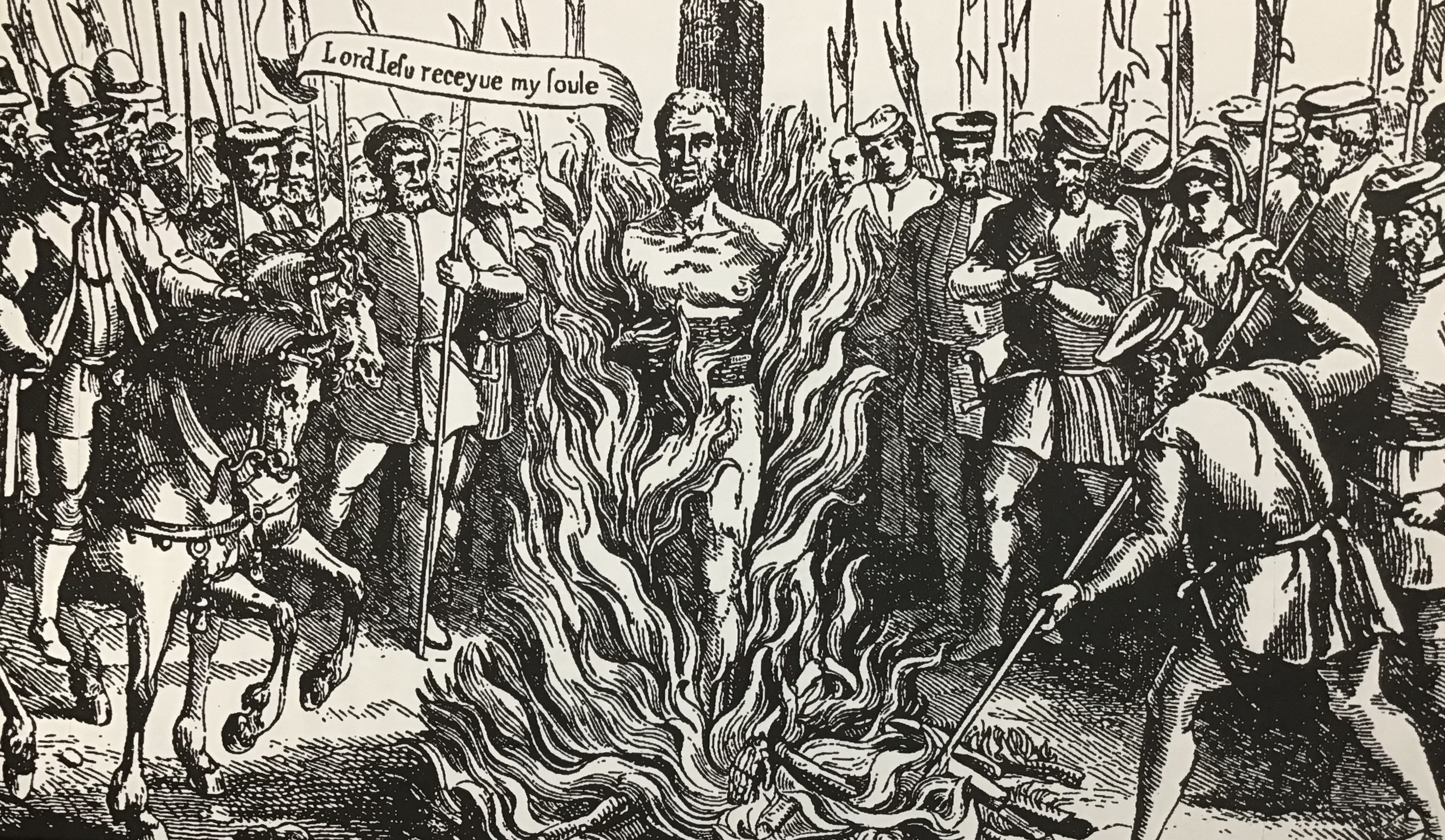
Bishop Hooper burned at the stake for the gospel.

Although we Protestants say that we don’t venerate the saints, you wouldn’t know it the way some pastors fawn over Luther, Calvin, Knox, Spurgeon, and other reformers. Don’t get me wrong, I think those men were used mightily of God, in spite of their flaws and personal sin.

But what I wonder about is how it is that so many pastors who would look up to these men and admire them for their courage and boldness are so cowardly in their own churches when they are called upon by the testimony of the Word of God to stand firm against a potential revolt by those who do not want biblical change.

When Gideon was called to pull down the idols in his town, he may have been overcome by the fear of man, but at least he did it, even if under the cover of night. And when they found out what he did, they wanted to kill him.

When Josiah came to understand how far Judah had fallen away from obedience to the Law, he immediately began to purge Judah and Jerusalem of its idolatrous high places and reinstated the reform that was necessary to please the Lord. This led to a need to rebuild and reorder the temple so that proper worship could be restored.

And the church today is in need of men who are ready and willing to make the changes that are needed in their local churches where unbiblical practices have found a nesting place for ages. For fear of confrontation, loss of income, or prominent families, or a simple fear of losing your job, pastors remain silent in the face of unrepentant sin and all manner of false practices. Unregenerate men are allowed to remain on elder and deacon boards, unhealthy and unbiblical curriculum and programs continue to function so as to avoid a conflict with a women’s ministry head or the parents of the youth. The call for entertainment in church continues to ring louder as the Word of God is given less time to work in the hearts that need it.

Yes, we admire Luther’s stand at the Diet of Worms where he refused to recant. We applaud Spurgeon for being unwilling to give in to the New Measures that sought to entertain the goats. We are in awe of Whitefield who preached the gospel wherever he could garner an audience. We rejoice at the courage of John Rogers and the other Marian martyrs who refused to stop preaching under Bloody Mary of Tudor, and were burned at the stake for it. But will we stand today? Where is our courage? Where is our godly resolve to trust God in the face of angry adversity within and outside of the church? Brothers! Be strong and very courageous!

Don’t Envy the Temporary Success of the Wicked

Sometimes it is so hard for Christians to see the unabated success of the wicked in the face of some significant trials and struggles. If the troubles weren’t bad enough, it is made worse when the unbelievers around us point out how foolish we are for clinging to hope in Jesus when we could simply make it easier on ourselves and do what it seems like everyone else is doing to get ahead.

In Psalm 49, the sons of Korah wrestled with this very issue and want to help us to endure by clinging to the Lord. To do this, they inject a massive dose of truth that we can easily forget. To begin with, they need to get our attention:

Hear this, all peoples! Give ear, all inhabitants of the world, both low and high, rich and poor together! My mouth shall speak wisdom; the meditation of my heart shall be understanding. I will incline my ear to a proverb; I will solve my riddle to the music of the lyre.” (Psalm 49:1–4, ESV)

With the false health-wealth and prosperity gospel out there, many people all over the world are convinced that they can have all the wealth and riches that this world offers and heaven too. With Joel Olsteen, Hillsong Church, TBN preachers, and other snake-oil salesmen selling a false gospel for profit, it seems as if you are losing out if you don’t get a piece of the action. It’s not that the Lord is against wealth, but those that would seek to do anything to gain it, or who make it their god and driving desire in life become shipwrecked in their faith.

To address this tendency to seek pleasure and success apart from God, the psalmist slaps his readers with the truth to awaken us from the stupor that can overcome us. He writes:

Why should I fear in times of trouble, when the iniquity of those who cheat me surrounds me, those who trust in their wealth and boast of the abundance of their riches? Truly no man can ransom another, or give to God the price of his life, for the ransom of their life is costly and can never suffice, that he should live on forever and never see the pit. For he sees that even the wise die; the fool and the stupid alike must perish and leave their wealth to others. Their graves are their homes forever, their dwelling places to all generations, though they called lands by their own names. Man in his pomp will not remain; he is like the beasts that perish. This is the path of those who have foolish confidence; yet after them people approve of their boasts. Selah Like sheep they are appointed for Sheol; death shall be their shepherd, and the upright shall rule over them in the morning. Their form shall be consumed in Sheol, with no place to dwell. But God will ransom my soul from the power of Sheol, for he will receive me. Selah

(Psalm 49:5–15, ESV)

Below are 4 Great Truths that We Can Take to the Bank Regarding those Who Have Made Success and Money Their God.

  1. Great Wealth Cannot Buy Spiritual Freedom.Truly no man can ransom another, or give to God the price of his life, for the ransom of their life is costly and can never suffice, that he should live on forever and never see the pit.” (Psalm 49:7–9, ESV)
  2. Great Power Cannot Stop Death.
    • Everyone dies.For he sees that even the wise die; the fool and the stupid alike must perish and leave their wealth to others.” (Psalm 49:10, ESV)
    • Everyone is buried.Their graves are their homes forever, their dwelling places to all generations, though they called lands by their own names. Man in his pomp will not remain; he is like the beasts that perish. This is the path of those who have foolish confidence; yet after them people approve of their boasts. Selah” (Psalm 49:11–13, ESV)
    • Everyone is raised up: The wicked to eternal death, and the righteous to eternal life.Like sheep they are appointed for Sheol; death shall be their shepherd, and the upright shall rule over them in the morning. Their form shall be consumed in Sheol, with no place to dwell. But God will ransom my soul from the power of Sheol, for he will receive me. Selah” (Psalm 49:14–15, ESV)
  3. Nobody Will Take Anything With Them.For when he dies he will carry nothing away; his glory will not go down after him.” (Psalm 49:17, ESV)
  4. The Wicked Rejoice in Temporary Pleasures. For though, while he lives, he counts himself blessed —and though you get praise when you do well for yourself— his soul will go to the generation of his fathers, who will never again see light.” (Psalm 49:18–19, ESV)

Therefore, Get Understanding! With this truth and clarity comes the reality of where we need to focus. “Man in his pomp yet without understanding is like the beasts that perish.” (Psalm 49:20, ESV). Do not be like a dumb beast that simply lives for its next meal. Instead seek the living God who is worth more than silver or gold.