The Lord’s Provision for Ministry (part 3)

Maybe it’s an American thing, but it seems that there is too much entrepreneurialism in the church today. Every up and coming church is looking to be innovative and cutting-edge. Along with this entrepreneurial spirit comes an equally troubling reality–that man-centered ministry is produced by a man-centered power. It makes sense: if you throw out the book on how to pursue ministry, why would you seek to be empowered in a biblical manner? For the man of God who wants to do things according to God’s Word, we need to remember that God provides in every way for every need.

We began to look at six ways which the Lord provides for His servants.The first way he provides is: He Gives Us Ministry Co-workers. You can read part one here: The Lord’s Provision for Ministry (part 1). Then we saw that he provides financially and by giving us focus in our ministry. You can read this in part 2: The Lord’s Provision for Ministry (part 2). Fourthly…

He Gives Us Gospel Boldness

“But when they resisted and blasphemed, he shook out his garments and said to them, “Your blood be on your own heads! I am clean. From now on I will go to the Gentiles.” (Acts 18:6, NASB95) 

Hard hearts are a result of the sinfulness of mankind. It goes all the way back to the Garden of Eden. We shouldn’t be surprised that Paul faced the rejection and mockery of the crowds in Corinth as he had in many cities he preached in. And it shouldn’t surprise us when we see that happen to us as well. It’s nothing new and we should expect it. But we should also expect that the Lord will provide us with gospel boldness as well, so that we can respond as we should in the face of opposition.

In verse 6, Paul can no longer stand the resistance of the Jewish people’s hardened hearts. Their objections degenerated into blasphemies against Christ himself. Paul shook out his garment, a sign of disgust and complete rejection, and rebuked them for their hardness. Paul had done what the Lord said was required in Ezekiel 3:18-19, “When I say to the wicked, ‘You will surely die,’ and you do not warn him or speak out to warn the wicked from his wicked way that he may live, that wicked man shall die in his iniquity, but his blood I will require at your hand. “Yet if you have warned the wicked and he does not turn from his wickedness or from his wicked way, he shall die in his iniquity; but you have delivered yourself.” (Ezekiel 3:18-19, NASB95)  

Paul wasn’t fooling around. He had come to complete the King’s business and he didn’t want to waste his time on foolish scoffers.

Some people call alcohol “liquid courage” because it lowers the inhibitions and allows people to say and do things they would never do or say when sober. However, Ephesians 5:18 says, “And do not get drunk with wine, for that is dissipation, but be filled with the Spirit,” (Ephesians 5:18, NASB95). Here, the influence of drunkenness is compared to the influence of being filled with the Holy Spirit. Paul was a Spirit-filled man and this is demonstrated in the fact that with great courage and boldness he spoke out against the rejection and mockery of the gospel of Jesus Christ.

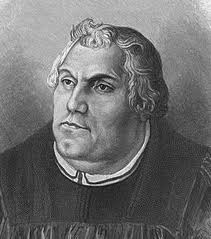
John Calvin once said to the Queen of France, “A dog barks when his master is attacked. I would be a coward if I saw that God’s truth is attacked and yet would remain silent.” God offers this same gospel boldness as well. I think that too many Christians are okay with being quiet wallflowers, even when their Lord is blasphemed in their presence. We must pray for the Lord to fill our mouths with a courageous testimony, even in the face of opposition.

Fearing God the Father

“Praise the Lord!
Blessed is the man who fears the Lord,
who greatly delights in his commandments!”
(Psalm 112:1, ESV)

There used to be a time when people would speak in reverential tones of certain men and women as “God fearing.” This person was known for living a life that was pleasing to God, and was utterly trustworthy and faithful. You would not find a God-fearing man or woman in the company of certain people, or involved in sinful activities and conversation.

God-fearing people were thought of this way because society in general knew what the Bible said. They knew what God expected of men, but they knew that most people only paid lip-service to what the Bible said. But a God-fearing man or woman was different.

Easton’s Bible Dictionary defines the fear of the Lord like this: “It is a fear conjoined with love and hope, and is therefore not slavish dread, but rather filial [fatherly] reverence.”

We notice here a mixture of fear and love, and it is connected to a fatherly love which is co-mingled with respect. Charles Bridges defined fear of the Lord in a similar manner. He wrote, “[The fear of the Lord is] that affectionate reverence, by which the child of God bends himself humbly and carefully to his Father’s law.”[1]

Bridges, like Easton’s definition, uses the Father and child imagery to help define the fear of the Lord, writing of the child of God and his heavenly Father. This image of God as Father is replete throughout the Bible.

Fear the Father as Creator

In Deut. 32:6 it says, “Do you thus repay the Lord, you foolish and senseless people? Is not he your father, who created you, who made you and established you?” (ESV). Just as a father provides, protects, and leads his family, so too the Lord had done the same for Israel. But shockingly, Moses’ words reveal that Israel was acting like an ungrateful and rebellious child that has no fear of breaking his rules nor of disrespecting him before the watching world.

The prophet Isaiah also testified against this lack of the fear of the Lord in Israel at a much later time. In Isaiah 1:2 the prophet brought the Word of the Lord saying, “Hear, O heavens, and give ear, O earth; for the Lord has spoken: “Children have I reared and brought up, but they have rebelled against me.” (ESV). Notice what the Lord says here—he has reared and brought them up. This reality should have brought him that fear we are looking at. They should have loved and respected him, but they did not.

In Isaiah 64:8,the prophet used the father metaphor alongside another picture of God as a Potter. In this passage, it says, “But now, O Lord, you are our Father; we are the clay, and you are our potter; we are all the work of your hand.” (ESV). This text looks forward to the coming Millennial Kingdom when the heart’s of God’s people shall turn and embrace the Messiah that they have rejected.

We see in these words the recognition that the Lord has made them and he is free to do with them as he sees fit. One day Israel will humble itself before the Lord in national contrition and joyful submission. God can do what he wants because he is not only Father, but he is Potter, who has made the clay into whatever he sees fit.

Fearing the Father as Wisdom

Probably most familiar to us is this aspect of the fear of the Lord as the beginning of wisdom. Proverbs 1:7 says, “The fear of the Lord is the beginning of knowledge; fools despise wisdom and instruction” (ESV). When we consider the fear of the Lord as Father and Creator, we can better see why to reject the Lord and His commands is foolish. A child, who has little strength, wisdom, experience, power, and influence is foolish to put off the care and counsel of a father who gives these to his children.

When the Lord spoke to Job and began prodding him to answer his questions, like a child who quickly has learned that he is over his head, he simply put his hand over his mouth. This is wisdom, knowing that the Father knows best and that our finite minds cannot begin to grasp his infinite plans for us.

Fearing the Lord as Judge

This is very different from the idea of fearing the Lord as Father and Creator. It is the fear that comes when a wayward child has been disobedient and has turned aside from the father’s ways. It is also the fear that does not come from a child of God, but from the fool that despises the Lord and his commands. It is not a true and pure reverential fear mixed with love, for there is no such love in the rebellious creature. This fear is a craven, slavish fear that the disobedient slave has when he fears his master will discover that he has been stealing from him secretly. Except our Lord is not blind to those that have offended him.

An example of the wayward who fear the Lord is found in Ezra 10, where the people have come to understand their disobedience in intermarrying with the pagan nations around them, something God had expressly forbidden Israel from doing. In verses 1-4 we read that the fear of the Lord (“trembling” in v. 3) has led to repentance and obedience. But the wicked fear the Lord in a different way, a way which is fearful of judgment to a point, but will not lead to any true changes in their lives.

Belshazzar did not repent when he saw the hand of God writing on the wall. He trembled in fear, but did not turn from his sin (Dan 5:9). When Paul preached the gospel before Felix, the Acts 24:25 says he was “alarmed” about the coming judgment, but he did not repent. And when James speaks about the demons believing and shuddering, we do not say that they have repented of their wickedness (James 2:19)!

Proverbs 28:1 says, “The wicked flee when no one pursues, but the righteous are bold as a lion” (ESV). The wicked flee from a judgment that will one day overcome them. They cannot escape the Lord’s righteous judgment. But the righteous do not flee the Lord even though we fear him. He fears him with reverence as our Father and Creator.

Fear and love meet in the fear of the Lord. He is our Father, Creator, and God. These should endear him to us and motivate our hearts toward worship. If they don’t, if we need manipulation, fear of judgment or punishment, we are not children, but slaves. Children don’t have that sort of fear of a righteous Father. They love him, respect him and desire to please him.

[1] Quoted by Bruce Waltke in NICOT, Proverbs 1-15, p. 101.

Three Lessons from a Sack Lunch

But Jesus said, “They need not go away; you give them something to eat.”” (Matthew 14:16, ESV)

I think that the strangest and most puzzling parts of the Bible sometimes yield the best gems when we take the time to ponder their meaning. Take for instance the above passage, where Jesus insists that the disciples feed the crowd of 5,000 men even though he knew that they couldn’t do it, and knowing that he would feed them himself a few moments later.

Why would Jesus say this? Why would he put such a gigantic responsibility upon the disciples to do what they couldn’t do? I think could be three possible reasons, and with each reason a lesson for us:

1. He wanted his disciples to learn compassion for the people, as he had.

Two verses easier Jesus is described as feeling compassion for the large crowds gathered. His healing ministry was an outgrowth of this compassion. Although it may be that the disciples had compassion, large crowds and the consuming needs of this crowds can begin to gnaw at the best of people. The needs were overwhelming and yet, Jesus continuously had compassion for the sea of humanity and their needs.

Whether it is Los Angeles, Chicago, Mumbai, Caracas, Tokyo, or Melbourne, the megacities of our world are teeming with hurting people. Sometimes Christians avoid the cities because the needs are so great, but Jesus felt compassion because the needs are great. And the needs are greater than the need for only bread and fish. They are lost and need the gospel.

2. He wanted the disciples to learn to come to him for the needs of others.

Of course the disciples didn’t have enough food to deed an estimated 20,000 people! That’s about the capacity of Madison Square Garden in New York City! But the disciples needed to learn that the five little barley loaves and two small fishes were not their only resources. Their greatest resource was looking them in the eyes and telling them to do the impossible. But they could not see beyond their small abilities.

So many pastors and churches are like those disciples. The city is so big. The sin is so great. The hearts are too hard. The church is too small and weak. We do not have enough resources and our power is weak. YES!! In ourselves we do not have enough. But we are not by ourselves. We must learn to go to our heavenly Father with our needs and ask of him on behalf of the communities we serve. He wants us to ask! He does not expect us to serve the needs of the world in our own strength.

3. He wanted them to see the power he would demonstrate once they came the end of their own meager resources.

There is no biblical record of the reaction the disciples had when they saw the crowd eat their fill. Nothing is said about what the twelve thought as they picked up twelve baskets of leftovers. We can only guess, and it isn’t a wild stretch to say that they must have been awestruck. What sort of power, compassion, and love had they just observed? They would need this memory to carry them after the ascension to remind them that no matter how meager their own strength and resources would be, Jesus Christ was enough.

The Western Church can have a hard time realizing that without Jesus we can do nothing. We think that our programs, buildings, crusades, media, and education almost guarantee our success. And when these don’t seem to do the trick, we quickly switch to something that will work. That’s the American entrepreneurial spirit at work–which has taken our country far, but has no place in the Church.

It is only when we sense our weakness and need for Christ in everything we do that we will see and benefit from his empowering and grace. And when that happens, we will be certain to stand in awe as the disciples knowing that there was nothing we contributed to the things we are witnessing. All glory will go to God alone, and that’s the way it should be.

Don’t Cover Your Cracks with Plaster

A few nights ago I awoke with the aches and pains of a sickness I have been fighting for a few days. Unable to sleep, I started to reflect upon all the friends and loved ones that are struggling with pain and suffering to a much greater degree. I thought about those who are facing a crumbling marriage, the loss of a spouse, the onset of a disease that will take their life. I lay in the dark and considered the deep comfort that we have in Christ.

The Christian life is not an easy one, and may even be fraught with greater struggles because of our commitment to follow Christ whatever the cost. But there is no accounting for the presence of Christ in the midst of these struggles.

Dear brothers and sisters in Christ, the world is watching. Please do not show them a perfect, polished life free of any pain or sorrow. Such a life does not exist in this broken world. Show them that you too are cracked and flawed, just as they are. Show them that you too struggle with weaknesses and doubts. And then show them that our God sent his Son for us, to bring us safely to his promised land. He gives his Spirit so that as we sit in pain and doubt we will know his supernatural presence and find comfort.

As you listen to the song below, remember that we must sometimes fight for faith to know the joy of the Lord—and in the end, Jesus will be victorious. Like Job, we may not always understand, but we trust.

Moralism is a False Gospel (weekend repost)

Is salvation merely a message of “do better?” Is Christianity simply a moralistic religion that teaches that all we need to do is obey God? That is what the self-righteous Pharisees thought, and it is what many people in churches think. To them, Christianity is a list of rules that can be kept–albeit with a lot of sacrifice. Don’t think so? How many times have you heard someone say their wayward son or daughter “just needs to get back to church?” Is that all they need? Is that what Jesus taught?

Read the complete post here: Moralism is a False Gospel