Divine Warfare: What 1 Chronicles Teaches Christians Today

With them by their generations according to their fathers’ households were 36,000 troops of the army for war, for they had many wives and sons. Their relatives among all the families of Issachar were mighty men of valor, recorded by genealogy, in all 87,000.” (1 Chronicles 7:4–5, LSB)

Although it’s not the most gripping read in the Bible, the opening chapters of 1 Chronicles are “…God-breathed and profitable for teaching, for reproof, for correction, for training in righteousness,” (2 Timothy 3:16, LSB), like every other passage of Scripture. I’ve tried to keep this in mind during my daily Bible reading as I move through this section of my devotional study.

This morning, what caught my eye was the repeated references to the number of men prepared for war among each of the tribes of Israel. Of course, these numbers were both dangerous and essential for the king(s) to know. They are dangerous because they could lead a ruler to rely on physical strength rather than on God, who is the One who fought for the nation. However, these numbers are also crucial for faithful preparation. As Jesus notes, “Or what king, when he sets out to meet another king in battle, will not first sit down and consider whether he is strong enough with ten thousand men to encounter the one coming against him with twenty thousand?” (Luke 14:31, LSB).

The Bible is filled with references to war and battle, both physical and spiritual. Some Christians struggle with the concept of warfare, viewing it as problematic for New Testament believers to engage in anything from war to self-defense. For pacifistic Christian sects, they must grapple with the warfare language used throughout the New Testament (including Jesus calling his disciples to carry swords at one point, cf. Lk 22:36-38) as well as the extensive discussions of warfare found in the Old Testament.

Although we might be able to dismiss war in the Bible as the sinful actions of warmongering rulers and sinful soldiers, we cannot ignore the reality that God Himself is identified as “Lord of Hosts” and “warrior” and that He engages in war with His enemies (Ex 14:14; 15:3; Ps 24:8; Isa 42:13; Jer 20:11; Zeph 3:17). So, if warfare is sinful, then why does the Lord Himself engage in it, and why did the Holy Spirit inspire New Testament writers to use battle imagery when speaking about the Christian life?

I don’t deny that not all wars are equal. I also don’t deny that war and violence are ugly. The fact is that we live on a fallen planet where the wicked and the righteous must coexist. The righteous are called to live at peace with others, so far as it depends on us (Rom 12:18). But what happens when the peaceful are acted upon? What happens when women, children, and the helpless are threatened, and the lives of others are put in danger? Is it not righteous to protect the lives of others? The temple had guards. Things we value have locks, including our homes.

I found an interesting quote in Peter Craigie’s book, The Problem of War in the Old Testament. Referring to a study done by Elbert W. Russell, “…the more orthodox a Christian group or individual may be, the more likely it is that his attitudes will be militaristic.”1 As I stated above, the challenge for pacifist Christians is that the Bible is filled with references to war, warfare, and even God’s direct instruction to Israel on how it should engage in battle. Craigie identifies Russell as a Quaker, and as such, he highlights the paradox of why orthodox teaching on warfare does not deny the place of peace in Christianity. I would add that peace was also the goal of the Old Testament teachings of God to His people.

Some politicians and American presidents have touted the ideal of “peace through strength.” As I read through 1 Chronicles, I can’t deny that militarism and preparation for righteous warfare are not foreign to the Bible, and neither should they be to the lives of modern Christians. One day, we will hammer swords into plowshares and spears into pruning hooks (Isa 2:4), but that is awaiting King Jesus, who will rule with a rod of iron and be seated on His throne. Until that day, I am thankful for the men who protect the innocent on a daily basis all around the world.

  1. Peter C. Craigie, The Problem of War in the Old Testament. (Grand Rapids, MI: William B. Eerdmans Publishing Company, 1978), 14. ↩︎
Placing Our Hope in God Alone (weekend repost)

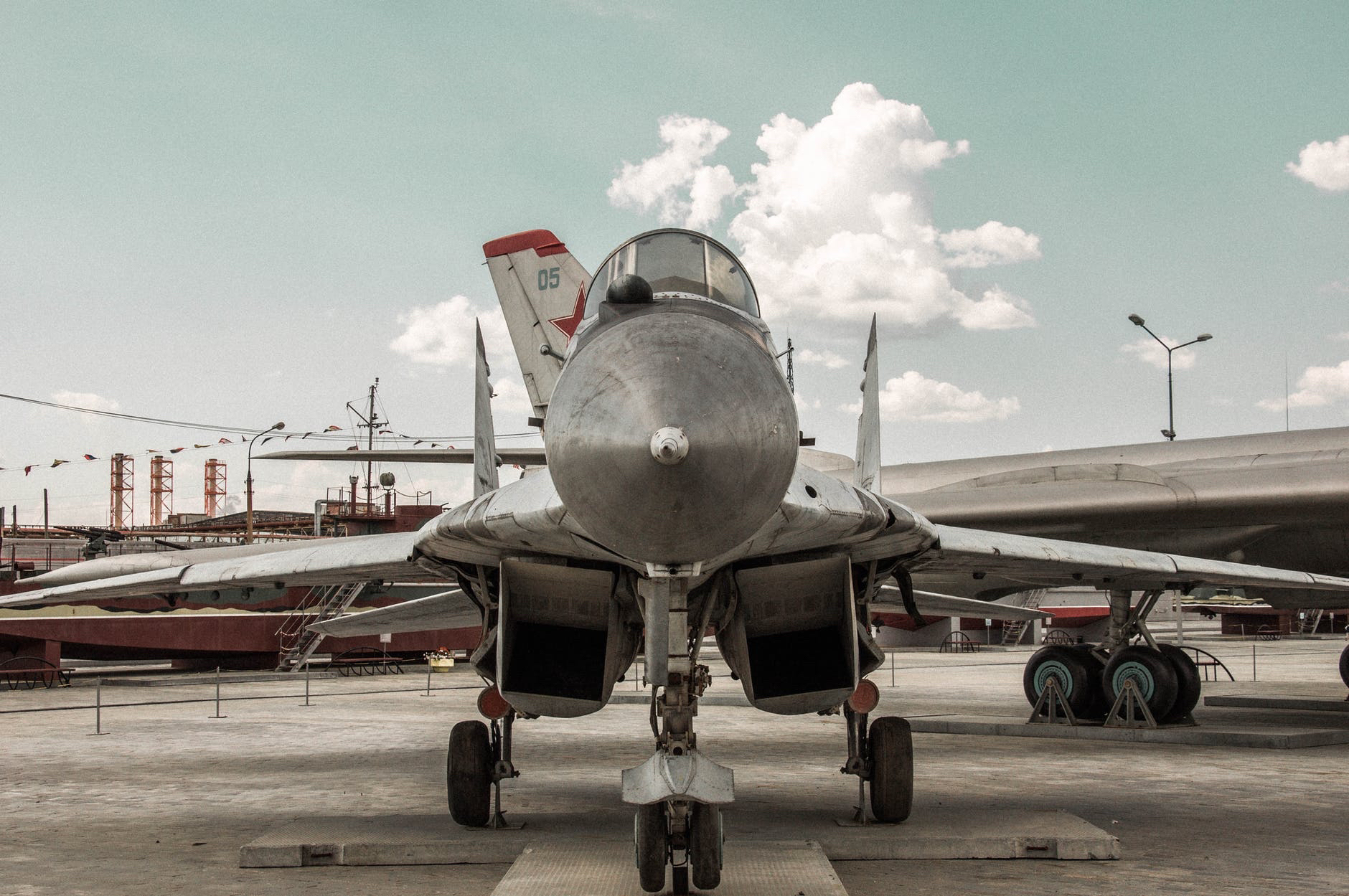
A few years ago I had the opportunity to walk through the National Museum of the US Air Force in Dayton, OH. Moving from one hangar to the next I saw the evolution of aircraft from the Wright brother’s first plane to the modern surveillance drones of today.

It isn’t hard to be in a place like that and not have an overwhelming sense of patriotism as I see the military defense weapons and aircraft that our nation has used in the defense of our country and many other countries all around the world. Seeing these beautiful machines and their sheer size made me feel a little sorry for anyone that stood against them in a battle.

Read the rest of this post here: Placing our Hope in God Alone

We Will Not Be Silent and We Will Not Back Down (weekend repost)

“In a time of universal deception, telling the truth is a revolutionary act. Let us determine that we will not be shamed into silence or inaction. We will speak, and like Shadrach, Meshach, and Abednego in the book of Daniel, let us resolve that we will not bow.”

Erwin Lutzer, We Will Not Be Silenced, 38.

It is interesting to read about the Apostle Paul’s experience in Jerusalem in Acts 21-26. In these chapters, Paul is constantly allowed to share with different audiences his testimony in one way or another. Incredibly, in many instances, he isn’t allowed to finish his explanation of why he believes in Jesus Christ.

Read the rest of the post here: We Will Not Be Silent and We Will Not Bow Down

Placing our Hope in God Alone

“The king is not saved by his great army; a warrior is not delivered by his great strength. The war horse is a false hope for salvation,
and by its great might it cannot rescue.” Ps 33:16-17

A few years ago I had the opportunity to walk through the National Museum of the US Air Force in Dayton, OH. Moving from one hangar to the next I saw the evolution of aircraft from the Wright brother’s first plane to the modern surveillance drones of today.

It isn’t hard to be in a place like that and not have an overwhelming sense of patriotism as I see the military defense weapons and aircraft that our nation has used in the defense of our country and many other countries all around the world. Seeing these beautiful machines and their sheer size made me feel a little sorry for anyone that stood against them in a battle.

It makes me think about how Pharaoh felt about his horses and chariots, and the king of Babylon about his weapons of war. The same can be said about the Medo-Persians, Greeks, and Romans at different parts of world history. Whether the weapons are spears, swords, arrows, or chariots, tanks, and airplanes, our hearts can become fooled into thinking that it is the weapon and strategies that win the war. Sometimes we think we can simply outnumber the enemy with more soldiers, more money, more missiles, and more technologies. This is heady stuff and it can divert the attention of a nation away from their inherent weakness and need for God.

In Psalm 33, the unnamed psalmist recognized this prideful blindspot and seeks to refocus the attention of the worshippers of Yahweh. The king, he writes, is not saved by his army-no matter how great. A read through the Chronicles and any history book will give credence to this reality. Kings are overthrown, betrayed, killed in battle, poisoned, and even killed by their own sons in a grab of power. King David himself survived an attempted coup by his own son. Some rulers are better than others, but no ruler can exist without God’s help. The Lord puts the man on the throne or behind the desk, but it is God alone who keeps him there, and it is God who removes him.

The psalmist also recognized that the same is true about those warriors that seem unbeatable in battle. We laud those warriors that fight valiantly and bring to our nation victory over the enemy. Stories are told of campaigns where all hope was lost and then the hero emerged and snatched victory out of the jaws of defeat. But even the greatest hero among our warriors should not be hoped upon more than our God. Do not forget men like the mighty Goliath who boasted in his mighty size and ability to defeat Israel, even defying the Lord with mockery. That warrior’s great strength could not deliver him when a boy with a sling brought him to his death on the battlefield.

The warhorse was a great advantage to any ancient kingdom that sought to be a military powerhouse. The war horse was large, brave, and strong. He could charge into a mob of warriors with courage and bowl over those in his path, allowing his rider to swing his longsword or thrust his spear into the melee while remaining out of reach by the foot soldier. Any army that had a cavalry was an almost unstoppable force. Almost.

Knowing the confidence that men put in warhorses, he commanded that the kings of Israel were not to amass large numbers of them knowing that it would easily allow the king to seek confidence in his cavalry and not place his trust in the Lord. In modern weaponry, confidence is placed in ships, drones, fighter jets, missiles, and many other weapons that can unleash “shock and awe” in our enemies.

The writer of Psalm 33:16-17 should be heard. Anything we place our confidence in outside of God can and will fail. It is inevitable. As a matter of fact, it is worse than failure. These things that we place above our trust in God are an affront to Him, and they will not only fail but they will also be brought low as they have become a challenge to God for supremacy in our hearts. He will not allow anything else in His place.

How the News Media Can Affect Your Spiritual Life (weekend repost)

With the proliferation of media sources it is possible to take in news and media non-stop from all over the world instantaneously at any hour of the day. Because of this mass flow of information, it is easy for Christians to become swept up in the downpour of news and information. And although it is good that we become aware of what is going on in our world so that we can be informed, like any good thing, there’s also a need to guard our hearts against the negative effects on our souls.

Read the post here: How the News Media Can Affect Your Spiritual Life