“Now the apostles and the brothers who were throughout Judea heard that the Gentiles also had received the word of God. And when Peter came up to Jerusalem, those who were circumcised took issue with him, saying, “You went to uncircumcised men and ate with them.” (Acts 11:1–3, LSB)
People were saved, and yet there is criticism.
Note that even in the greatest blessings within the church, there is always at least one person (or two) willing to see the negative side. And notice that the problem they have with this is an unbiblical tradition that was broken.
How does Peter respond? Here we have a wonderful example! Peter is calm and patient. He explains the situation, brings biblical clarity, and then humbly awaits the church to share its wisdom. In this instance, they concurred with Peter.
Had the majority agreed with the circumcision party, I do not think Peter would have bowed out and remained silent. However, his first response was to trust the Spirit to lead the leaders, and if they were not led by the Spirit, then I think Peter would have continued to passionately reason with them from the Word.
Here is the balance of Spirit and truth; shepherding and yet being shepherded. Let us learn both.
“And I, when I came to you, brothers, did not come proclaiming to you the testimony of God with lofty speech or wisdom. For I decided to know nothing among you except Jesus Christ and him crucified.” 1 Corinthians 2:1–2 (ESV)
Set in a backdrop where the church in Corinth was filled with many Christians who had a strong taste for ear-pleasing speakers, Paul addresses his intentional plan to not be seeker sensitive in his preaching. The words “lofty speech” and “wisdom” (ESV) both reference the exalted form of rhetoric that the preferred speakers used in their addresses to the church.
“And I was with you in weakness and in fear and much trembling, and my speech and my message were not in plausible words of wisdom, but in demonstration of the Spirit and of power, so that your faith might not rest in the wisdom of men but in the power of God.” 1 Corinthians 2:3–5 (ESV)
What did Paul mean when he wrote of his “weakness…in fear and much trembling?” Clearly, Paul was connecting his preaching to these things (“…my speech and my message…”). I think that Paul’s words here are a much-needed correction to the celebrity culture within the Western church today.
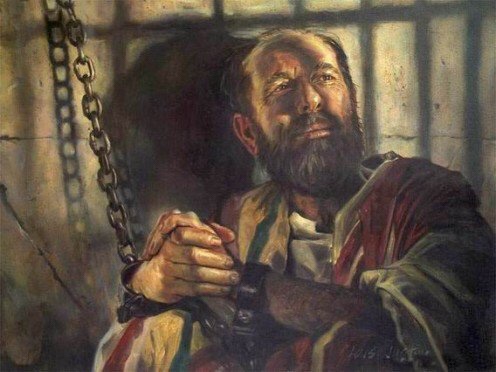
The Apostle to the Gentiles stood before this church in Corinth as a weak man. He did not have the polish and trappings that the false teachers of Corinth had, and to many, this was a severe disadvantage. Although they might not say it this way, there are many who would imply strongly that the message is secondary to the method. If you don’t have a media empire pushing your message, then the world won’t listen and you’ll be ineffective. I wonder how Paul would have responded to that sort of thinking. Well, we don’t have to wonder because his Spirit-inspired words are given to us.
In his commentary on these verses, Alan Johnson clarifies what Paul is saying: “…[Paul’s] proclamation (wider than only preaching) of the “mystery” of God, namely, Jesus Christ as the crucified One, was in keeping with the sole focus on the cross because Paul consistently, deliberately presented himself not self-confidently but in self-effacement, not in strength as a “successful” person but in weakness and fear, with much trembling (v. 3).” (Alan F. Johnson, 1 Corinthians, vol. 7, The IVP New Testament Commentary Series (Westmont, IL: IVP Academic, 2004), 62.)
Paul isn’t working to build his brand. He isn’t seeking to launch a well-strategized media plan that incorporates all the latest channels for all the up-and-coming evangelical elites. He isn’t buddying up to those more popular false teachers in order to share the limelight while justifying this as focusing on the majors and overlooking areas of disagreement in the name of “grace.” Nope. Paul is not about Paul. He unashamedly points to himself as a weak and fearful man. His words were perceived by the Corinthians as implausible and foolish–because that was what the unvarnished gospel sounds like to unregenerate ears. Paul didn’t seek to “fix” it.
And since Paul wasn’t trying to boost his own brand, he didn’t care what others thought about him so long as they saw Jesus. Paul was weak–he didn’t feign weakness to seem more spiritual. He was scared–but God was his strength. He wasn’t practiced and polished in his delivery, intentionally–so that people wouldn’t walk away impressed with this servant’s speech, but so they would walk away worshipping his God.
Paul focused on the cross in his life, message, and methods. In our glitzy evangelical world of super conferences, social media blitzes, and multi-books deals, we are all too often a faint shadow of this servant of God. May we join with George Whitefield in saying, “Let my name die everywhere, let even my friends forget me, if by that means the cause of the blessed Jesus may be promoted.”
That is what you must do with your sermons, make them red-hot; never mind if men do say you are too enthusiastic, or even too fanatical, give them red-hot shot. There is nothing else half as good for the purpose you have in view. We do not go out snow-balling on Sundays, we go fire-balling; we ought to hurl grenades into the enemy’s ranks.
—C.H. Spurgeon, The Soul Winner: How to Lead Sinners to the Saviour; Fleming H. Revel edition, 69.
“This is not a moment for timid souls. Boldness comes easily when you are in the presence of those who agree with you; it is difficult when you are standing alone in the midst of people who seek your demise. Boldness behind a pulpit is one thing; boldness in a city council meeting is another. Boldness is seen most clearly when you have burned the bridge that would have enabled you to retreat to safety.”
Erwin Lutzer, We Will Not Be Silenced: Responding Courageously to Our Cultures Assault on Christianity, 120.
We are at a critical point in the history of the world and the Church. Should the Lord tarry, our children will look back on these dark and trying days and judge whether we were courageous in the face of great opposition or see evidence of compromise and capitulation. What will make the difference? Can I suggest a few things from Acts 4:8-12, where the disciples ran into their first major confrontation with aggression?
“Then Peter, filled with the Holy Spirit, said to them, “Rulers of the people and elders, if we are being examined today concerning a good deed done to a crippled man, by what means this man has been healed, let it be known to all of you and to all the people of Israel that by the name of Jesus Christ of Nazareth, whom you crucified, whom God raised from the dead—by him this man is standing before you well. This Jesus is the stone that was rejected by you, the builders, which has become the cornerstone. And there is salvation in no one else, for there is no other name under heaven given among men by which we must be saved.” (Acts 4:8-12)
1. The disciples were filled with the Spirit.
This is the only way a group of Christ-followers who were cowering behind locked doors only a few days before could be so radically different. Courage and boldness is not for those of this type of personality. Boldness and courage filled the hearts of those filled with the Spirit.
2. The disciples testified to Jesus Christ.
The evangelical church is scattered and divided about a lot of things today—spiritual gifts, baptism modes, music, methodology, women in ministry, and more. Don’t get me wrong, hese are all incredibly important things. But the primary need for standing firm against the onslaught of the enemy is the gospel message. The heart and focus must highlight the cross of Jesus Christ and the atoning work accomplished. Everything else must be seen in its subordinate place.
3. The disciples upheld the importance of the resurrection of Christ.
The resurrection points to the acceptance of the sacrifice of Christ on our behalf. It is not tangential, but central. The resurrection of Christ points to our own future resurrection and glorification. If you grasp this, then courage is sure to come because nothing—NOTHING—can stop you. Not even death.
4. The disciples never forgot that Jesus was rejected too.
If you forget that they hated Jesus, you might be tempted into the sin of seeking to please man. But if you remember that they hated our Lord and crucified the Lord of glory, then we will not be surprised when they hate us as well—no matter how winsome or loving or kind we might be.
5. The disciples knew that there is no other hope for the world than Jesus.
If a person could be saved through Islam, or Mormonism, or liberation theology, then it would be much easier to just quietly practice our faith privately without any care about others because they’ll eventually get to heaven too. But the message of Jesus was clear—He is the only way to the Father. And that should embolden us because although some people might want to silence us or shout us down, we can’t be silent if we truly love them.
Brothers and sisters, don;t lose heart. Jesus is coming soon, but we have work to do and we can’t allow the shouts of the world to drown us out.



 Always Reforming