
One of the more difficult issues that often comes up in preaching is how to properly preach the gospel in any given sermon. Obviously, there are texts which easily lend themselves to preaching the gospel, but how can we be faithful to stress the authorial intent of the Bible and still be faithful to preach Christ?
Thankfully, back in 2016 The Master’s Seminary held its annual Faculty Lecture Series on Christ-Centered Preaching. I would commend the whole series to you if you struggle with this issue, which many men do, but I want to take some time here to highlight each message and then when I have finished the sermon series I’d like to make some practical applicational comments for how we can preach Christ in our sermons in a way that is biblically faithful to the text.
The first message is from Dr. Richard L. Mayhue, the former dean of The Master’s Seminary from 1990 to 2014.
His message can be be heard here as audio or video.
In this message, Dr. Mayhue covers:
- An Overview of the Christ-Centered Preaching Movement
- An Overview of the Improper Practices of the Movement
- And Overview of Legitimate Christ-Centered Preaching
“It is exegetically fraudulent to try to extract from every biblical text some truth about Christ.”–Daniel Block
Dr. Mayhue briefly addresses the argument used to defend this preaching from texts such which seem at first glance to say that Christ can be found in the totality of the Old Testament, such as Luke 24:44; John 5:39; 1Cor 1:22-23; 1Cor 2:2; 2Cor 4:5. He also deals with the issue of hermeneutics and how coming to the text with a theological bias may allow for preaching Christ in every text, but it also abuses the authorial intent of the text. Likewise, Mayhue argues that a Christo-centric hermeneutic falls short of a full theocentric emphasis in Scripture and points to John Calvin himself as a good model of faithful, biblical exposition which does not fall into the same pitfalls as modern Christo-centric preachers.
Although this message clocks in at 52:31, it only begins to scratch the surface of the issues at hand and does not deal with a lot of the issues, nor does it help much in showing a young expositor how Christ can be preached in many texts other than those which are explicitly Messianic. That task is left for those that will follow.


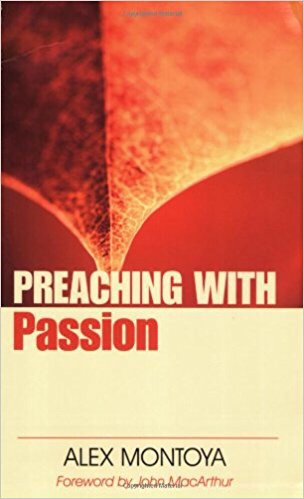 There have been times in my ministry when an icy chill has come over my heart, when my soul no longer weeps, when my sermons no longer connect, and when the act of preaching becomes a drudgery. I know that I have then lost compassion for people. That is when I retreat to a small taco stand in the barrio of East Los Angeles, to a place where real people live. I order a cup of coffee and sit with my back against the wall. Then I watch, I observe, I read, and I listen intently for the heart cry.
 Expository preaching is both an art and a science. But we must beware of the danger of making our sermons either too light or too dense in regards to our content. Those expositors that are more cerebral can easily slide into a lecture mentality that sees the pulpit as a lecture and each Sunday as an opportunity to dump all of their exegetical research upon their unwary members. Those who have been given the “gift of gab” can think that simply because they can fill the allotted teaching time with witty speech, good stories and lots of application are being faithful to preach when they are most often simply pandering to the baser desires of their listeners.
 Always Reforming