Shifting Focus from Celebrities to Christ

I came across the following quote from Gregory the Great (Bishop of Rome from 590-604 AD):

“That man is an enemy of his Redeemer who on the strength of the good works he performs, desires to be loved by the Church, rather than by Him [Christ]. Indeed, a servant is guilty of adulterous thought, if he craves to please the eyes of the bride when the bridegroom sends gifts to her by him.”1

A lot of Christians have noted that the “celebrity Christian” thing is weird and should be done away with. Yet, after one falls, another begins to rise to the top and quickly takes the last one’s place. There are a lot of issues related to the celebrity culture, but my aim in this post is to point out that the celebrity Christian thing is not only wrong, it’s adulterous.

When we put men or women on a pedestal, we divert the eyes of the world and other Christians away from Christ and onto a man. And when we seek to be the one on that pedestal, we desire to be the one who draws the eyes.

Tradition in the United States is that no other woman should wear white to a wedding other than the bride-to-be. Why? It is because the eyes of the guests, and especially of the groom, should be on the bride. So what happens when there are competitors? And not just wearing white, but seeking to catch the attention of the groom? Gregory is correct in stating that this is adulterous and marks such a person as an enemy of the groom, Jesus Christ.

Some who crave the spotlight would say that my comments and those of others who decry celebrity culture are simply a result of jealousy over their success, and that they are seeking a way to point others to Jesus. Yet, I don’t see these tactics used in the Bible. Instead, Jesus said, “And I, if I am lifted up from the earth, will draw all men to Myself” (John 12:32, LSB).

May we see more Christians with the attitude of George Whitefield:

“Let the name of Whitefield perish, but Christ be glorified. Let my name die everywhere, let even my friends forget me, if by that means the cause of the blessed Jesus may be promoted. . . . I am content to wait till the judgment day for the clearing up of my reputation; and after I am dead, I desire no other epitaph than this, “Here lies G. W. What sort of man he was the great day will discover.”2

  1. Gregory the Great, Pastoral Care, trans. Henry David, Ancient Christian Writers 11 (New York: Newman Press, 1950), 75. Quoted in Harold L. Senkbeil, The Care of Souls: Cultivating a Pastor’s Heart (Bellingham, WA: Lexham Press, 2019), 117. ↩︎
  2. Arnold A. Dallimore, George Whitefield: The Life and Times of the Great Evangelist of the Eighteenth-Century Revival (2 vols.) (Carlisle, PA: Banner of Truth Trust, 1980),2:257-258. ↩︎

Finding Hope in Chaos: Isaiah 6:1 Reflection

In the year of King Uzziah’s death I saw the Lord sitting on a throne, high and lifted up, with the train of His robe filling the temple.” (Isaiah 6:1, LSB)

Over the last couple of days, I have watched as the world ponders what could have been, and what might be.

  • A former US President and current candidate for the United States Presidency was almost assassinated.
  • Today, the headlines are swirling around a major tech upheaval as computer systems all over the world are causing problems for airlines, 911 emergency systems, banking, and a host of other issues related to our hyper-networked world.
  • And if that wasn’t enough, the calls for the current President of the United States to step out of the race due to growing concerns within the Democratic party over his ability to win his race against Donald Trump.

If I may, I want to jump back to the days that the words of Isaiah were written to connect some dots for my Christian readers. King Uzziah’s fall is described in 2 Chronicles 26:16-23. Although this king of Judah had started off well, his latter days were lived in the hous of a leper because he forgot who he was before God. This is a point we all need to watch for in our own lives. Our success is a matter of God’s grace upon us, and we need to watch our own hearts lest we well up with pride, the downfall of so many.

However, a more significant point touched my heart this morning as I meditated on the current events in our world, particularly in the US. The downfall and death of Uzziah must have been a shocking blow to the kingdom. This king, who was undoubtedly loved because of his faithfulness and care for his people, reigned over his kingdom for 52 years, taking the throne at the tender age of 16 (2Chron 26:3). America has never had a president reign in office for anywhere close to that time. The news of how he was stricken by God with leprosy in judgment must have been a severe blow to the nation, and then his eventual death must have brought the whole kingdom into a deep sense of mourning.

But Isaiah 6:1 is a passage that we need to ponder for our days. We could insert our own national calamities…

  • “In the year that Donald Trump was almost assassinated…”
  • “In the year that computer systems crashed and left our nation paralyzed…”
  • “In the year that two planes were flown into the twin towers in New York city…”
  • “In the year that…”

Who knows what will come tomorrow or next week? It seems like so much is coming quickly that we hardly have any time to breathe. How does the Christian faith deal with such chaotic times? Let’s read the rest of Isaiah 6:1: “I saw the Lord sitting on a throne, high and lifted up, with the train of His robe filling the temple.

While the kingdom of Judah was reeling in national grief and possibly confusion and fear for what would happen next, we read that the Lord God was sitting upon His throne, exalted. How does the Christian faith deal with an assassination attempt, a tech meltdown, a coup, war, a terrorist attack, or any other tragedy and upheaval that might come? We look to the heavens and recognize that our God is still in control and that He never lost it.

I am praying for America–for our current President, Vice President, and every other elected official. I am also praying for the many candidates who are running for office, including former President Donald Trump. I’m not simply praying for healing and protection for Donald Trump, but I recognize that all men will die one day in some manner. I am praying that America will look beyond the red, white, and blue into the heavens above and see that there is a Throne and He who is sitting on it is still in control. No matter what happens here in America or elsewhere on this planet–He knows, and He rules over it all. I pray that our president–whoever he is, bows his head in humble submission, recognizing that his every breath is given to him as a gift from God, and He alone sustains and removes it.

So, dear Christian friend, don’t fret. God is firmly seated upon His throne. No matter what comes, place your trust–not in men, nations, money, political parties, or any other idol–no, put your trust in Jesus Christ because He alone holds all power and authority.

Preaching to Be Forgotten and For God to Be Glorified (weekend repost)

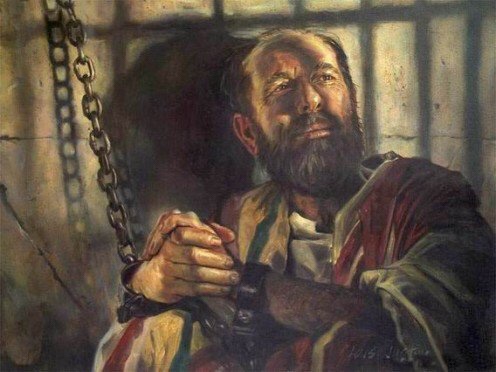
What did Paul mean when he wrote of his “weakness…in fear and much trembling?” Clearly, Paul was connecting his preaching to these things (“…my speech and my message…”). I think that Paul’s words here are a much-needed correction to the celebrity culture within the Western church today.

The Apostle to the Gentiles stood before this church in Corinth as a weak man. He did not have the polish and trappings that the false teachers of Corinth had, and to many, this was a severe disadvantage. Although they might not say it this way, there are many who would imply strongly that the message is secondary to the method. If you don’t have a media empire pushing your message, then the world won’t listen and you’ll be ineffective. I wonder how Paul would have responded to that sort of thinking. Well, we don’t have to wonder because his Spirit-inspired words are given to us.

Read the full post here: Preaching to Be Forgotten and For God to Be Glorified

Preaching to Be Forgotten and For God to Be Glorified

“And I was with you in weakness and in fear and much trembling, and my speech and my message were not in plausible words of wisdom, but in demonstration of the Spirit and of power, so that your faith might not rest in the wisdom of men but in the power of God.” 1 Corinthians 2:3–5 (ESV)

What did Paul mean when he wrote of his “weakness…in fear and much trembling?” Clearly, Paul was connecting his preaching to these things (“…my speech and my message…”). I think that Paul’s words here are a much-needed correction to the celebrity culture within the Western church today.

The Apostle to the Gentiles stood before this church in Corinth as a weak man. He did not have the polish and trappings that the false teachers of Corinth had, and to many, this was a severe disadvantage. Although they might not say it this way, there are many who would imply strongly that the message is secondary to the method. If you don’t have a media empire pushing your message, then the world won’t listen and you’ll be ineffective. I wonder how Paul would have responded to that sort of thinking. Well, we don’t have to wonder because his Spirit-inspired words are given to us.

In his commentary on these verses, Alan Johnson clarifies what Paul is saying: “…[Paul’s] proclamation (wider than only preaching) of the “mystery” of God, namely, Jesus Christ as the crucified One, was in keeping with the sole focus on the cross because Paul consistently, deliberately presented himself not self-confidently but in self-effacement, not in strength as a “successful” person but in weakness and fear, with much trembling (v. 3).”  (Alan F. Johnson, 1 Corinthians, vol. 7, The IVP New Testament Commentary Series (Westmont, IL: IVP Academic, 2004), 62.)

Paul isn’t working to build his brand. He isn’t seeking to launch a well-strategized media plan that incorporates all the latest channels for all the up-and-coming evangelical elites. He isn’t buddying up to those more popular false teachers in order to share the limelight while justifying this as focusing on the majors and overlooking areas of disagreement in the name of “grace.” Nope. Paul is not about Paul. He unashamedly points to himself as a weak and fearful man. His words were perceived by the Corinthians as implausible and foolish–because that was what the unvarnished gospel sounds like to unregenerate ears. Paul didn’t seek to “fix” it.

And since Paul wasn’t trying to boost his own brand, he didn’t care what others thought about him so long as they saw Jesus. Paul was weak–he didn’t feign weakness to seem more spiritual. He was scared–but God was his strength. He wasn’t practiced and polished in his delivery, intentionally–so that people wouldn’t walk away impressed with this servant’s speech, but so they would walk away worshipping his God.

Paul focused on the cross in his life, message, and methods. In our glitzy evangelical world of super conferences, social media blitzes, and multi-books deals, we are all too often a faint shadow of this servant of God. May we join with George Whitefield in saying, “Let my name die everywhere, let even my friends forget me, if by that means the cause of the blessed Jesus may be promoted.”

Placing Our Hope in God Alone (weekend repost)

A few years ago I had the opportunity to walk through the National Museum of the US Air Force in Dayton, OH. Moving from one hangar to the next I saw the evolution of aircraft from the Wright brother’s first plane to the modern surveillance drones of today.

It isn’t hard to be in a place like that and not have an overwhelming sense of patriotism as I see the military defense weapons and aircraft that our nation has used in the defense of our country and many other countries all around the world. Seeing these beautiful machines and their sheer size made me feel a little sorry for anyone that stood against them in a battle.

Read the rest of this post here: Placing our Hope in God Alone