Where Are You Looking For Help?

I lift up my eyes to the hills. From where does my help come? My help comes from the Lord, who made heaven and earth.

(Psalm 121:1–2, ESV)

Christian, where are you looking for help? Are you looking for it in the President? Honestly, are you? Are you looking for your help to come in the passing of “righteous laws?” Are you hoping in the Constitution? Have you placed your trust in political action and conservatism? Yes, I admit, the Lord can use these things, but are you placing your trust in them and not in the Lord? Have you become confused about where your loyalties lie?

Christian, where are you looking for help? Are you looking for it in a vaccine or medical cure that will keep you safe from the Coronavirus? Are you hoping in science and doctors? Are you panicked that you won’t have enough masks and gloves and hand sanitizer? Are you stockpiling supplies selfishly because you believe that you need to take care of yourself? Are you trusting in media reports, graphs and charts, medical “experts” and the word on the street from social media? Are your driven by fear for your life? Have you become so fearful that God has become small and you must help him along?

Christian, where are you looking for help? Have you become convinced of the thinking that overthrowing the world with angry rhetoric and supporting violent riots is somehow supposed to bring justice in a wicked and fallen world? Have you placed your hope in a Kingdom now, where human philosophy and effort can build a utopia that will somehow address the sin of man’s soul? Have you exchanged the gospel of the crucified Jesus for a gospel of equality and justice won through protest, political action, and evangelism of those who don’t think like you? Have you become so driven by the issue of injustice that you no longer look to Jesus as the one who loves and sent his Son to be the Savior of the world? Have you misplaced your zeal in a hope that things will change without Christ?

Christian, where are you looking for your help? Can you confidently say, “My help comes from the Lord”?

“But”, you say, “we need to exercise our rights as citizens…” Yes, but has your citizenship on earth overridden your trust that this world is not your home?

“But we must make sure that we protect those who are vulnerable. This sickness has killed people.” Yes, but aren’t we already vulnerable, like grass that is here today and gone tomorrow? Does not the Lord see your needs, and cares for you? Does he not already know the number of your days? Does not his love cast out fear? Aren’t we told not to be anxious, but by prayer and supplication make our needs known to the Lord? Will we not all die, even if we have placed our bodies in a vacuum-sealed clean room? But how will you have lived for Christ?

“But, there is racism and poverty in this world, and Jesus calls us to fight for the innocent and to call out sin.” Yes, and we must speak truth to those lies that would undercut the value of any human, whether because of the color of his skin or the money in his pocket. But, a poor man or a man who has hatred for his brother will still be cast into outer darkness when he has money and no longer hates those different than he is. This world is broken. It has been so since the beginning of mankind. Where does Christ fit in for you? Is he simply used to further your personal agenda? And how much are we seeking his help in overcoming the sin of this world, and how much of it is our drive to fix things in our own flesh?

Where does your help come from? It’s an honest question. The Sunday school answer is that “our help comes from the Lord.” But we need to assess our hearts and ask if that is really true. Look around you. Does your life, your actions, your words, reflect a person who trusts in the Lord, or have you placed your hopes elsewhere? He alone, the one who made heaven and earth, is able to overcome. Place your full trust in him alone.

Humble Submission to Christ the Lord

And Mary said, “Behold, I am the servant of the Lord; let it be to me according to your word.” And the angel departed from her.

Luke 1:38, ESV

This morning I read from the book of Jonah. I have been pondering the incarnation for the last several days and the wonder of Christ’s birth, and then I read Jonah. To put it lightly, Jonah had problems. Massive spiritual problems. I’ll come back to him in a bit.

All too often in Protestant churches, Mary, the mother of Jesus, has scorn heaped upon her because there are some who have taken this woman of God and have worshipped her. But that isn’t Mary’s fault! From my reading of the New Testament, Mary was a gracious and beautiful example of incredible faith that we should emulate–such as the passage I cite in Luke 1:38 above. Yes, Mary was a sinner, and she too needed a Savior. But look beyond this and see her humble submission as well.

I’ll let the scholars handle the age of Mary, but I think most agree that this woman was still very young. But her words, particularly in what has been called the Magnificat (Lk 1:46-55), show a spiritually mature child of God. She is not a scholar, nor of the priestly line. She is a simple, humble woman from a back-woods town who is preparing to marry a humble carpenter. That is why her words should stop us in our tracks: “Behold, I am the servant of the Lord; let it be to me according to your word.”

She is saying through the angel to the Lord God, “I am yours. Do with me whatever you see is right. I am nothing, you are everything. Whatever you want, I will submit to you wholly.” O, how we need more people of God with this heart! But she isn’t alone in the Bible.

In the Old Testament, we find Abram willing to leave everything he has ever known–land, family, language, comfort, safety, the familiar, the safe. He leaves it all because he is following his God (Gen 12:1-4). Again, the spirit of Father Abraham is that the Lord is Sovereign. He commands, and we joyfully follow; even into the unknown darkness. Later, when he has received his son Isaac after many years of waiting, Abraham is asked to sacrifice this beloved gift (Gen 22:1-19). There is no argument, or pleading with God to reconsider what he is asking. Genesis 22:3 simply says that Abraham rose early in the morning and set out to obey his Master.

I saw this same commitment to humble submission when I recently re-read the book of Hosea. In Hosea 1:2-3 it says:

When the Lord first spoke through Hosea, the Lord said to Hosea, “Go, take to yourself a wife of whoredom and have children of whoredom, for the land commits great whoredom by forsaking the Lord.” So he went and took Gomer, the daughter of Diblaim, and she conceived and bore him a son.” 

(Hosea 1:2–3, ESV)

We can understand the purpose of God in doing this because the Bible is clear about the reason for this request–to be a shockingly visible illustration of the way that Israel was toward the Lord God. But that didn’t make Hosea’s obedience and heartbreak any easier. The shame he endured as God’s man must have been unbearable at times as his unfaithful wife continued to bear children fathered by other men. Yet, Hosea continued to faithfully and humbly submit to all that the Lord asked of his servant.

That brings us back to Jonah.

Mary endured shame, scorn and great pain in order to bring the Savior into the world. Abram left everything and was willing to sacrifice his most beloved son. Hosea walked his entire life in the darkness of a broken relationship for the cause of illustrating the enduring love of God in the face of rebellious and idolatrous Israel.

And Jonah…he sulked and ran and was enraged because he wanted to be the master of his life. Jonah wouldn’t rejoice at the repentance of the lost. He wouldn’t rejoice at his salvation from the fish’s belly and a new opportunity to be used by God. He wouldn’t even enjoy life, but would rather be struck dead because he was such an angry little man.

John Paton

I recently read the biography of the great missionary to the Pacific, John Paton. In Paton’s day, the church had taken on the attitude of Jonah. They loved their comfort and ease. They didn’t like it when men and women of God wanted to take the gospel to the world because they didn’t want their comfort to be unsettled. Some were bribed with money to stay. Some were belittled and treated with contempt–being told that God would’t use them because they were ungifted. Some said that the primitive people would never be able to appreciate the fine education they had earned, so why waste it? Others were so fearful of the dangers of cannibalism and disease that they forbid anyone from going to these people. Serve Jesus in England, where it is safe. You can serve Jesus here. WE need him too!

But Paton, and a few others accepted the call and braved the hardship and ridicule heaped on them back home and face the dangers in the Pacific. They humbly submitted their lives to the Sovereign they loved more than life itself. Most died, but the Lord raised up many more servants until the Pacific was won for Christ.

But the Jonah spirit is alive and well in many hearts and churches today. I take comfort in the fact that there are also still in Christ’s church Mary’s and Abraham’s and Hosea’s among us. Those who will submit to the Lord their God with joy and humility. If that is you, don’t allow the Jonah spirit in the church to dissuade you. See the joy in the hardship. Know that the Lord is greater than any hardship you may endure. As Luther wrote,”Let goods and kindred go, this mortal life also; the body they may kill, God’s truth abideth still. His kingdom is forever!” 

And if you see too much of Jonah in your own heart, then Jonah’s message to Ninevah is God’s message to you too. Repent. This life isn’t for you. It isn’t about you. It’s about Jesus. Humble yourself before the mighty hand of God, and he will lift you up (1Pet 5:6).

The Attraction of Idolatry

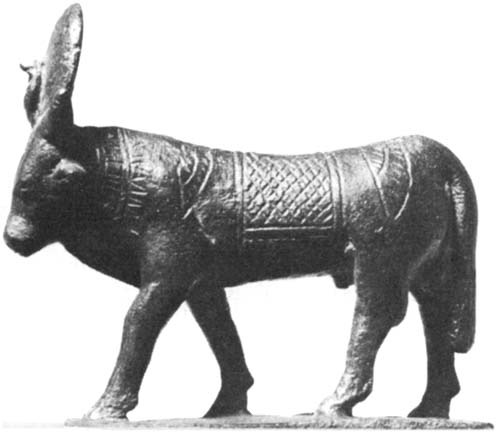
golden calf

Last night’s Bible study in Psalm 106:19-23 focused upon Israel’s involvement in the worship of the golden calf. This account can be found in Exodus 32, with references in several places throughout the Scripture. It was a low-point in Israel’s history and one which they eventually learned their lesson, at least regarding making idols of metal and wood.

In preparing for the study, I came across Doug Stuart’s excursus in the New American Commentary: Exodus in which Stuart lays out why ancient people would have been attracted to idolatry. His article gives important insight into why God’s people struggled with this sin so often, and additionally helps us to see how idolatry still exists today. I have included the text of the excursus below in full with the hope that many will find this gem a blessing in their understanding of the Bible.

Excursus: The Attractions of Idolatry

1. Guaranteed: Ancients assumed that the presence of a god or goddess was guaranteed by the presence of an idol since the idol “partook” of the very essence of the divinity it was designed to represent. When, for example, a statue of a given god was carved and certain ritual incantations spoken over that statue to cause the essence of the god to enter it, the statue was then understood to become a functioning conduit for anything done in its presence from the worshiper to that god. In the same way that a modern persons might speak to and look into a sound-equipped television camera knowing that their words and actions were being transmitted accurately to other locations, ancient people believed that the offerings they brought before an idol of a god and the prayers they said in the idol’s presence were fully and unfailingly perceived by the god whom that idol represented.

2. Selfish: Idolatry was an entire materialistic system of thinking and behavior, sometimes called the “fertility cult,” built on the idea that the gods could do virtually anything but feed themselves. The one sort of “hold” or advantage humans had over the gods was the ability to feed them. Accordingly, it was felt that if one fed a given god, that god was in turn obligated to use his power on behalf of the feeder-worshiper. Not much else was required; if you fed a god adequately and regularly, that god would, in “quid pro quo” fashion, bless you in return with abundance of crops, fertility of cattle.

3. Easy: Frequency and generosity of worship (offering sacrifices) were the sole significant requirements of faithful idolatrous religion. Idolatry minimized the importance of ethical behavior. Ritual provision of food to the gods was important; keeping a divinely revealed covenant was not. At Sinai the Israelites took upon themselves the obligation to live as a holy people, subjecting themselves to obedience to hundreds of individual commandments so as to conform their lives ethically to Yahweh’s will, including the faithful offering of sacrifices to the true God. By contrast, idolatry was easy, requiring sacrifices but little else.

4. Convenient: Deut 12:2 requires that the Israelites “destroy completely all the places on the high mountains and on the hills and under every spreading tree where the nations you are dispossessing worship their gods.” Comparably, 1 Kgs 14:23 reports of Israelite idolaters that “they also set up for themselves high places, sacred stones and Asherah poles on every high hill and under every spreading tree.” These ubiquitous idol shrines allowed worshipers to take a sacrifice to the god or goddess of their choice virtually any time of day, any day of the week, and at a location nearby any place they happened to be. By contrast, Yahweh’s covenant required all Israelites to report to a single, central location three times a year, necessitating costly and time-consuming travel for many and prohibiting worship anywhere in the land but that single, approved sanctuary.

5. Normal: Idolatry was the common way of religion—without exception outside Israel—in the ancient world. This made it seem entirely normal since no one could find any parallel to the Israelite covenant obligation to worship an invisible God outside of the area of Yahweh’s special revelation to his people. Idolatry was, as well, the settled, experienced Canaanite way. When the Israelites entered Canaan, they could hardly help thinking that the successful farming methods of the Canaanites necessarily involved various idolatrous magical rituals used for generations, from boiling a goat kid in its mother’s milk (see comments on 23:19) to sowing a crop in a special pattern with two different kinds of plant seeds (Lev 19:19; Deut 22:9). If an Israelite asked a Canaanite neighbor, “How do you farm around here?” the Canaanite neighbor probably would start his explanation with a description of how to make proper offerings to Baal and Asherah in advance of preparing the fields and planting (or other farm duties) in order to ensure the fertility of the farm. Moreover, idolatry was the way of the superpowers and the economically successful states, whose riches and prestige seemed to go hand in hand with their idolatrous rites.

6. Logical: Idolatry was polytheistic, syncretistic, and pantheistic. The ancients believed in a multiplicity of gods—every one being a specialist in some aspect of the world or nature; and therefore the ancients found it enormously attractive to think they could gain assured access to those gods through idols. It was unthinkable to most ancients that a single god could be the only God. The idea of a “general practitioner” having to be responsible for all the various divine duties was simply not part of the mind-set of ancient peoples, and it seems to have been, indeed, hard even for most Israelites to imagine as well, judging from the frequency to which they turned to polytheistic idolatry in their history.

Ancient people also believed in three categories of gods, all of which any individual was likely to differentiate by his or her own beliefs and worship: the personal god, the family god, and the national god. For most Israelites at most times, and for all other people who knew anything about Israel’s God, Yahweh was merely a national god. Ancient Israelites might have, say, Dagon (Judg 16:23; 1 Sam 5; 1 Chr 10:10) as their personal god and perhaps Baal (e.g., Judg 2:13; 6:25, 28, 30–32; 1 Kgs 16:31–32) as their family god, but they would always have Yahweh as his national God. No Israelite, no matter how totally immersed in idolatry, would ever answer no to the question, “Do you believe in Yahweh?” But most, at most times in Israel’s history, would, sadly, see him only as a national god (the one who had brought them out of Egypt or the one to whom they would appeal in times of war). Their greater day-by-day loyalty in worship would be directed toward the various idols representing their various categories of gods.

7. Pleasing to the senses: 1 Kgs 19:18 describes the Israelite practice of worshiping the fertility-weather god Baal by, in part, bowing down to his idol and kissing it. Ezekiel 8:9ff. details some of the extensive depictions of various creatures in idolatrous form worshiped in Jerusalem. Idolatry provided worshipers with images of divinity pleasing to the eyes, spawned a whole, entrenched industry of image making (cf. Acts 19:24–27), and appealed to the sensual, even, broadly speaking, to the “artistic” in the people. It was hard to appreciate the beauty or attractiveness of someone who refused to be seen, that is, Yahweh.

8. Indulgent: Although the Israelites were permitted by the covenant to eat meat whenever they chose (Deut 12:15), the usual pagan practice was to eat meat only as part of a worship sacrifice to an idol. That way, a portion of the sacrifice would go to the idol as a burnt offering, a portion to the priest representing the idol (and his family), and the remainder to the worshiper and his family, thus never “wasting” the effect of eating meat but rather getting double value from the meat: nutrition for oneself and favor with the idol god. Accordingly, the more frequently one ate meat (since it was always eaten in connection with worship) and the more meat one ate (since thereby the god’s portion was increased), the more likely one could curry favor with the gods. “Pigging out” thus typified pagan sacrifices, in contrast to the more clearly symbolic value of an orthodox Israelite’s worship. Heavy drinking and drunkenness31 also were considered proper in idol worship feasts because debauching oneself was simply part of being generous to a god.

9. Erotic: Temple prostitution is described at various points in the Old Testament. Behind it lay the notion that all creation was in fact procreation, so everything that would exist had to be born into existence. When this was coupled with the “sympathetic magic” idea that things done symbolically in one location might cause certain behaviors in another, ritual worship sex performed in order to stimulate the gods to produce fertility on earth was the result. Ancient pagan worshipers were taught that if they, taking the symbolic role of, say, Baal, would have sex with a temple prostitute symbolically portraying, say, Asherah, this act would stimulate Baal and Asherah to have sex in heaven, which in turn would stimulate things to be born on earth: the young of flocks and herds, as well as the seedlings of all desired plants. Sex thus became a regular aspect of idol worship and was so widely practiced even at the Jerusalem temple in Israelite times that Josiah’s reform had to pay special attention to its eradication (2 Kgs 23:6–7); similarly, in northern Israel Amos noted the way father and son would visit the same temple prostitute (Amos 2:7–8).

Douglas K. Stuart, Exodus, vol. 2, The New American Commentary (Nashville: Broadman & Holman Publishers, 2006), 450–454.