The Lord’s Provision for Ministry (part 1)

It’s hard to imagine the hardships that the Apostle Paul must have faced at times. Having travelled so far away from family and that which was familiar would be enough to cause most people to struggle. Add to that the immense physical strain in travelling by foot, having poor accommodations and little to eat at times. We could understand if Paul and his teammates grew weary. The beatings and imprisonments compounded and heightened the suffering he endured for the sake of Christ.

As Paul wandered about in Athens (Acts 17), he was all alone. His travelling companions would catch up with him later, but for now he walked the streets and engaged people with the gospel of Jesus Christ. As he moved about the city, his heart was provoked by the widespread idolatry, and as he left Athens his ministry did not show as much fruit as he hoped. How did Paul continue for so long without being burned out and frustrated?

A Lifeway Research Survey completed in 2015 states conservatively that the number of men leaving the ministry are about 250 per month. Some statistics are as high as 1,700 a month.  The reasons given in the Lifeway survey would have been understood by the Apostle Paul and experienced by him in some form:

  • 84 percent say they’re on call 24 hours a day.
  • 80 percent expect conflict in their church.
  • 54 percent find the role of pastor frequently overwhelming.
  • 53 percent are often concerned about their family’s financial security.
  • 48 percent often feel the demands of ministry are more than they can handle.
  • 21 percent say their church has unrealistic expectations of them. [1]

So, it is fair to ask ourselves once again, how could Paul continue so faithfully in the ministry under such difficult circumstances? This isn’t just important for those in ministry to know, but everyone in the Body of Christ as well. We are all called as ministers of the New Covenant. You may not preach a sermon every Sunday, but you might teach Sunday school, or AWANA or lead a weekly Bible study. All of Christ’s disciples are called, even if not vocationally, to minister to one another and to carry the gospel to the world. In this series of posts I’d like to examine six ways which the Lord provides for His servants. The first way he provides is…

He Gives Us Ministry Co-workers 

After these things he left Athens and went to Corinth. And he found a Jew named Aquila, a native of Pontus, having recently come from Italy with his wife Priscilla, because Claudius had commanded all the Jews to leave Rome. He came to them,” (Acts 18:1–2, NASB95) 

But when Silas and Timothy came down from Macedonia, Paul began devoting himself completely to the word, solemnly testifying to the Jews that Jesus was the Christ.” (Acts 18:5, NASB95)

Leaving Athens, Paul was still all alone. Back in Acts 17:13-15 the missionary team was broken up in order to get Paul out of the area because of the physical danger he was in from the angry Jewish leaders who were stirring up riots in Berea. Paul went to Athens alone and then travelled to Corinth, a little over 50 miles away. If Athens was noted for its philosophical and religious nature, Corinth was known for its sensual attractions. The city was one of the largest and most prominent ports in the ancient world and it was a melting pot of money, religions and fleshly sin, much like Los Angeles and New York City.

The need was great in Corinth for the gospel. As Paul came to this great ministry opportunity, the Lord provided for him ministry partners named Priscilla and Aquila, a married couple. Aquila, whose name was Latin for “eagle,” was originally from the Roman province of Pontus, near the Black Sea in what is now called Turkey. Aquila and Priscilla had been living in Rome but had been commanded to leave along with all other Jews. This was because of a command in 49 A.D. from Emperor Claudius.

Along with this couple, the Lord brought back Silas and Timothy from Macedonia (v. 5). When they found Paul, he was busy faithfully proclaiming the gospel in the synagogue. Paul now had a full team that joined him in preaching and discipling those that came to Christ. Even as gifted as the Apostle Paul was, he needed the help of co-workers to be able to faithfully carry out the mission he had received from Christ. 

This reminds me that when the Lord Jesus sent out his disciples, he sent them out in groups of at least two, sometimes more. I don’t think this is a command, but it is good wisdom.

Ecclesiastes 4:9-12 says, “Two are better than one because they have a good return for their labor. For if either of them falls, the one will lift up his companion. But woe to the one who falls when there is not another to lift him up. Furthermore, if two lie down together they keep warm, but how can one be warm alone? And if one can overpower him who is alone, two can resist him. A cord of three strands is not quickly torn apart.” (Ecclesiastes 4:9-12, NASB95)  

Think about those in your church. These are your ministry partners and co-workers for the gospel ministry. We should be working together, encouraging one another, stirring one another up to love and good deeds. We should be making incursions into enemy territory in teams.

If you’re not doing anything, that means that you aren’t just disobeying the Lord in not serving, but you are not being a co-worker for someone else. Others are needing to carry on without you! Get in the game! The team needs you!


The Great Need for Courageous Leaders In the Church

“And when they brought those kings out to Joshua, Joshua summoned all the men of Israel and said to the chiefs of the men of war who had gone with him, “Come near; put your feet on the necks of these kings.” Then they came near and put their feet on their necks. And Joshua said to them, “Do not be afraid or dismayed; be strong and courageous. For thus the Lord will do to all your enemies against whom you fight.”” (Joshua 10:24–25)

When you begin reading the book of Joshua, you can almost sense the fear and intimidation that Joshua was feeling. It starts with the announcement that Moses is dead. And then over and over again Joshua and the people of Israel are told to be strong and courageous.

After gaining some victories, assurance, and even a few tough lessons, Joshua has grown quite a bit as a leader by chapter 10. As five kings band together to try and stop the advancement of Israel into the Canaanite territory, it quickly becomes obvious that God is fighting for his people and they are unstoppable. The five kings in fear and desperation hide out in a cave, where they are discovered and sealed into the cave to await their fate.

After destroying the five kingdoms, Joshua returned to the sealed cave to deal with the kings. What he did next is worthy of note for leaders in the church today.

1. Joshua summoned all the men of Israel. The men were the leaders of the families and clans, as well as those who fought the battles. By Joshua summoning all the men so that they could be built up in courage, he was strengthening and stabilizing the whole nation. Similarly, when the pastoral leadership of the church strengthens and gives courage to the men in the church as a whole, they strengthen the whole church.

2. Joshua encouraged the chiefs of the men of war…[to] come near; put your feet on the necks of these kings.” Joshua then turned to the leaders of the warriors—the commanders, and gave them the honor of this courageous symbolic act of victory. Not only did this act allow them to taste the victory for themselves, but it also strengthened their courage as the people saw not just Joshua as a mighty man whom God could use, but many mighty men God was using. Again, the local church should not be a place of pastor worship, but a place where the pastors are “equipping the saints for the work of the ministry.” This means that we should be producing multiple warriors for Christ, and among them many will rise to the place of “chiefs of the men of war.” How encouraging to know that your local church is a fertile growing place for mighty men of God!

3. Joshua finally spoke God’s Word to them to both focus and humble them: “And Joshua said to them, “Do not be afraid or dismayed; be strong and courageous. For thus the Lord will do to all your enemies against whom you fight”” (Joshua 10:25). These are very similar words to those that the Lord said to Joshua when he failed at Ai (Joshua 8:1). Joshua had absorbed those words and was now living by them. He knew that the Word of God is a powerful two-edged sword, and he wanted to equip his men with the same weapon that he had received. Those words were more than simply true—they contained reminders of humility and focus—don’t be afraid or discouraged, be strong and courageous. But don’t forget that the Lord will be fighting for you. It is not you who has won these victories.

Locker room pep talks are strongly associated with sports, and so many men are familiar with them. But that isn’t what Joshua gave them, and its not what our churches need. Leave the pop psychology to Oprah Winfrey and Joel Osteen. Real leaders need en-couragement, meaning they need courage from God himself. Hype only lasts so long. Courageous leaders need to point up and coming leaders beyond themselves to God himself. Preach the Word and let the lion out!

Hope for Leaders Who Have Made Dumb Decisions

It’s not hard for me to think about multiple examples of personal failure over my 51 years of life. I can recall so many bad decisions–dumb ones, sinful ones, immature ones, naive ones, rash ones, prideful ones. Like I said, I remember too many. The problem is, leaders have to make multiple decisions all day, every day. The more decisions we need to make, the greater potential there is to make another bonehead decision. So what do we do? Well, you could:

  1. Give up being a leader. And if you really are poor at decision making because you constantly make the kinds of bad choices I named before, that might not be a bad decision. But don’t rush into it! Keep reading.
  2. Give up making decisions, but remain a leader. This type of leader is known as a “lame duck.” You have actually done #1 above, but continue to call yourself a leader. This never works for long, and is frustrating for the people you are supposed to lead. It’s better for you to step down than to play this game.
  3. Start making better decisions. Duh. But before you stop reading, consider this: All leaders make bad decisions. All of them. The best leaders make fewer poor decisions and there are reasons for that, which are beyond the scope of this article. But the fact is, by growing and improving on your decision making, you will become a better leader.

In Joshua 7, Joshua made some poor decisions as he took Israel from a victory over Jericho, to an embarrassing defeat when his army was defeated by a tiny army. His failure not only cost the lives of thirty-six of his men (Josh 7:5), but it put courage into the heart of his enemies while simultaneously putting fear into the heart of Israel.

Several years ago my wife and I got food poisoning from eating at a fast-food place. It was pretty traumatic for us, and we were sick for days. I knew it was the food–I could taste it and smell it. It was so engrained into my memory that now, over 20 years later I can still go back to that moment when we started to become violently ill. I had no desire to eat at that restaurant again for many, many years. Bad decisions are like that–they leave a really bad taste in your mouth that makes it hard to overcome.

After the Lord directed Joshua on how to make everything right, it was time for Joshua to face his fear. Joshua 8:1 helps us so much here for learning how to overcome the fear of a poor decision so that we can make better decisions. It says,

And the Lord said to Joshua, “Do not fear and do not be dismayed. Take all the fighting men with you, and arise, go up to Ai. See, I have given into your hand the king of Ai, and his people, his city, and his land.

(Joshua 8:1, ESV)

Fear of the future and the unknown as well as discouragement from past failings can be the biggest hurdle to clear after a major failure. But notice here that the Lord commanded Joshua not to fear or be dismayed. Yes, poor decisions were made. But the mission has not changed. Joshua was to lead the people into the Promised Land, and Ai needed to be conquered. The problem was that Joshua had rushed in, he didn’t consult the Lord and made the decisions to go to war and send in a smaller army without seeing if this was the Lord’s will. The Bible doesn’t tell us, but maybe Joshua was beating himself up over the bad decisions made. Any leader knows that’s not a stretch to imagine. It happens all the time.

But the Lord says to Joshua, Do not fear and do not be dismayed. Once we are assured that we are being guided by the Word and Spirit, we must move forward without fear of the future or discouragement from the past. Joshua wasn’t running ahead of God anymore. Now he was going to decide that he needed to obey, and this was the first command. Warren Wiersbe has wisely written, “The promises of God make the difference between faith and presumption” ( Warren W. Wiersbe, Be Strong, “Be” Commentary Series (Wheaton, IL: Victor Books, 1996), 97.)

Notice also, that the Lord gave Joshua direction: “Take all the fighting men with you, and arise, go up to Ai.” So often, poor decisions are made because we make the decision. Spiritual leadership is not the same as corporate leadership because the spiritual leader directs God’s people from God’s Word to do God’s business. When we forget this, we become spiritual entrepreneurs, not spiritual leaders. They may look the same, but they aren’t. Spiritual entrepreneurs work for themselves, to achieve their own goals, and often receive the glory for it from men who do not recognize the difference. Joshua had taken the reigns and failed, now he was going to learn to take his lead from the Lord.

Finally, the Lord gave Joshua his strength: “See, I have given into your hand the king of Ai, and his people, his city, and his land.” After the amazing victory over Jericho, you would think that it was obvious that God was going to give Israel the strength to fight. But the loss at Ai shows how quickly a victory can blind us to our dependence. All too quickly we can begin to strut like roosters, full of pride as if we did anything to achieve the victory. In order for Joshua to grow as a leader, he needed to remember that every victory was given by the Lord–big or small.

Joshua obeyed the Lord, carrying out the directives he was given with precision, and the Lord gave him the victory as he promised. Remember that. The answer isn’t give up when you fail, but learn from your failures and grow as a leader. Psalm 37:23-24 is a great encouragement in this way: “The steps of a man are established by the Lord, when he delights in his way; though he fall, he shall not be cast headlong, for the Lord upholds his hand.” (Psalm 37:23–24, ESV)

The Blessings and Benefits of Ministry Fellowship (weekend repost)

Joining a denomination or going at it alone are not the only options for churches, pastors, leaders, and ministries.

Maintaining doctrinal fidelity and alignment is critical when seeking to work with others to accomplish Great Commission objectives.

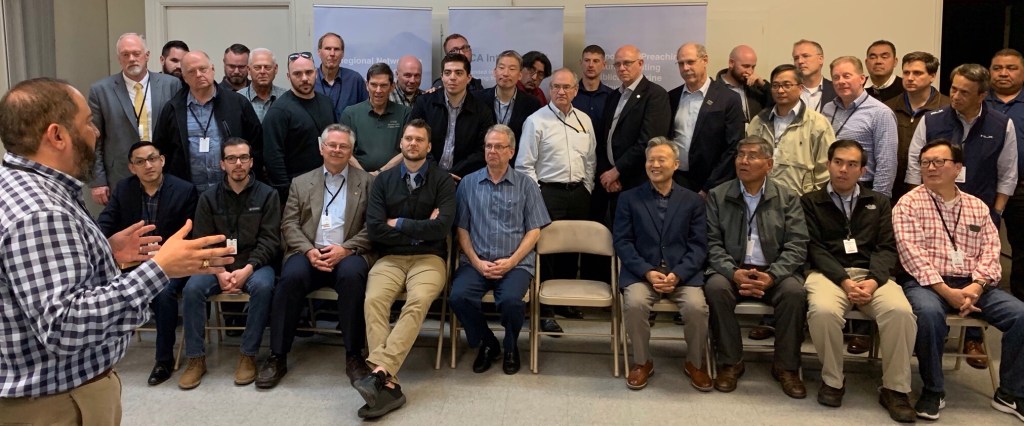
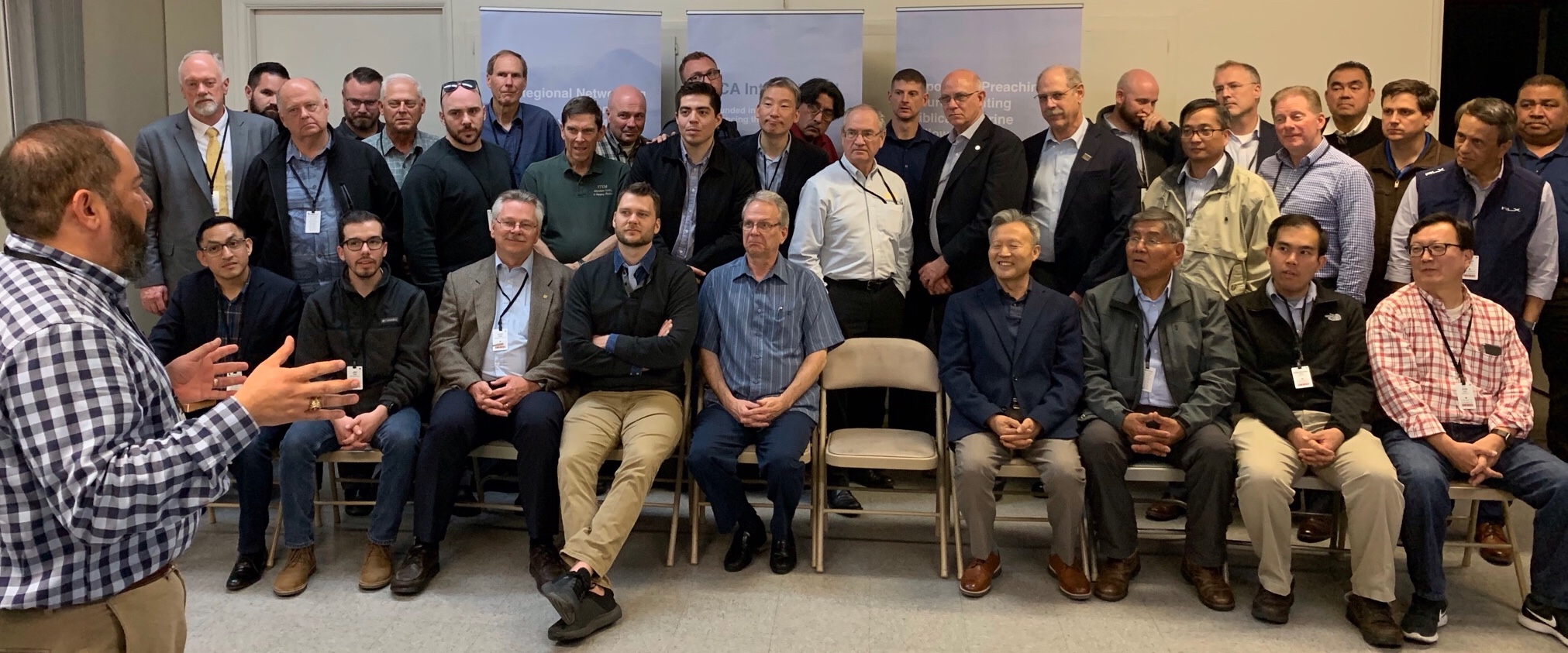
IFCA International was founded in 1930 to fight against the onslaught of theological liberalism growing in denominational churches, mission agencies, and seminaries.

Listen to a podcast I was invited to record with some fellow pastors a few months ago as they ask me more about IFCA International. To find out more, go to http://www.IFCA.org.

Listen to the podcast here.

The Blessings and Benefits of Ministry Fellowship

Joining a denomination or going at it alone are not the only options for churches, pastors, leaders, and ministries.

Maintaining doctrinal fidelity and alignment is critical when seeking to work with others to accomplish Great Commission objectives.

IFCA International was founded in 1930 to fight against the onslaught of theological liberalism growing in denominational churches, mission agencies, and seminaries.

Listen to a podcast I was invited to record with some fellow pastors a few months ago as they ask me more about IFCA International. To find out more, go to http://www.IFCA.org.

Listen to the podcast here.