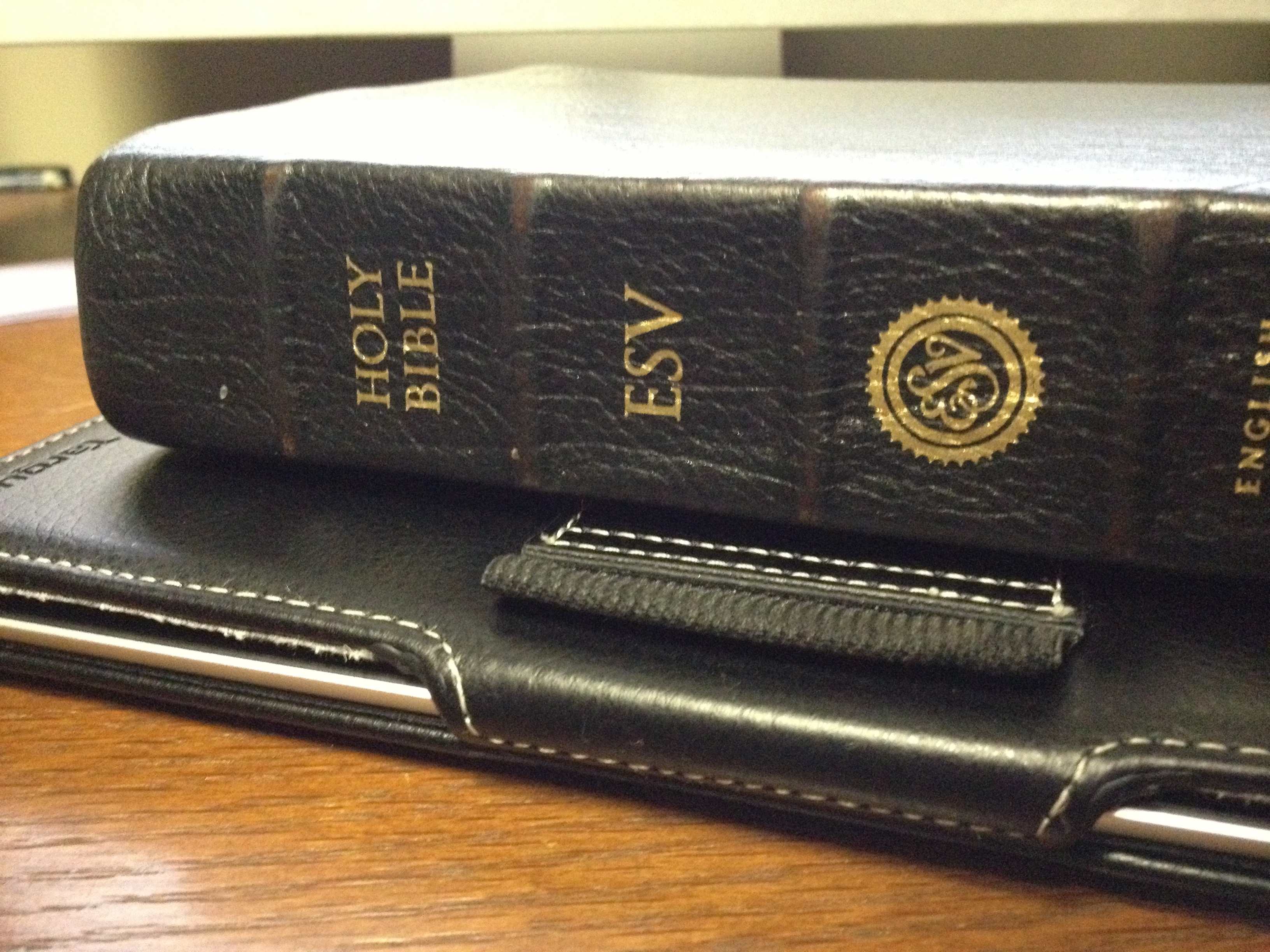
What Are a Your Motives For Studying Theology?

20140731-104342-38622684.jpg

“Some desire to know merely for the sake of knowing, and that is shameful curiosity. Some desire to know that they may sell their knowledge, and that too is shameful. Some desire to know for reputation’s sake, and that is shameful vanity. But there are some who desire to know that they may edify others, and that is praiseworthy; and there are some who desire to know that they themselves may be edified, and that is wise.”

—Richard Baxter, The Reformed Pastor

Are You Chasing Church Health or Church Growth?

Healthy tree

The term recovery is used in the medical field, and that makes it appropriate for church revitalization, because our goal should be to have a healthy church. So many pastors and church leaders today are striving for church growth, but that is putting the cart before the horse. The objective should not be church growth, but church health, because growth must proceed from health.”

–Harry L. Reeder, III; From Embers to a Flame, 46.

Help For New Expositors: 10 Do’s and Don’ts of Sermon Introductions

Preaching

Yesterday I shared my Sermon Prep Checklist [Find it here]. Since many new expositors struggle with how to begin a sermon properly, I thought that these 10 Do’s and Dont’s of Sermon Introductions might be helpful to some. Please make sure to post any questions you might have in the comments below.

Do:

  1. Be clear, and concise. Make an impact that will leave your listener wanting more.
  2. Be creative. Introducing every sermon in the same manner gets as tedious as a bologna sandwich every day for lunch. Mix it up.
  3. Be careful in your use of sensational or shocking introductions. They may distract from the message itself, and if over-done will desensitize your listeners over time.
  4. Be brief. Don’t repeat yourself or use multiple illustrations. Get to the main idea and transition into your proposition as quickly as possible. Your job is to exposit the text—so move on to it!
  5. Be energetic. Nothing invites a wandering mind and a good nap than a boring preacher.

Do not:

  1. Make your introduction disproportionate to the sermon. Your intro is like a porch to your sermon (the house). Make the porch fit the house.
  2. Cram details into the introduction that should more properly be placed into the sermon under a main or sub-point.
  3. Avoid eye contact or read your intro. Eye contact is important to engage your listeners. Know your intro so well that you will not need to read it. With that said, lengthy quotes are seldom appropriate in an introduction.
  4. Introduce your first point, or a sub-point or idea in your sermon. This is confusing. Introduce the main idea of the sermon, which should cover your proposition and outline.
  5. Introduce the book, genre, author or audience. This material is background, but not the main idea of the text.

Help For New Expositors: A Simplified Sermon Preparation Checklist

Checklist

Over a decade ago, I was frustrated with my lack of methodology in sermon preparation. It seemed that every time I sat down to prepare a message, that I started in a slightly different way or I would do things in a different order. I was taught the exegetical method in seminary, but there are some things that only practice and experience can teach. I knew that I needed some sort of a form or checklist to help me move from one stage of preparation to the next. I don’t use this as much any more, but it served as a great training resource until I was so used to the movements of sermon prep that I didn’t need it any more. Below is what I came up with. If it helps you, great! If you have any questions about how each part functions, let me know in the comments. (By the way, my version has check boxes after each step, so I could get the satisfaction that comes from finishing each step with a “check.”)


Text: ____________________ Date to Preach _____________


1. Read the text in its context.  (Read 25x. Hash marks:)____________

Take notes on observations, questions, and cultural/historical issues that you need addressed later in your study.

2. Read the text 1x in alternative versions:

    • ESV
    • NASB
    • NIV
    • KJV
    • NKJV
    • NLT
    • The Message

3. Translate the text from the original language.

4. Diagram the text (either line or block). Understand the relationship of phrases and words to one another.

5. What is the major theme of the passage? 

6. Read available commentaries on the passage.

    • _____________________
    • _____________________
    • _____________________
    • _____________________
    • _____________________
    • _____________________

7. Outline the passage (Exegetical outline)

8. What is the doctrinal focus here? ________________

9. Form the preaching proposition.

10. Outline the proposition (Homiletical outline)

11. Clothe it with illustrations and applications.

12. Form introduction, conclusion and title.

Biblical Balance in Worship that Is Not Disconnected from Time

ipad_preach

“Good worship does not engage in the arrogance of modernity, which disconnects from the past, nor does it participate in the idolatry of traditionalism, which lives in the past. Rather, we should begin with the great classical worship that at one time was contemporary and has now become tried and true, and then build upon it, being ready to absorb that which is excellent in the present. Good worship is offered in spirit and in truth, honors Christ, and facilitates the praise of God’s people and the communication of the gospel to the lost. It is connected to the past without living in the past, contextualized in the present without accommodating the present, and setting a pattern to shape the future instead of becoming dated in the future.”

–Harry L. Reeder, III;  Embers to a Flame, 34-35.