Moralism is a False Gospel

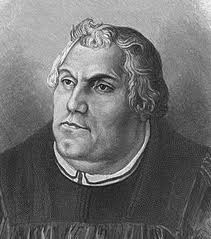
Martin Luther.jpg

Is salvation merely a message of “do better?” Is Christianity simply a moralistic religion that teaches that all we need to do is obey God? That is what the self-righteous Pharisees thought, and it is what many people in churches think. To them, Christianity is a list of rules that can be kept–albeit with a lot of sacrifice. Don’t think so? How many times have you heard someone say their wayward son or daughter “just needs to get back to church?” Is that all they need? Is that what Jesus taught?

In Romans 1:17, the Apostle Paul wrote, “For in it the righteousness of God is revealed from faith for faith, as it is written, “The righteous shall live by faith.”” (Romans 1:17, ESV). This text traumatized Martin Luther before his conversion to Christ. Here was a man that sincerely wanted salvation. He had dedicated his life to holy living in a monastic community where he sacrificed on a daily basis. Yet his soul was tortured. Here are Luther’s own words, written a year before his death on March 5, 1545 following a long life of joyful blessing in true salvation through Jesus Christ.

I had indeed been captivated with an extraordinary ardor for understanding Paul in the Epistle to the Romans. But up till then it was … a single word in Chapter 1 [:17], “In it the righteousness of God is revealed,” that had stood in my way. For I hated that word “righteousness of God,” which according to the use and custom of all the teachers, I had been taught to understand philosophically regarding the formal or active righteousness, as they called it, with which God is righteous and punishes the unrighteous sinner.

Though I lived as a monk without reproach, I felt that I was a sinner before God with an extremely disturbed conscience. I could not believe that he was placated by my satisfaction. I did not love, yes, I hated the righteous God who punishes sinners, and secretly, if not blasphemously, certainly murmuring greatly, I was angry with God, and said, “As if, indeed, it is not enough, that miserable sinners, eternally lost through original sin, are crushed by every kind of calamity by the law of the decalogue, without having God add pain to pain by the gospel and also by the gospel threatening us with his righteous wrath!” Thus I raged with a fierce and troubled conscience. Nevertheless, I beat importunately upon Paul at that place, most ardently desiring to know what St. Paul wanted.

At last, by the mercy of God, meditating day and night, I gave heed to the context of the words, namely, “In it the righteousness of God is revealed, as it is written, ‘He who through faith is righteous shall live.’ ” There I began to understand [that] the righteousness of God is that by which the righteous lives by a gift of God, namely by faith. And this is the meaning: the righteousness of God is revealed by the gospel, namely, the passive righteousness with which [the] merciful God justifies us by faith, as it is written, “He who through faith is righteous shall live.” Here I felt that I was altogether born again and had entered paradise itself through open gates. Here a totally other face of the entire Scripture showed itself to me.… And I extolled my sweetest word with a love as great as the hatred with which I had before hated the word “righteousness of God.” Thus that place in Paul was for me truly the gate to paradise. [Emphasis added]

The “gates of paradise” were opened up to Luther because he no longer depended upon his own law-keeping to satisfy the perfect demands of God. He saw salvation as a gracious act of God alone. Christ was perfectly righteous, fulfilling the whole law in our place. He died in our place and we are justified because of his perfect life and substitutionary death.

The hamster wheel of self-righteous deeds done in order to save ourselves is endless and endlessly disappointing. But the worst thing is that it does not end in heaven, but hell. The one who rejects the perfect finished work of Christ on the cross in favor of his or her imperfect works should expect nothing more, and will get nothing less.

Don’t point people to hell with “do better” sermons. Don’t say that your lost neighbor needs to be invited to church when you need they need to be regenerated by Christ. Don’t confuse fruits of righteousness with earning points with God so he will somehow love and favor you more.

Christ alone is enough. Faith in him alone saves. This is all “marvelous, infinite, matchless grace.”

Seeking and Thinking Upon the Right Things

With the new year ahead of us, many people are making all sorts of New Year’s Resolutions—new diets, new Bible reading plans, new commitments to exercise more. We have all heard of the truism: “You are what you eat.” In many ways, this statement is true! If you feed your body well, you will generally have better health and more energy. If you feed your body a steady diet of junk food, then the results are somewhat predictable. But think with me for a second about this saying’s spiritual counterpart: “How we think effects how we behave.” Perhaps in this new year, we as Christians could use a little re-focusing on how we think.

Consider the truth of Romans 6:11: “So you also must consider yourselves dead to sin and alive to God in Christ Jesus.” (Romans 6:11, ESV). If we think about the reality that we as Christians have died with Christ on the cross to the power of sin, then we can find victory as we strive to live holy lives. This sort of thinking will have a serious impact on the way we live our lives.

In a sense, we are living corpses. We are dead to ourselves and alive in Christ (Col. 2:20). We have been buried with him (Col. 2:12), have been raised up with him (Col. 3:1) and have been seated with him in the presence of God the Father (Col. 3:1). If we can get our heads around what this means, it will have a huge impact on the way that we live life now.

Colossians 3:1-3 says, “If then you have been raised with Christ, seek the things that are above, where Christ is, seated at the right hand of God. Set your minds on things that are above, not on things that are on earth. For you have died, and your life is hidden with Christ in God.” (Colossians 3:1–3, ESV)

In this blogpost, I’d like to look a little more closely at this idea of seeking the right things and how that affects our thinking as Christians.

Background

As we begin, it would be helpful to take some time to remember the situation the church of Colossae faced. They had this false teaching that was spreading what was a mix of Jewish ceremonialism and a false teaching that would later be called Gnosticism.

Jewish ceremonialism demanded that they follow all the rules and regulations of the Old Testament, while failing to see that those ceremonies pointed to Jesus Christ (Col. 2:16-17).

Early Gnostic mysticism demanded ascetic living, angel worship, and visions while simultaneously taking the focus off of Christ (Col. 2:18-19).

One form of Gnosticism failed to see the symbolism of the Old Testament ceremonies and rituals that pointed to Jesus Christ, while the other form placed the focus on lesser beings and self-affliction to gain greater access to God. Both forms of this false teaching led the people away from God through rituals, ceremonies and false philosophies. The motivation for seeking God was man-made traditions and rules. And both failed because they did not address the heart and the mind.

So, Paul, in these four verses (Col. 3:1-4) turned from these false teachings to the true motivation given for pleasing God and living a victorious Christian life that replaces man-made rules and traditions. This brings us back to the truth I stated at the beginning: How we think effects how we behave. In Colossians 3:1-4 we find two keys that will unlock for us the real motivation for living for Christ that deals with the heart and the mind before it deals with the flesh.

1. Seek the Things That Are Above (v. 1)

“If then you have been raised with Christ, seek the things that are above, where Christ is, seated at the right hand of God.” (Colossians 3:1, ESV)

Paul begins by giving to us the counter to the false teacher’s approach that he has just finished discussing in Colossians 2. “If then” is a conditional statement that really could be translated “Since.” Since you have been raised with Christ. What has happened as a result of being raised with Christ? We died to sin according to Romans 6. And according to Colossians 2:12, we were buried with Christ in baptism (“having been buried with him in baptism, in which you were also raised with him through faith in the powerful working of God, who raised him from the dead.” (ESV))

The very next verse (Col. 2:13) adds that not only did we die to our sins with Christ, but we were also made alive together with him at his resurrection. Paul once again reminds his readers of this fact in 3:1. Since we have been raised with Christ, Paul is saying, seek the things that are above. Really, Paul’s grammar tells us that he means, “Keep on seeking!” This isn’t a one-time deal. We are to keep on seeking. Paul is saying that since we are those who are truly spiritually alive, who have our lives in Jesus Christ. Therefore, let us place our goals, aspirations and dreams upon those things that are above, where our lives are at—with the Savior who is not on earth, but sitting at the right hand of the Father.

Whereas the false teachers were placing their sights upon earthly goals, Paul says that what we ought to seek is far above—in heaven. In other words, our values system changes when we see ourselves as being alive with Christ in heaven. We stop seeking primarily after the things on this earth because our lives are not here on earth, but in heaven with Christ. Our attachment to earthly things will be evaluated with this truth. We will have a different standard of value for material possessions because we have treasure laid up in heaven. We will not be concerned about gaining honor from men, because we are enthroned with Christ—and there is no greater honor than that. We will not seek after earthly power, because we have all power in Christ. We will not chase after fame because we have already gained the loving approval of our heavenly Father.

All of these things that men seek after are earthly things and the one who grasps the reality of what he or she has in Christ will not seek after them with the same hungering and passion as the unredeemed man. We may need and use earthly things while we are here, but we will not spend an inordinate amount of time or energy chasing them because we see their true value in the light of what we already have in Christ.

2. Set Your Mind on the Things that Are Above (vv. 2-4)

“Set your minds on things that are above, not on things that are on earth. For you have died, and your life is hidden with Christ in God. When Christ who is your life appears, then you also will appear with him in glory.” (Colossians 3:2–4, ESV)

Like the command in verse 1, this is also given in the same tense and could be translated, “Keep on thinking on the things that are above.” Keep on thinking about heavenly things. Some people say that some Christians are “Too heavenly minded to be any earthly good,” but I think that the real problem is that too many Christians are not heavenly minded enough to be any earthly good. Our eyes are on this world and not on heaven.

Paul reminds us why we ought to have this heavenly focus in verse 4. Christian, you are dead, he writes. You are no longer a citizen of earth. Sure, you need to live here for a few more years, but this planet is not your home. You are a visitor. Don’t unpack your bags! You are an alien, a foreigner in a strange, distant land, so don’t get too comfortable! This isn’t your home. Your old life—it is gone! You died. You are no longer the same person. You died and have been reborn a different person. So, don’t focus your mind on the things on this fallen earth, rather think about the things in your true home where Christ is.

When I was little boy, I went to a Christian camp in California called Indian Village. It was the first time that I had been away from home by myself, not counting staying over my grandparent’s house. I got so homesick at camp. I thought about the food at home and my toys and my bed. I especially thought about my mom and dad and my little brother. I was so unsettled, that I refused to take a shower for several days. That is until my camp counselor helped me get over the embarrassment by letting me shower after everyone had left camp for an activity and I was allowed to shower in my swim trunks. That teepee tent I slept in at night for a week was not my home, and I was not going to get used to it. I eventually settled down some and even had a good time, but I was ready to go home when the buses came!

Colossians 3:3 says that our real life is hidden with Christ, who is in heaven. Life is not here—it is waiting for us in heaven. We are somewhere between heaven and earth, as Jonathan Edwards said, not a part of either heaven or earth right now. Our feet are on earth, but our heads and hearts are in heaven.

What is our motivation for this change in our thinking? Verse 4 tells us that the motivation for living in this truth is that when Jesus Christ comes (and this is sure, although the timing is unknown), then our real life will begin, and we will really start living. We will appear with him in glory. Just as we died with Christ and were buried and were raised up with Christ, when he returns, we will share in the glory. We will see the unifying of this strange existence into one. Heaven will come down and we will no longer be torn between heaven and earth. We will then be with Christ in heaven where our hearts and minds are. Everything will be made right. We, as pilgrims, will finally be home.

What are you seeking after? Heavenly things or earthly things? If you are seeking after earthly things, you will eventually leave them all behind. You can’t take them with you, and even if you could, they would be worthless in light of the treasures of heaven.

What are you thinking on? Heavenly things or earthly things? Have you unpacked your bags and begun to settle in? Have you forgotten your true home? Are you home sick? You should be. You should have a mental picture of heaven and the Lord and it should be so vivid that you can’t be truly happy to remain here on this broken planet. May we all be like the Apostle Paul, who would stay here for the blessings that he could bring the church, but he would much rather go home to heaven (Phil. 1:21-24). Paul’s eyes were set heavenward. Where are yours?
“Mercy”

“God, be merciful to me, a sinner!” Luke 18:13

God of the Publican,

Be merciful to me a sinner; this I am by nature and practice, this the Word proclaims me to be, this I hope I feel myself to be; Yet Thou hast not left me to despair, for there is no ‘peradventure’ in Thy grace; I have all the assurance I need that with Thee is plenteous redemption.

In spite of the number and heinousness of my sins Thou hast given me a token for good; The golden scepter is held out, and Thou hast said, ‘Touch it and live.’ May I encourage myself by a sense of Thy all-sufficiency, by faith in Thy promises, by views of the experience of others. To that dear refuge in which so many have sheltered from every storm may I repair.

In that fountain always freely open for sin may I be cleansed from every defilement. Sin is that abominable thing which Thy soul hates, and this alone separates Thee and me. Thou canst not contradict the essential perfections of Thy nature; Thou canst not make me happy with Thyself, till Thou hast made me holy like Thyself.

O holy God, make me such a creature as Thou canst take pleasure in, and such a being that I can take pleasure in Thee. May I consent to and delight in Thy law after the inner man, never complain over the strictness of Thy demands, but mourn over my want of conformity to them; never question Thy commandments, but esteem them to be right. By Thy Spirit within me may my practice spring from principle, and my dispositions be conformable with duty.

–The Valley of Vision

When Reading Your Bible Through the Year is Wrong

Like many Christians, I have tried to make it my practice to read the Bible on a daily basis and to read through the Bible in a year by following a reading plan. I have been blessed by this practice and would recommend that every Christian be in the Bible on a daily basis.

On this New Year’s Day, fresh reading plans will begin and new Bibles purchased will be read with great anticipation and joy. I applaud these things. What joy the Word of God brings to those who would spend time plumbing its depths! There is no better use of one’s time than reading and meditating upon Scripture.

But on this New Year day, I want to add balance to some things I have heard regarding Bible reading. We live under grace, not Law. Bible reading is important—as Jesus said, it is our daily bread for our weary souls (Matthew 4:4). But there is a hidden danger in making Bible reading into a work of the Law rather than a means of grace. Beyond the self-righteousness that can come from those who do read their “Bibles before breakfast,” and expect that all Christians should do the same or they are out of fellowship with God, there is also the danger of making the Bible another “to-do” to be checked off from our list of chores every day. Rushed reading without any thought to what the verses say or mean produces Bible illiterate people as much as not reading the Bible does.

It reminds me of a saying my wife and I had in our bedroom which read, “Always Kiss Me Goodnight.” Can you imagine waking up to your spouse and saying to yourself, “If I don’t kiss her, I can’t eat breakfast, so I better get it over with and give her a kiss.” Surely this falls short of true love and the intention of this sentiment. Reading your Bible before breakfast is good in placing your relationship with the Lord above our fleshly appetites, but this can also easily slide into legalism. And legalism is powerless over the flesh. Rules eventually fail where only the Spirit of God can bring about change.

The Word of God is written for our benefit. We might not always want to read it, but this is not so much a matter of obedience as it is a matter of the heart and how it has grown cold. If we begin with this realization, we can go before our heavenly Father in confession, asking him to warm our heart and to remind us of his love for us. We can be honest, knowing that he already knows our hearts have grown cold, and we can ask him to help us in our weakness to draw close to him.

Then, with a humble heart of faith, we can draw near, knowing that as we drink from the well of the Word, our Lord will begin to give us a thirst for him. We become like the father in the New Testament who wanted to believe that Christ could heal his son, but yet he knew how weak his faith was, so he cried out, “I believe, help my unbelief!” (Mark 9:24). We might know we need to read our Bibles, but we need to be honest when we also realize that we don’t want to, and that this is a spiritual problem that we must confess to God for his help.

Today, many Christians will begin their new Bible reading strong and with the best of intentions…but in the flesh and not in dependence upon God. This year, try something new—read your Bible in dependence upon the Spirit. Not just to begin reading it, but to continue reading through to the end. The goal is not finishing the Bible, nor is it reading it every day without fail. The goal is growing close to your Savior and God. From that relationship will flow rivers of living water.  

Christ’s Intense Love in the Storms of Life

Jesus Lover of My Soul— Charles Wesley (1740)

Jesus, lover of my soul, let me to Thy bosom fly,

While the nearer waters roll, while the tempest still is high.

Hide me, O my Savior, hide, till the storm of life is past;

Safe into the haven guide; O receive my soul at last.


Other refuge have I none, hangs my helpless soul on Thee;

Leave, ah! leave me not alone, still support and comfort me.

All my trust on Thee is stayed, all my help from Thee I bring;

Cover my defenseless head with the shadow of Thy wing.


Wilt Thou not regard my call? Wilt Thou not accept my prayer?

Lo! I sink, I faint, I fall—Lo! on Thee I cast my care;

Reach me out Thy gracious hand! While I of Thy strength receive,

Hoping against hope I stand, dying, and behold, I live.


Thou, O Christ, art all I want, more than all in Thee I find;

Raise the fallen, cheer the faint, heal the sick, and lead the blind.

Just and holy is Thy Name, I am all unrighteousness;

False and full of sin I am; Thou art full of truth and grace.


Plenteous grace with Thee is found, grace to cover all my sin;

Let the healing streams abound; make and keep me pure within.

Thou of life the fountain art, freely let me take of Thee;

Spring Thou up within my heart; rise to all eternity.