Living a Robust Christian Life


Fight the good fight of the faith. Take hold of the eternal life to which you were called and about which you made the good confession in the presence of many witnesses.” (1Ti 6:12, ESV)

No temptation has overtaken you that is not common to man. God is faithful, and he will not let you be tempted beyond your ability, but with the temptation he will also provide the way of escape, that you may be able to endure it.

(1 Corinthians 10:13, ESV)

One of the dangers we are told exists with the current Coronavirus is the way that it is a particular threat to those with compromised immune systems and the elderly. Because this demographic in society often lack the physical stamina to fight off a severe infection, they can succumb more easily to viruses that attack the body than a person who has a stronger body and immune system.

In 1 Corinthians 10:13, the Apostle Paul is encouraging the church to develop a robust spiritual immunity by learning from the mistakes and sins of Israel. In many ways, Paul had heard many troubling things had taken root in this congregation, and Paul knows where this could very easily lead.

Do not be idolaters as some of them were; as it is written, “The people sat down to eat and drink and rose up to play.” We must not indulge in sexual immorality as some of them did, and twenty-three thousand fell in a single day. We must not put Christ to the test, as some of them did and were destroyed by serpents, nor grumble, as some of them did and were destroyed by the Destroyer. Now these things happened to them as an example, but they were written down for our instruction, on whom the end of the ages has come.” (1 Corinthians 10:7–11, ESV)

What Paul saw happening in the church was a roadmap for destruction. He had seen it happen in the Old Testament as Israel left Egypt and indulged in sin with wanton abandon. Looking at their lives and their refusal to heed the patient and steady warnings of Moses and the Lord, the bodies of Israelites littered the wilderness for forty years.

How does sin “overtake us?” It is not because we are not equipped to handle temptation. The Israelite are described as having been fully aware of God’s presence with them when it says:

For I do not want you to be unaware, brothers, that our fathers were all under the cloud, and all passed through the sea, and all were baptized into Moses in the cloud and in the sea, and all ate the same spiritual food, and all drank the same spiritual drink. For they drank from the spiritual Rock that followed them, and the Rock was Christ.” (1 Corinthians 10:1–4, ESV)

Israel was led by the shekinah glory cloud, by the Lord himself. They saw the Lord protect them and fight for them when they passed through the Dead Sea on dry land. They received provision in food and water in the wilderness, and all of these showed that they were led by God. But they still rebelled. This is how sin “overtakes us” in temptation. We give ourselves over to sin little by little. A little indulgence here, and a little there. We might have all the resources of Christ before us, but we do not take advantage of them. Instead we coddle our sin, like holding a rattlesnake to our chest. We love it, but it will destroy us.

Now these things took place as examples for us, that we might not desire evil as they did.” (1 Corinthians 10:6, ESV). A robust faith is an exercised faith. It is one that fights sin. It may get knocked now, it may slip and fall, but it gets back up. It is a faith that cries out to God for mercy and help. It sees its own weakness without Christ and leans upon the salvation won by him on the cross. It looks and learns from not only the victories of others, but also the failures as well.

A robust faith is active. It isn’t like the seaweed that drifts back and forth in the tide of culture. It doesn’t wait until someone else comes to push us, but seeks to grow in faith by the study and application of the Word to self, and then seeks to go and help the weak in faith.

Temptation will always present itself. But like those that are physically healthy and strong can resist most diseases and threats to their immune system, so too will the one who is spiritually healthy be better prepared to face the temptations when they come. And even if they should succumb to the threat, they will grow wiser and stronger, even in their failure, and the next time, they will not fall as quickly or as easily.

The Soon-Crushed Serpent

I appeal to you, brothers, to watch out for those who cause divisions and create obstacles contrary to the doctrine that you have been taught; avoid them. For such persons do not serve our Lord Christ, but their own appetites, and by smooth talk and flattery they deceive the hearts of the naive. For your obedience is known to all, so that I rejoice over you, but I want you to be wise as to what is good and innocent as to what is evil. The God of peace will soon crush Satan under your feet. The grace of our Lord Jesus Christ be with you.

Romans 16:17–20, ESV

This morning as I was getting into my car, I noticed a large weed growing at the edge of my front lawn. Not far was a large patch of clover that has continued to spread throughout my yard. As I began to look around, I began to notice more and more weeds. I take a bit of pride in my yard, and the battle against weeds seems to be never ending. I had a small shrub die recently, and I can’t figure out why, but I never tend to the weeds and they still flourish. All of this reminds me of the curse of sin.

As the Apostle Paul closed out his letter to the Romans, he thanked a litany of saints that had been a blessing and encouragement to him in the ministry of the gospel. However, in verses 17-20, after having thanked the hard workers in the church, Paul diverted his words to address the danger of false teachers who will work to break up that unity through their deceptive speech that makes it seem like they care for the church, but in reality they only care about themselves.

I don’t know of a pastor that hasn’t come face to face with a false teacher who has sought to divide the church, and many times under the guise of what is best, in their eyes, for everyone. As a pastor, it hurts to watch this poisonous deception spread like weeds in the hearts of those who listen to the smooth words of these liars. Paul had seen it happen, and he warned the church to watch out for this among themselves as well. He knew that when division comes, the work will stop. Satan knows this too.

Today I asked my wife to call a company to come and spray weed killer and fertilizer on our lawn. The weeds will be kept at bay while the grass will have time to thicken and grow stronger roots, enabling it to fight off the weeds as it grows more robust. But the fight against the weeds will never end…that is until the Lord Jesus returns.

Paul sees this as well. Paul wrote, “The God of peace will soon crush Satan under your feet…”(v. 20). The “peace” is the eternal peace given to the children of God through the atoning work of Christ. There will be no peace accord with the enemy. This God who brings peace through Christ will crush Satan, that serpent of old, not only under the feet of Christ, once and for all, but he will crush Satan under our feet as well. We will share in the victory that was won at the cross and which culminates at the Second Coming.

So for now, we fend off the brood of vipers, and we seek the welfare of the church through the fertilizer of the Word, knowing that it will help keep the liars at bay. But we also recognize that until the Serpent-Crusher comes to make all things right, we can take courage in knowing that he has already won the victory through the cross of Jesus Christ.

Don’t Forget to Look Up

But you, O Lord, are enthroned forever; you are remembered throughout all generations.” (Psalm 102:12, ESV)

Psalm 102 begins with great misery and pain. The superscription on this psalms reads: “A prayer of one afflicted, when he is faint and pours out his complaint before the Lord.”

As you read through this psalm one gets a great sense of his pain and anguish, which appears to be spiritual, emotional, and even physical. He groans, struggles with insomnia, weeps, and feels his body engulfed in fever and suffering so great that he cannot eat.

There are many of God’s people who can identify with such suffering. But what is the solution for the man or woman of God in such trying times? Here in America, it might be the time to see a physician or a psychologist. One might be given medications to help with the sleep and pain. Perhaps, a self-help group would be recommended so that the suffering might console one another.

But the psalmist has a different route. It stands out vividly beginning in verse 12 and begins with a strong contrast, “But you, O Lord…” In contrast to whatever is happening in our human experience on earth, there is another reality as well that is occurring in heaven: the Lord is enthroned forever. This is not simply about the duration of is reign, but about the permanency and the settled nature of it as well. The Lord has not been unseated. There has not been a coup in heaven whereby the demons have grappled control of the throne of God. No, he is still there.

The following verses build upon this hope-filled truth. If he is there, then he can hear. And if he can hear, he can answer. The Lord is glorious, and he will judge the wicked. He can see everything and he hears our cries. He still is worthy of praise and glorious. Although our suffering is difficult, this meditation on the fuller reality above our circumstances helps us to realize that the Lord God is fully aware, fully powerful to act, and still loves and cares for his people.

And even though our suffering may be prolonged, and even might usher us into the Lord’s presence, there is yet hope. The psalmist closes his song with these words that reach beyond this life and into eternity: “They will perish, but you will remain; they will all wear out like a garment. You will change them like a robe, and they will pass away, but you are the same, and your years have no end. The children of your servants shall dwell secure; their offspring shall be established before you.” (Psalm 102:26–28, ESV)

One day, we will no longer experience the pains and trials of this life. One day all danger will have passed and every threat will be gone. One day, we will be with the Lord who is eternal, and we shall be like him. But even better, we shall be with him. So, the next time you’re days are dark and seem to be without much hope, don’t forget to look up, and remember that there is more happening than meets the eye.

Seeking and Thinking Upon the Right Things

With the new year ahead of us, many people are making all sorts of New Year’s Resolutions—new diets, new Bible reading plans, new commitments to exercise more. We have all heard of the truism: “You are what you eat.” In many ways, this statement is true! If you feed your body well, you will generally have better health and more energy. If you feed your body a steady diet of junk food, then the results are somewhat predictable. But think with me for a second about this saying’s spiritual counterpart: “How we think effects how we behave.” Perhaps in this new year, we as Christians could use a little re-focusing on how we think.

Consider the truth of Romans 6:11: “So you also must consider yourselves dead to sin and alive to God in Christ Jesus.” (Romans 6:11, ESV). If we think about the reality that we as Christians have died with Christ on the cross to the power of sin, then we can find victory as we strive to live holy lives. This sort of thinking will have a serious impact on the way we live our lives.

In a sense, we are living corpses. We are dead to ourselves and alive in Christ (Col. 2:20). We have been buried with him (Col. 2:12), have been raised up with him (Col. 3:1) and have been seated with him in the presence of God the Father (Col. 3:1). If we can get our heads around what this means, it will have a huge impact on the way that we live life now.

Colossians 3:1-3 says, “If then you have been raised with Christ, seek the things that are above, where Christ is, seated at the right hand of God. Set your minds on things that are above, not on things that are on earth. For you have died, and your life is hidden with Christ in God.” (Colossians 3:1–3, ESV)

In this blogpost, I’d like to look a little more closely at this idea of seeking the right things and how that affects our thinking as Christians.

Background

As we begin, it would be helpful to take some time to remember the situation the church of Colossae faced. They had this false teaching that was spreading what was a mix of Jewish ceremonialism and a false teaching that would later be called Gnosticism.

Jewish ceremonialism demanded that they follow all the rules and regulations of the Old Testament, while failing to see that those ceremonies pointed to Jesus Christ (Col. 2:16-17).

Early Gnostic mysticism demanded ascetic living, angel worship, and visions while simultaneously taking the focus off of Christ (Col. 2:18-19).

One form of Gnosticism failed to see the symbolism of the Old Testament ceremonies and rituals that pointed to Jesus Christ, while the other form placed the focus on lesser beings and self-affliction to gain greater access to God. Both forms of this false teaching led the people away from God through rituals, ceremonies and false philosophies. The motivation for seeking God was man-made traditions and rules. And both failed because they did not address the heart and the mind.

So, Paul, in these four verses (Col. 3:1-4) turned from these false teachings to the true motivation given for pleasing God and living a victorious Christian life that replaces man-made rules and traditions. This brings us back to the truth I stated at the beginning: How we think effects how we behave. In Colossians 3:1-4 we find two keys that will unlock for us the real motivation for living for Christ that deals with the heart and the mind before it deals with the flesh.

1. Seek the Things That Are Above (v. 1)

“If then you have been raised with Christ, seek the things that are above, where Christ is, seated at the right hand of God.” (Colossians 3:1, ESV)

Paul begins by giving to us the counter to the false teacher’s approach that he has just finished discussing in Colossians 2. “If then” is a conditional statement that really could be translated “Since.” Since you have been raised with Christ. What has happened as a result of being raised with Christ? We died to sin according to Romans 6. And according to Colossians 2:12, we were buried with Christ in baptism (“having been buried with him in baptism, in which you were also raised with him through faith in the powerful working of God, who raised him from the dead.” (ESV))

The very next verse (Col. 2:13) adds that not only did we die to our sins with Christ, but we were also made alive together with him at his resurrection. Paul once again reminds his readers of this fact in 3:1. Since we have been raised with Christ, Paul is saying, seek the things that are above. Really, Paul’s grammar tells us that he means, “Keep on seeking!” This isn’t a one-time deal. We are to keep on seeking. Paul is saying that since we are those who are truly spiritually alive, who have our lives in Jesus Christ. Therefore, let us place our goals, aspirations and dreams upon those things that are above, where our lives are at—with the Savior who is not on earth, but sitting at the right hand of the Father.

Whereas the false teachers were placing their sights upon earthly goals, Paul says that what we ought to seek is far above—in heaven. In other words, our values system changes when we see ourselves as being alive with Christ in heaven. We stop seeking primarily after the things on this earth because our lives are not here on earth, but in heaven with Christ. Our attachment to earthly things will be evaluated with this truth. We will have a different standard of value for material possessions because we have treasure laid up in heaven. We will not be concerned about gaining honor from men, because we are enthroned with Christ—and there is no greater honor than that. We will not seek after earthly power, because we have all power in Christ. We will not chase after fame because we have already gained the loving approval of our heavenly Father.

All of these things that men seek after are earthly things and the one who grasps the reality of what he or she has in Christ will not seek after them with the same hungering and passion as the unredeemed man. We may need and use earthly things while we are here, but we will not spend an inordinate amount of time or energy chasing them because we see their true value in the light of what we already have in Christ.

2. Set Your Mind on the Things that Are Above (vv. 2-4)

“Set your minds on things that are above, not on things that are on earth. For you have died, and your life is hidden with Christ in God. When Christ who is your life appears, then you also will appear with him in glory.” (Colossians 3:2–4, ESV)

Like the command in verse 1, this is also given in the same tense and could be translated, “Keep on thinking on the things that are above.” Keep on thinking about heavenly things. Some people say that some Christians are “Too heavenly minded to be any earthly good,” but I think that the real problem is that too many Christians are not heavenly minded enough to be any earthly good. Our eyes are on this world and not on heaven.

Paul reminds us why we ought to have this heavenly focus in verse 4. Christian, you are dead, he writes. You are no longer a citizen of earth. Sure, you need to live here for a few more years, but this planet is not your home. You are a visitor. Don’t unpack your bags! You are an alien, a foreigner in a strange, distant land, so don’t get too comfortable! This isn’t your home. Your old life—it is gone! You died. You are no longer the same person. You died and have been reborn a different person. So, don’t focus your mind on the things on this fallen earth, rather think about the things in your true home where Christ is.

When I was little boy, I went to a Christian camp in California called Indian Village. It was the first time that I had been away from home by myself, not counting staying over my grandparent’s house. I got so homesick at camp. I thought about the food at home and my toys and my bed. I especially thought about my mom and dad and my little brother. I was so unsettled, that I refused to take a shower for several days. That is until my camp counselor helped me get over the embarrassment by letting me shower after everyone had left camp for an activity and I was allowed to shower in my swim trunks. That teepee tent I slept in at night for a week was not my home, and I was not going to get used to it. I eventually settled down some and even had a good time, but I was ready to go home when the buses came!

Colossians 3:3 says that our real life is hidden with Christ, who is in heaven. Life is not here—it is waiting for us in heaven. We are somewhere between heaven and earth, as Jonathan Edwards said, not a part of either heaven or earth right now. Our feet are on earth, but our heads and hearts are in heaven.

What is our motivation for this change in our thinking? Verse 4 tells us that the motivation for living in this truth is that when Jesus Christ comes (and this is sure, although the timing is unknown), then our real life will begin, and we will really start living. We will appear with him in glory. Just as we died with Christ and were buried and were raised up with Christ, when he returns, we will share in the glory. We will see the unifying of this strange existence into one. Heaven will come down and we will no longer be torn between heaven and earth. We will then be with Christ in heaven where our hearts and minds are. Everything will be made right. We, as pilgrims, will finally be home.

What are you seeking after? Heavenly things or earthly things? If you are seeking after earthly things, you will eventually leave them all behind. You can’t take them with you, and even if you could, they would be worthless in light of the treasures of heaven.

What are you thinking on? Heavenly things or earthly things? Have you unpacked your bags and begun to settle in? Have you forgotten your true home? Are you home sick? You should be. You should have a mental picture of heaven and the Lord and it should be so vivid that you can’t be truly happy to remain here on this broken planet. May we all be like the Apostle Paul, who would stay here for the blessings that he could bring the church, but he would much rather go home to heaven (Phil. 1:21-24). Paul’s eyes were set heavenward. Where are yours?


Pastor Like Paul, part 3

“You, however, have followed my teaching, my conduct, my aim in life, my faith, my patience, my love, my steadfastness,”–2 Timothy‬ ‭3:10‬ ‭ESV‬‬

We have been learning what it means to follow a good leader, and how to be a good leader ourselves. We are doing this by reading Paul’s last letter to his spiritual child, Timothy, who was a pastor in Ephesus.

The Christian faith depends upon not only faithful discipleship, but on faithful disciples who continue in the pattern they have received. In their last two posts in this series we looked at 3 ways we need to follow the good Christian leader:

  1. Follow the Same Doctrine

  2. Follow the Same Conduct

  3. Follow the Same Purpose

You can read part 1 here, and part 2 here.

4. Follow with the Same Faithfulness

Faith Defined

The Greek word pistos refers not just to the content of our faith, but it also can be rendered “faithfulness.”

Faith, in general, means to believe in something, to have confidence and trust in something or someone, but Hebrews 11:1 defines it more accurately. It says, “Now faith is the assurance of things hoped for, the conviction of things not seen.” (Hebrews 11:1, ESV)

Faith Lived Out

It is important to note that this definition of faith comes at the head of a whole chapter of earthly struggles that God’s people overcame in the strength of the Lord. Hebrews 11 shows us that biblical faith is not a painless faith, it is not an easy faith. To believe is only part of it. But faith runs deep and it trust God even in the hardest and darkest times.

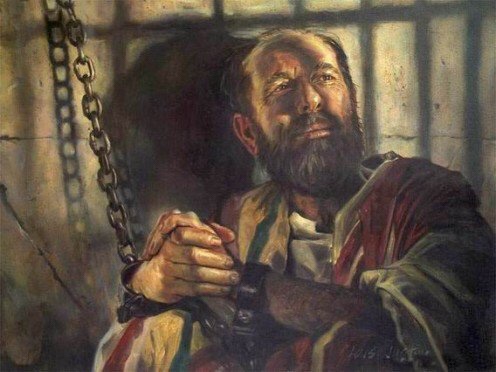
Think about what Paul is going through at the time he penned these words to Timothy. He is facing certain death and his life up to this point has been hard. Read with me 2 Cor 6:4-10 to remember what Paul suffered for Christ: “but as servants of God we commend ourselves in every way: by great endurance, in afflictions, hardships, calamities, beatings, imprisonments, riots, labors, sleepless nights, hunger; by purity, knowledge, patience, kindness, the Holy Spirit, genuine love; by truthful speech, and the power of God; with the weapons of righteousness for the right hand and for the left; through honor and dishonor, through slander and praise. We are treated as impostors, and yet are true; as unknown, and yet well known; as dying, and behold, we live; as punished, and yet not killed; as sorrowful, yet always rejoicing; as poor, yet making many rich; as having nothing, yet possessing everything.” (2 Corinthians 6:4–10, ESV)

Do you see how faith looks when it is lived out? Paul wants Timothy to have this sort of faith. Surely he had seen the suffering and hatred he faced. Paul’s teaching, conduct and aim in life had led to this sort of treatment for him, and it would surely lead to this in Timothy’s life as well. And will have this response if we follow the model Christ laid out for us as well.

Timothy seemed to have struggled with wavering faith that resulted in fear and shame at times.

  • “for God gave us a spirit not of fear but of power and love and self-control. Therefore do not be ashamed of the testimony about our Lord, nor of me his prisoner, but share in suffering for the gospel by the power of God,” (2 Timothy 1:7–8, ESV)
  • which is why I suffer as I do. But I am not ashamed, for I know whom I have believed, and I am convinced that he is able to guard until that day what has been entrusted to me.” (2 Timothy 1:12, ESV)
  • “May the Lord grant mercy to the household of Onesiphorus, for he often refreshed me and was not ashamed of my chains,” (2 Timothy 1:16, ESV)
  • “Do your best to present yourself to God as one approved, a worker who has no need to be ashamed, rightly handling the word of truth.” (2 Timothy 2:15, ESV)

Timothy needed to learn that “the promises of God are true and reliable.” We need that lesson too.