What did Paul mean when he wrote of his “weakness…in fear and much trembling?” Clearly, Paul was connecting his preaching to these things (“…my speech and my message…”). I think that Paul’s words here are a much-needed correction to the celebrity culture within the Western church today.
The Apostle to the Gentiles stood before this church in Corinth as a weak man. He did not have the polish and trappings that the false teachers of Corinth had, and to many, this was a severe disadvantage. Although they might not say it this way, there are many who would imply strongly that the message is secondary to the method. If you don’t have a media empire pushing your message, then the world won’t listen and you’ll be ineffective. I wonder how Paul would have responded to that sort of thinking. Well, we don’t have to wonder because his Spirit-inspired words are given to us.
“And I was with you in weakness and in fear and much trembling, and my speech and my message were not in plausible words of wisdom, but in demonstration of the Spirit and of power, so that your faith might not rest in the wisdom of men but in the power of God.” 1 Corinthians 2:3–5 (ESV)
What did Paul mean when he wrote of his “weakness…in fear and much trembling?” Clearly, Paul was connecting his preaching to these things (“…my speech and my message…”). I think that Paul’s words here are a much-needed correction to the celebrity culture within the Western church today.
The Apostle to the Gentiles stood before this church in Corinth as a weak man. He did not have the polish and trappings that the false teachers of Corinth had, and to many, this was a severe disadvantage. Although they might not say it this way, there are many who would imply strongly that the message is secondary to the method. If you don’t have a media empire pushing your message, then the world won’t listen and you’ll be ineffective. I wonder how Paul would have responded to that sort of thinking. Well, we don’t have to wonder because his Spirit-inspired words are given to us.
In his commentary on these verses, Alan Johnson clarifies what Paul is saying: “…[Paul’s] proclamation (wider than only preaching) of the “mystery” of God, namely, Jesus Christ as the crucified One, was in keeping with the sole focus on the cross because Paul consistently, deliberately presented himself not self-confidently but in self-effacement, not in strength as a “successful” person but in weakness and fear, with much trembling (v. 3).” (Alan F. Johnson, 1 Corinthians, vol. 7, The IVP New Testament Commentary Series (Westmont, IL: IVP Academic, 2004), 62.)
Paul isn’t working to build his brand. He isn’t seeking to launch a well-strategized media plan that incorporates all the latest channels for all the up-and-coming evangelical elites. He isn’t buddying up to those more popular false teachers in order to share the limelight while justifying this as focusing on the majors and overlooking areas of disagreement in the name of “grace.” Nope. Paul is not about Paul. He unashamedly points to himself as a weak and fearful man. His words were perceived by the Corinthians as implausible and foolish–because that was what the unvarnished gospel sounds like to unregenerate ears. Paul didn’t seek to “fix” it.
And since Paul wasn’t trying to boost his own brand, he didn’t care what others thought about him so long as they saw Jesus. Paul was weak–he didn’t feign weakness to seem more spiritual. He was scared–but God was his strength. He wasn’t practiced and polished in his delivery, intentionally–so that people wouldn’t walk away impressed with this servant’s speech, but so they would walk away worshipping his God.
Paul focused on the cross in his life, message, and methods. In our glitzy evangelical world of super conferences, social media blitzes, and multi-books deals, we are all too often a faint shadow of this servant of God. May we join with George Whitefield in saying, “Let my name die everywhere, let even my friends forget me, if by that means the cause of the blessed Jesus may be promoted.”
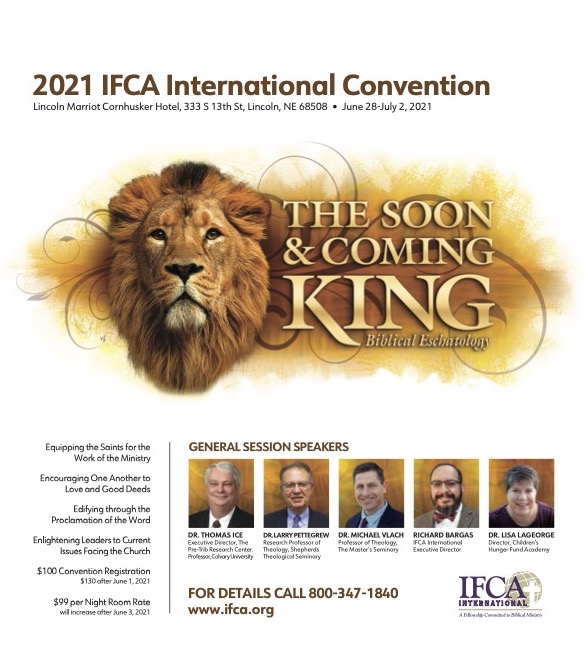
I need to take a break from writing here to focus on our IFCA Annual Convention and Board meetings for the next couple of weeks and to take some time off with my family. I will return to writing on July 12, Lord willing.
If you’d be interested in viewing the Convention General Session speakers via Livestream, you can find out more information and register for the convention at the link below. Your prayers are appreciated!
I don’t have any doubt that we live in a time when people clamor for mindless entertainment, where it seems that the more outlandish and stupid, the better. How else will history be able to understand pop cultural trends like the current infatuation with “poop emojis”and YouTube videos of people eating Tide laundry detergent pods?
“Do your best to present yourself to God as one approved, a worker who has no need to be ashamed, rightly handling the word of truth.” (2 Timothy 2:15, ESV)
I don’t have any doubt that we live in a time when people clamor for mindless entertainment, where it seems that the more outlandish and stupid, the better. How else will history be able to understand pop cultural trends like the current infatuation with “poop emojis”and YouTube videos of people eating Tide laundry detergent pods?
However, as a pastor, I am troubled that the mindset that some people have had is that since this empty-mindedness is not going away, that people cannot handle the preaching of the Word of God with any depth. The argument usually is that people just don’t know their Bibles today, and so we must shorten the length of our sermons and simplify our messages—with some even saying that the church will need to abandon preaching altogether and instead should just have “talks.”
What is particularly dismaying is that theological liberalism often chooses to move away from the Bible, stating that Scripture cannot be accepted as it is given because it is intellectually untenable. A person could not believe in the Bible as it is presented in its grammatical, historical and literal setting andalso believe in science!
But that isn’t what we have all too often in Bible churches. Instead, there is a movement away from the Bible because even though we Bible-believing Christians can all affirm its truthfulness, we don’t want to dig too deep—it makes our heads hurt with all that history and geography and cultural stuff. And don’t get us started on theology! We have Bible churches that are often filled with people who prefer Bible-lite sermons that tell good stories and have lots of moralizing, but woe to the pastor who would dare to go deeper!
At least that is what a lot of pastors I have spoken to seem to think…
What I have found out is something quite different. Yes, many Christians are against boring sermons, and overly-long sermons. They sleep through sermons that have no point but are simply data-dumps and half-baked sermons that meander nowhere slowly. They leave churches where the pastor seems to want to talk about only his hobby horse doctrines or wants to flaunt his ability to use Greek grammar. Yes, it’s true, people don’t want that.
But we seem to confuse simplicity with simple-mindedness. We think that because they don’t want to hear a 45-minute sermon on the history of Tiglath-Pileser that they can’t stand real Bible preaching! So, in frustration, some pastors go back to vapid sermons. Stories, jokes, cutesy alliterations, we dress up like John the Baptist or the angel Gabriel. Why? Because we have not worked hard at going deep and wide. We have not prepared our biblical meal for everyone at the table to be able to digest the truth.
We can’t forget that people are at all sorts of different levels spiritually. Every church is like this. Some are unbelievers, some are babes in Christ, some are plateaued in their walk, some are maturing and others are going through a spiritual growth spurt. Don’t get frustrated by that man who wants you to go deeper every Sunday! Put a nugget or two in the sermon for him to chew on. Don’t scoff when that young couple ask the simplest questions—they are hungry! Feed them some application alongside your explanation of the text! Don’t chuckle at the hard-headed fellow who never seem to get it. Speak at his level and give him clear illustrations to cause that light to go on for him. We preach to real people, and so our sermons need to speak to real people!
My experience has shown that committed Christians don’t want shorter, watered down sermons. They don’t want a bunch of silly stories or jokes. They want the Bible! They want theology! They want to go deeper! And those “millennials” that so many people like taking jabs at, they thrive in churches where the Word of God is preached with conviction and depth.
Our sermons can’t be empty. But they can’t be boring either. We need to present the meat of the Word in the most pleasing way we know how. We need to break it down for the young in Christ and give those who are more mature something to continue to work out in their own personal study. By doing this, we will raise the bar of our churches—they will all grow in depth and breadth of their knowledge of the Word and their learning will, Lord willing, blossom into changed lives.