
In one region of Africa, the first converts to Christianity were very diligent about praying. In fact, the believers each had their own special place outside the village where they went to pray in solitude. The villagers reached these “prayer rooms” by using their own private footpaths through the brush. When grass began to grow over one of these trails, it was evident that the person to whom it belonged was not praying very much. Because these new Christians were concerned for each other’s spiritual welfare, a unique custom sprang up. Whenever anyone noticed an overgrown “Prayer path,” he or she would go to the person and lovingly warn, “Friend, there’s grass on your path!
I suspect that we all have struggled at times to be consistent in our prayer times. Our paths begin to grow grass. In Matthew 7:7-11, we find ourselves in the middle of Jesus’ great Sermon on the Mount. In chapter six, the Lord gave an amazing lesson on prayer. But as you listen to what Jesus is teaching in the Sermon on the Mount the more you see that radical dependence that you and I need in prayer.
- We need prayer because he calls us to forgive our enemies (6:14-15)
- We need prayer because he says when we fast, it is to be with a humble heart (6:16-18)
- We need prayer because he warns us of the lure of material possessions and how they can steal away our affection for the Lord (6:19-24)
- We need prayer because Jesus told us that we aren’t supposed to get anxious, that he would provide for all of our needs (6:25-34)
- We need prayer because we aren’t supposed to unfairly judge others, but rather we need to examine our own hearts to find healing and forgiveness for our own sins first (7:1-5).
- We need prayer because we need to discern when those we preach the gospel to are so hard-hearted or against our efforts that we need to move on, all while keeping our own hearts tender and hoping that they will come to repentance (7:6).
Can you start to see why we need prayer? What the Lord is calling us to be and do is impossible without God. We can’t even hope to begin fulfilling these things without him, and that was only the last half of the Sermon!
At this point, those who were listening to Jesus’ message must have been feeling overwhelmed, wondering how they could be obedient. We can often feel this way and be tempted to give up. But I want us to see that we can’t give up. We need to wrestle with God in persistent prayer.
In my last post (here) we saw the power of God demonstrated to us in what he has done in his awesome works, including our salvation and forgiveness. From there we were able to see that we need to ask God with greater faith that he will provide for our needs. We need to develop that idea of asking God in dependence and with persistence. It is here that Jesus instructs them how—Ask, Seek, Knock. Let’s look at each on in order to find out how we can become more dependent upon the Lord.
“Ask, and it will be given to you; seek, and you will find; knock, and it will be opened to you. For everyone who asks receives, and the one who seeks finds, and to the one who knocks it will be opened. Or which one of you, if his son asks him for bread, will give him a stone? Or if he asks for a fish, will give him a serpent? If you then, who are evil, know how to give good gifts to your children, how much more will your Father who is in heaven give good things to those who ask him!” (Matt 7:7-11, ESV)
“Ask” your heavenly Father
Every one of these five verses speaks about asking, and all of them point to the fact that if we ask our heavenly Father, he will answer our needs. Implied in asking is the need for humility. We ask when we do not have. We are in need. It is what we see in Matt 5:3–the poor in spirit know they have nothing in themselves and they need to receive everything from God. Jesus assures us that when we acknowledge our need to him, we shall receive. Jesus illustrates this with the child who goes to his earthly father for something to eat. The staple diet of most people in Jesus’ time was bread and fish. Jesus says that just like a little child comes in dependence to her father for her food, so our infinitely kinder, gentler and more loving heavenly Father will give us all we need with great delight and joy! But we need to remember that we must come asking humbly and dependence upon him.
“Seek” the Father’s will
This reminds us of Matt. 6:33, “But seek first the kingdom of God and his righteousness, and all these things will be added to you.” The desire to be dependent upon God progresses from asking God in humble dependence to growing in prayer while seeking God’s will. Seeking gives us a visual picture of looking for something that is not clearly before us.
It’s like a person looking for their eyeglasses. When I don’t have my glasses on, I can see enough to avoid running into a dresser or a door, but not well enough to find my glasses if they have fallen on the ground off of my night stand. A couple of times I put them somewhere to take a shower and I couldn’t find them. (Maybe my wife moved them for fun!). I need to keep on seeking them until I find them. I don’t sit down and say to myself, “Oh, well. I lost them. I hope I make it to work okay.”
Jesus is telling us, we need to keep on asking, but beyond asking, we need to be seeking—going to his throne and calling out to him with our needs. And if they include any steps of faith on our part, then we need to take them—seeking God’s will as we pray. So what needs should we pray for? Here I wrote about personal needs. We know about those, so I’ll move on to Kingdom needs. Remember that I said that personal needs are important. But think about this for a second. All of those personal needs will be fulfilled and vanish in the Kingdom. Not one will remain.
The needs of the Kingdom are eternally important. They will have an eternal impact. Souls will be changed forever because of these needs. Because of this we need to spend more time and energy seeking God for these types of needs. Listen to two men who knew the needs of heaven far better than most of us today. They were both pastors.
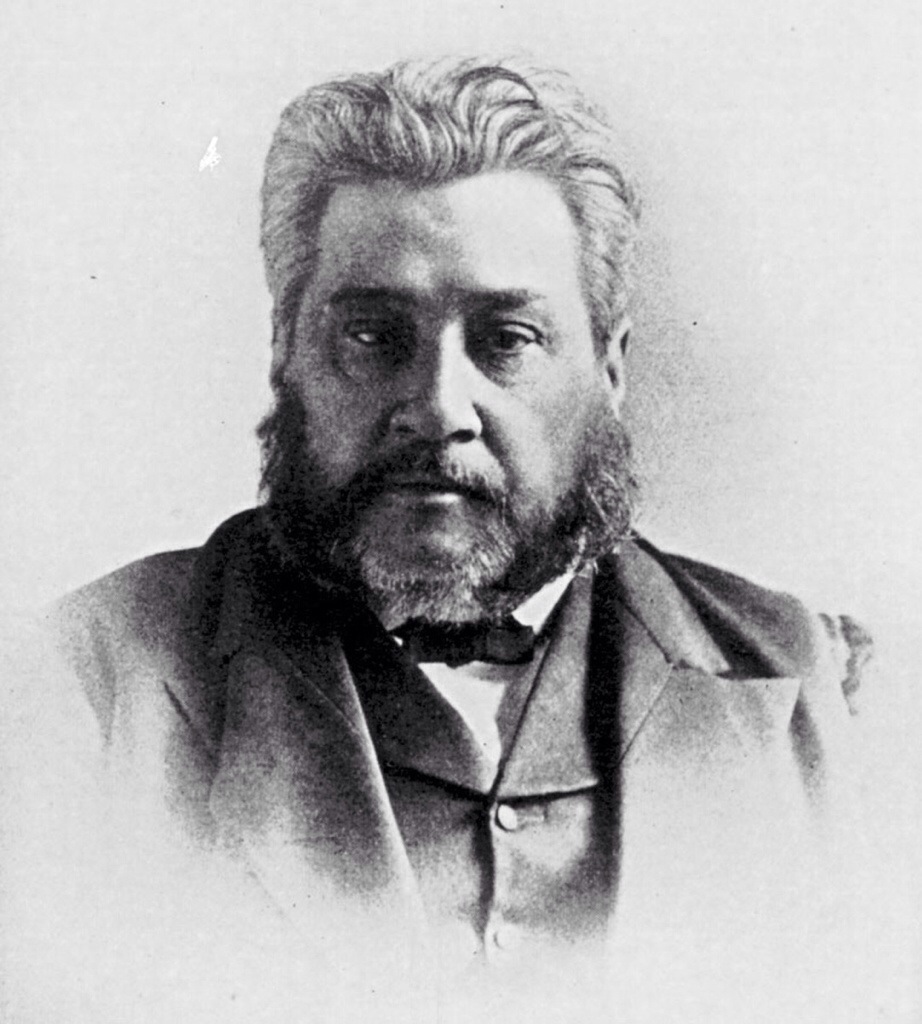
Richard Baxter put a sharp focus on what the Church has been called by our Master to do:
“We are seeking to uphold the world, to save it from the curse of God, to protect the creation, to attain the ends of Christ’s death, to save ourselves and others from damnation, to overcome the devil, and demolish his kingdom, to set up the kingdom of Christ, and to attain and help others to the kingdom of glory. And are these works to be done with a careless mind or lazy hand? O, see, then, that this work be done with all your might!”[1]
Jonathan Edwards likewise understood the great need of the Church in carrying out its mission. He said,
“Those that are about to undertake this work should do it with the greatest seriousness and consideration of the vast importance of the work, how great a thing it is to have the care of precious souls committed to them, and with a suitable concern upon their minds, considering the great difficulties, dangers, and temptations that do accompany it. It is compared to going to warfare.[2]
So how will we carry out this mission beyond our own personal needs? It will come with prayerful seeking the Lord’s face. It will come with a persistence in calling out to God for souls to be saved and for obstacles to be brought down. It will come as we pray for sinners to come under the conviction of the Holy Spirit and Jesus to be magnified in our lives in the face of trials and tribulation. If we were about to go out to war, we would pray and seek God’s help. Pick up your armor and sword. We are at war!
“Knock” with perseverance
The verbs in verse 7, “ask”, “seek” and “knock” are all present imperatives. That means that they are commands that we are to continue to do. Not just once, but persistently. That is why “knocking” is such a good picture of our need to be persistent. Jesus calls us to knock on prayer’s door persistently. Some of us pray like I knocked on doors to sell vacuum cleaners or encyclopedias (do they do that anymore?). We pray once and then we walk away, yet we expect for God to bless us richly. God still gives us good gifts, but he delights to give even more, especially if we would only ask him. James 4:2 says, in part, “You do not have because you do not ask.” We pray for the salvation of a friend, but we stop after a week. Or we pray for the church to grow, but our prayers are hit-and-miss. Jesus told the story of two people who were persistent in prayer in Luke 11 & 18. One was a man who wouldn’t go away until his friend loaned him some food for a visiting guest. The other was an old women who pestered a judge until he gave her justice.
When asking and seeking have not yielded God’s answer, DON’T STOP PRAYING! Be persistent. Keep on knocking on heaven’s door. The Lord who is good, and loves you more than anyone else on this earth will answer your prayer!
Some of you might ask “why?” If God hears our prayers, and we pray once, why doesn’t he just answer? Why does he make us pray so many times? It isn’t because he didn’t hear us the first time, or that he isn’t able to answer us the first time. He often doesn’t answer immediately for our benefit. Really? Yes! Here are a few reasons why God might not answer you immediately (assuming that you are not living in sin):
- By praying persistently, God teaches us dependence. A person who prays once or twice and then tries to fix it themselves shows that they do not depend upon God. Delayed answers cause us to grow in dependence.
- By praying persistently, God teaches us to seek his will and not our own. Sometimes we pray selfish prayers. When we pray over and over, we are forced to think about whether what we are praying for is truly God’s will. If not, we may change our prayers, or we may humble ourselves and submit to God’s will even if it is not ours.
- By praying persistently, God teaches us patience. God is not on our clock and his timing is perfect. He hears us, but the timing of our answer to prayer is not so important to him as teaching us patient dependence upon him.
- Persistent prayer requires a greater faith and a focused sense of need. It also requires that we depend upon God’s resources and not our own feeble efforts done in our own strength.
Have you found that your prayers are short-lived? Is it because you move on to do it in your own strength? Do you see how often that has made matters worse? Commit yourself to go to the Lord for all your needs, waiting patiently for him to answer you. Maybe you have found that your prayers are short-sighted. You pray, but not for the great things God has called us all to do. You haven’t prayed for a great harvest of souls. You haven’t prayed for the salvation of your family member who you believe would never get saved. You haven’t prayed for that obstacle to faith to be removed. You’ve prayed short-range, short-sighted, “safe” prayers. My friend—we have a big God. Pray big prayers. Don’t lose sight of what is eternal. Can I add a few more personal needs?
Maybe God has been tugging at your heart about serving him in a greater way. Perhaps it has been in sharing Christ more. But you are afraid. You are unsure about stepping out of your comfort zone. Pray for the Lord to give you courage. Keep praying daily, even hourly. And then do it—share Christ in faith, trusting that he is with you and will help you speak.
Maybe God has been speaking about something more serious. Maybe its been about serving on the mission field or in full time ministry. Don’t think that you can’t do it. God is with you and if he calls you he will equip and strengthen you. Pray and ask others to pray. Then step out in faith!
Maybe God has been convicting you of something else that you have pushed aside and thought that it was impossible. Pray about it! And I don’t mean that as a throw-away statement meant to be an excuse to do nothing. I mean really pray about God’s will for your life. When we open that door it is exhilarating and exciting. Anything is possible!
When you get right down to it, if God is your God, then he is your Master. If you yield to his will, who knows how he will use you. Pray persistently and watch what he will do!
[1] Richard Baxter, The Reformed Pastor, p. 12.
[2] Jonathan Edwards, The Salvation of Souls, 51-52.

 Always Reforming