How to Pray, pt. 3 (Matt 6:10a)

Focus is sometimes very difficult. Especially after dinner and a long day. It’s easy to lose focus. I remember one day when I had spent the whole night working on an assignment for school. I hit the print button as I took a shower and then off to seminary I went.

Image

At chapel I sat up near the front so that I wouldn’t be tempted to fall asleep (a tactic that I used for classes after lunch as well!). On that particular day, John MacArthur was our chapel speaker. But the focus was gone. I fought hard, but the sleep won out. I’m pretty sure Dr. MacArthur saw me sleeping that day.

But other than sleepiness, we can lose focus, can’t we? Those two sisters, Mary and Martha teach us that Martha lost her focus on the most important things (Lk 10:38-42). And we can do that in our prayer times as well.

So far we have seen that our prayers need to be honed:

  1. With a God-centered focus on God as our Father–“Our Father in heaven…”
  2. With a God-Centered focus on God’s holiness–“…hallowed be your name…”
  3. Now, With a God-centered focus on God’s Kingdom, “…your kingdom come”

God has given us a job to do on this earth. And it’s not to make it to the top of the corporate ladder or feather our retirement nest or finally reach all those goals in our bucket list. Those are all fine and have their place, but it isn’t first place and too much time on those things will cause us to lose our focus on God’s kingdom.

You know that almost everything we spend these short 70+ years on this earth gaining will all be burned up one day? Not much will be left if we don’t spend our time wisely. And that begins with prayer.

In the 2nd Petition, “your kingdom come” we focus our prayers on three matters:

  1. We pray that Satan’s kingdom may be destroyed.

A kingdom means that there are people who are being ruled by a king; and the vast majority of humanity is ruled by Satan, the prince of the power of the air (Eph 2:2). When we pray, petitioning that God’s kingdom come, we are at the same time asking that Satan’s kingdom be destroyed, since these two kingdoms are incompatible.

When we pray for the destruction of Satan’s kingdom, we are praying in line with the psalmist: “God shall arise, his enemies shall be scattered;and those who hate him shall flee before him! As smoke is driven away, so you shall drive them away;as wax melts before fire, so the wicked shall perish before God! (Ps. 68:1-2).

Also, when we pray for God’s kingdom to come, we pray in agreement with what is revealed in prophecy will one day surely come. In Revelation 20:1-3, 7-15 we see the yet-future defeat of Satan and the judgment of all the wicked. At this point in history, all of sinful humanity will be placed into one of two places-with God, or in the Lake of fire. The final separation of darkness and light will be complete! Sin and evil will be eradicated and finally be completely judged!

There are some dark and sinister elements in our world that Christians need to war against. You need to be in deep and concerted prayer for God to strike down the enemies of the gospel and for him to use you as his agent to bring about those changes.

I’ve prayed that the Lord would remove obstacles, including people, to the preaching of the gospel. I’ve prayed that the Lord would shut down strip clubs and bars. I’ve prayed that back-sliding sinners would be crushed by their sins so they will look up to Jesus once more. I’ve prayed that family members would be overwhelmed by their sin and would seek Christ with a repentant heart and that they would be miserable until they do so.

I want to see God’s Kingdom come. And I don’t want to see the kingdom of darkness grow—not in my neighborhood. Not in my church. Not in my home. What about you?

  1. Likewise, when we pray, “Your kingdom come,” we pray that God’s grace may advance:

The Church is made up of those who are currently living in the grace of our Savior Jesus Christ here on earth. We have not been glorified, and we have not received all that has been promised for us, yet we hope expectantly in Jesus’ finished work on the cross. It is this hope that we are to busying ourselves in moving forward while we still have breath:

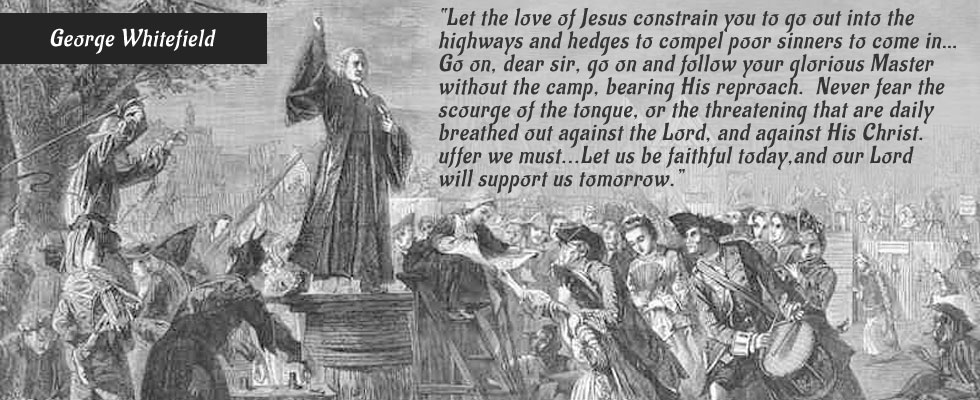
The Apostle Paul, in writing to the believers in Thessalonica, wanted to see the Church of Jesus Christ grow, praying: Finally, brothers, pray for us, that the word of the Lord may speed ahead and be honored, as happened among you( 2Thess 3:1, emphasis mine). Paul wanted to see Christ come into the hearts and lives of people, and so he shared the gospel with everyone he came into contact with. Like Alex Montoya says, “If it looks human, evangelize it!”
Image

Do you realize that God has blessed you, in part so that you can make his name great in the whole earth? Notice the connection that the psalmist makes: “May God be gracious to us and bless usand make his face to shine upon us, that your way may be known on earth, your saving power among all nations. Let the peoples praise you, O God; let all the peoples praise you!” (Ps 67:1-3)

Do you pray for God’s kingdom to come? Does it match your hunger for souls to be saved?

Paul’s hunger to see his fellow Jews saved was so intense, that he wrote,  “I am speaking the truth in Christ—I am not lying; my conscience bears me witness in the Holy Spirit— that I have great sorrow and unceasing anguish in my heart. For I could wish that I myself were accursed and cut off from Christ for the sake of my brothers, my kinsmen according to the flesh” (Rom. 9:1-3) and in Romans 10:1, “Brothers, my heart’s desire and prayer to God for them is that they may be saved.”

  1. Finally, when we pray, “Your kingdom come,” we pray that the kingdom of God’s Glory may be hastened

This is possibly the most prominent idea that we think about when we consider this phrase of the Lord’s prayer. Every true follower of Jesus Christ looks forward to the day when our Savior returns, and hopes that he comes soon. As Revelations 22:20 says, “He who testifies to these things says, “Surely I am coming soon.” Amen. Come, Lord Jesus!”

Notice the message that comes to us through 2 Peter 3:8-13:

  1. It acts as a warning to those who think that Jesus’ return is far off.
  2. It reminds us to keep working towards fulfilling the Great Commission until he comes again.
  3. It encourages us to keep waiting eagerly for that day when it finally does come and we see our Savior face to face!

But awaiting the Lord’s coming needs to be accompanied with a die-hard obedience to his last words—Take the gospel to the world! Make disciples. Push forward. Take the kingdom with violence—violent men for Christ and the gospel are needed. The Church needs men and women who are not lax or passive. Men and women who study hard and pray hard and preach hard and live godly lives that cannot be denied by our enemies.

Are you that kind of Christian? Pray that you would be!

How to Pray, pt. 2 (Matt 6:9b)

We started this series on the Lord’s prayer last time, and we looked at the preface of the prayer that goes, “Our Father, who art in heaven.” This post will look at the first of six petitions that lay out for every Christian a model that teaches us how to pray. Before we get into the first petition, I want to draw your attention to something first. Hopefully since last time you have been thinking about your own prayers and considering whether or not they are pleasing to God. But as you look at your own prayers and compare them to the Lord’s prayer, I hope you are seeing how theocentric or God centered they are. Stop and think about this for a second. Here are the first three petitions, reworded into modern language:

  • Father, make your name holy
  • Father, make your kingdom come
  • Father, make your will to be done

Now think about the common prayers we often hear, and even pray ourselves. Too often they begin and end with ourselves in mind. If we call Jesus’ model prayer theocentric, then we would have to say that most of our prayers are anthropocentric, or man-centered. Centered upon our needs, our wants, our desires, our responses to God’s blessings. Don’t get me wrong, God wants us to come to him in our times of need. After all, the fourth prayer is a request for our daily bread. BUT we need to make sure that when we come to the Lord in prayer, it is not like rubbing a magic lamp to get the genie to give us what we want. Prayer is so much more than “Thanks” followed by “give me.”

God's Not a Genie Dispensing Wishes!


With that, let’s look at the first petition in our model prayer: “Hallowed be your name.” What does this mean? In this petition, we are really praying that God’s name would shine forth in full glory and honor. The fact that this is the first petition is not an accident. Jesus brought this petition up to the front to show that the glory of God is to take priority even over our own physical needs. The purpose of man’s existence is to bring glory to God. Now, you may not believe that, or have even thought about that, but that is a fact.

Rom 11:36: For from him and through him and to him are all things. To him be glory forever. Amen.

1Cor 6:20: for you were bought with a price. So glorify God in your body.

Rev 4:11: “Worthy are you, our Lord and God, to receive glory and honor and power, for you created all things, and by your will they existed and were created.”

So what does it really mean to make God’s name holy? The word “holy” or to hallow means to separate from common use. Think about it, when we say that a cemetery is hallowed ground, we mean that it is sacred and set apart for a special purpose. When we make God’s name holy, it does not mean that we are adding to a deficiency in his holiness. For example, when a sports team wins a championship, the praise and glory that they receive is added to their renown. They become more worthy of praise than they were before they had achieved their championship status.

But God is not like that. He is perfect and when we glorify and magnify his name, we aren’t adding anything to his essential glory and majesty—he cannot be any greater than he already is. All we are doing in magnifying him is making him greater in the eyes of others. In his book Don’t Waste your Life, John Piper says this, ]

“Magnify has two distinct meanings. In relation to God, one is worship and one is wickedness. You can magnify like a telescope or like a microscope. When you magnify like a microscope, you make something tiny look bigger than it is. A dust mite can look like a monster. Pretending to magnify God like that is wickedness. But when you magnify God like a telescope, you make something unimaginably great look like what it really is. With the Hubble space Telescope, pinprick galaxies in the sky are revealed for the billion-star giants that they are. Magnifying God like that is worship.” (p. 32).

A True Christian strives to exalt and advance the name of Christ.

The question he asks himself in everything he is doing is, “Will this action or activity bring honor and glory to God’s name?” This was Paul’s desire. Phil 1:20 says,  “as it is my eager expectation and hope that I will not be at all ashamed, but that with full courage now as always Christ will be honored in my body, whether by life or by death.”  And we know that these weren’t just cheap words from Paul, because when he wrote them, he was in prison for preaching the gospel, and would eventually be put to death in Rome.

But, you may be asking yourself, what does all this have to do with prayer?

1. If you do not magnify God’s name in your life, you contradict your own prayers and are a hypocrite.

Hallowing God’s name is not something we only pray. It is the purpose that we live for. We pray this petition as we are mindful that we are living out our lives that God’s name would be made holy in our lives everyday.

2. If you cannot grasp the holiness of the God that you are praying to, then you wills struggle in your prayer life.

How often do we struggle in prayer to stay awake? Even Jesus’ closest three disciples struggled as Jesus prayed in the Garden of Gethsemene on the night he was betrayed. If only we could see a glimpse of God’s glory! What a stirring up of our prayers we might have! What if we saw God as Moses who saw a glimpse of God’s glory as he was hidden in the cliff! Or the angels who see God sitting upon his throne and must cover their eyes with their wings, crying “Holy, holy, holy, is the Lord God of hosts, the whole earth is full of his glory!”

Whether we see a glimpse of God’s glory or not, his name is great and is to be praised among all the nations.

Ps 8:9: O Lord, our Lord, how majestic is your name in all the earth!

Ps 115:1: Not to us, O Lord, not to us, but to your name give glory, for the sake of your steadfast love and your faithfulness!

How you will live your life to bring God the glory that he so richly deserves?

How to Pray, pt. 1 (Matt 6:9a)

Prayer is a difficult thing to do. It may seem to be easy, and we can form words and make statements that seem to be prayers easily enough, but if we stop and consider a few things, we will see that true prayer is difficult.

Image

Consider this quote from Dr. Lloyd-Jones:

Man is at his greatest and highest when, upon his knees, he comes face-to-face with God….It is the highest activity of the human soul, and therefore it is at the same time the ultimate test of a man’s true spiritual condition. There is nothing that tells the truth about us as Christian people so much as our prayer life. Everything we do in the Christian life is easier than prayer….Prayer is undoubtedly the ultimate test, because a man can speak to others with greater ease than he can speak to God. Ultimately, therefore, a man discovers the real condition of his spiritual life when he examines himself in private, when he is alone with God….So that it is when we have left the realm of activities and outward dealings with other people, and are alone with God, that we really know where we stand in a spiritual sense. It is not only the highest activity of the soul, it is the ultimate test of our true spiritual condition. [Studies in the Sermon on the Mount, 322]

Obviously, the disciples sensed the difficulty of prayer themselves. In Luke 11:1 it says,“Now Jesus was praying in a certain place, and when he finished, one of his disciples said to him, “Lord, teach us to pray, as John taught his disciples.” After watching Jesus pray, and seeing their own lack-luster attempts, they ask Jesus to teach them. So, we have in Matthew 6:9-13 not only an answer to the negative idea of not praying like the hypocrites (see Matt 6:5), but the Lord’s model prayer was for teaching the Lord’s disciples, then and now, how to pray.

This prayer has a preface followed by six petitions. We will look at each one in turn and see what Jesus meant to teach us about prayer. Let’s begin by looking at the preface, or opening words of this prayer, “Our Father in heaven” or “Our Father who art in heaven.”


1. The Preface teaches us to draw near to God with holy reverence.

We are about to speak to the One who is “in heaven.” This is not an earthly conversation with another man, but a holy conversation in which the lowly creature is about to speak to his heavenly Creator. The hypocrite of our context has forgotten this. He speaks for his own pleasure and self-promotion forgetting that he is standing before the Lord’s presence.

Psalm 95:6: Oh come, let us worship and bow down; let us kneel before the Lord, our Maker!

When you come before the Lord in prayer, is it like you are John in Rev. 1:12-17? We are addressing this same Lord and God whom John fell dead at his feet. How can we rush flippantly and irreverently into his presence?

2. The Preface teaches us to draw near to God with confidence.

He is “our” Father. Luke’s version of this prayer (given on a different occasion) doesn’t include this word, but I am so glad that it is here. This prayer is not for the pagans and the unbelieving world. He is not their Father. Their father is Satan, the father of lies (John 8:44). But, because he is our Father we can have confidence as we draw near to Him. This confidence is based upon the finished work of our Savior Jesus Christ. The cross is the doorway by which we enter into the throne room of God with confidence.

Eph 3:12: [Christ Jesus] in whom we have boldness and access with confidence through our faith in him.

3. The Preface teaches us to draw near to God as Children to a Father.

This is closely related to the last point, but it is more intimate. Matt 7:9-11 says, “Or which one of you, if his son asks him for bread, will give him a stone? Or if he asks for a fish, will give him a serpent? If you then, who are evil, know how to give good gifts to your children, how much more will your Father who is in heaven give good things to those who ask him!”

Rom. 8:15 comforts and confirms this for us when it says, “For you did not receive the spirit of slavery to fall back into fear, but you have received the Spirit of adoption as sons, by whom we cry, “Abba! Father!”

Gal. 4:4-5 also calls all believers God’s adopted sons, “But when the fullness of time had come, God sent forth his Son, born of woman, born under the law,to redeem those who were under the law, so that we might receive adoption as sons.

Listen to Thomas Watson regarding this incredible reality:

See the amazing goodness of God, that he is pleased to enter into the sweet relation of a Father to us. He needed not to adopt us, he did not want [for] a Son, but we wanted [for] a Father. He showed power in being our Maker, but mercy in being our Father. That when we were enemies, and our hearts stood out as garrisons against God, he should conquer our stubbornness, and of enemies make us children, and write his name, and put his image upon us, and bestow a kingdom of glory; what a miracle of mercy is this! [A Body of Divinity]

4. The Preface teaches us to draw near to God, who is able and ready to help us.

Jesus assumes this by his own personal practice of prayer and his willingness to teach the disciples how to pray. He didn’t say to them, “Well, I’ll teach you, but remember, God helps those who help themselves.” Wrong. He is able and ready to help us. He is the same Father whom Jesus said he could call out to and who could easily send 72,000 angels to come to his side to deliver him from the cross.

Eph 3:20-21: Now to him who is able to do far more abundantly than all that we ask or think, according to the power at work within us [that is, the Holy Spirit (v. 16)], to him be glory in the church and in Christ Jesus throughout all generations, forever and ever. Amen.

God’s children need to recognize that prayer is not a duty, but a privilege. When we come to times of need, our Father ought to be our first resource that we go to.

We need to think about how each of these lessons impact our current way of praying. Do you draw near to God with holy reverence or with a flippant casual attitude? How does this show up in our choice of words and our hastiness to pray? Do we ever take the time to collect our thoughts before we enter his throne? Boldness does not mean rashness!

Do you draw near to God with confidence because He is our Father who is in heaven? There may be some who don’t have confidence when they approach God in prayer because He is a stranger, not a Father. Confidence comes in the relationship that we gain through our Savior. If you haven’t received Jesus Christ as your substitute, as your Savior, then you can do so today.

Do you draw near to God as children draw near to their loving Father? Put aside all twisted ideas of poor and evil fathers. We are speaking of our loving heavenly Father who drew near to us first. Do you seek His face, not merely to ask for your needs (although that is important), but also just to adore Him as Abba, Father?

Finally, do you draw near to God confident that he is able and ready to help you? This can be seen in the amount of time, effort and energy you spend in prayer as compared to your striving to achieve what you secretly believe God cannot or will not do.

How will your prayer change? Hopefully it will. Hopefully, as you think about these four lessons, you will be challenged to pray more fervently and actively in faith than you ever have before.

The Desperate Dependence of Prayer

Desperate-prayer

A few weeks ago I watched a PBS documentary about the rebuilding of the skyscraper that is taking the place of the Twin Towers in New York. It was interesting and sobering as they replayed those video clips of the Towers as the planes crashed into each one and then how they buckled and came crashing down.

In the days following the terrorist attacks of September 11, 2001, Billy Graham stated, “IN TIMES LIKE THIS, WE REALIZE HOW WEAK AND INADEQUATE WE ARE, AND OUR GREATEST NEED IS TO TURN IN REPENTANCE AND FAITH TO THE GOD OF ALL MERCY AND THE FATHER OF ALL COMFORT. IF EVER THERE WAS A TIME FOR US TO TURN TO GOD AND TO PRAY AS A NATION, IT IS NOW — THAT THIS EVIL WILL SPREAD NO FURTHER.”

Graham was right. Things like the attacks of Pearl Harbor and September 11th remind us how weak and inadequate we truly are. They call us to turn to God and ask for mercy in dependence upon Him.

Psalm 86 reminds us of this need for the mercy of God. Without God’s merciful hand upon us, we are weak, poor, blind and naked. We need the Lord. The psalmist David knew this.

This blog post will begin looking at David’s appeal in order to begin seeing our own need and how we can find hope and mercy in the Lord God alone.

Incline your ear, O Lord, and answer me, for I am poor and needy. Preserve my life, for I am godly; save your servant, who trusts in you—you are my God. Be gracious to me, O Lord, for to you do I cry all the day. (Psalm 86:1-3 ESV)

David’s Appeal: Hear Me (v. 1)

A basic indispensable truth of Christian prayer is that our God will hear us and answer our prayers. If God cannot or will not hear us, or can hear but will not answer us, there is no reason to go on.

But the Lord addressed is Yahweh, the Great I AM, he is not like the false god Baal who would not respond to his prophets on Mount Carmel. He is not like the countless false gods of this world that remain silent as their worshipers seek their aid.

And David is confident that the Lord will answer him not only because the Lord is living and can hear his prayers, but because David has taken the posture of a true worshipper of the Lord God Almighty. How does he describe himself? As “poor and needy.”

Although it is not clear when in David’s life he wrote this song, from what we know about David’s life, he was not from a family that could be described as poor and needy. His father Jesse was a somewhat prosperous man, blessed by God with moderate wealth. And of course, when David became king of Israel, he was neither poor or needy in terms of riches and wealth.

I don’t think that David meant that he was poor and needy in those terms. David was, like all of us, poor and needy in terms of his inability, his helplessness and his utter need at this time. He was poor in strength, poor in capability—poor in the spiritual sense without God’s hand upon his life.

David knew that the riches man on this earth cannot compare to the poorest man on earth who has the Lord at his side. David needed the Lord’s ear. With the Lord listening to his prayers and with him answering his needs, David would surely cease to be either poor or needy.

This is because David understood who our God is. Just a quick run through of this psalm and we can see the categories that David attributes to the Lord.

  • He is good and forgiving, V. 5
  • He is a God who answers prayer, V. 7
  • He is a unique God who does mighty works, V. 8
  • He is God of all the nations, V. 9
  • He is great, does wondrous things, the One true God, V. 10
  • He is faithful in his covenant love, delivering his people, V. 13
  • He is merciful and gracious, slow to anger and abounding in covenant faithfulness, V. 15
  • He is a helping and comforting God, V. 17

Of course, the rest of Scripture fills out this short list with so many more attributes of our Great and Mighty God.

Let me ask you this, does your understanding of God impact the way that you pray? It should. It should impact not only the content of your prayer, but also the boldness, the frequency, the size of the requests and the expectancy you should have of his response.

But what if your knowledge of the Lord is small or lacking? Try practicing this as you read the Bible. As you read, take some time to allow the Bible to first be God-centered before you look for how it can speak to you about your own life and situation.

What I mean by this is, if you are reading this psalm, Psalm 86, we could be tempted to first focus on David’s need to be heard. But if we rush to that and we have a lacking understanding of God, we will only be able to pray in a limited fashion. But if we look at the other things that David says in this psalm about what he knows about the Lord, we will be instructed and be able to expand our vision of who God is.

Or maybe we are reading the Gospels. We come to John 10, we need to ask ourselves, How is God reveled in Jesus the Good Shepherd? How is my understanding of God expanded when Jesus speaks about being One with the Father? etc.

When David said that he was poor and needy, he was recognizing that the Lord is the provider in every way. Whatever he needed, David knew that the Lord is our provider. And that knowledge impacted not just his prayer in verse 1, but it impacted his life, so that whenever he needed anything, he knew where to go to have that need met.

If we do not seek out the Lord in our need, we need to ask ourselves “why not?” Does this show a self-sufficient attitude? Perhaps a lack of faith or denial of the power of prayer? Maybe it is a subtle form of pride in our own strength? Whatever the case, we need to know that it is sin.

John Calvin wrote,

“To know God as the sovereign disposer of all good, inviting us to present our requests, and yet not to approach or ask of Him, were so far from [helping] us, that it were just as if one told of a treasure were to allow it to remain buried in the ground.”

Save Me (v. 2)

Here in this second verse David says something that might be initially objectionable if not understood correctly. He says, “Preserve my life or soul.” Thus far we are okay with this. He needs to be saved. Verse 14 tells us that insolent and ruthless men were after him and they hated him (v. 17) and wanted to take his life (v. 17).

But the reason he calls God to save him is what is distasteful. David says, “Preserve my soul, for I am godly (ESV) or holy.” At best, it sounds like boasting on his part.

The word, “godly” or “holy” is the Hebrew word hasid. It is where the hasidic Jews get their name from. It means “faithful, zealous, devoted.” Now, looking at it in that light helps, doesn’t it? David is not saying that he has arrived spiritually. He just finished saying that he was poor and needy. Of course he didn’t mean that.

He did mean to call attention to the fact that he was a devoted follower of the Lord and not a man who had scoffed at God until disaster made him call out in desperation. David is pointing to his consistent walk with the Lord.

It is not as if the Lord needed reminding, but it does show us that David has a strong bond—a covenant relationship with the Lord he is so dependent upon.

This can be seen in the next line of verse 2. David calls himself the Lord’s servant. David considered himself God’s slave. He wasn’t like those who promise God they will do whatever he wants from them if he will make a deal and save them. No, David has been serving the Lord as his slave his whole life and now he asks the Lord as the Great Master to save his humble servant who has been so faithful in his service all of his life.

The last line of verse 2 adds to David’s reflection on his relationship with the Lord. David reiterated that he trusts in the Lord and that David’s God is only and supremely the Lord.

David understood service. As a shepherd for his father in his youth, he served the family and the flock. He went out into the fields and led the sheep and goats to pastures and water. He lead them to the pen for protection. In doing this he also served the family.

When Jesse sent David out to his brothers to take them food, David did so. He served his family in menial tasks with the utmost obedience despite not gaining any glory or appreciation.

Later, David served his king-Saul. You will remember that David served Saul through some scary and troubling situations. But all the way through he refused to turn on his master, even after he had been chosen as Saul’s replacement. David even grieved on the day that Saul was killed.

So David knew what being a servant was all about. And even though his human masters were not always kind to him, David knew that the Lord was worthy to of all service and honor and glory.

When trials in life grew difficult and even life-threatening, David did not flee to another master that he thought might treat him better. No, David stuck close to the Lord God, fully dependent upon Him to save his life from any and all dangers.

The Apostles thought of themselves as slaves of Jesus Christ. They thought of themselves as lowly, unworthy, slaves who lived for the glory and honor of their Master Jesus Christ and not their own renown.

As John MacArthur wrote in his book Slave,

“When we call ourselves Christians, we proclaim to the world that everything about is, including our very self-identity, is found in Jesus Christ because we have denied ourselves in order to follow and obey Him. He is both our Savior and our Sovereign, and our lives center on pleasing Him. To claim the title is to say with Paul, “To live is Christ and to die is gain” (Phil 1:21).” (p.11)

David was a servant of the Most High God, and as his servant, he knew that he needed to appeal to the Lord for his help and salvation. Because without the Lord, there was no hope.

What about you? Are you a slave of Christ? Do you have any hope outside of Christ? Cast them all away. None can save. None can bring help or comfort. None can satisfy. Only Jesus can.

Praying Persistently

Praying Persistently

In one region of Africa, the first converts to Christianity were very diligent about praying. In fact, the believers each had their own special place outside the village where they went to pray in solitude. The villagers reached these “prayer rooms” by using their own private footpaths through the brush. When grass began to grow over one of these trails, it was evident that the person to whom it belonged was not praying very much. Because these new Christians were concerned for each other’s spiritual welfare, a unique custom sprang up. Whenever anyone noticed an overgrown “Prayer path,” he or she would go to the person and lovingly warn, “Friend, there’s grass on your path!

I suspect that we all have struggled at times to be consistent in our prayer times. Our paths begin to grow grass. In Matthew 7:7-11, we find ourselves in the middle of Jesus’ great Sermon on the Mount. In chapter six, the Lord gave an amazing lesson on prayer. But as you listen to what Jesus is teaching in the Sermon on the Mount the more you see that radical dependence that you and I need in prayer.

  • We need prayer because he calls us to forgive our enemies (6:14-15)
  • We need prayer because he says when we fast, it is to be with a humble heart (6:16-18)
  • We need prayer because he warns us of the lure of material possessions and how they can steal away our affection for the Lord (6:19-24)
  • We need prayer because Jesus told us that we aren’t supposed to get anxious, that he would provide for all of our needs (6:25-34)
  • We need prayer because we aren’t supposed to unfairly judge others, but rather we need to examine our own hearts to find healing and forgiveness for our own sins first (7:1-5).
  • We need prayer because we need to discern when those we preach the gospel to are so hard-hearted or against our efforts that we need to move on, all while keeping our own hearts tender and hoping that they will come to repentance (7:6).

Can you start to see why we need prayer? What the Lord is calling us to be and do is impossible without God. We can’t even hope to begin fulfilling these things without him, and that was only the last half of the Sermon!

At this point, those who were listening to Jesus’ message must have been feeling overwhelmed, wondering how they could be obedient. We can often feel this way and be tempted to give up. But I want us to see that we can’t give up. We need to wrestle with God in persistent prayer.

In my last post (here) we saw the power of God demonstrated to us in what he has done in his awesome works, including our salvation and forgiveness. From there we were able to see that we need to ask God with greater faith that he will provide for our needs. We need to develop that idea of asking God in dependence and with persistence. It is here that Jesus instructs them how—Ask, Seek, Knock. Let’s look at each on in order to find out how we can become more dependent upon the Lord.

“Ask, and it will be given to you; seek, and you will find; knock, and it will be opened to you.  For everyone who asks receives, and the one who seeks finds, and to the one who knocks it will be opened. Or which one of you, if his son asks him for bread, will give him a stone? Or if he asks for a fish, will give him a serpent?  If you then, who are evil, know how to give good gifts to your children, how much more will your Father who is in heaven give good things to those who ask him!” (Matt 7:7-11, ESV)

“Ask” your heavenly Father

Every one of these five verses speaks about asking, and all of them point to the fact that if we ask our heavenly Father, he will answer our needs. Implied in asking is the need for humility. We ask when we do not have. We are in need. It is what we see in Matt 5:3–the poor in spirit know they have nothing in themselves and they need to receive everything from God. Jesus assures us that when we acknowledge our need to him, we shall receive. Jesus illustrates this with the child who goes to his earthly father for something to eat. The staple diet of most people in Jesus’ time was bread and fish. Jesus says that just like a little child comes in dependence to her father for her food, so our infinitely kinder, gentler and more loving heavenly Father will give us all we need with great delight and joy! But we need to remember that we must come asking humbly and dependence upon him.

 “Seek” the Father’s will

This reminds us of Matt. 6:33, “But seek first the kingdom of God and his righteousness, and all these things will be added to you.” The desire to be dependent upon God progresses from asking God in humble dependence to growing in prayer while seeking God’s will. Seeking gives us a visual picture of looking for something that is not clearly before us.

It’s like a person looking for their eyeglasses. When I don’t have my glasses on, I can see enough to avoid running into a dresser or a door, but not well enough to find my glasses if they have fallen on the ground off of my night stand. A couple of times I put them somewhere to take a shower and I couldn’t find them. (Maybe my wife moved them for fun!). I need to keep on seeking them until I find them. I don’t sit down and say to myself, “Oh, well. I lost them. I hope I make it to work okay.”

Jesus is telling us, we need to keep on asking, but beyond asking, we need to be seeking—going to his throne and calling out to him with our needs. And if they include any steps of faith on our part, then we need to take them—seeking God’s will as we pray. So what needs should we pray for? Here I wrote about personal needs. We know about those, so I’ll move on to Kingdom needs. Remember that I said that personal needs are important. But think about this for a second. All of those personal needs will be fulfilled and vanish in the Kingdom. Not one will remain.

The needs of the Kingdom are eternally important. They will have an eternal impact. Souls will be changed forever because of these needs. Because of this we need to spend more time and energy seeking God for these types of needs. Listen to two men who knew the needs of heaven far better than most of us today. They were both pastors.

Richard Baxter put a sharp focus on what the Church has been called by our Master to do:

“We are seeking to uphold the world, to save it from the curse of God, to protect the creation, to attain the ends of Christ’s death, to save ourselves and others from damnation, to overcome the devil, and demolish his kingdom, to set up the kingdom of Christ, and to attain and help others to the kingdom of glory. And are these works to be done with a careless mind or lazy hand? O, see, then, that this work be done with all your might!”[1]

Jonathan Edwards likewise understood the great need of the Church in carrying out its mission. He said,

“Those that are about to undertake this work should do it with the greatest seriousness and consideration of the vast importance of the work, how great a thing it is to have the care of precious souls committed to them, and with a suitable concern upon their minds, considering the great difficulties, dangers, and temptations that do accompany it. It is compared to going to warfare.[2]

So how will we carry out this mission beyond our own personal needs? It will come with prayerful seeking the Lord’s face. It will come with a persistence in calling out to God for souls to be saved and for obstacles to be brought down. It will come as we pray for sinners to come under the conviction of the Holy Spirit and Jesus to be magnified in our lives in the face of trials and tribulation. If we were about to go out to war, we would pray and seek God’s help. Pick up your armor and sword. We are at war!

“Knock” with perseverance

The verbs in verse 7, “ask”, “seek” and “knock” are all present imperatives. That means that they are commands that we are to continue to do. Not just once, but persistently. That is why “knocking” is such a good picture of our need to be persistent. Jesus calls us to knock on prayer’s door persistently. Some of us pray like I knocked on doors to sell vacuum cleaners or encyclopedias (do they do that anymore?). We pray once and then we walk away, yet we expect for God to bless us richly. God still gives us good gifts, but he delights to give even more, especially if we would only ask him. James 4:2 says, in part, “You do not have because you do not ask.” We pray for the salvation of a friend, but we stop after a week. Or we pray for the church to grow, but our prayers are hit-and-miss. Jesus told the story of two people who were persistent in prayer in Luke 11 & 18. One was a man who wouldn’t go away until his friend loaned him some food for a visiting guest. The other was an old women who pestered a judge until he gave her justice.

When asking and seeking have not yielded God’s answer, DON’T STOP PRAYING! Be persistent. Keep on knocking on heaven’s door. The Lord who is good, and loves you more than anyone else on this earth will answer your prayer!

Some of you might ask “why?” If God hears our prayers, and we pray once, why doesn’t he just answer? Why does he make us pray so many times? It isn’t because he didn’t hear us the first time, or that he isn’t able to answer us the first time. He often doesn’t answer immediately for our benefit. Really? Yes! Here are a few reasons why God might not answer you immediately (assuming that you are not living in sin):

  1. By praying persistently, God teaches us dependence. A person who prays once or twice and then tries to fix it themselves shows that they do not depend upon God. Delayed answers cause us to grow in dependence.
  2. By praying persistently, God teaches us to seek his will and not our own. Sometimes we pray selfish prayers. When we pray over and over, we are forced to think about whether what we are praying for is truly God’s will. If not, we may change our prayers, or we may humble ourselves and submit to God’s will even if it is not ours.
  3. By praying persistently, God teaches us patience. God is not on our clock and his timing is perfect. He hears us, but the timing of our answer to prayer is not so important to him as teaching us patient dependence upon him.
  4. Persistent prayer requires a greater faith and a focused sense of need. It also requires that we depend upon God’s resources and not our own feeble efforts done in our own strength.

Have you found that your prayers are short-lived? Is it because you move on to do it in your own strength? Do you see how often that has made matters worse? Commit yourself to go to the Lord for all your needs, waiting patiently for him to answer you. Maybe you have found that your prayers are short-sighted. You pray, but not for the great things God has called us all to do. You haven’t prayed for a great harvest of souls. You haven’t prayed for the salvation of your family member who you believe would never get saved. You haven’t prayed for that obstacle to faith to be removed. You’ve prayed short-range, short-sighted, “safe” prayers. My friend—we have a big God. Pray big prayers. Don’t lose sight of what is eternal. Can I add a few more personal needs?

 Maybe God has been tugging at your heart about serving him in a greater way. Perhaps it has been in sharing Christ more. But you are afraid. You are unsure about stepping out of your comfort zone. Pray for the Lord to give you courage. Keep praying daily, even hourly. And then do it—share Christ in faith, trusting that he is with you and will help you speak.

Maybe God has been speaking about something more serious. Maybe its been about serving on the mission field or in full time ministry. Don’t think that you can’t do it. God is with you and if he calls you he will equip and strengthen you. Pray and ask others to pray. Then step out in faith!

Maybe God has been convicting you of something else that you have pushed aside and thought that it was impossible. Pray about it! And I don’t mean that as a throw-away statement meant to be an excuse to do nothing. I mean really pray about God’s will for your life. When we open that door it is exhilarating and exciting. Anything is possible!

When you get right down to it, if God is your God, then he is your Master. If you yield to his will, who knows how he will use you. Pray persistently and watch what he will do!


[1] Richard Baxter, The Reformed Pastor, p. 12.

[2] Jonathan Edwards, The Salvation of Souls, 51-52.