Joining a denomination or going at it alone are not the only options for churches, pastors, leaders, and ministries.
Maintaining doctrinal fidelity and alignment is critical when seeking to work with others to accomplish Great Commission objectives.
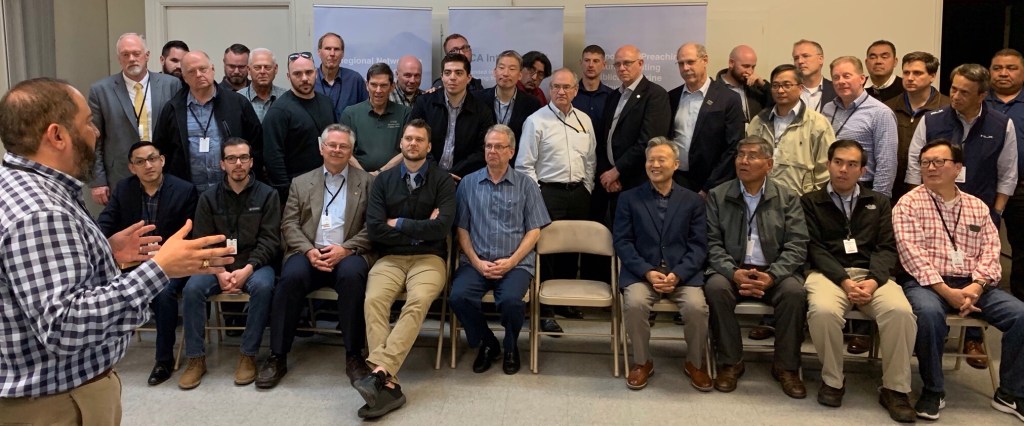
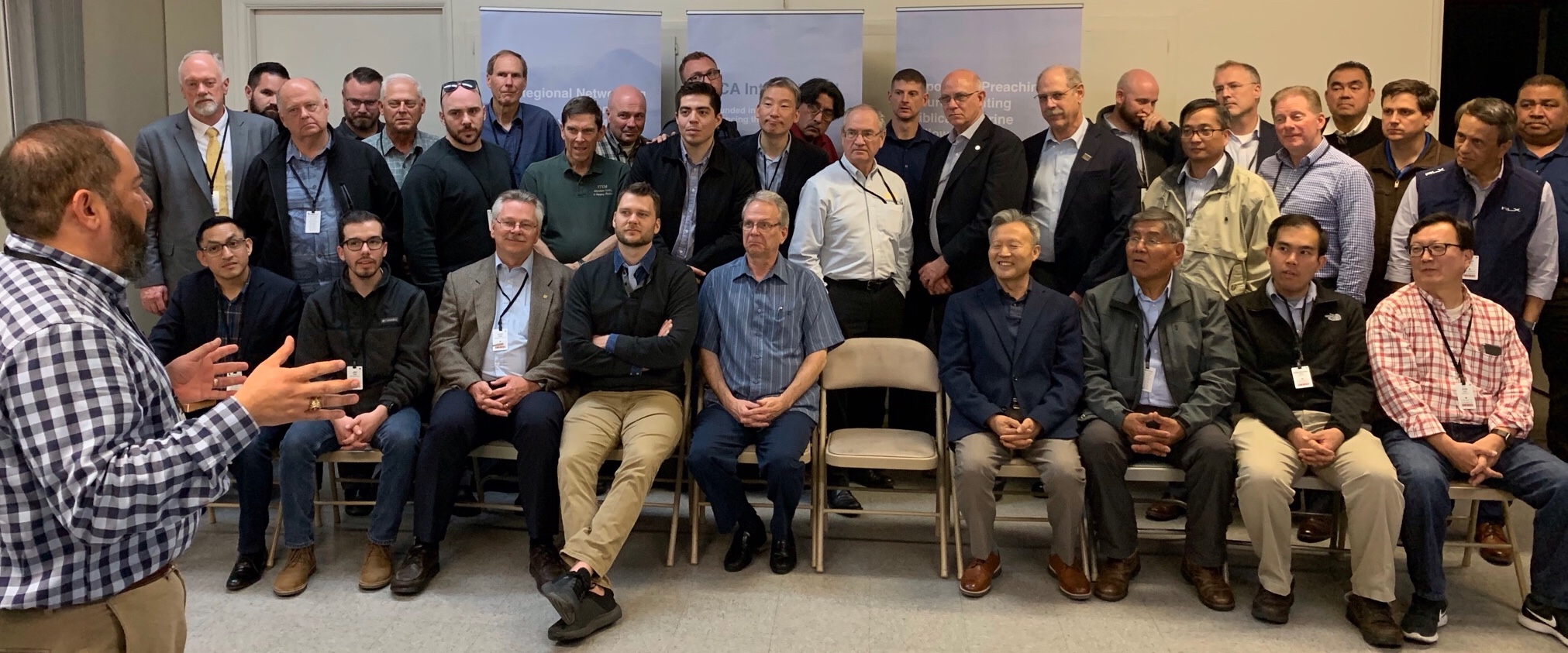
IFCA International was founded in 1930 to fight against the onslaught of theological liberalism growing in denominational churches, mission agencies, and seminaries.
Listen to a podcast I was invited to record with some fellow pastors a few months ago as they ask me more about IFCA International. To find out more, go to http://www.IFCA.org.
Joining a denomination or going at it alone are not the only options for churches, pastors, leaders, and ministries.
Maintaining doctrinal fidelity and alignment is critical when seeking to work with others to accomplish Great Commission objectives.
IFCA International was founded in 1930 to fight against the onslaught of theological liberalism growing in denominational churches, mission agencies, and seminaries.
Listen to a podcast I was invited to record with some fellow pastors a few months ago as they ask me more about IFCA International. To find out more, go to http://www.IFCA.org.
“But Jesus said, “They need not go away; you give them something to eat.”” (Matthew 14:16, ESV)
I think that the strangest and most puzzling parts of the Bible sometimes yield the best gems when we take the time to ponder their meaning. Take for instance the above passage, where Jesus insists that the disciples feed the crowd of 5,000 men even though he knew that they couldn’t do it, and knowing that he would feed them himself a few moments later.
Why would Jesus say this? Why would he put such a gigantic responsibility upon the disciples to do what they couldn’t do? I think could be three possible reasons, and with each reason a lesson for us:
1. He wanted his disciples to learn compassion for the people, as he had.
Two verses easier Jesus is described as feeling compassion for the large crowds gathered. His healing ministry was an outgrowth of this compassion. Although it may be that the disciples had compassion, large crowds and the consuming needs of this crowds can begin to gnaw at the best of people. The needs were overwhelming and yet, Jesus continuously had compassion for the sea of humanity and their needs.
Whether it is Los Angeles, Chicago, Mumbai, Caracas, Tokyo, or Melbourne, the megacities of our world are teeming with hurting people. Sometimes Christians avoid the cities because the needs are so great, but Jesus felt compassion because the needs are great. And the needs are greater than the need for only bread and fish. They are lost and need the gospel.
2. He wanted the disciples to learn to come to him for the needs of others.
Of course the disciples didn’t have enough food to deed an estimated 20,000 people! That’s about the capacity of Madison Square Garden in New York City! But the disciples needed to learn that the five little barley loaves and two small fishes were not their only resources. Their greatest resource was looking them in the eyes and telling them to do the impossible. But they could not see beyond their small abilities.
So many pastors and churches are like those disciples. The city is so big. The sin is so great. The hearts are too hard. The church is too small and weak. We do not have enough resources and our power is weak. YES!! In ourselves we do not have enough. But we are not by ourselves. We must learn to go to our heavenly Father with our needs and ask of him on behalf of the communities we serve. He wants us to ask! He does not expect us to serve the needs of the world in our own strength.
3. He wanted them to see the power he would demonstrate once they came the end of their own meager resources.
There is no biblical record of the reaction the disciples had when they saw the crowd eat their fill. Nothing is said about what the twelve thought as they picked up twelve baskets of leftovers. We can only guess, and it isn’t a wild stretch to say that they must have been awestruck. What sort of power, compassion, and love had they just observed? They would need this memory to carry them after the ascension to remind them that no matter how meager their own strength and resources would be, Jesus Christ was enough.
The Western Church can have a hard time realizing that without Jesus we can do nothing. We think that our programs, buildings, crusades, media, and education almost guarantee our success. And when these don’t seem to do the trick, we quickly switch to something that will work. That’s the American entrepreneurial spirit at work–which has taken our country far, but has no place in the Church.
It is only when we sense our weakness and need for Christ in everything we do that we will see and benefit from his empowering and grace. And when that happens, we will be certain to stand in awe as the disciples knowing that there was nothing we contributed to the things we are witnessing. All glory will go to God alone, and that’s the way it should be.
If we want to improve in any skill, we must practice. This axiom is also true for preaching. If you don’t get many opportunities to preach, them you won’t be able to grow as an expositor. But there is an additional tool beyond practice that is also needed. As a matter of fact, it goes hand in hand with practice. It’s feedback. We need help with seeing our blindspots and our weaknesses in our sermons and delivery. One good place to get helpful feedback is from our church–those people that love us and want us to grow in our skills.
If we want to improve in any skill, we must practice. This axiom is also true for preaching. If you don’t get many opportunities to preach, them you won’t be able to grow as an expositor. But there is an additional tool beyond practice that is also needed. As a matter of fact, it goes hand in hand with practice. It’s feedback. We need help with seeing our blindspots and our weaknesses in our sermons and delivery. One good place to get helpful feedback is from our church–those people that love us and want us to grow in our skills.
Now I understand that going to someone in your church and asking them to critique your preaching is a scary prospect because we are opening ourselves up to someone when we are very vulnerable. But we need the feedback if we are to get better and improve our preaching skills. So here is how you can being:
Find two or three people you trust will be both kind and honest with you as they critique your preaching.
If you have an idea of where you might need to improve, try working on this skill set for a month. Don;t try to change too much too fact or you will freeze up with the “paralysis of analysis” syndrome. Once you get a skill under your belt, you can move on.
Explain to those people who are giving you feedback what they should be looking for. They need to know how to identify weakness in you beyond what they like and don’t like. It needs to be defined and measurable.
After they give you feedback, thank them and assure them that you will take their comments into consideration and work on these things. Then do it!
I have created a simple form to give to those in a church with helpful areas for them to take notes. I would suggest that you not only explain what they are looking for, understand that they are helping you out, so don’t demand that they spend too much time distracted with the critique so that they get nothing from the message. In fact, you might want to rotate those that help you with feedback so it isn’t the same people week after week. Here are the questions I include on my form:
Sermon Evaluation
Preacher’s name: _____________________
Sermon title: _________________________
Sermon main text: ____________________
Date preached: _______________________
Introduction:
Did the introduction lead to the main idea of the text?
Was it interesting?
Did it include enough background info to give context without bogging down the sermon?
Sermon Body:
Was there a clear outline?
Was the outlining of the sermon choppy?
Did the preacher point us back to the text to prove his point?
Did he stray from the text or explain it?
Were there sufficient illustrations to make the abstract ideas concrete?
Was there appropriate application given?
Was the main point of the text the main point of the sermon?
Was there doctrinal error?
Was the explanation of the main doctrines clear?
Sermon Conclusion:
Was the gospel somehow included in the sermon or conclusion?
Was this message God-centered?
Was this message overall clear, somewhat clear, muddy, or confusing?
Was the hearer given something to do or believe?
Outline:
(The one giving feedback should be instructed to write out your outline as they heard it. This should help you evaluate how successfully you gave out the outline in regard to repetition, and clarity.)



 Always Reforming