Hope for Leaders Who Have Made Dumb Decisions

It’s not hard for me to think about multiple examples of personal failure over my 51 years of life. I can recall so many bad decisions–dumb ones, sinful ones, immature ones, naive ones, rash ones, prideful ones. Like I said, I remember too many. The problem is, leaders have to make multiple decisions all day, every day. The more decisions we need to make, the greater potential there is to make another bonehead decision. So what do we do? Well, you could:

  1. Give up being a leader. And if you really are poor at decision making because you constantly make the kinds of bad choices I named before, that might not be a bad decision. But don’t rush into it! Keep reading.
  2. Give up making decisions, but remain a leader. This type of leader is known as a “lame duck.” You have actually done #1 above, but continue to call yourself a leader. This never works for long, and is frustrating for the people you are supposed to lead. It’s better for you to step down than to play this game.
  3. Start making better decisions. Duh. But before you stop reading, consider this: All leaders make bad decisions. All of them. The best leaders make fewer poor decisions and there are reasons for that, which are beyond the scope of this article. But the fact is, by growing and improving on your decision making, you will become a better leader.

In Joshua 7, Joshua made some poor decisions as he took Israel from a victory over Jericho, to an embarrassing defeat when his army was defeated by a tiny army. His failure not only cost the lives of thirty-six of his men (Josh 7:5), but it put courage into the heart of his enemies while simultaneously putting fear into the heart of Israel.

Several years ago my wife and I got food poisoning from eating at a fast-food place. It was pretty traumatic for us, and we were sick for days. I knew it was the food–I could taste it and smell it. It was so engrained into my memory that now, over 20 years later I can still go back to that moment when we started to become violently ill. I had no desire to eat at that restaurant again for many, many years. Bad decisions are like that–they leave a really bad taste in your mouth that makes it hard to overcome.

After the Lord directed Joshua on how to make everything right, it was time for Joshua to face his fear. Joshua 8:1 helps us so much here for learning how to overcome the fear of a poor decision so that we can make better decisions. It says,

And the Lord said to Joshua, “Do not fear and do not be dismayed. Take all the fighting men with you, and arise, go up to Ai. See, I have given into your hand the king of Ai, and his people, his city, and his land.

(Joshua 8:1, ESV)

Fear of the future and the unknown as well as discouragement from past failings can be the biggest hurdle to clear after a major failure. But notice here that the Lord commanded Joshua not to fear or be dismayed. Yes, poor decisions were made. But the mission has not changed. Joshua was to lead the people into the Promised Land, and Ai needed to be conquered. The problem was that Joshua had rushed in, he didn’t consult the Lord and made the decisions to go to war and send in a smaller army without seeing if this was the Lord’s will. The Bible doesn’t tell us, but maybe Joshua was beating himself up over the bad decisions made. Any leader knows that’s not a stretch to imagine. It happens all the time.

But the Lord says to Joshua, Do not fear and do not be dismayed. Once we are assured that we are being guided by the Word and Spirit, we must move forward without fear of the future or discouragement from the past. Joshua wasn’t running ahead of God anymore. Now he was going to decide that he needed to obey, and this was the first command. Warren Wiersbe has wisely written, “The promises of God make the difference between faith and presumption” ( Warren W. Wiersbe, Be Strong, “Be” Commentary Series (Wheaton, IL: Victor Books, 1996), 97.)

Notice also, that the Lord gave Joshua direction: “Take all the fighting men with you, and arise, go up to Ai.” So often, poor decisions are made because we make the decision. Spiritual leadership is not the same as corporate leadership because the spiritual leader directs God’s people from God’s Word to do God’s business. When we forget this, we become spiritual entrepreneurs, not spiritual leaders. They may look the same, but they aren’t. Spiritual entrepreneurs work for themselves, to achieve their own goals, and often receive the glory for it from men who do not recognize the difference. Joshua had taken the reigns and failed, now he was going to learn to take his lead from the Lord.

Finally, the Lord gave Joshua his strength: “See, I have given into your hand the king of Ai, and his people, his city, and his land.” After the amazing victory over Jericho, you would think that it was obvious that God was going to give Israel the strength to fight. But the loss at Ai shows how quickly a victory can blind us to our dependence. All too quickly we can begin to strut like roosters, full of pride as if we did anything to achieve the victory. In order for Joshua to grow as a leader, he needed to remember that every victory was given by the Lord–big or small.

Joshua obeyed the Lord, carrying out the directives he was given with precision, and the Lord gave him the victory as he promised. Remember that. The answer isn’t give up when you fail, but learn from your failures and grow as a leader. Psalm 37:23-24 is a great encouragement in this way: “The steps of a man are established by the Lord, when he delights in his way; though he fall, he shall not be cast headlong, for the Lord upholds his hand.” (Psalm 37:23–24, ESV)

The Blessings and Benefits of Ministry Fellowship (weekend repost)

Joining a denomination or going at it alone are not the only options for churches, pastors, leaders, and ministries.

Maintaining doctrinal fidelity and alignment is critical when seeking to work with others to accomplish Great Commission objectives.

IFCA International was founded in 1930 to fight against the onslaught of theological liberalism growing in denominational churches, mission agencies, and seminaries.

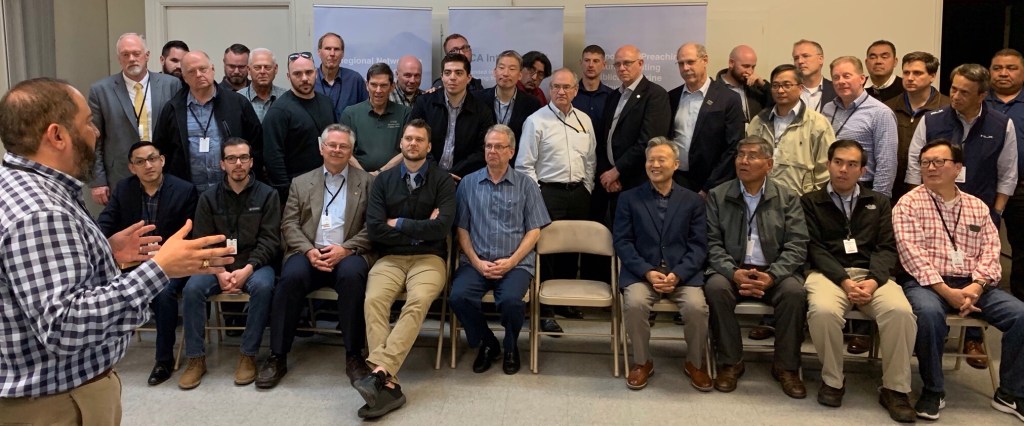
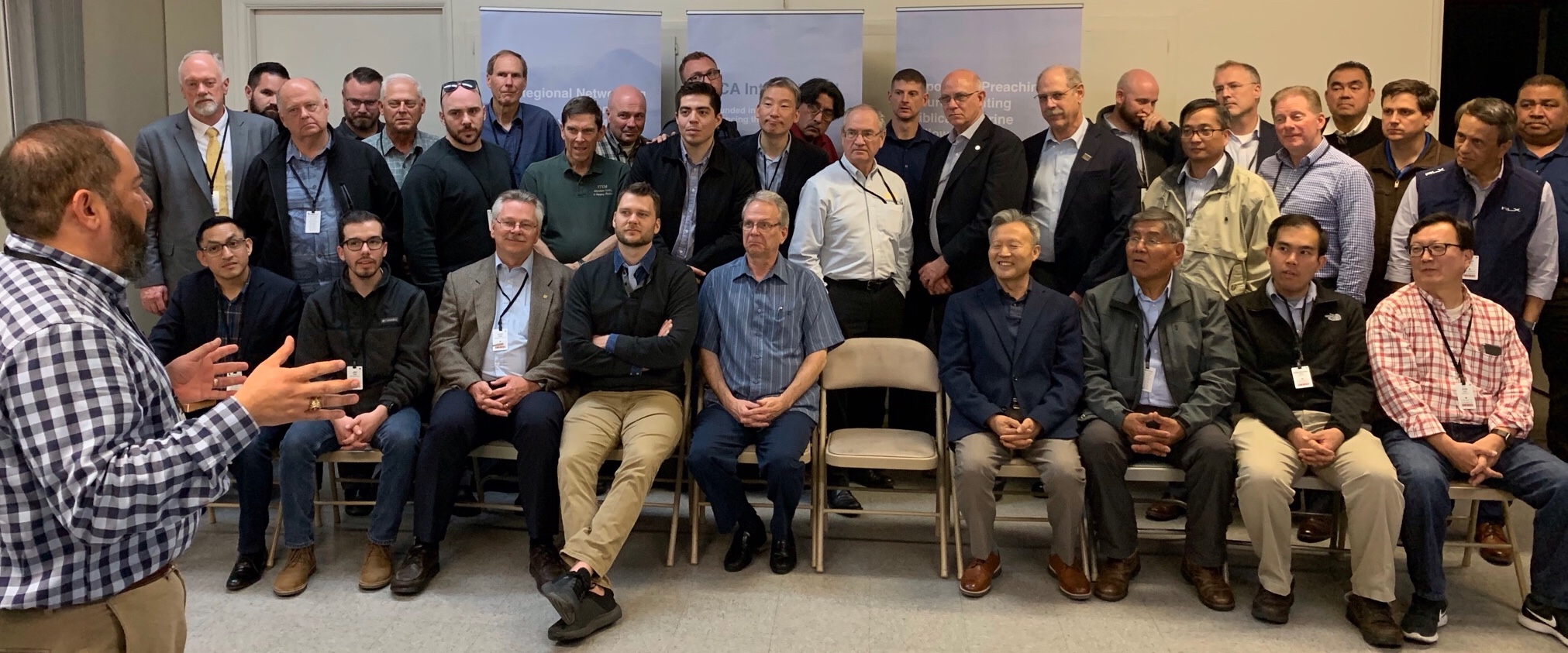
Listen to a podcast I was invited to record with some fellow pastors a few months ago as they ask me more about IFCA International. To find out more, go to http://www.IFCA.org.

Listen to the podcast here.

The Blessings and Benefits of Ministry Fellowship

Joining a denomination or going at it alone are not the only options for churches, pastors, leaders, and ministries.

Maintaining doctrinal fidelity and alignment is critical when seeking to work with others to accomplish Great Commission objectives.

IFCA International was founded in 1930 to fight against the onslaught of theological liberalism growing in denominational churches, mission agencies, and seminaries.

Listen to a podcast I was invited to record with some fellow pastors a few months ago as they ask me more about IFCA International. To find out more, go to http://www.IFCA.org.

Listen to the podcast here.

Three Lessons from a Sack Lunch

But Jesus said, “They need not go away; you give them something to eat.”” (Matthew 14:16, ESV)

I think that the strangest and most puzzling parts of the Bible sometimes yield the best gems when we take the time to ponder their meaning. Take for instance the above passage, where Jesus insists that the disciples feed the crowd of 5,000 men even though he knew that they couldn’t do it, and knowing that he would feed them himself a few moments later.

Why would Jesus say this? Why would he put such a gigantic responsibility upon the disciples to do what they couldn’t do? I think could be three possible reasons, and with each reason a lesson for us:

1. He wanted his disciples to learn compassion for the people, as he had.

Two verses easier Jesus is described as feeling compassion for the large crowds gathered. His healing ministry was an outgrowth of this compassion. Although it may be that the disciples had compassion, large crowds and the consuming needs of this crowds can begin to gnaw at the best of people. The needs were overwhelming and yet, Jesus continuously had compassion for the sea of humanity and their needs.

Whether it is Los Angeles, Chicago, Mumbai, Caracas, Tokyo, or Melbourne, the megacities of our world are teeming with hurting people. Sometimes Christians avoid the cities because the needs are so great, but Jesus felt compassion because the needs are great. And the needs are greater than the need for only bread and fish. They are lost and need the gospel.

2. He wanted the disciples to learn to come to him for the needs of others.

Of course the disciples didn’t have enough food to deed an estimated 20,000 people! That’s about the capacity of Madison Square Garden in New York City! But the disciples needed to learn that the five little barley loaves and two small fishes were not their only resources. Their greatest resource was looking them in the eyes and telling them to do the impossible. But they could not see beyond their small abilities.

So many pastors and churches are like those disciples. The city is so big. The sin is so great. The hearts are too hard. The church is too small and weak. We do not have enough resources and our power is weak. YES!! In ourselves we do not have enough. But we are not by ourselves. We must learn to go to our heavenly Father with our needs and ask of him on behalf of the communities we serve. He wants us to ask! He does not expect us to serve the needs of the world in our own strength.

3. He wanted them to see the power he would demonstrate once they came the end of their own meager resources.

There is no biblical record of the reaction the disciples had when they saw the crowd eat their fill. Nothing is said about what the twelve thought as they picked up twelve baskets of leftovers. We can only guess, and it isn’t a wild stretch to say that they must have been awestruck. What sort of power, compassion, and love had they just observed? They would need this memory to carry them after the ascension to remind them that no matter how meager their own strength and resources would be, Jesus Christ was enough.

The Western Church can have a hard time realizing that without Jesus we can do nothing. We think that our programs, buildings, crusades, media, and education almost guarantee our success. And when these don’t seem to do the trick, we quickly switch to something that will work. That’s the American entrepreneurial spirit at work–which has taken our country far, but has no place in the Church.

It is only when we sense our weakness and need for Christ in everything we do that we will see and benefit from his empowering and grace. And when that happens, we will be certain to stand in awe as the disciples knowing that there was nothing we contributed to the things we are witnessing. All glory will go to God alone, and that’s the way it should be.

A Tool to Sharpen Your Preaching (weekend repost)

If we want to improve in any skill, we must practice. This axiom is also true for preaching. If you don’t get many opportunities to preach, them you won’t be able to grow as an expositor. But there is an additional tool beyond practice that is also needed. As a matter of fact, it goes hand in hand with practice. It’s feedback. We need help with seeing our blindspots and our weaknesses in our sermons and delivery. One good place to get helpful feedback is from our church–those people that love us and want us to grow in our skills.

Read the full post and see the sermon evaluation form here: A Tool To Sharpen Your Preaching