Persistent Prayer

“Ask, and it will be given to you; seek, and you will find; knock, and it will be opened to you.“For everyone who asks receives, and he who seeks finds, and to him who knocks it will be opened.“Or what man is there among you who, when his son asks for a loaf, will give him a stone?“Or if he asks for a fish, he will not give him a snake, will he?“If you then, being evil, know how to give good gifts to your children, how much more will your Father who is in heaven give what is good to those who ask Him!

(Matthew 7:7–11, NASB95)

I suspect that we all have struggled at times to be consistent in our prayer times. In Matthew 7:7-11 (quoted above), Jesus is in the middle of his great Sermon on the Mount. In chapter six, the Lord gave an amazing lesson on prayer. But as you listen to what Jesus is teaching in the Sermon on the Mount the more you see that radical dependence that you and I need in prayer. 

  • We need prayer because he calls us to forgive our enemies (Matt. 6:14-15).
  • We need prayer because he says when we fast, it is to be with a humble heart (Matt. 6:16-18).
  • We need prayer because he warns us of the lure of material possessions and how they can steal away our affection for the Lord (Matt. 6:19-24).
  • We need prayer because Jesus told us that we aren’t supposed to get anxious, that he would provide for all of our needs (Matt. 6:25-34).
  • We need prayer because we aren’t supposed to unfairly judge others, but rather we need to examine our hearts to find healing and forgiveness for our sins first (Matt. 7:1-5).
  • We need prayer because we need to discern when those we preach the gospel to are so hard-hearted or against our efforts that we need to move on, all while keeping our own hearts tender and hoping that they will come to repentance (Matt. 7:6).

So, coming to chapter 7, it should be very clear to the reader how much prayer is needed. So, as Jesus begins to teach on the need to take every request to the Lord who is good and gives to his children, we see three ways in which we need to be persistent in prayer:

1. “Ask” your heavenly Father.

Every one of these five verses speaks about asking, and all of them point to the fact that if we ask our heavenly Father, he will answer our needs. Implied in asking is the need for humility. We ask when we do not have. Those who are self-sustained and have no need for God will not pray. And those who say they need God but do not pray, show by their lack of prayer that they do not truly believe that they need God. The prideful take care of themselves. The humble submit to the Lord’s will as they go to him in prayer.

2. “Seek” the Father’s will.

This reminds us of Matt. 6:33, “But seek first the kingdom of God and his righteousness, and all these things will be added to you.”

The desire to be dependent upon God progresses from asking God in humble dependence to growing in prayer while seeking God’s will. Seeking gives us a visual picture of looking for something that is not clearly before us.

“We are seeking to uphold the world [in prayer], to save it from the curse of God, to protect the creation, to attain the ends of Christ’s death, to save ourselves and others from damnation, to overcome the devil, and demolish his kingdom, to set up the kingdom of Christ, and to attain and help others to the kingdom of glory. And are these works to be done with a careless mind or lazy hand? O, see, then, that this work [of prayer] be done with all your might!” – Richard Baxter in The Reformed Pastor

“Those that are about to undertake this work [of prayer] should do it with the greatest seriousness and consideration of the vast importance of the work, how great a thing it is to have the care of precious souls committed to them, and with a suitable concern upon their minds, considering the great difficulties, dangers, and temptations that do accompany it. It [prayer] is compared to going to warfare.” –Jonathan Edwards in The Salvation of Souls

3. “Knock” with persistence.

The verbs in verse 7, “ask”, “seek” and “knock” are all present imperatives. That means that they are commands that we are to continue to do, not just once, but persistently. That is why “knocking” is such a good picture of our need to be persistent. Jesus calls us to knock on prayer’s door persistently.

Some of you might ask “why?” If God hears our prayers, and we pray once, why doesn’t he just answer? Why does he make us pray so many times? It isn’t because he didn’t hear us the first time, or that he isn’t able to answer us the first time. He often doesn’t answer immediately for our benefit:

  • By praying persistently, God teaches us dependence. A person who prays once or twice and then tries to fix it themselves shows that they do not depend upon God. Delayed answers cause us to grow in dependence.
  • By praying persistently, God teaches us to seek his will and not our own. Sometimes we pray selfish prayers. When we pray over and over, we are forced to think about whether what we are praying for is truly God’s will. If not, we may change our prayers, or we may humble ourselves and submit to God’s will even if it is not ours.
  • By praying persistently, God teaches us patience. God is not on our clock, yet his timing is perfect. He hears us, but the timing of our answer to prayer is not so important to him as teaching us patient dependence upon him.

Persistent prayer requires greater faith and a focused sense of need. Have you found that your prayers are short-lived? Is it because you move on to do it in your own strength? Do you see how often that has made matters worse? Commit yourself to go to the Lord for all your needs, waiting patiently for him to answer you.

Maybe you have found that your prayers are short-sighted. You pray, but not for the great things God has called us all to do. You haven’t prayed for a great harvest of souls. You haven’t prayed for the salvation of your family member whom you believe will never get saved. You haven’t prayed for that obstacle to faith to be removed. You’ve prayed short-range, short-sighted, “safe” prayers. My friend—we have a big God. Pray big prayers. Don’t lose sight of what is eternal.

God’s Power and Prayer

“For Thine is the kingdom, and the power and the glory forever. Amen.”

-Jesus

The sinfulness of man requires the power of God to overcome our nature, bringing us to Christ and setting us free from our sins, removing us from the kingdom of darkness and placing us into the kingdom of God, adopting us as sons of God and joint heirs with Christ, establishing both our ability to stand before the righteous throne of Almighty God as well as establishing our right to do so by virtue of Christ’s perfect righteousness imputed to our account.

Therefore, our prayers are heard and answered upon this basis, seeing that God has opened up the doors of heaven, and by virtue of the cross of Jesus has welcomed us in.

In this post I’d like to briefly focus upon three prayer types: 1) Adoration and worship, Thanksgiving; 2) Confession; and 3) Supplication and Petition.

1. Adoration/Worship and Thanksgiving

The first prayer type (grouping three similar types together) is prayer of response. When we pray with thanksgiving and adoration, we are responding to the acts of God which reflect his power to redeem, provide, create and sustain. Some examples of these in the Scriptures are:

Adoration and Worship – Exodus 15, “Then Moses and the sons of Israel sang this song to the Lord, and said,“I will sing to the Lord, for He is highly exalted;The horse and its rider He has hurled into the sea.“The Lord is my strength and song,And He has become my salvation;This is my God, and I will praise Him;My father’s God, and I will extol Him.“The Lord is a warrior;The Lord is His name.“Pharaoh’s chariots and his army He has cast into the sea;And the choicest of his officers are drowned in the Red Sea.“The deeps cover them;They went down into the depths like a stone.“Your right hand, O Lord, is majestic in power,Your right hand, O Lord, shatters the enemy.” (Exodus 15:1–6, NASB95)

Thanksgiving – Psalm 138, “I will give You thanks with all my heart;I will sing praises to You before the gods.I will bow down toward Your holy templeAnd give thanks to Your name for Your lovingkindness and Your truth;For You have magnified Your word according to all Your name.On the day I called, You answered me;You made me bold with strength in my soul.All the kings of the earth will give thanks to You, O Lord,When they have heard the words of Your mouth.And they will sing of the ways of the Lord,For great is the glory of the Lord.” (Psalm 138:1–5, NASB95)

In your life God has shown you his mighty power, whether it has been through salvation, provision, guidance, providential care, healing or some other way. Does your prayer life reflect this?

2. Confession

Confession is made with the belief that:

  1. We have an omniscient God who knows our sin and we agree with him that we have transgressed his law. Prov. 5:21; Ps 51:3.
  2. We have sinned against our holy God who cannot look upon sin and is just in punishing our iniquity. Ps 51:4, 11.
  3. We have a merciful God who can remove the dark stain of sin through the blood of Christ’s substitutionary death upon the cross. Ps 51:7-10.

Some people, even Christians, live with the awful burden of past sins that they believe are unforgiven and unforgivable, even by God. 

First Corinthians 6:9-11 is the hope of Christ and the power of God demonstrated to the worst of sinners. It says:

Or do you not know that the unrighteous will not inherit the kingdom of God? Do not be deceived: neither the sexually immoral, nor idolaters, nor adulterers, nor men who practice homosexuality,nor thieves, nor the greedy, nor drunkards, nor revilers, nor swindlers will inherit the kingdom of God. And such were some of you. But you were washed, you were sanctified, you were justified in the name of the Lord Jesus Christ and by the Spirit of our God.” Take your eyes off of your sin and put them on Christ! 

3. Supplication and Petition

Supplications and petitions can be placed roughly into two categories:

First, Personal prayer needs (for self and others). Biblical examples of such prayers include:

  1. For food (Matt 6:11)
  2. For healing/trials (2Cor 12:7)
  3. For persecution relief (Acts 12:6-19)
  4. For pain and suffering (Psalms of David, Job)
  5. For wisdom (James 1:5)

Second, Prayer for the Work of the Kingdom, including:

  1. For open doors of opportunity (Col 4:3)
  2. For strength in times of persecution (Acts 4:29)
  3. For boldness in the face of opposition (Acts 4:29)

In the area of supplications and petitions we can become reluctant to pray as we should. We need to answer the questions: Can he answer? and Will he answer? Consider the words of Jesus himself:

“And Jesus answered them, “Have faith in God. Truly, I say to you, whoever says to this mountain, ‘Be taken up and thrown into the sea,’ and does not doubt in his heart, but believes that what he says will come to pass, it will be done for him.Therefore I tell you, whatever you ask in prayer, believe that you have received it, and it will be yours.” (Mk 11:22-24)

“And Jesus said to him, “ ‘If you can’! All things are possible for one who believes.”” (Mk 9:23)

Do we use, “If the Lord wills” as an excuse for our lack of faith? Many things the Lord wills, but we often fail to ask (James 4:2).

Consider these verses:

“And without faith it is impossible to please him, for whoever would draw near to God must believe that he exists and that he rewards those who seek him.” (Heb 11:6)

“And whatever you ask in prayer, you will receive, if you have faith.” (Matt 21:22)

“Elijah was a man with a nature like ours, and he prayed fervently that it might not rain, and for three years and six months it did not rain on the earth. Then he prayed again, and heaven gave rain, and the earth bore its fruit.” (James 5:17-18) 

Do these verses cause you to imagine what God could do? Do they set your heart racing? Or do you find yourself doubting, and adding exceptions? The ability for your prayers to be answered is not so much about who you are, as much as it is about who God is! Pray dear friend!

The Need for Modern Reformers in the Local Church

“The problem with preachers today is that nobody wants to kill them anymore!”

Steven J. Lawson
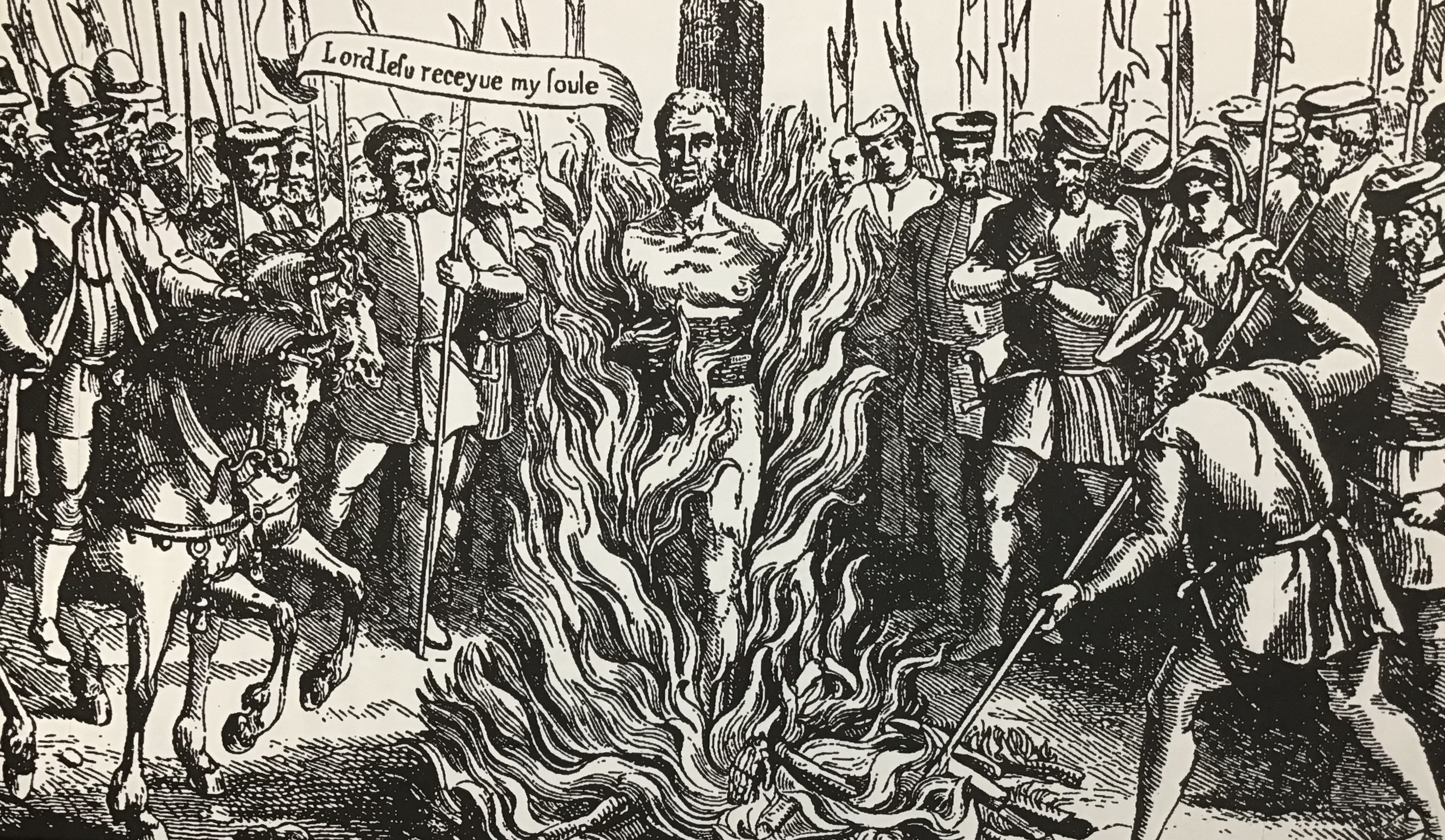
Bishop Hooper burned at the stake for the gospel.

Although we Protestants say that we don’t venerate the saints, you wouldn’t know it the way some pastors fawn over Luther, Calvin, Knox, Spurgeon, and other reformers. Don’t get me wrong, I think those men were used mightily of God, in spite of their flaws and personal sin.

But what I wonder about is how it is that so many pastors who would look up to these men and admire them for their courage and boldness are so cowardly in their own churches when they are called upon by the testimony of the Word of God to stand firm against a potential revolt by those who do not want biblical change.

When Gideon was called to pull down the idols in his town, he may have been overcome by the fear of man, but at least he did it, even if under the cover of night. And when they found out what he did, they wanted to kill him.

When Josiah came to understand how far Judah had fallen away from obedience to the Law, he immediately began to purge Judah and Jerusalem of its idolatrous high places and reinstated the reform that was necessary to please the Lord. This led to a need to rebuild and reorder the temple so that proper worship could be restored.

And the church today is in need of men who are ready and willing to make the changes that are needed in their local churches where unbiblical practices have found a nesting place for ages. For fear of confrontation, loss of income, or prominent families, or a simple fear of losing your job, pastors remain silent in the face of unrepentant sin and all manner of false practices. Unregenerate men are allowed to remain on elder and deacon boards, unhealthy and unbiblical curriculum and programs continue to function so as to avoid a conflict with a women’s ministry head or the parents of the youth. The call for entertainment in church continues to ring louder as the Word of God is given less time to work in the hearts that need it.

Yes, we admire Luther’s stand at the Diet of Worms where he refused to recant. We applaud Spurgeon for being unwilling to give in to the New Measures that sought to entertain the goats. We are in awe of Whitefield who preached the gospel wherever he could garner an audience. We rejoice at the courage of John Rogers and the other Marian martyrs who refused to stop preaching under Bloody Mary of Tudor, and were burned at the stake for it. But will we stand today? Where is our courage? Where is our godly resolve to trust God in the face of angry adversity within and outside of the church? Brothers! Be strong and very courageous!

The Lord’s Provision for Ministry (part 4)

I remember once getting a missionary newsletter in the mail from a pastor in a foreign country that clearly was stretching the truth. In baptist circles, they might say he was speaking “evangelastically.” This missionary wrote glowingly of the tens of thousands that had come to salvation, and about the thousands that he had baptized as a result. Then, a little harder to find, he mentioned that his church had added new members–but only a tiny handful. His whole congregation was about two dozen people.

Now I don’t begrudge the hard work of evangelism. The spiritual soil in some places is harder than others. My issue is when a person claims that thousands of souls are saved but the church has only two dozen people. Where did the rest go? Something isn’t right. In the decision-driven mindset, this may work, but when I read my Bible I don’t see these things. But I guess when you are writing home to supporters, the fear of man drives you to report big numbers to show you are doing your job. It’s a shame because God doesn’t expect men to convert souls. That’s His prerogative.

In my previous posts in this series, I have laid out the many ways that God provides for his ministers. You can read those posts here: The Lord’s Provision for Ministry (part 1) and The Lord’s Provision for Ministry (part 2) and Part 3: https://always-reforming.com/?p=1834. In these posts, I am showing that the Lord provides in six ways. Here is the fifth way:

He Gives Us Souls Converted

“Then he left there and went to the house of a man named Titius Justus, a worshiper of God, whose house was next to the synagogue. Crispus, the leader of the synagogue, believed in the Lord with all his household, and many of the Corinthians when they heard were believing and being baptized.” (Acts 18:7-8, NASB95)

Outside of the synagogue the Lord brought the gospel of salvation to some important people that would affect the ministry in Corinth. Verse 7 mentions Titius Justus, a man with a Roman name, but who had become a convert to Judaism. God had saved him through the gospel that Paul preached. Since Paul had anathematized the synagogue, a meeting place would be needed. How blessed that the Lord saved the guy who lived right next door!

Furthermore, verse 8 tells us of the salvation of a man named Crispus who was saved along with his whole family. This man was a ruler of the synagogue, meaning that he had responsibilities in the synagogue and would have been thought of as important and highly regarded by all Jews in the city. His salvation would have been a huge blow to the Jews in Corinth. And then the end of verse 8 mentions that many others were saved and baptized in the city. The church had begun!

Growing up my mom had a vegetable garden in our backyard. I remember one year she let me and my brother plant watermelon seeds. We were responsible for weeding, watering and doing all the yardwork, a job we did nearly every weekend. It wasn’t normally very fun. But harvesting the fruit of our labors was always a joy! It made the hard work worth it all. Farmers know this truth well, and Paul used this image for those who serve God.

In 1 Corinthians 3:6-9, Paul wrote this to the church he planted there some years later: “I planted, Apollos watered, but God was causing the growth. So then neither the one who plants nor the one who waters is anything, but God who causes the growth. Now he who plants and he who waters are one; but each will receive his own reward according to his own labor. For we are God’s fellow workers; you are God’s field, God’s building.” (1 Corinthians 3:6-9, NASB95) 

Just like God makes watermelon seeds grow into watermelons, it is God alone who brings people to salvation. But like the farmer, we labor with him. Have you ever had the privilege of leading a sinner to God’s throne of grace, resulting in their salvation? There is nothing better! God provides this blessing to those who are faithful to share his gospel message faithfully. 

The Lord’s Provision for Ministry (part 3)

Maybe it’s an American thing, but it seems that there is too much entrepreneurialism in the church today. Every up and coming church is looking to be innovative and cutting-edge. Along with this entrepreneurial spirit comes an equally troubling reality–that man-centered ministry is produced by a man-centered power. It makes sense: if you throw out the book on how to pursue ministry, why would you seek to be empowered in a biblical manner? For the man of God who wants to do things according to God’s Word, we need to remember that God provides in every way for every need.

We began to look at six ways which the Lord provides for His servants.The first way he provides is: He Gives Us Ministry Co-workers. You can read part one here: The Lord’s Provision for Ministry (part 1). Then we saw that he provides financially and by giving us focus in our ministry. You can read this in part 2: The Lord’s Provision for Ministry (part 2). Fourthly…

He Gives Us Gospel Boldness

“But when they resisted and blasphemed, he shook out his garments and said to them, “Your blood be on your own heads! I am clean. From now on I will go to the Gentiles.” (Acts 18:6, NASB95) 

Hard hearts are a result of the sinfulness of mankind. It goes all the way back to the Garden of Eden. We shouldn’t be surprised that Paul faced the rejection and mockery of the crowds in Corinth as he had in many cities he preached in. And it shouldn’t surprise us when we see that happen to us as well. It’s nothing new and we should expect it. But we should also expect that the Lord will provide us with gospel boldness as well, so that we can respond as we should in the face of opposition.

In verse 6, Paul can no longer stand the resistance of the Jewish people’s hardened hearts. Their objections degenerated into blasphemies against Christ himself. Paul shook out his garment, a sign of disgust and complete rejection, and rebuked them for their hardness. Paul had done what the Lord said was required in Ezekiel 3:18-19, “When I say to the wicked, ‘You will surely die,’ and you do not warn him or speak out to warn the wicked from his wicked way that he may live, that wicked man shall die in his iniquity, but his blood I will require at your hand. “Yet if you have warned the wicked and he does not turn from his wickedness or from his wicked way, he shall die in his iniquity; but you have delivered yourself.” (Ezekiel 3:18-19, NASB95)  

Paul wasn’t fooling around. He had come to complete the King’s business and he didn’t want to waste his time on foolish scoffers.

Some people call alcohol “liquid courage” because it lowers the inhibitions and allows people to say and do things they would never do or say when sober. However, Ephesians 5:18 says, “And do not get drunk with wine, for that is dissipation, but be filled with the Spirit,” (Ephesians 5:18, NASB95). Here, the influence of drunkenness is compared to the influence of being filled with the Holy Spirit. Paul was a Spirit-filled man and this is demonstrated in the fact that with great courage and boldness he spoke out against the rejection and mockery of the gospel of Jesus Christ.

John Calvin once said to the Queen of France, “A dog barks when his master is attacked. I would be a coward if I saw that God’s truth is attacked and yet would remain silent.” God offers this same gospel boldness as well. I think that too many Christians are okay with being quiet wallflowers, even when their Lord is blasphemed in their presence. We must pray for the Lord to fill our mouths with a courageous testimony, even in the face of opposition.