Help for New Expositors – Don’t Photobomb Jesus

photobombIsn’t it interesting that there are no physical descriptions in the Bible of what the Apostles or Jesus looked like. This is hard to believe in our self-driven culture where the Instagram selfie perfectly captures the ethos of our day.

There is one extra-biblical description of Apostle Paul found in The Acts of Thecla, where it says that Onesiphorus described Paul as “a man short in stature, with a bald head, bowed legs, in good condition, eyebrows that met, a fairly large nose, and full of grace. At times he seemed human, at other times he looked like an angel.”[1] It appears that Paul had a face for radio!

In our world, “image is everything” and yet, for those who stand before the world to proclaim the Word of God, we are simply called to be a faithful, unwavering voice of truth in a dry, wilderness of error and darkness (Mark 1:3; Amos 8:11).

When this is the case, we shouldn’t worry about being impressive or even whether anybody notices us. We shouldn’t be jockeying for prominence among the evangelical superstars or trying to be seen so we can move up the ladder of fame. This is exactly the opposite of what Jesus expects of his servants. Mark 10:42-45 shines brightly against the growing evil of popular Christianity and its longing for attention. It hurts to read Jesus’ words and think about how much modern evangelical Christianity ignores these words:

And Jesus called them to him and said to them, “You know that those who are considered rulers of the Gentiles lord it over them, and their great ones exercise authority over them. But it shall not be so among you. But whoever would be great among you must be your servant, and whoever would be first among you must be slave of all.” (Mark 10:42–44, ESV, emphasis mine)

It is when we open our mouths, when we speak the Word of God that people should be amazed–not at us, but at our great and awesome God. If we draw attention, let it be to our Lord and Savior. If we thunder and rail, let it be against sin as we call men to holiness. If we speak with great authority and power, let it be from the Scriptures alone and not ourselves. And when we leave a room where we have preached the mighty deeds of our God, and people stand back and say, “What a mighty God! O, how I want to know Him more!” may we be content to slide out of the room and rejoice that our God chose to use us, sinners saved by grace, to bring more people into His presence. SDG

[1] The Acts of Thecla 3. Translation by Bart D. Ehrman in Lost Scriptures: Books That Did Not Make It into the New Testament (Oxford: Oxford University Press, 2003), 114.

Premillennialism and Consistency in Hermeneutics-Walvoord

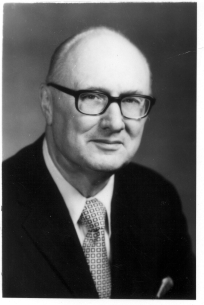
The debate between premillenarians and other millenarians hangs to a large extent upon the principles of interpretation of Scripture which each group employs. This is commonly recognized by all parties. The amillenarian Albertus Pieters states, “The question whether the Old Testament prophecies concerning the people of God must be interpreted in their ordinary sense, as other Scriptures are interpreted, or can properly be applied to the Christian Church, is called the question of spiritualization of prophecy. This is one of the major problems in biblical interpretation, and confronts everyone who makes a serious study of the Word of God. It is one of the chief keys to the difference of John Walvoordopinion between Premillenarians and the mass of Christian scholars. The former reject such spiritualization, the latter employ it; and as long as there is no agreement on this point the debate is interminable and fruitless.”3 In principles of interpretation the crux of the controversy is revealed.

The premillennial position is that the Bible should be interpreted in its ordinary grammatical and historical meaning in all areas of theology unless contextual or theological reasons make it clear that this was not intended by the writer. Amillenarians use the literal method in theology as a whole but spiritualize Scripture whenever its literal meaning would lead to the premillennial viewpoint. This is obviously a rather subjective principle and open to manipulation by the interpreter to sustain almost any system of theology. The conservative amillenarian claims to confine spiritualization to the field of prophecy and interpret other Scriptural revelation literally. Thus a conservative amillenarian would accept literally passages teaching the deity of Christ, the substitutionary atonement, the resurrection of Christ, and similar doctrines. They would denounce as heretics anyone who would tamper with these fundamental doctrines—as Origen, the father of amillenarianism, most certainly did. Conservative amillenarians would, however, feel perfectly justified in proceeding to spiritualize passages speaking of a future righteous government on earth, of Israel’s regathering to Palestine, and of Christ reigning literally upon the earth for a thousand years. Their justification is that these doctrines are absurd and impossible and that therefore they must be spiritualized. The wish is father of the interpretation, therefore, and amillennial interpretation of Scripture abundantly illustrates this.

-You can read the whole journal article at http://walvoord.com/article/150

Don’t Forget Who Our Real Enemy Is!

“It may help to be reminded of some of the important doctrines to which dispensationalists subscribe wholeheartedly. After all, dispensationalists are conservatives and affirm complete allegiance to the doctrines of verbal, plenary inspiration, the virgin birth and deity of Christ, the substitutionary atonement, eternal salvation by grace through faith, the importance of godly living and the ministry of the Holy Spirit, the future coming of Christ, and the eternal damnation of the lost. Those who are divided from us in the matter of dispensationalism or premillennialism may remember the areas in which they are united with us. As already noted, some doctrines are more important than others, so it particularly behooves us not to cut off our fellowship from those who share similar views about these important doctrines. There are few enough these days who believe in the fundamentals of the faith, and to ignore those who have declared themselves on the side of the truth of God is unwise. Something is wrong with our circles of fellowship, sense of priority, or doctrine of unity when conservatives view fellow conservatives as the opposition party and then find their theological friends among those who are teaching and promoting error.”—Charles Ryrie, Dispensationalism, Kindle loc. 4236.

This is My Father’s World

20140805-101221-36741684.jpg

This is my Father’s world, and to my listening ears
All nature sings, and round me rings the music of the spheres.
This is my Father’s world: I rest me in the thought
Of rocks and trees, of skies and seas;
His hand the wonders wrought.

This is my Father’s world, the birds their carols raise,
The morning light, the lily white, declare their Maker’s praise.
This is my Father’s world: He shines in all that’s fair;
In the rustling grass I hear Him pass;
He speaks to me everywhere.

This is my Father’s world. O let me ne’er forget
That though the wrong seems oft so strong, God is the ruler yet.
This is my Father’s world: the battle is not done:
Jesus Who died shall be satisfied,
And earth and Heav’n be one.

This is my Father’s world, dreaming, I see His face.
I ope my eyes, and in glad surprise cry, “The Lord is in this place.”
This is my Father’s world, from the shining courts above,
The Beloved One, His Only Son,
Came—a pledge of deathless love.

This is my Father’s world, should my heart be ever sad?
The lord is King—let the heavens ring. God reigns—let the earth be glad.
This is my Father’s world. Now closer to Heaven bound,
For dear to God is the earth Christ trod.
No place but is holy ground.

This is my Father’s world. I walk a desert lone.
In a bush ablaze to my wondering gaze God makes His glory known.
This is my Father’s world, a wanderer I may roam
Whate’er my lot, it matters not,
My heart is still at home.

—Maltbie Babcock, 1901