Pentecost Today? Not So Fast.

For to one is given through the Spirit the utterance of wisdom, and to another the utterance of knowledge according to the same Spirit, to another faith by the same Spirit, to another gifts of healing by the one Spirit, to another the working of miracles, to another prophecy, to another the ability to distinguish between spirits, to another various kinds of tongues, to another the interpretation of tongues.

(1 Corinthians 12:8–10, ESV)

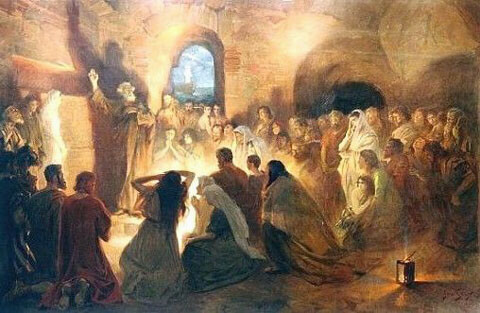
When the day of Pentecost arrived, they were all together in one place. And suddenly there came from heaven a sound like a mighty rushing wind, and it filled the entire house where they were sitting. And divided tongues as of fire appeared to them and rested on each one of them. And they were all filled with the Holy Spirit and began to speak in other tongues as the Spirit gave them utterance. Now there were dwelling in Jerusalem Jews, devout men from every nation under heaven. And at this sound the multitude came together, and they were bewildered, because each one was hearing them speak in his own language. And they were amazed and astonished, saying, “Are not all these who are speaking Galileans? And how is it that we hear, each of us in his own native language? Parthians and Medes and Elamites and residents of Mesopotamia, Judea and Cappadocia, Pontus and Asia, Phrygia and Pamphylia, Egypt and the parts of Libya belonging to Cyrene, and visitors from Rome, both Jews and proselytes, Cretans and Arabians—we hear them telling in our own tongues the mighty works of God.” And all were amazed and perplexed, saying to one another, “What does this mean?” But others mocking said, “They are filled with new wine.”

(Acts 2:1–13, ESV)

One of the more divisive issues within the evangelical Christian church today is the issue of speaking in tongues. The growth of Pentecostal denominations and charismatic churches over the last 100 years has been phenomenal. For some, this is enough evidence that the modern gift of tongues is biblical. Add to this the experiential element and those who are convinced of the legitimacy of modern charismatic practices would be hard-pressed to deny their existence. Although the continuationist view is the newer position on the use of the miraculous gifts today, it has become the majority view within evangelicalism.

In this post I’d like to look at three characteristics on the Day of Pentecost to consider the question of what is the gift of tongues? After I answer them, I’d like to compare that special day and see if Pentecost is still happening today.

The account in Acts 2 follows Jesus’ ascension after he told the disciples to stay in Jerusalem until the promised Holy Spirit came. This small band of believers gathered together in an upper room and prayed together. The following is an examination of what happened in that room when the Spirit came:

  1. Sound (vv. 2, 6)
    • This was a sign to both the believers gathered as well as the unbelievers that were drawn to the loud commotion.
    • This sound is described as being like “a mighty rushing wind.” The Greek word for “wind” is pneuma and it is also the word used for Spirit. The wind was described as sounding like rushing or violent wind. This sound was meant to communicate the power of the Holy Spirit.
    • This surprising sound was not wind but was “like” wind in its mighty power–reminding the disciples of the promise given by Jesus in Acts 1:8 that he would give them power to accomplish his commission.
  2. Sight (v. 3)
    • The “tongues of fire” appeared to those in the upper room and thus were a sign to the believers gathered.
    • The tongues were distributed among them all, and everyone in the room received this sign as it rested upon each of them. This was followed by speaking in tongues. In 1Cor 12:11, Paul tells us that the Holy Spirit gives his spiritual gifts to those whom he wills.
    • Why a sign of fire? Throughout the Bible fire represents two major ideas-judgment and purity. In this setting and context, it is appropriate to understand the symbol as a reference to the purifying work of the Spirit (Isaiah 6; Rev. 1:14, 15).
  3. Speech (vv. 4-11)
    • The speech was a sign to the unbelievers (vv. 6-12). Those gathered Jews in the city of Jerusalem did not hear God speaking in Hebrew, as he had done in the Old Testament through his prophets. He spoke to them through the foreign languages of the nations. In 1 Corinthians 14, Paul said, “In the Law it is written, “By people of strange tongues and by the lips of foreigners will I speak to this people, and even then they will not listen to me, says the Lord.” Thus tongues are a sign not for believers but for unbelievers, while prophecy is a sign not for unbelievers but for believers.” (1 Corinthians 14:21–22, ESV)
    • What did these Christians say when they spoke in tongues? What was the content of their speech? We don’t have to wonder. Verse 11 says they were speaking of the mighty deeds of God. It is important to also note that their words were understandable to the people–not Christians, but unbelieving Jews.
    • Additionally, it is important to point out that the miracle was in speech, not hearing. Verses 9-11 tells us that the people gathered heard the praise of these Christians in their own tongues. That was because the languages were genuine human languages from the places these Jewish pilgrims had come from.
  4. Conclusion: What happened after this event? What were the conclusions the crowd came to?
    • Confusion (v. 12). They didn’t have a clue about what was happening.
    • Contempt (v. 13). They mocked and said the people were drunk.
    • Conversions (2:41). Three thousand souls were saved.

Some Parallels to Today’s Tongues Movement?

Before I get to my questions, I need to ask, is Acts 2 descriptive or prescriptive? In other words, is Acts supposed to be a handbook for how we should conduct the Church today or is it a history of how the early church functioned at one time and in many ways is unique?

Some within the Pentecostal and Charismatic movement call the church to a new Pentecost. They lament that the church is powerless today because we need that same power, and so we need the same Pentecostal experience. If Acts 2 is prescriptive and gives instructions for the Church to follow today:

  1. Where is the rushing wind sound today?
  2. Where are the fiery tongues today?
  3. Why are tongues not identifiable languages today?
  4. Why are tongues not used to testify to the unbelievers today?
  5. Why are there not mass conversions on the scale of those in Acts 2 today?
  6. Why is it that all those who are believers are not given this gift today? Even the 3,000 that were saved that day are never said to have been given the gift of tongues. Why not if it is supposed to be normal for every Christian?

It is my conviction that the gift of tongues and its accompanying gift of interpretation ceased after the completion of the Bible and is no longer necessary for the church to function. This is not just my opinion, but is in fact the confirmed historical stand of the Church from the end of the Apostolic age all the way up until the early 19th Century.

We do not need to practice tongues to become close to our Savior, God, and King. If you do not read God’s Word, tongues will not help you know Him better. If you do not pray, muttering in a supposed “angelic language” will not edify anyone. If you do not practice love, you can have no part with the Father. Such a large portion of so many churches are taken up with this practice that whole churches are known for their concentration on the Holy Spirit. Let us not forget what Jesus said concerning the Holy Spirit in John 16:13-14, “When the Spirit of truth comes, he will guide you into all the truth, for he will not speak on his own authority, but whatever he hears he will speak, and he will declare to you the things that are to come. He will glorify me, for he will take what is mine and declare it to you.” (John 16:13–14, ESV). The Spirit never points to himself, but to Jesus. May we do the same.

Why We Must Preach the Bible (part 3)

This is the third installment of a three-part article. Part One can be read here: Why We Must Preach the Bible (part 1), and Part Two can be read here: Why We Must Preach the Bible (part 2)

We have been considering the need for the Church of Jesus Christ to preach the Bible faithfully, in full dependence upon God and the power vested in His Word. In the first article, I wrote that we must preach the Bible because it is our only authority. Without that divine Book, no man standing up on a Sunday morning has any authority. Secondly, we must preach the Bible because the Bible alone demonstrates divine power. Manipulation, oratorical skill, and emotionalism will only get you so far. Today I want to look at one last reason why we must preach the Bible.

3. It Demands Divine Duty

The hard soil of men’s hearts is not something unique to the 21st century. It is as old as humanity itself. This fact needs to sink into the heart of the pastor who is looking for low-hanging fruit when he seeks a ministry. God has not called most of us to a large pulpit ministry, nor world-wide fame. But He has called every one of His ministers to faithfully proclaim the Word wherever we are sent. Hard hearts, gang violence, poor attendance, meager offerings, inadequate facilities, nonexistent leadership, are all realities that can make ministry challenging, but none are reasons to walk away from a church or a community. As a matter of fact, all of these are reasons that a faithful Bible preaching, gospel-saturated church is needed in that place. The marks of this divine duty require us to preach faithfully, preach plainly, and preach patiently.

Preach Faithfully (Ezek. 2-3; 2 Tim. 4:1-5)

Facing the rebellious nation of Israel, the Lord clearly told Ezekiel what he must do, “And you shall speak my words to them, whether they hear or refuse to hear, for they are a rebellious house.” (Ezek. 2:7, ESV). Over and over again, Ezekiel was told that Israel was a rebellious house, impudent, stubborn, and hard-headed. And yet, his instructions were clear, speak God’s words to them. Though they would not listen, and though they were so hard in heart, it did not change the directive—be a watchman (3:17) and speak the words of impending judgment (v. 19) no matter what. Faithfulness is what God requires (3:19, 21).

As the Apostle Paul faced his own death, he exhorted Timothy to continue to persevere in the ministry of the Word in season and out of season. For Timothy, Paul’s imprisonment and coming death was a very real illustration of the threat to the gospel ministry. Paul didn’t instruct Timothy to move to a safer territory nor did he instruct him to avoid suffering, but instead encouraged him to keep preaching even when people will no longer endure it and that this might include the need to endure suffering for the sake of Christ. Paul was faithful to preach the whole counsel of God and he would receive his reward in due time (2 Tim. 4:7-8).

Preach Plainly (1Cor. 2:1-5)

Plain preaching is not the same as bland preaching, nor does it mean to preach simplistically. Paul’s desire to give Jesus Christ all the glory required him to make sure that his own preaching did not put the spotlight on his considerable education, gifts, and talents. Although the so-called super-apostles had a low view of Paul’s presence and preaching ability (2 Cor. 10:10), he placed his full dependence upon the power of God’s Spirit working through the Word of God. In doing this, Paul put the cross of Christ on full display. Plain preaching is not flashy, gimmicky, or self-seeking. Simply put, plain preaching is Spirit-empowered, not man-centered. The Puritan Richard Baxter wrote, “It is no easy matter to speak so plain that the ignorant may understand us, so seriously that the deadest heart may feel us, and so convincingly that contradictory cavaliers may be silenced.” (Joel R. Beeke and Mark Jones, A Puritan Theology: Doctrine for Life, (Reformation Heritage Books, Grand Rapids, 2012), 695).

Preach Patiently (2 Tim. 4:2)

Our duty to preach the Word must be done with the reminder that we do not preach ourselves nor do we preach our words. Pastors are under-shepherds that are to lead without being domineering. We are to be loving examples to the flock that has been placed in our charge (1 Pet. 5:2-4). This means that we must teach the Word of God with the patience of our Master (2 Tim. 4:2), and that is easier said than done, particularly when we are facing the growing challenges of ministry today. Nevertheless, we must teach and preach with great patience, waiting upon the Word and Spirit to do their mighty work.

Although the reasons that we preach the Word could be multiplied, these three should stand out for us—it is our authority, our power and our duty. And as we faithfully proclaim the Word, we can expect that it will do its mighty work of reviving the soul and enlightening the eyes (Ps. 19:7, 8). The benefits of doing so will manifest themselves in due time, showing us that as we sow the seeds of the Word into the hearts of our congregations that all our efforts are profitable (2 Tim. 3:16-17), and will accomplish the will of God in the end (Isa. 55:11).

As William Gurnall wrote a long time ago, “The Word of God is too sacred a thing and preaching to solemn a work, to be toyed and played with” (Ibid., 685). May we pick up our Swords and faithfully execute the ministry that the Lord has called each of us to do, for His greater glory and for the good of the Church. 

Why You Should Boldly Preach Christ Crucified

For the word of the cross is foolishness to those who are perishing, but to us who are being saved it is the power of God.

(1 Corinthians 1:18, NASB95)
Peter preaching
  1. Because It is Not Popular (v. 18)
    Not only is it not popular, it is moronic (moria in Gk.). Consider the fact that the gospel of Jesus Christ demands that we say to sinners that a poor and humble Jewish man was God, and that he was nailed to a cross to die a criminals death despite his perfect innocence. We proclaim that this man is not only a man, but that he is God in the flesh. That he is perfect and sinless and that he was born of a virgin.

Furthermore, we proclaim that all of humanity is lost and that each individual man, woman, and child is a wretched sinner.
We proclaim that Christ is the only hope for humanity and that all other claims are lies from the pit of hell and all who seek salvation in any other name are doomed to eternal damnation.


We proclaim that Jesus Christ has done all that is necessary for our salvation, and that he rejects all attempts to earn salvation on our own. He, being the King, demands our allegiance and one day every knee shall bow and every tongue shall confess that He is Lord.

Brothers, when we proclaim this the world will overwhelmingly reject us as fools of the worst kind. We will be called bigots, intolerant, and uneducated religious zealots. And that is why so many bow to the pressures and soften their message. Paul was keenly aware of the propensity of men to soften the blow of the gospel by using soothing words that made the hearer feel at ease.
He said in 1Corinthians 2:1-5 that he purposely made it his aim to proclaim the unvarnished gospel of Jesus Christ crucified. Today, preachers everywhere are trying to make Jesus look cool. They are trying to make Christianity attractive. They are doing just what Paul avoided.

Brothers, the cross was not cool. It was brutal and bloody.

The call of Christ is not popular. True Christianity will never court the world. But pastors will continue to attempt to make our precious faith more palatable in order to gain the popularity of the world. This is nothing but pride. Nobody should enter the ministry or the pulpit in order to make his own name great.

Isaac Watts wrote, “When I survey the wondrous cross on which the Prince of glory died; My riches gain I count but loss, and pour contempt on all my pride.”
PREACH CHRIST BECAUSE IT IS NOT POPULAR!

2. Because They Are Perishing (v. 18)
When we preach the message of the cross, the world sees it as folly because they do not see the danger to their souls. Sometimes they fail to see the danger because they do not see it in our eyes and do not hear it in our voices as we proclaim cold truth from our pulpits.
Brothers, do you feel the truth of Hell?
Do you remember the days when you were among the brood of vipers?
Do you recall that you were once a vessel prepared for destruction?
Have you forgotten that you were on the precipice of the bottomless pit and you were ready in due time to slip into eternal fire separate from God to be tormented for all eternity?
HAVE YOU FORGOTTEN?

When we remember our former state we will be quick to point people to the only remedy for their souls—the cross of Christ. When we remember that they are perishing, we will not care about their mocking and their cries for ear-tickling sermons—we will give them what we know they need.

Wrote Thomas Brooks, “The damned shall live as long in hell as God himself shall live in heaven.” That fact alone should drive us to preach Christ crucified. Check your hearts brothers. Do you feel the terror of hell and do you cry out with Paul on Sunday mornings: “For we (!) are the aroma of Christ to God among those who are being saved and among those who are perishing, to one a fragrance from death to death, to the other a fragrance from life to life. Who is sufficient for these things?”(2Cor. 2:15-16)

PREACH CHRIST BECAUSE THEY ARE PERISHING!

3. Because It is the Power of God (v. 18)
Power in the pulpit. Power evangelism. Power encounters. Pastors want power.
But the power of God is not found in the usual places.
It is not found in business models or worldly philosophy (1Cor 1:22).
It is not found in dramatic, emotionalism (1Cor 1:22).
It isn’t found in phony encounters and confrontations with demons and the occult.

The power of God was displayed on the cross, where God sent His Son to be crushed for our iniquities. Jesus became sin on our behalf, so that we might become the righteousness of God! That is power!

Concerning the justification of God, John Calvin said, “Wherever the knowledge of it is taken away, the glory of Christ is extinguished, religion abolished, the Church destroyed, and the hope of salvation utterly overthrown.” This is the power of the cross.

Why is the Church so weak and utterly incapable of making an impact in our nation? Because many so-called Christian churches have left this message behind and taken up the banners of politics, pop psychology, health and wealth, and so many other empty promises.

The Roman Catholic system, the Emerging movement, the Seeker Sensitive movement and the Liberal mainline denominations have all shown us what becomes of those who lay aside the cross of Christ. But it hasn’t stopped many men from flirting with those compromising philosophies.


Puritan pastor Richard Baxter has written, “If a hardened heart is to be broken, it is not stroking but striking that must do it.” The only thing that can cut another stone is a diamond, the hardest gem on earth. In order to cut the hardest heart, we must use the sharpest tool.

In Hebrews 4:12 we are reminded, “For the word of God is living and active, sharper than any two-edged sword, piercing to the division of soul and of spirit, of joints and of marrow, and discerning the thoughts and intentions of the heart.”

Brothers, even in our fundamental Bible churches the temptation can be overwhelming to give up expository preaching in favor of sugar coated sermons that aim to please the itching ears of people. We reason in our hearts that once we have them in our churches we can preach the gospel to them, we just need to ease them into it. Don’t fall for this pragmatic lie!

You are merely a tool in God’s hand. He uses you as His minister to wield His weapon of choice. You cannot change the soul of a man in any way without the intervention of the Word, the Spirit and Christ. It is the Word of God preached—the Gospel alone that brings a sinner to his knees.

PREACH CHRIST BECAUSE THE MESSAGE OF THE CROSS IS YOUR ONLY POWER!

Rejoicing in Trials? Yes!

Circumstances do not bring joy, only Christ does. The Apostle Paul’s outlook on his own life was that it was not his own, that he was a servant of Jesus Christ first and foremost. He said that in his opening words to the Philippian church. Paul derives his joy from his identity as a servant, so that he does not look primarily to his circumstance, but to his fulfillment of his Master’s will. Endurance through trials is not a work of the flesh, but a work of the Spirit.

This is something that the world cannot understand at all. For a world without God, when suffering comes, they often seek the quickest route out. The world does not see any benefit for suffering and pain. As a matter of fact, when they see a Christian suffer, they can sometimes mock us, and ask where our God is. Why doesn’t he relieve our suffering when we have been so faithful to serve him?

Paul is helping the Philippian church to see that his imprisonment is not the worst thing that could happen to him. Discontentment is worse. Joylessness is worse.

In Philippians 1:15-18, Paul sat in a prison cell, yet was filled with joy in the continued preaching of the gospel. He was not bitter about the fact that he wanted to be out doing the work of the ministry. And he wasn’t bitter about those who were free, and used their freedom to preach the gospel, not to serve Christ, but to jab at Paul! Paul ended his thought in verse 18 with “in that I will rejoice.” Christ was being glorified. How could anything be better?

But as Paul thought for a second, he realized that there were reasons for continued rejoicing beyond just the present preaching of the Word. Let’s look at a few of these reasons that he laid out for rejoicing:

Rejoice in the Prayers of the Saints (v.19)

Paul writes how he can rejoice because he knows that the brothers and sisters in Philippi are praying for him. In Philippians 4:1 Paul has mentioned that he constantly kept the church in his prayers, and he is aware that they have done the same for him. This is a greater challenge in the church today because our society tends toward more and more isolation. We might see what you eat on Facebook or Instagram, and hear about how great your vacation was, but the real issues in our lives are kept hidden.

In general, we shouldn’t overshare. We need to be wise about what we say and to whom we say it. But in matters of praying for one another, we need to grow deeper without going into gossip or unnecessary details. The example we see from Paul was that he shared himself with the church. He shared his thoughts, his fears, his needs, and his weaknesses. This type of transparency allowed the church to better pray for him. And in this prayerfulness for one another, Paul could rejoice. He knew that the church was praying for him in his struggles and trials. And he prayed for their welfare as their spiritual father. But prayer is not all that was needed. He adds, “and…”

Rejoice in the Help of the Spirit (v. 19)

Paul’s joy was based upon much more than the faithful prayers of the saints in Philippi. Prayer is only as good as the God to whom we pray. The intercession of the saints must be accompanied by a movement of God. Our prayers shouldn’t stop until God answers one way or another. Paul knows that something will happen when the saints pray and the Spirit “helps.” This is really where Paul finds his assurance. His confidence comes with the working of the Lord.

The word “help” (ESV) is an unfortunate rendering because it seems such a weak word. The KJV’s “supply” is a little better, but still doesn’t give the best picture of the critical nature here. The Greek word epichoragia is a word that is used in Ephesians 4:16 to speak about a ligament that serves to support the body: “from whom the whole body, joined and held together by every joint with which it is equipped, when each part is working properly, makes the body grow so that it builds itself up in love.” (Ephesians 4:16, ESV)

That is the kind of “help” the Spirit is. Without him, we are crippled spiritually. We cannot go on. He is that critical. The Spirit’s help is not like an assistant, whom we can do without. He is like a knee joint for a sprinter—invaluable. The reference to “the Spirit of Jesus Christ” means the Holy Spirit. He is the One who will bring about Paul’s “deliverance.”

But what sort of deliverance was Paul expecting? Some have thought that maybe this salvation is from his situation—temporal salvation; others have thought that it was spiritual. Perhaps Paul was thinking about the fact that whether he lived on and was freed or whether he died a martyr’s death, he would be saved. The Spirit of Jesus would deliver him from death, or deliver him from this life through death. Either way, Paul would be set free in some form or another.

Where we set our eyes changes what we see. If we set our eyes on Christ, we see hope. Christ delivers from the challenges we face today, and he has conquered our sin, winning for us salvation and eternal life. But when we put our eyes on our problems, on the circumstances that we are in the middle of, our vision is clouded. We can be given over to despair and hopelessness. Paul could have easily gone there as he sat in prison. But he knew he had good friends praying for him, and that the Spirit of Jesus was working it all out. He would get out of that prison, and either he would be reunited with his friends, or he would be safe in the arms of Jesus.

What about you? Are you trusting in the Lord to deliver you in your times of need? Have you forgotten the power of God? Stop trusting in your own strength. Stop seeking to be the answer to your own prayers. Depend upon the Lord’s strength. Why are you downcast? It is because you have placed your hopes in something other than the Lord. Hope in God. Finally, we need to…

Rejoice in Expected Courage (v. 20)

Paul is eager to see where the Lord is directing him. He knows the prayers are for his release, and he knows that the Spirit is at work, but the future is still unclear. When Paul says he has “eager expectation,” this idea pictures a person straining his neck to see what is ahead just around the bend. It is a great word. Paul isn’t dreading the future, he is embracing it. He is hopeful!

    So, what are the possibilities? He expects that whatever happens, he will not be ashamed. Why would he be? He is not a criminal. He is on trial for the gospel. He has no remorse in prison. He would do it all over again. He has glorified his Lord in his ministry.

Let me ask you, are you ready to meet the Lord today? Would you be ashamed of what you have accomplished in your short life on this planet? Are you banking on the next 10-20 years to make something of your life for Christ? That is borrowed time, my friends. It may never come. You need to put your life in order today. You don’t want to be lying in a hospital bed thinking about how ashamed you will be to face the Lord because your life was only a pursuit of personal desires.

Instead, Paul was anticipating having a lion’s heart to face whatever would happen. He expected to have “full courage” for whatever he faced. You see, if he was released from prison, his message of the risen Christ would be vindicated in many people’s eyes. And if he received the death penalty, then he expected to be filled with courage just as much. How? It had to do with how he had been as a servant. You see, Paul wasn’t only speaking about the courageous death he would face—courage as he faced the executioner.

Whether he lived or died was inconsequential. Eager expectation, hope, and courage marked Paul’s outlook. Paul’s lion-like boldness was based upon the salvation won for him at the cross and how he had remained faithful to his Master. Paul was ready to die well.

With heaven before us, what do we really need to fear? Jesus has conquered sin and death. Our best days are ahead of us. Christ is King! Let us have courage to face the uncertain future knowing that the face of Christ and eternal life is a certainty!

When the Struggles Run Deep

But sexual immorality and all impurity or covetousness must not even be named among you, as is proper among saints. Let there be no filthiness nor foolish talk nor crude joking, which are out of place, but instead let there be thanksgiving. For you may be sure of this, that everyone who is sexually immoral or impure, or who is covetous (that is, an idolater), has no inheritance in the kingdom of Christ and God. Let no one deceive you with empty words, for because of these things the wrath of God comes upon the sons of disobedience. Therefore do not become partners with them; for at one time you were darkness, but now you are light in the Lord. Walk as children of light

(Ephesians 5:3–8, ESV)

What happens when a sinner is redeemed? Do all of their sinful habits and lifestyles instantly disappear, with no trace or spot left? Yes and no. Before the holy eyes of God, our sins, every one of them, vanish beneath the blood of Christ. But for now, there remains in us an ongoing struggle that is a battle between the desires of the flesh and the desires of the Holy Spirit who now resides in us. At times, the battle cools and the temptation will lay dormant. At other times it will be sparked and set ablaze like a fire in a powder keg.

As Paul has laid out in Epehsians 4, we need to live or “walk” in a manner worthy of our calling, and this new lifestyle must be empowered by the Holy Spirit filled life (Eph 5:18). The new life in Christ is too often described as something it is not. The miraculous redemption we receive is described in terms that are over-realized; making young Christians think that their new life in Christ has given them complete mastery over their sin. But that sort of idea is dangerous for two reasons: It does not warn of the power of the flesh and the strength of temptation, especially in those areas of past habitual sin. The second reason this idea is dangerous is the fact that most new Christians are told very little about the need for dependence upon the supernatural power of the Holy Spirit to defend against the overwhelming urges to give in to sin. The result is that they try to overcome their temptation with will power and fleshly means and end up failing.

In Ephesians 5, Paul deals with some pretty strong sins that were affecting some of the Christians at Ephesus: sexual immorality, impurity, covetousness (v. 3), filthiness, foolish talk, and crude joking (v. 4). These sins, like all sin, have been conquered by the cross of Christ. Those who place their trust in Jesus Christ alone for salvation have been cleansed and set free from the filthiest of sins. We need to say that more. We need to let the man or woman who is mired in shame and guilt know that Christ can set them free and cleanse them from all unrighteousness. They don’t need to clean up themselves in order to come to Christ. As a matter of fact, they can’t. As the song says, “What can wash away my sin, nothing but the blood of Jesus!”

But we must also acknowledge that once a person has come to Christ and been washed clean, and they are justified with Christ, they are not incapable of the temptation to sin. If this were the case, then Paul’s words of warning would make no sense. Neither would all of the exhortations in the New Testament about fleeing from sin and temptation. And since we are to grow in holiness, and to learn to grow in dependence upon the power of the Spirit, and to wield the Sword of the Spirit, we need to also acknowledge that the young Christian is in need of discipleship, patience, and brotherly oversight. And this is especially true when the struggles run deep.

In our society today we have been hearing more and more about the “gay Christian.” In this passage, Paul is pretty clear–there is no such thing. But that doesn’t mean that we will not have new believers who will need us to walk with them as they battle sin and temptation. They will need much prayer, Bible instruction, love, friendships, and hospitality. So will the Christian struggling with other forms of sexual immorality, and adultery. So will those struggling with anger, gossip, ingratitude, coveting, bitterness, and shame. The list is never ending. We need one another. None of us has arrived, but we are all making our way.

We cannot accept that Christ saved us so we can remain in our sin, therefore we can continue to wallow in it. But neither can we say that Christ saves us and therefore, temptation is stricken from our hearts so that we no longer struggle with it anymore. If that were true, we wouldn’t need the Church, we wouldn’t need each other. And we wouldn’t need Christ or the Spirit of God. May the Lord help us to reach out to those who are struggling. And may we be prepared to go with them for the long haul, knowing that this is how Christ uses the Church, the Spirit and the Word to bring about our sanctification.