Fruitless Religion

And the blind and the lame came to him in the temple, and he healed them. But when the chief priests and the scribes saw the wonderful things that he did, and the children crying out in the temple, “Hosanna to the Son of David!” they were indignant, and they said to him, “Do you hear what these are saying?” And Jesus said to them, “Yes; have you never read, “ ‘Out of the mouth of infants and nursing babies you have prepared praise’?”

In the morning, as he was returning to the city, he became hungry. And seeing a fig tree by the wayside, he went to it and found nothing on it but only leaves. And he said to it, “May no fruit ever come from you again!” And the fig tree withered at once.

(Matthew 21:14–16, 18-19 ESV)

While the people are rejoicing and celebrating the coming of Jesus of Nazareth into Jerusalem, the chief priests and scribes stand by in disgust at the display of the people.

These rabble, the people who are diseased, these uneducated children, the peasant disciples of Jesus–they are all so ignorant to the form of religion that they uphold! And Jesus, whom they assumed should know better, is unwilling to correct his misguided followers! Instead he continues quoting Scripture that affirms their worship of Jesus as the Messiah.

The next morning Jesus did something that is puzzling to many people. He came upon a fig tree along the side of the road and he found that it was barren of any figs. It had lots of leaves, but no fruit. With a word, he cursed the tree so that it withered and died.

Why did Jesus kill a tree? He did it for a profound reason. He killed the tree to show that those who make a show of their religion who have no evidence of the grace of God in their lives are worthless to Christ and they shall be judged. They might appear to be fruit filled because of the outward show of their religion, like a fruit tree with thick, green leaves. But leaves are not impressive to the hungry. And religious activity without a relationship with the Lord does not fool God.

In another place Jesus said these chilling words:

“Not everyone who says to me, ‘Lord, Lord,’ will enter the kingdom of heaven, but the one who does the will of my Father who is in heaven. On that day many will say to me, ‘Lord, Lord, did we not prophesy in your name, and cast out demons in your name, and do many mighty works in your name?’ And then will I declare to them, ‘I never knew you; depart from me, you workers of lawlessness.’

Matthew 7:21–23, ESV

Religion doesn’t save. Only Jesus does. Church attendance, Bible reading, giving money, volunteering your time to good causes, being kind, saying prayers, all of these things do nothing to impress God.

When Christ gives new life, it is out of this new life that good works will flow (Ephesians 2:10, “For we are his workmanship, created in Christ Jesus for good works, which God prepared beforehand, that we should walk in them.” (Ephesians 2:10, ESV)).

But those who start with good works and then add God have dead religion that will not save them. It is like stapling figs to a tree. Make sure that your good works are the overflow of a life of worship and your relationship with the living Christ.

“Mercy”

“God, be merciful to me, a sinner!” Luke 18:13

God of the Publican,

Be merciful to me a sinner; this I am by nature and practice, this the Word proclaims me to be, this I hope I feel myself to be; Yet Thou hast not left me to despair, for there is no ‘peradventure’ in Thy grace; I have all the assurance I need that with Thee is plenteous redemption.

In spite of the number and heinousness of my sins Thou hast given me a token for good; The golden scepter is held out, and Thou hast said, ‘Touch it and live.’ May I encourage myself by a sense of Thy all-sufficiency, by faith in Thy promises, by views of the experience of others. To that dear refuge in which so many have sheltered from every storm may I repair.

In that fountain always freely open for sin may I be cleansed from every defilement. Sin is that abominable thing which Thy soul hates, and this alone separates Thee and me. Thou canst not contradict the essential perfections of Thy nature; Thou canst not make me happy with Thyself, till Thou hast made me holy like Thyself.

O holy God, make me such a creature as Thou canst take pleasure in, and such a being that I can take pleasure in Thee. May I consent to and delight in Thy law after the inner man, never complain over the strictness of Thy demands, but mourn over my want of conformity to them; never question Thy commandments, but esteem them to be right. By Thy Spirit within me may my practice spring from principle, and my dispositions be conformable with duty.

–The Valley of Vision

Humble Submission to Christ the Lord

And Mary said, “Behold, I am the servant of the Lord; let it be to me according to your word.” And the angel departed from her.

Luke 1:38, ESV

This morning I read from the book of Jonah. I have been pondering the incarnation for the last several days and the wonder of Christ’s birth, and then I read Jonah. To put it lightly, Jonah had problems. Massive spiritual problems. I’ll come back to him in a bit.

All too often in Protestant churches, Mary, the mother of Jesus, has scorn heaped upon her because there are some who have taken this woman of God and have worshipped her. But that isn’t Mary’s fault! From my reading of the New Testament, Mary was a gracious and beautiful example of incredible faith that we should emulate–such as the passage I cite in Luke 1:38 above. Yes, Mary was a sinner, and she too needed a Savior. But look beyond this and see her humble submission as well.

I’ll let the scholars handle the age of Mary, but I think most agree that this woman was still very young. But her words, particularly in what has been called the Magnificat (Lk 1:46-55), show a spiritually mature child of God. She is not a scholar, nor of the priestly line. She is a simple, humble woman from a back-woods town who is preparing to marry a humble carpenter. That is why her words should stop us in our tracks: “Behold, I am the servant of the Lord; let it be to me according to your word.”

She is saying through the angel to the Lord God, “I am yours. Do with me whatever you see is right. I am nothing, you are everything. Whatever you want, I will submit to you wholly.” O, how we need more people of God with this heart! But she isn’t alone in the Bible.

In the Old Testament, we find Abram willing to leave everything he has ever known–land, family, language, comfort, safety, the familiar, the safe. He leaves it all because he is following his God (Gen 12:1-4). Again, the spirit of Father Abraham is that the Lord is Sovereign. He commands, and we joyfully follow; even into the unknown darkness. Later, when he has received his son Isaac after many years of waiting, Abraham is asked to sacrifice this beloved gift (Gen 22:1-19). There is no argument, or pleading with God to reconsider what he is asking. Genesis 22:3 simply says that Abraham rose early in the morning and set out to obey his Master.

I saw this same commitment to humble submission when I recently re-read the book of Hosea. In Hosea 1:2-3 it says:

When the Lord first spoke through Hosea, the Lord said to Hosea, “Go, take to yourself a wife of whoredom and have children of whoredom, for the land commits great whoredom by forsaking the Lord.” So he went and took Gomer, the daughter of Diblaim, and she conceived and bore him a son.” 

(Hosea 1:2–3, ESV)

We can understand the purpose of God in doing this because the Bible is clear about the reason for this request–to be a shockingly visible illustration of the way that Israel was toward the Lord God. But that didn’t make Hosea’s obedience and heartbreak any easier. The shame he endured as God’s man must have been unbearable at times as his unfaithful wife continued to bear children fathered by other men. Yet, Hosea continued to faithfully and humbly submit to all that the Lord asked of his servant.

That brings us back to Jonah.

Mary endured shame, scorn and great pain in order to bring the Savior into the world. Abram left everything and was willing to sacrifice his most beloved son. Hosea walked his entire life in the darkness of a broken relationship for the cause of illustrating the enduring love of God in the face of rebellious and idolatrous Israel.

And Jonah…he sulked and ran and was enraged because he wanted to be the master of his life. Jonah wouldn’t rejoice at the repentance of the lost. He wouldn’t rejoice at his salvation from the fish’s belly and a new opportunity to be used by God. He wouldn’t even enjoy life, but would rather be struck dead because he was such an angry little man.

John Paton

I recently read the biography of the great missionary to the Pacific, John Paton. In Paton’s day, the church had taken on the attitude of Jonah. They loved their comfort and ease. They didn’t like it when men and women of God wanted to take the gospel to the world because they didn’t want their comfort to be unsettled. Some were bribed with money to stay. Some were belittled and treated with contempt–being told that God would’t use them because they were ungifted. Some said that the primitive people would never be able to appreciate the fine education they had earned, so why waste it? Others were so fearful of the dangers of cannibalism and disease that they forbid anyone from going to these people. Serve Jesus in England, where it is safe. You can serve Jesus here. WE need him too!

But Paton, and a few others accepted the call and braved the hardship and ridicule heaped on them back home and face the dangers in the Pacific. They humbly submitted their lives to the Sovereign they loved more than life itself. Most died, but the Lord raised up many more servants until the Pacific was won for Christ.

But the Jonah spirit is alive and well in many hearts and churches today. I take comfort in the fact that there are also still in Christ’s church Mary’s and Abraham’s and Hosea’s among us. Those who will submit to the Lord their God with joy and humility. If that is you, don’t allow the Jonah spirit in the church to dissuade you. See the joy in the hardship. Know that the Lord is greater than any hardship you may endure. As Luther wrote,”Let goods and kindred go, this mortal life also; the body they may kill, God’s truth abideth still. His kingdom is forever!” 

And if you see too much of Jonah in your own heart, then Jonah’s message to Ninevah is God’s message to you too. Repent. This life isn’t for you. It isn’t about you. It’s about Jesus. Humble yourself before the mighty hand of God, and he will lift you up (1Pet 5:6).

Preachers Who Don’t Love People

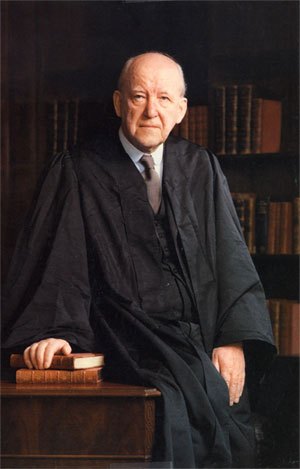
lloydjones“The trouble with some of us is that we love preaching, but we are not always careful to make sure that we love the people to whom we are actually preaching. If you lack this element of compassion for the people you will also lack the pathos which is a very vital element in all true preaching. Our Lord looked out upon the multitude and ‘saw them as sheep without a shepherd’, and was ‘filled with compassion’. And if you know nothing of this you should not be in a pulpit, for this is certain to come out in your preaching.”

-Dr. David Martyn Lloyd-Jones, Preaching and Preachers

Choked by the Weeds of Bitterness?

“The poisonous weed of bitterness thrives in the deep soil of unresolved anger.

It must be pulled up by its roots, not just snipped off at the top.

Hebrews 12:15 states that a root of bitterness can spring up and cause trouble, causing many to be defiled. You cannot nurture the bitterness plant and at the same time keep it concealed. The bitter root bears bitter fruit. You may think you can hide it … live with it … grin and bear it, but you cannot. Slowly, inexorably, that sharp, cutting edge of unforgiveness will work its way to the surface. The poison seedling will find insidious ways to cut into others. Ironically, the one who suffers most is the one who lashes out at those around him. He becomes victim of the giant he refused to slay.”—Charles R. Swindoll, Killing Giants, Pulling Thorns (Grand Rapids, Mich.: Zondervan Publishing House, 1994), pp. 26–27.