Taming the Tongue and Communication (Eph 4:25-32)

taming_the_tongue

“25 Therefore, having put away falsehood, let each one of you speak the truth with his neighbor, for we are members one of another. 26 Be angry and do not sin; do not let the sun go down on your anger, 27 and give no opportunity to the devil. 28 Let the thief no longer steal, but rather let him labor, doing honest work with his own hands, so that he may have something to share with anyone in need. 29 Let no corrupting talk come out of your mouths, but only such as is good for building up, as fits the occasion, that it may give grace to those who hear. 30 And do not grieve the Holy Spirit of God, by whom you were sealed for the day of redemption. 31 Let all bitterness and wrath and anger and clamor and slander be put away from you, along with all malice. 32 Be kind to one another, tenderhearted, forgiving one another, as God in Christ forgave you.” (Eph 4:25-32, ESV)

One of the worst thing in life is finding out that you have been taken in by a lie. Whether it is a financial scam,a  lie from a friend, or a lie from a co-worker, it is unsettling to know that you were deceived. You act upon the information that you received and it turns out that it was a lie. And then the truth comes out. But no lie is worse than the lies that Satan puts out for mass consumption:

  •             People are good
  •             God keeps things from you
  •             You deserve happiness
  •             You’re not perfect, but you are better than others.

Unbelievers are those who have exchanged God’s truth for a lie (Rom 1) and a believer is a person whom God has opened their eyes and they see the lies about God and ourselves and then causes them to believe the truth. When we look at these truths in Ephesians 4:25-32,  we need to understand that Paul is writing to those who have been delivered from the lies of Satan. If a person has not been delivered or “saved” then they are still blind. But if you have been delivered, then you need to act in the truth accordingly! You should now live in the truth. Paul has spoken about what has been put off in the old life (v. 22) and what has been put on (v. 24) in the new life in Christ. We know that verse 25 is connected and dependant because it begins with “therefore.”

In other words, as believers, we need to live our lives in light of the gospel, which we have come to believe. And the first area that he addresses is the area of communication. Learning to communicate is crucial to the health of a relationship—no matter what the relationship. It is through good communication that relationships are built and it is through communication that relationships grow. It is through communication that problems are solved, and in marriage there is nothing better that builds a sense of closeness than good communication. Where there is no communication, relationships starve. Good relationships are built and sustained in an environment of good communication. What happens when people don’t communicate?

  • The relationship remains shallow and superficial. Small talk dominates the conversations. We do this with acquaintances, but should not do this with close friends.
  • Wise decision-making is not accomplished, because husbands and wives are not talking to one another (the same goes with older children, who will not or cannot communicate with their parents because communication has broken down.)
  • Issues that are unclear, such as expectations and demands, remain unclear and lead to hurt feelings and frustrations.
  • If there is an idea that is wrong or sin invades the relationship, there is no means by which that sin or error can be addressed properly and biblically.
  • Disagreements turn into fights, because we don’t know how to communicate.
  • And to make matters worse, some of us grew up in families that were messed up in this area—we never communicated about anything beyond a surface level. Forget about sex and money and politics and sin. Hurt feelings were buried and shoved down and nobody spoke about it.
  • But that is not how things are to be according to God’s word.

Notice in v. 25 the verb “Speak.” That is a command. It is not an option. There is no option for “clamming up” or the “silent treatment” or the answer to the question “What’s wrong?” with “Nothing.” But we have to do more than just speak. We have to speak the right way, don’t we? There is a lot of power in our words. The longer I spend with seminary students listening to at least 10 sermons a week, which works out to about 145 sermons a semester, it becomes clear that the way something is said is just as important as the content of what is said. Right?

  • Prov 11:9, 11, “With his mouth the godless man would destroy his neighbor, but by knowledge the righteous are delivered. …By the blessing of the upright a city is exalted, but by the mouth of the wicked it is overthrown.”
  • Prov 12:18, “There is one whose rash words are like sword thrusts, but the tongue of the wise brings healing.”
  • Prov 18:21, “Death and life are in the power of the tongue, and those who love it will eat its fruits.”
  • James 3:5ff

To summarize, infinite good and pain lie in the power of the tongue. So in light of the importance of communication in our lives, I’d like to offer three mandates from God as to how we should speak to one another.

  1. Speak Honestly (v. 25)

Paul is saying in a sense, “Therefore, since you have laid aside Satan’s lie, lay aside lying and embrace truth.” Now of course, this means the overt, bald-faced lie, but it means more than this.

  • Deceit can refer to the speaking of truth, but it is only partial. You are holding back more information in order to give a wrong impression. That can be a form of manipulation.
  • Exaggeration is an embellishment of the truth. This can look like two words we can say when we get into an argument—“Always” and “Never.” Those are sweeping generalizations and seldom true—they are lies.
  • Evasion is a form of not telling the truth. We ignore or hide from our spouse something we don’t want them to know. We didn’t lie about our little shopping trip, we just didn’t tell them. Or it can look like changing the subject, or in an argument pointing to the other one’s fault to avoid the current problem about your self.
  • Innuendo or disguising the message. That can occur when you are afraid to come right out and say something, so you bury it. Dropping hints like , “Boy, Mike sure does care about his wife. Did you see what he did for her birthday?” What does that communicate? Or the husband, “Did you know that Wendy gets up at 5:00am to make Pastor homemade blueberry muffins and fresh coffee?” What does the wife hear?
  • The Conflict between what we are saying with our mouths and our non-verbal communication
  • Blame shifting
  • Not Keeping Promises when it is in our power

What is the motivation beyond our new life in Christ? At the end of verse 25 it tells us—“for we are members of one another.” I mean, this applies to Christians in the Body of Christ, but how much more and intimate as believing spouses are we members of one another in the covenant of marriage (one flesh) in Christ? Lying isn’t just wrong because God says its wrong and we’re Christians, so we shouldn’t lie—it’s wrong because it hurts those we are closest to and we love the most.

Many of our communications problems come because we are not honest, but we deceive, distort and manipulate the facts to our advantage—we re-imagine events and the facts pertaining to them, and sadly enough, we begin to believe our own lies. Lies can deceive both ways. But as Christians, who are to come out of the darkness and embrace the light and truth, we need to put away falsehoods. We are to declare the truth and live in the truth and promote the truth. The world follows its father, who is a liar, but do we want to be like the world? If not, we need to be honest and speak the truth.

  1. Speak Regularly (v. 26-28)

Anger is permissive, but if you are angry, there are limits to it, being careful not to sin. So, what is sinful anger and non-sinful anger? God is an angry God at times. Jesus showed anger. So, there is a non-sinful anger. It is not automatically sinful. But there is a sinful anger. Prov 22:24-25, “Make no friendship with a man given to anger, nor go with a wrathful man, lest you learn his ways and entangle yourself in a snare.” Prov. 25:28, “A man without self-control is like a city broken into and left without walls.” Allowed anger is simply getting angry at what God gets angry at—sin, injustice, God being maligned or his glory being stolen, unrighteousness, immorality, irreverence. We could use more of this type of anger, couldn’t we? But the problem is that this type of anger is such a small part of our experience with this emotion. Most of us struggle with anger is its many pervasive forms:

  • Sullenness
  • Resentment
  • Moodiness
  • Explosiveness
  •  Thoughts of revenge or hatred
  • Meanness or spite

Anger is sinful if: 1.) It is selfishly motivated—when your own perceived rights have been violated. Life is not the way you deserve it to be. So you clam up or blow up. 2.) If it is sinfully expressed—Maybe you are righteously angered at your spouse’s sin, but you do one of two extremes in response—you clam up or you blow up. Anger is simply a passion—but what is behind this passion? Is it glory for God or is it selfishly motivated and how do you handle it? What do we do if we exhibit such anger—we need to confess it, and repent and pray for God’s help to overcome this sin and to be angered only about the things he hates, and that we would handle it the way God would handle it. What is our motivation for such anger? Is it selfishness, is it because we don’t get our own way, as James 4 says?

But, our text says that we are not only to put off sinful anger, but that we are to put on something. We are not to let the sun go down upon our anger. That means we are to deal with it as quickly as possible. This is a proverb, and it does not mean that you need to deal with your anger before sunset. It does not even mean that you need to hash it out before you go to bed, although that should be done if possible. But you should deal with the problem of your sinful anger and selfishness as soon as possible.

Speak often to one another so that your relationship is not hindered. Don’t nurse it, don’t brood over it, don’t allow it to linger in your heart. Deal with your own heart, repent and then get it right. What happens if you don’t deal with it right away? It begins to affect other areas of your life—it begins to creep into other unresolved problems and bitterness and all the garbage comes out, it begins to seep into your times of physical intimacy, and effects your speech (sarcasm, etc); and bitterness, resentment and hatred don’t stay in neat cubicles in your heart—they sinfully begin to eat away at others, and the sinful anger problem you had with one person now has sinfully affected others. Notice v. 27, it also gives a foothold to the devil in your life and marriage. As you angrily lick your wounds, you are setting yourself up for a greater fall.

Satan loves to blow on those hot coals of anger and use them for his own ends. We need to deal with our problems and this requires us to be in continuous speech as it says in v. 25. The word “speak” in verse 25 is in the present tense in Greek meaning that this speech is to be ongoing. That means that communication is never to stop. And that keeps the anger from simmering and growing into bitterness and seething hatred. It allows for clarification and asking good questions to gain insight and wisdom.

When I speak to couples who literally hate one another—their communication had come to a screeching halt at some time in the past and they had no way of dealing with their sins against one another. Its like those garbage-man strikes where the truck no longer go out and pick up the trash. At first it’s a nuisance, then its disgusting, then its s serious health hazard. So, you’re going to go to the Lord and give him your sour attitude in repentance, but you are also going to sit down with your spouse and talk it over and as forgiveness, and get it right.

  1. Speak Graciously (v. 29-32)

Now, there are some people who may have gotten really excited about the last point to “speak regularly” because you want that—you want to sit down and hash it all out. But let me add caution to this, and ask you:

  • Is it because you like to wrangle words?
  • Is it because you like to be right?
  • Is it to win and come out on top?
  • Is it to attack the other person and put them in their place?
  • Is it to manipulate the other person so you can get what you want?

If these are your purposes, say it anyway you want—sarcasm works pretty good. Because if these are your goals, then you are not seeking to communicate nor are you seeking to please the Lord or help your spouse or the other person. But if you wish to help the other person and love them and bring the both of you into a right relationship with one another and the Lord, then these goals are unacceptable and need to be repented of.

The principle is in v. 29. It says we are to speak to the other person in such a way so that we are instructing, lifting up, and building up the other person, not tearing them down. This is the kind of speech that is fitting to the occasion. It might be gracious instruction, gracious reproof in love, gracious exhortation, rehearsing the realities of the gospel. What verse 29 really says that in this conversation, you are going to impart grace to them—you are going to be a blessing to them through this conversation. Now thinking back to our feeble attempts to do this, we can often see how we can go so wrong, when we intended to do right, can’t we? We can mow people down with the truth. We can beat people with our Bibles. We can choose the wrong occasion to deal with the problem. We can just “say what’s on our mind.” Keep in mind…

  • Be concerned with what you say. Choose your words wisely. Words are hurting and cutting. Some are skillful at cutting people up with their words. They are like the chefs at Benihana with their words. But v. 29 says we are not to let unwholesome words come out of our mouths. Corrupt, decaying words. Prov 15:1-2.
  • Be concerned with how you say it. Tone, pitch, volume, facial expressions, sarcasm, condescension, scoffing, mocking. All of these affect our communication, and can take words that are good and make them sinful with their intention. Prov 16:21; Col 4:6.
  • Not sure how what you want to say will come across? Try this. Ask yourself, does this fit along with what I am about to say in the way I am about to say it: “You stupid idiot.” If it fits, then don’t say it.
  • Be concerned when you talk. Prov 15:23; 25:11. Choose appropriate times to speak. This is hard work, to communicate in a God-honoring way! And there is an additional motivation given in v. 30. It tells us that when we sin in this way we grieve the Holy Spirit. When we speak to one another, there is another One listening to our conversation. And when we speak in sinful ways to others, we grieve him.

Ultimately it’s a matter of the heart-Matt 12:34-35. When we speak we reflect what’s in our hearts.

5 Reasons God Wants You to Stop Being Anxious (Matt. 6:25-34)

Anxiety

On the website for the Anxiety Disorder Association of America (ADAA), the following statistics are reported:

  • Anxiety disorders are the most common mental illness in the U.S., affecting 40 million adults in the United States age 18 and older (18.1% of U.S. population).
  • Anxiety disorders cost the U.S. more than $42 billion a year, almost one-third of the country’s $148 billion total mental health bill.
  • More than $22.84 billion of those costs are associated with the repeated use of health care services; people with anxiety disorders seek relief for symptoms that mimic physical illnesses.
  • People with an anxiety disorder are three to five times more likely to go to the doctor and six times more likely to be hospitalized for psychiatric disorders than those who do not suffer from anxiety disorders.[http://www.adaa.org/AboutADAA/PressRoom/Stats&Facts.asp; accessed 3/20/09]

Anxiety is not merely a problem from Bible times that we don’t understand. Anxiety lives in our town, our street, and probably even in our own homes. Anxiety comes in all shapes and sizes, and for all sorts of reason. Some elderly folks worry about having living too long so that their money runs out or about who will take care of them when they are no longer able to. But the young are not immune to anxiety either. I currently know of at least five young men and women who are worried that they will never get married and that maybe God has chosen them for a life of celibacy (we should get them all together!).

So, money and food, and clothes aren’t the only things that we are anxious about. Jobs, kids, bills, cars, relationships, health, all of these things and more give us plenty of reason to worry. But God says something different.

Five Reasons God Wants You To Stop Being Anxious

1. Anxiety Clouds Your Real Mission on Earth (vv. 25, 33)

Jesus asks a serious question that we forget when we are in a state of anxiety. It is found at the end of verse 25, “Is not life more than food, and the body more than clothing?” God wants our lives to be more about getting stuff and keeping it. If all we do is chase after the latest and greatest, then we prove ourselves to be serving the false god mammon, and not the Lord Jesus Christ. The correct focus that every true child of God ought to have is found in verse 33, “But seek first the kingdom of God and his righteousness, and all these things will be added to you.” You see, we can spend all of our time worrying about temporal things, and we shall find that when we get to heaven, we missed the boat completely. Our eyes were on the wrong prize. Our true mission is to see the kingdom of God grow and for the individual members of the church to grow in the likeness of Christ in holiness. That is our mission—priority one. The church has become weak and diluted because it has lost its mission and has begun chasing after lesser things.

2. Anxiety Causes You to Doubt God’s Love for You (vv. 26, 28-30)

Jesus goes on to give us two illustrations of God’s loving care and concern over his creation: birds and lilies of the field. First, Jesus shows that although birds work very hard daily to care for their needs by feathering their nests, hunting down worms and other insects, they don’t worry about storing up food for the winter. They let God be God and trust him to supply their needs tomorrow.

Second, Jesus directed his disciples’ attention to the wildflowers growing around them on the mount they were gathered on. These flowers were adorned beautifully by God himself, all without worrying.
Jesus’ main point is this, and don’t miss it—God cares more for you than he does for any animal, even these little birds. He loves you more than the temporary grasses and flowers that last only a few days and then wither up and die. If he cares enough to attend to their needs, how much more does he care about you?

Rom. 8:32 reminds us, “He who did not spare his own Son but gave him up for us all, how will he not also with him graciously give us all things?” Did Christ die for sparrows? Did he give his life for flowers? Did God send his only begotten Son to save your soul, only to leave you to die naked and starving? It is when we are anxious that we imply these things. We imply by our anxiety that God doesn’t love us enough to take care of us and supply us with every need, whether physical, spiritual or emotional.

3. Anxiety is a Waste of Energy (v. 27)

This reason is probably the most pragmatic of the five reason. It asks, what does worrying change? How has anything ever been accomplished by anxiety? Stress and panic, sleepless nights and tearful fretting all accomplish nothing. They cannot bring a solution to the table, and in the end, they usually make us feel worse.

4. Anxiety is a Mark of Small Faith (vv. 30a-32)

Jesus doesn’t say that if you are anxious that you have no faith, but he does say that you have little faith. I don’t think I know of a Christian who wants small faith. You may have small faith, but you want to grow in your trust of the Savior. Jesus is setting before us an opportunity to do just that. But how?

Peter tells us in 1Pet. 5:6-7, Humble yourselves, therefore, under the mighty hand of God so that at the proper time he may exalt you, casting all your anxieties on him, because he cares for you.”

We need to humble ourselves under God’s mighty hand. We can’t be anxious and at the same time say we have placed our full trust in God. Matthew 6:32 tells us that the Gentiles, or pagan unbelieving world, chases after its own needs, feeling that if they don’t take care of #1, then nobody will. Should a follower of Jesus Christ have the same attitude? We need to be humble and put our full weight upon the Lord, and he will not fail us. Why? Because he cares for you!

5. Anxiety Tries to Get Ahead of God (v. 34)

Today has enough problems doesn’t it? God has wisely and sovereignly distributed the amount of blessings and troubles that we can handle. Like the manna in the wilderness, He has given us enough grace for today. But we can’t hoard it up for tomorrow. There is only enough for today and the worries of today. We need to trust the Lord in this. We can’t begin worrying about tomorrow. What a precious Savior, that he cares so much for us!

So, what can we hope to do when anxiety attacks our hearts? Here are some wise closing words of biblical instruction from A.W. Pink: “Be anxious for nothing” (Phil. 4:6). Worrying is as definitely forbidden as theft. This needs to be carefully pondered and definitely realized by us, so that we do not excuse it as an innocent “infirmity.”

The more we are convicted of the sinfulness of anxiety, the sooner are we likely to perceive that it is most dishonoring to God, and “strive against” it (Heb. 12:4). But how are we to “strive against” it? First, by begging the Holy Spirit to grant us a deeper conviction of its enormity. Second, by making it a subject of special and earnest prayer, that we may be delivered from this evil. Third, by watching its beginning, and as soon as we are conscious of harassment of mind, as soon as we detect the unbelieving thought, lift up our heart to God and ask Him for deliverance from it.


How to Pray, pt. 6 (Matt. 6:12)

forgive

The first half of these lesson on prayer taught us to pray for God’s name, God’s kingdom and God’s will.

The second half, so far has taught us to ask for God’s provision for our physical needs. As we move from our physical needs, the next two petitions address our spiritual needs: forgiveness of our sins and deliverance from temptations and evil.

We are twice as needful of spiritual provisions as physical needs, although in our daily attention we spend far more time addressing physical needs than spiritual ones!

Let’s turn to Matt 6:12 and look at this fifth petition in the Lord’s model prayer: “and forgive us our debts, as we also have forgiven our debtors.”

The Problem-Debts
This word used in the Greek New Testament comes from a verb which means “to owe, as in a financial obligation.” It is usually used for monetary debts, but it is also used for a moral obligation.

We know that this is not a financial debt that Jesus is talking about here because this same saying in Luke 11:4 has the word hamartias or sins. Forgive us our sins, as we ourselves forgive everyone who are indebted to us.

Luke’s account shows us that debts in this context are sins. Sin is pictured as a debt, and the sinner is pictured as a debtor. Get this: sin is not only wrong, but it requires payment—the debt must be settled. This is a major problem. Many People woefully underestimate the seriousness, deadliness and consequences of their sins before God.

To illustrate this, look at the picture that Jesus paints of our situation using a story that will hopefully tingle in our ears: Matt 18:21-35.

  • V. 21: Notice that the context of this parable is in response to Peter’s question about forgiveness.
  • V. 23: This parable is couched in financial terms. The servant who owes the king is said to be in debt.
  • V. 24. How much is ten thousand talents by today’s standards? A talent was worth about 20 years wages. The servant here owes the king 10,000 talents, or $6 billion dollars! This is a dramatic representation of the amount of sins that we have committed against our King and God.

You need to grasp this if you are ever to grasp forgiving others. If you see yourself as a relatively good person (relative to others, not relative to God), then you will never understand why we ought to forgive as God forgave us. Back to our story in Matthew 18:

  • V. 25-27 Not surprisingly, the servant could not pay the king the debt, despite all the servant’s vain promises that he could.

Scottish pastor Horatius Bonar wrote these words in a hymn:
Not what my hands have done can save my guilty soul;
Not what my toiling flesh has borne can make my spirit whole.
Not what I feel or do can give me peace with God;
Not all my prayers and sighs and tears can bear my awful load.

Your voice alone, O Lord, can speak to me of grace;
Your power alone, O Son of God, can all my sin erase.
No other work but Yours, no other blood will do;
No strength but that which is divine can bear me safely through.

Thy work alone, O Christ, can ease this weight of sin;
Thy blood alone, O Lamb of God, can give me peace within.
Thy love to me, O God, not mine, O Lord, to Thee,
Can rid me of this dark unrest, And set my spirit free.

We’ll come back to this parable later. But what I want you to understand is that great debt of sin that every person owes to God. It is both wrong, and must be paid.

If you are a Christian, your debt has been paid. Your sins have been forgiven. Your account has been settled.
For you, passages like Col 2:13-14 are sweet:

And you, who were dead in your trespasses and the uncircumcision of your flesh, God made alive together with him, having forgiven us all our trespasses, by canceling the record of debt that stood against us with its legal demands. This he set aside, nailing it to the cross.

Now, if  you have never approached Jesus Christ and asked for his mercy and forgiveness, then you still owe a huge debt of sin to God, and you can never repay it. But it doesn’t need to end for you this way. Notice what 1John 1:9 says, “if we confess our sins…”

Forgiveness by God for your sins requires confession on your part. Confession doesn’t mean repeating all the things that you’ve done. Confession is from the Greek verb homologeo and it literally means “the same word.”
Confession is when you say the same things about your sins as God does. God knows what you have done. He isn’t surprised. He wants YOU to recognize them as offenses against HIM, and to call them what they are. He wants you to agree with him that they are sins, and they are wrong, and they are a stench in his nostrils.
If you confess with a broken heart and a right attitude, God will forgive and will cleanse you from all unrighteousness.
If you play the part, saying “I’m sorry” in order to get out of punishment, or in order to satisfy your guilt without truly seeing the depths of your sins, your only fooling yourself and your sins remain.
When you realize how your sins are an offense against God, then you will want to be changed. You will want to turn from them. You will want to get away from them like a wretched garment that is stained with filth and vomit.

Is. 55:6-7 says, “Seek the Lord while he may be found; call upon him while he is near; let the wicked forsake his way, and the unrighteous man his thoughts; let him return to the Lord, that he may have compassion on him, and to our God, for he will abundantly pardon.”

“Beware of Light Thoughts of Sin”

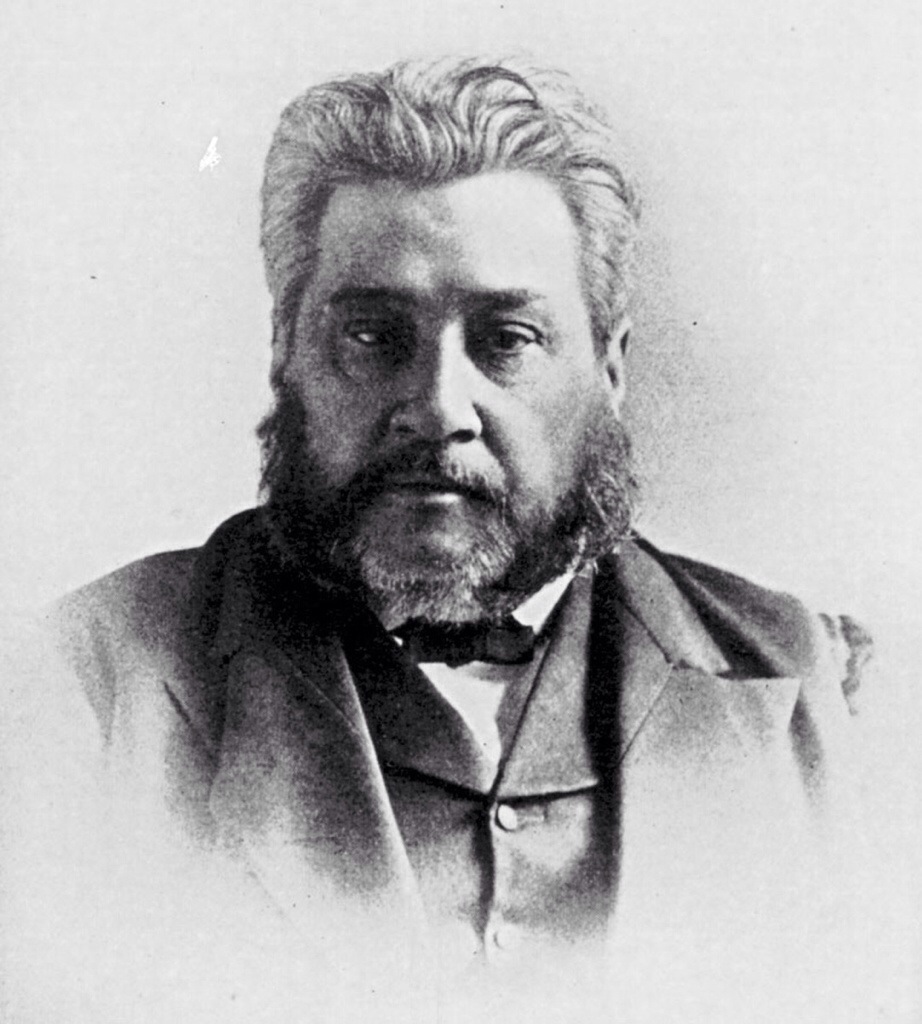
Spurgeon.jpg

Charles Haddon Spurgeon

“Beware of light thoughts of sin. At the time of conversion, the conscience is so tender, that we are afraid of the slightest sin. Young converts have a holy timidity, a godly fear lest they should offend against God. But alas! very soon the fine bloom upon these first ripe fruits is removed by the rough handling of the surrounding world: the sensitive plant of young piety turns into a willow in after life, too pliant, too easily yielding. It is sadly true, that even a Christian may grow by degrees so callous, that the sin which once startled him does not alarm him in the least. By degrees men get familiar with sin. The ear in which the cannon has been booming will not notice slight sounds. At first a little sin startles us; but soon we say, “Is it not a little one?” Then there comes another, larger, and then another, until by degrees we begin to regard sin as but a little ill; and then follows an unholy presumption: “We have not fallen into open sin. True, we tripped a little, but we stood upright in the main. We may have uttered one unholy word, but as for the most of our conversation, it has been consistent.” So we palliate sin; we throw a cloak over it; we call it by dainty names. Christian, beware how thou thinkest lightly of sin. Take heed lest thou fall by little and little. Sin, a little thing? Is it not a poison? Who knows its deadliness? Sin, a little thing? Do not the little foxes spoil the grapes? Doth not the tiny coral insect build a rock which wrecks a navy? Do not little strokes fell lofty oaks? Will not continual droppings wear away stones? Sin, a little thing? It girded the Redeemer’s head with thorns, and pierced His heart! It made Him suffer anguish, bitterness, and woe. Could you weigh the least sin in the scales of eternity, you would fly from it as from a serpent, and abhor the least appearance of evil. Look upon all sin as that which crucified the Saviour, and you will see it to be “exceeding sinful.”-Charles Haddon Spurgeon

Being About the Father’s Business (Repost)

Keep about your work. Do not flinch because the lion roars; do not stop to stone the devil’s dogs; do not fool away your time chasing the devil’s rabbits. Do your work. Let liars lie, let sectarians quarrel, let the devil do his worst; but see to it nothing hinders you from fulfilling the work God has given you

He has not commanded you to get rich. He has never bidden you to defend your character. He has not set you at work to contradict falsehood about yourself which Satan and his servants may start to peddle. If you do those things, you will do nothing else; you will be at work for yourself and not for the Lord

Keep at your work. Let your aim be as steady as a star. You may be assaulted, wronged, insulted, slandered, wounded, and rejected; you may be abused by foes, forsaken by friends, and despised  and rejected of men. But see to it with steadfast determination, with unfaltering zeal, that you pursue the great purpose of your life and object of your being until at last you can say, “I have finished the work which Thou gavest me to do.”–Author Unknown