With the proliferation of media sources it is possible to take in news and media non-stop from all over the world instantaneously at any hour of the day. Because of this mass flow of information, it is easy for Christians to become swept up in the downpour of news and information. And although it is good that we become aware of what is going on in our world so that we can be informed, like any good thing, there’s also a need to guard our hearts against the negative effects on our souls.
AND YE SHALL KNOW THE TRUTH, AND THE TRUTH SHALL MAKE YOU FREE.—ST. JOHN 8:32
Inscribed in stone in the entry hall of the Chicago Tribune Building, Chicago, IL
With the proliferation of media sources it is possible to take in news and media non-stop from all over the world instantaneously at any hour of the day. Because of this mass flow of information, it is easy for Christians to become swept up in the downpour of news and information. And although it is good that we become aware of what is going on in our world so that we can be informed, like any good thing, there’s also a need to guard our hearts against the negative effects on our souls.
Before I get to some of the benefits of media, Let me first offer five warnings we need to take seriously. We must be mindful of our consumption of news media because:
It can consume your time. Where news used to be a small part of our lives, it can now be a danger of consuming hours of our day through Twitter feeds, satellite radio, and TV, RSS feeds and more. We need to ask ourselves if we are being good stewards of our time.
It can become an obsession. Like anything used excessively, even media can become an unhealthy obsession. As stories unfold, we become captive to the drama and we begin to see our lives through the lens of the news cycle. Many people have come to connect their whole identity with their political views and the latest updates of the drama being played out on their TV or Twitter feed. All the while far greater things such as family, spouses, and even ministry suffer.
It can take your eyes off of God and place them on your circumstances. A steady flow of the news can make a person jaded and cynical because the news tends to highlight the worst of humanity. It would be one thing if the bad news turned our hearts to prayer, but it most often doesn’t. Instead it plays upon our base fears.
It can fill you with worry and dread. As hinted at above, news stirs up (and even plays upon) our fears and tends to fill us with thoughts on the negative things in life. It can begin to induce fear, doubt, anger, and anxiety—all of which are frequently sinful in their manifestations.
It can develop in you a misplaced hope. Along with all of the bad news, there are nuggets of hope that are tantalizingly placed in front of the consumer. One effect of a constant flow of bad news is that we begin to seek a savior—in money, politics, celebrities, even in entertainment that will take our minds off of the world we live in. The media offers its version of hope, but it never offers the hope of Christ. And outside of Christ there is no real hope. But if we are not careful, we will continue watching and waiting, thinking that the solution is just around the corner, after the next commercial break or election cycle. And yet it never comes.
But does that mean that we should’ve watch the news or read Twitter or take in any social media? No, I don’t think that a total media blackout is either necessary or beneficial. As a matter of fact, the news is a helpful thing to be aware of. Consider these five reasons:
It can inform you of your neighbors’ outlook and the world at large. We do live in the world, even though we are not to be a part of its practice of evil. And to be engaged as Christians who want to show love and concern for our neighbor, we need to know what is going on and seek to understand the world in which they live and breathe. This will be helpful when we communicate with those that we are called to love with the gospel.
It can help you know what to pray for. This is a big world and we need to know what is going on in it partly so we can be praying intelligently. Wars, disasters, emergencies, political and social issues, all take place on a world stage that we should be informed about so we can take those needs and the people involved before the throne of grace. It’s hard to pray in ignorance, and in this way ignorance is not bliss. Allow the news, Twitter, your Facebook feed be for you a prayer prompt. Then pray.
It can sharpen your application of the Word. Some of the greatest Christian authors were Christian thinkers who took the Bible and applied it to the challenges of their day. This didn’t threaten the Christian faith, but made it more robust. I believe in the total sufficiency of God’s Word. Instead of fearing the onslaught of the next perversion rolling through town, we should open our Bibles and begin to understand how God has already addressed it through his Word. There really is nothing new under the sun.
It can remind you of mankind’s depravity and the need to proclaim the gospel. Some people read or watch the news and simply become angry at the evil they see. But shouting at the devil doesn’t do anything. Instead we should see that the Word is once again confirmed to be true in its doctrine of depravity, and we should pray that instead of a self-righteous judgmental attitude, it would instead drive us to share our faith because we continue to see the destructive nature of sin on those we love.
It can inform you of the needs of others all over the world. Seeing what is happening in another part of the world gives us an opportunity not only to pray for those needs, but it allows us to begin thinking about practical ways we can do more. Gospel missionaries are all over, and maybe a news story or headline will get us started in praying for and supporting the needs of those serving in that part of the world.
In 1 Chronicles 12:32 we are told that the sons of Issachar were “men who understood the times.” When the church understands the times while not being taken captive by them, we will become more effective witnesses and tools that are fit for our Master’s use. Make good use of news and social media as in everything, for the glory of God.
It’s not hard for me to think about multiple examples of personal failure over my 51 years of life. I can recall so many bad decisions–dumb ones, sinful ones, immature ones, naive ones, rash ones, prideful ones. Like I said, I remember too many. The problem is, leaders have to make multiple decisions all day, every day. The more decisions we need to make, the greater potential there is to make another bonehead decision. So what do we do? Well, you could:
Give up being a leader. And if you really are poor at decision making because you constantly make the kinds of bad choices I named before, that might not be a bad decision. But don’t rush into it! Keep reading.
Give up making decisions, but remain a leader. This type of leader is known as a “lame duck.” You have actually done #1 above, but continue to call yourself a leader. This never works for long, and is frustrating for the people you are supposed to lead. It’s better for you to step down than to play this game.
Start making better decisions.Duh. But before you stop reading, consider this: All leaders make bad decisions. All of them. The best leaders make fewer poor decisions and there are reasons for that, which are beyond the scope of this article. But the fact is, by growing and improving on your decision making, you will become a better leader.
In Joshua 7, Joshua made some poor decisions as he took Israel from a victory over Jericho, to an embarrassing defeat when his army was defeated by a tiny army. His failure not only cost the lives of thirty-six of his men (Josh 7:5), but it put courage into the heart of his enemies while simultaneously putting fear into the heart of Israel.
Several years ago my wife and I got food poisoning from eating at a fast-food place. It was pretty traumatic for us, and we were sick for days. I knew it was the food–I could taste it and smell it. It was so engrained into my memory that now, over 20 years later I can still go back to that moment when we started to become violently ill. I had no desire to eat at that restaurant again for many, many years. Bad decisions are like that–they leave a really bad taste in your mouth that makes it hard to overcome.
After the Lord directed Joshua on how to make everything right, it was time for Joshua to face his fear. Joshua 8:1 helps us so much here for learning how to overcome the fear of a poor decision so that we can make better decisions. It says,
“And the Lord said to Joshua, “Do not fear and do not be dismayed. Take all the fighting men with you, and arise, go up to Ai. See, I have given into your hand the king of Ai, and his people, his city, and his land.”
(Joshua 8:1, ESV)
Fear of the future and the unknown as well as discouragement from past failings can be the biggest hurdle to clear after a major failure. But notice here that the Lord commanded Joshua not to fear or be dismayed. Yes, poor decisions were made. But the mission has not changed. Joshua was to lead the people into the Promised Land, and Ai needed to be conquered. The problem was that Joshua had rushed in, he didn’t consult the Lord and made the decisions to go to war and send in a smaller army without seeing if this was the Lord’s will. The Bible doesn’t tell us, but maybe Joshua was beating himself up over the bad decisions made. Any leader knows that’s not a stretch to imagine. It happens all the time.
But the Lord says to Joshua, Do not fear and do not be dismayed. Once we are assured that we are being guided by the Word and Spirit, we must move forward without fear of the future or discouragement from the past. Joshua wasn’t running ahead of God anymore. Now he was going to decide that he needed to obey, and this was the first command. Warren Wiersbe has wisely written, “The promises of God make the difference between faith and presumption” ( Warren W. Wiersbe, Be Strong, “Be” Commentary Series (Wheaton, IL: Victor Books, 1996), 97.)
Notice also, that the Lord gave Joshua direction: “Take all the fighting men with you, and arise, go up to Ai.” So often, poor decisions are made because we make the decision. Spiritual leadership is not the same as corporate leadership because the spiritual leader directs God’s people from God’s Word to do God’s business. When we forget this, we become spiritual entrepreneurs, not spiritual leaders. They may look the same, but they aren’t. Spiritual entrepreneurs work for themselves, to achieve their own goals, and often receive the glory for it from men who do not recognize the difference. Joshua had taken the reigns and failed, now he was going to learn to take his lead from the Lord.
Finally, the Lord gave Joshua his strength: “See, I have given into your hand the king of Ai, and his people, his city, and his land.” After the amazing victory over Jericho, you would think that it was obvious that God was going to give Israel the strength to fight. But the loss at Ai shows how quickly a victory can blind us to our dependence. All too quickly we can begin to strut like roosters, full of pride as if we did anything to achieve the victory. In order for Joshua to grow as a leader, he needed to remember that every victory was given by the Lord–big or small.
Joshua obeyed the Lord, carrying out the directives he was given with precision, and the Lord gave him the victory as he promised. Remember that. The answer isn’t give up when you fail, but learn from your failures and grow as a leader. Psalm 37:23-24 is a great encouragement in this way: “The steps of a man are established by the Lord, when he delights in his way; though he fall, he shall not be cast headlong, for the Lord upholds his hand.” (Psalm 37:23–24, ESV)
A few nights ago I awoke with the aches and pains of a sickness I have been fighting for a few days. Unable to sleep, I started to reflect upon all the friends and loved ones that are struggling with pain and suffering to a much greater degree. I thought about those who are facing a crumbling marriage, the loss of a spouse, the onset of a disease that will take their life. I lay in the dark and considered the deep comfort that we have in Christ.
The Christian life is not an easy one, and may even be fraught with greater struggles because of our commitment to follow Christ whatever the cost. But there is no accounting for the presence of Christ in the midst of these struggles.
Dear brothers and sisters in Christ, the world is watching. Please do not show them a perfect, polished life free of any pain or sorrow. Such a life does not exist in this broken world. Show them that you too are cracked and flawed, just as they are. Show them that you too struggle with weaknesses and doubts. And then show them that our God sent his Son for us, to bring us safely to his promised land. He gives his Spirit so that as we sit in pain and doubt we will know his supernatural presence and find comfort.
As you listen to the song below, remember that we must sometimes fight for faith to know the joy of the Lord—and in the end, Jesus will be victorious. Like Job, we may not always understand, but we trust.
Is salvation merely a message of “do better?” Is Christianity simply a moralistic religion that teaches that all we need to do is obey God? That is what the self-righteous Pharisees thought, and it is what many people in churches think. To them, Christianity is a list of rules that can be kept–albeit with a lot of sacrifice. Don’t think so? How many times have you heard someone say their wayward son or daughter “just needs to get back to church?” Is that all they need? Is that what Jesus taught?



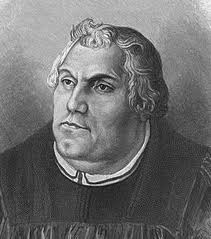
 Always Reforming