God’s Power and Prayer

“For Thine is the kingdom, and the power and the glory forever. Amen.”

-Jesus

The sinfulness of man requires the power of God to overcome our nature, bringing us to Christ and setting us free from our sins, removing us from the kingdom of darkness and placing us into the kingdom of God, adopting us as sons of God and joint heirs with Christ, establishing both our ability to stand before the righteous throne of Almighty God as well as establishing our right to do so by virtue of Christ’s perfect righteousness imputed to our account.

Therefore, our prayers are heard and answered upon this basis, seeing that God has opened up the doors of heaven, and by virtue of the cross of Jesus has welcomed us in.

In this post I’d like to briefly focus upon three prayer types: 1) Adoration and worship, Thanksgiving; 2) Confession; and 3) Supplication and Petition.

1. Adoration/Worship and Thanksgiving

The first prayer type (grouping three similar types together) is prayer of response. When we pray with thanksgiving and adoration, we are responding to the acts of God which reflect his power to redeem, provide, create and sustain. Some examples of these in the Scriptures are:

Adoration and Worship – Exodus 15, “Then Moses and the sons of Israel sang this song to the Lord, and said,“I will sing to the Lord, for He is highly exalted;The horse and its rider He has hurled into the sea.“The Lord is my strength and song,And He has become my salvation;This is my God, and I will praise Him;My father’s God, and I will extol Him.“The Lord is a warrior;The Lord is His name.“Pharaoh’s chariots and his army He has cast into the sea;And the choicest of his officers are drowned in the Red Sea.“The deeps cover them;They went down into the depths like a stone.“Your right hand, O Lord, is majestic in power,Your right hand, O Lord, shatters the enemy.” (Exodus 15:1–6, NASB95)

Thanksgiving – Psalm 138, “I will give You thanks with all my heart;I will sing praises to You before the gods.I will bow down toward Your holy templeAnd give thanks to Your name for Your lovingkindness and Your truth;For You have magnified Your word according to all Your name.On the day I called, You answered me;You made me bold with strength in my soul.All the kings of the earth will give thanks to You, O Lord,When they have heard the words of Your mouth.And they will sing of the ways of the Lord,For great is the glory of the Lord.” (Psalm 138:1–5, NASB95)

In your life God has shown you his mighty power, whether it has been through salvation, provision, guidance, providential care, healing or some other way. Does your prayer life reflect this?

2. Confession

Confession is made with the belief that:

  1. We have an omniscient God who knows our sin and we agree with him that we have transgressed his law. Prov. 5:21; Ps 51:3.
  2. We have sinned against our holy God who cannot look upon sin and is just in punishing our iniquity. Ps 51:4, 11.
  3. We have a merciful God who can remove the dark stain of sin through the blood of Christ’s substitutionary death upon the cross. Ps 51:7-10.

Some people, even Christians, live with the awful burden of past sins that they believe are unforgiven and unforgivable, even by God. 

First Corinthians 6:9-11 is the hope of Christ and the power of God demonstrated to the worst of sinners. It says:

Or do you not know that the unrighteous will not inherit the kingdom of God? Do not be deceived: neither the sexually immoral, nor idolaters, nor adulterers, nor men who practice homosexuality,nor thieves, nor the greedy, nor drunkards, nor revilers, nor swindlers will inherit the kingdom of God. And such were some of you. But you were washed, you were sanctified, you were justified in the name of the Lord Jesus Christ and by the Spirit of our God.” Take your eyes off of your sin and put them on Christ! 

3. Supplication and Petition

Supplications and petitions can be placed roughly into two categories:

First, Personal prayer needs (for self and others). Biblical examples of such prayers include:

  1. For food (Matt 6:11)
  2. For healing/trials (2Cor 12:7)
  3. For persecution relief (Acts 12:6-19)
  4. For pain and suffering (Psalms of David, Job)
  5. For wisdom (James 1:5)

Second, Prayer for the Work of the Kingdom, including:

  1. For open doors of opportunity (Col 4:3)
  2. For strength in times of persecution (Acts 4:29)
  3. For boldness in the face of opposition (Acts 4:29)

In the area of supplications and petitions we can become reluctant to pray as we should. We need to answer the questions: Can he answer? and Will he answer? Consider the words of Jesus himself:

“And Jesus answered them, “Have faith in God. Truly, I say to you, whoever says to this mountain, ‘Be taken up and thrown into the sea,’ and does not doubt in his heart, but believes that what he says will come to pass, it will be done for him.Therefore I tell you, whatever you ask in prayer, believe that you have received it, and it will be yours.” (Mk 11:22-24)

“And Jesus said to him, “ ‘If you can’! All things are possible for one who believes.”” (Mk 9:23)

Do we use, “If the Lord wills” as an excuse for our lack of faith? Many things the Lord wills, but we often fail to ask (James 4:2).

Consider these verses:

“And without faith it is impossible to please him, for whoever would draw near to God must believe that he exists and that he rewards those who seek him.” (Heb 11:6)

“And whatever you ask in prayer, you will receive, if you have faith.” (Matt 21:22)

“Elijah was a man with a nature like ours, and he prayed fervently that it might not rain, and for three years and six months it did not rain on the earth. Then he prayed again, and heaven gave rain, and the earth bore its fruit.” (James 5:17-18) 

Do these verses cause you to imagine what God could do? Do they set your heart racing? Or do you find yourself doubting, and adding exceptions? The ability for your prayers to be answered is not so much about who you are, as much as it is about who God is! Pray dear friend!

The Need for Modern Reformers in the Local Church

“The problem with preachers today is that nobody wants to kill them anymore!”

Steven J. Lawson
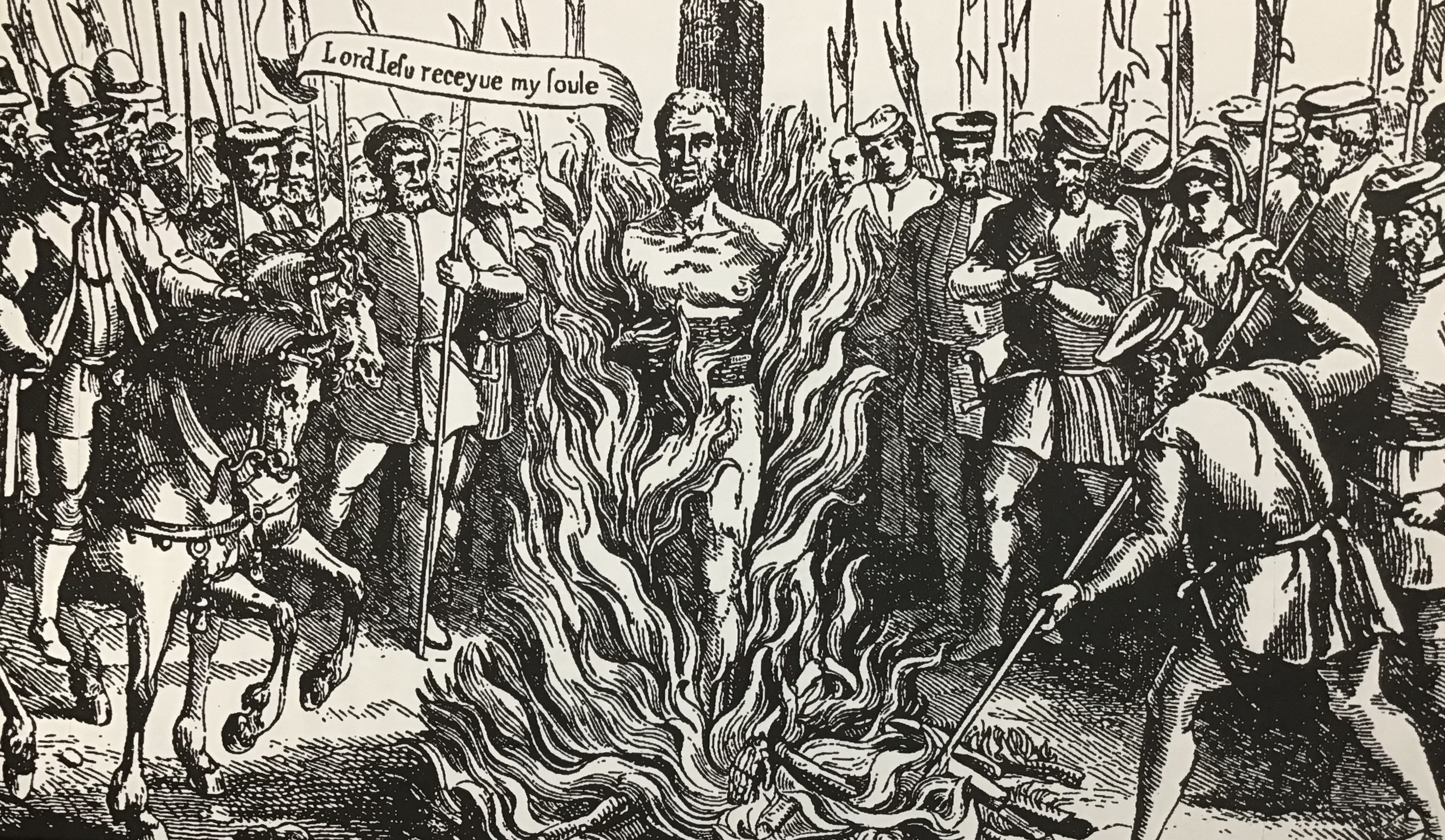
Bishop Hooper burned at the stake for the gospel.

Although we Protestants say that we don’t venerate the saints, you wouldn’t know it the way some pastors fawn over Luther, Calvin, Knox, Spurgeon, and other reformers. Don’t get me wrong, I think those men were used mightily of God, in spite of their flaws and personal sin.

But what I wonder about is how it is that so many pastors who would look up to these men and admire them for their courage and boldness are so cowardly in their own churches when they are called upon by the testimony of the Word of God to stand firm against a potential revolt by those who do not want biblical change.

When Gideon was called to pull down the idols in his town, he may have been overcome by the fear of man, but at least he did it, even if under the cover of night. And when they found out what he did, they wanted to kill him.

When Josiah came to understand how far Judah had fallen away from obedience to the Law, he immediately began to purge Judah and Jerusalem of its idolatrous high places and reinstated the reform that was necessary to please the Lord. This led to a need to rebuild and reorder the temple so that proper worship could be restored.

And the church today is in need of men who are ready and willing to make the changes that are needed in their local churches where unbiblical practices have found a nesting place for ages. For fear of confrontation, loss of income, or prominent families, or a simple fear of losing your job, pastors remain silent in the face of unrepentant sin and all manner of false practices. Unregenerate men are allowed to remain on elder and deacon boards, unhealthy and unbiblical curriculum and programs continue to function so as to avoid a conflict with a women’s ministry head or the parents of the youth. The call for entertainment in church continues to ring louder as the Word of God is given less time to work in the hearts that need it.

Yes, we admire Luther’s stand at the Diet of Worms where he refused to recant. We applaud Spurgeon for being unwilling to give in to the New Measures that sought to entertain the goats. We are in awe of Whitefield who preached the gospel wherever he could garner an audience. We rejoice at the courage of John Rogers and the other Marian martyrs who refused to stop preaching under Bloody Mary of Tudor, and were burned at the stake for it. But will we stand today? Where is our courage? Where is our godly resolve to trust God in the face of angry adversity within and outside of the church? Brothers! Be strong and very courageous!

The Place of Theology in Sermons

The recent State of Theology study by Ligonier ministries puts into quantifiable results the fact that the Evangelical Church is astoundingly ignorant and misinformed about the basic doctrines of the Christian faith. It isn’t hard to understand this when sermons continue to get shorter and substance grows thinner. Moralism, stories, pop psychology, and video clips fill up the time given for preaching and the results are predictable.

How can we beef up the theological content of our sermons while not overwhelming our congregations with long dissertations and dry lectures? As in many things in life, we must strike a balance. How can we do that?

  1. Preach the text. Expositional preaching is not the same as a theological diatribe. Every text contains theology, but not every theological message is expositional. Stick to the text and explain the passage by making the theology in it clear.
  2. Make sure you understand the depth and breadth of the theology in the text. As the one expounding the passage, you must know the greater concepts of theology inside and outside of the passage. Pull out that systematic theology and refresh yourself with the broader and more full ideas involved in the particular theological concept you are addressing. This will guard you from saying something contradicted elsewhere in Scripture.
  3. Be clear about the theological idea before you preach on it. Nothing makes a muddy sermon than not knowing what you are talking about. If you can explain the main idea of a theological concept to a 10 year old, you understand it well. Break it down into bite-sized ideas and use illustrations or similes in order to communicate to different levels of spiritual maturity.
  4. Don’t be afraid of using theological terms, but be sure to define them. Don’t avoid using words like justification, atonement, even hypostatic union, but make sure that you define the word and idea. But be careful that in defining a word, you don’t oversimplify a complicated concept for the sake of being clever.
  5. Connect the theology with living for Christ. God places theological concepts in his Word because they are important, but it is the job of the expositor to mine the riches and point out the practical application of each idea to life. Show them the riches of theology and make them thirst for more. The Puritans were masters at this!

As we add theology each Sunday we will serve up rich, meaty spiritual meals that will satisfy and strengthen the congregation. Your church doesn’t have to be near a seminary, highly educated, or even made up of mature believers to do this. Start at whatever level your church is at spiritually, and then move them toward greater maturity and theological precision with patience and love. Not only will they thank you for it, you will be inoculating the church against false doctrine and false teacher as well, making your job as a shepherd so much easier.

Don’t Envy the Temporary Success of the Wicked

Sometimes it is so hard for Christians to see the unabated success of the wicked in the face of some significant trials and struggles. If the troubles weren’t bad enough, it is made worse when the unbelievers around us point out how foolish we are for clinging to hope in Jesus when we could simply make it easier on ourselves and do what it seems like everyone else is doing to get ahead.

In Psalm 49, the sons of Korah wrestled with this very issue and want to help us to endure by clinging to the Lord. To do this, they inject a massive dose of truth that we can easily forget. To begin with, they need to get our attention:

Hear this, all peoples! Give ear, all inhabitants of the world, both low and high, rich and poor together! My mouth shall speak wisdom; the meditation of my heart shall be understanding. I will incline my ear to a proverb; I will solve my riddle to the music of the lyre.” (Psalm 49:1–4, ESV)

With the false health-wealth and prosperity gospel out there, many people all over the world are convinced that they can have all the wealth and riches that this world offers and heaven too. With Joel Olsteen, Hillsong Church, TBN preachers, and other snake-oil salesmen selling a false gospel for profit, it seems as if you are losing out if you don’t get a piece of the action. It’s not that the Lord is against wealth, but those that would seek to do anything to gain it, or who make it their god and driving desire in life become shipwrecked in their faith.

To address this tendency to seek pleasure and success apart from God, the psalmist slaps his readers with the truth to awaken us from the stupor that can overcome us. He writes:

Why should I fear in times of trouble, when the iniquity of those who cheat me surrounds me, those who trust in their wealth and boast of the abundance of their riches? Truly no man can ransom another, or give to God the price of his life, for the ransom of their life is costly and can never suffice, that he should live on forever and never see the pit. For he sees that even the wise die; the fool and the stupid alike must perish and leave their wealth to others. Their graves are their homes forever, their dwelling places to all generations, though they called lands by their own names. Man in his pomp will not remain; he is like the beasts that perish. This is the path of those who have foolish confidence; yet after them people approve of their boasts. Selah Like sheep they are appointed for Sheol; death shall be their shepherd, and the upright shall rule over them in the morning. Their form shall be consumed in Sheol, with no place to dwell. But God will ransom my soul from the power of Sheol, for he will receive me. Selah

(Psalm 49:5–15, ESV)

Below are 4 Great Truths that We Can Take to the Bank Regarding those Who Have Made Success and Money Their God.

  1. Great Wealth Cannot Buy Spiritual Freedom.Truly no man can ransom another, or give to God the price of his life, for the ransom of their life is costly and can never suffice, that he should live on forever and never see the pit.” (Psalm 49:7–9, ESV)
  2. Great Power Cannot Stop Death.
    • Everyone dies.For he sees that even the wise die; the fool and the stupid alike must perish and leave their wealth to others.” (Psalm 49:10, ESV)
    • Everyone is buried.Their graves are their homes forever, their dwelling places to all generations, though they called lands by their own names. Man in his pomp will not remain; he is like the beasts that perish. This is the path of those who have foolish confidence; yet after them people approve of their boasts. Selah” (Psalm 49:11–13, ESV)
    • Everyone is raised up: The wicked to eternal death, and the righteous to eternal life.Like sheep they are appointed for Sheol; death shall be their shepherd, and the upright shall rule over them in the morning. Their form shall be consumed in Sheol, with no place to dwell. But God will ransom my soul from the power of Sheol, for he will receive me. Selah” (Psalm 49:14–15, ESV)
  3. Nobody Will Take Anything With Them.For when he dies he will carry nothing away; his glory will not go down after him.” (Psalm 49:17, ESV)
  4. The Wicked Rejoice in Temporary Pleasures. For though, while he lives, he counts himself blessed —and though you get praise when you do well for yourself— his soul will go to the generation of his fathers, who will never again see light.” (Psalm 49:18–19, ESV)

Therefore, Get Understanding! With this truth and clarity comes the reality of where we need to focus. “Man in his pomp yet without understanding is like the beasts that perish.” (Psalm 49:20, ESV). Do not be like a dumb beast that simply lives for its next meal. Instead seek the living God who is worth more than silver or gold.

Our Great Resurrection Hope (part 4)

He is risen! On this beautiful Resurrection Sunday morning, there is eternal hope for every believer in Christ Jesus. Although they are fun, the easter egg hunts, baskets, pretty Spring dresses, and bunnies cannot compare to the joy that rises in the heart of those who have placed their trust in Christ. In this final post of our great resurrection hope, we will look at the crushing of the enemy and the final victory that we are assured. Our hope is not a wishful thinking but an assured confidence.

In Part 1, we learned that Christ’s Resurrection Guarantees the Christian’s Resurrection, and in Part 2, we saw that Christ’s Resurrection Reverses the Curse of Humanity, and in Part 3, we saw that Christ’s Resurrection Gives Hope for the Future. Let us look at Paul’s words in 1Corinthians 15:24-26 as we consider the fourth reason this day is one of such great hope.

Then comes the end, when he delivers the kingdom to God the Father after destroying every rule and every authority and power. For he must reign until he has put all his enemies under his feet. The last enemy to be destroyed is death.

(1 Corinthians 15:24–26, ESV)

Christ’s Resurrection Guarantees the Defeat of Every Enemy of Christ (vv. 24-26)

When Jesus Christ died upon the cross, he set into motion the assured and final victory over every enemy of God. This includes Satan and the demons and every human being that have rebelled against God. (v. 24)

Jesus Christ will destroy every rule, and every authority and power that will not submit to him. Not a single enemy of God will remain. His reign will last until every enemy is conquered and put under his feet (v. 25)

The final enemy shall be death (v. 26). Until the resurrection of Jesus Christ, death was the undefeated champion of every fight fought. Nobody faces death and walks away. Some might escape for a few more days or even years, but death always wins. But in Jesus Christ, death has met its match. Jesus Christ is stronger than death.

The great enemy of mankind that began in the Garden will finally be stopped. All the dead who have trusted in Christ will have been raised from the dead and transformed into glorified bodies, just like Jesus has been. There will be no more death at all.

The death of death will have come because of the death of Christ. All things will be made right.

This is the hope we have in Christ. This is what the resurrection means to Christians. It directly affects each of of us.

Charles Haddon Spurgeon said, “Death in its substance has been removed, and only the shadow of it remains.… Nobody is afraid of a shadow, for a shadow cannot block a man’s pathway for even a moment. The shadow of a dog can’t bite; the shadow of a sword can’t kill.” Christ Himself took the full force of death’s destroying power by dying and paying for our sin, then rising from the grave. Trusting Jesus may not remove death’s shadow, but remember, shadows can’t hurt us.”[1]

The resurrection reminds us of this truth. We are more than conquerors in Christ Jesus. We have nothing to fear, even death itself. We shall be raised from the dead, because Christ lives!

And all the enemies of God shall be dealt with as well.

That leads me to ask a question of you this morning. Do you have this hope in the resurrection of Jesus Christ? That would depend upon whether you have placed your faith and trust in him.

Jesus’ resurrection guarantees the resurrection of his followers. But it does something else. It points to the fact that he always keeps his promises. Jesus promised that he would rise from the dead. And he promised that he would come back. Not just to raise his disciples from the dead, but also to judge the unrighteous.

So, this Easter, what have you placed your hope in? Is it in the salvation in Jesus Christ or is it in yourself? Only salvation in Christ offers the great hope that we have this morning. Everything else is like a hollow chocolate bunny.


[1] https://bible.org/illustration/nobody-afraid-shadow