“When the rule of Rehoboam was established and he was strong, he abandoned the law of the Lord, and all Israel with him.” 2 Chronicles 12:1
What a warning biblical leaders have in the example of King Rehoboam! The above verse shows the downfall of many, and O how the mighty have fallen!
When a ruler or leader becomes established and strong, it is then that so many no longer depend upon the Lord, but instead abandon Him for their own strength. King Uriah did this, and so did Hezekiah. David as well as Saul before him.
What a profound warning for all rulers and leaders! We all need to take heed, lest we fall when we think that we are strong and self-sufficient. How can we know that this is happening?
Our prayer life dwindles and even disappears.
We do not seek the Lord’s counsel when making decisions.
We put greater focus and dependence upon our strengths and push to the background our weaknesses.
We see victories as “ours,” even placing our achievements before others as memorials to ourselves.
We become driven and ruthless when dealing with others and grace disappears from our interactions with them.
We find ourselves less thankful to the Lord for using us as servants, and we become hungry for the applause of men, and even downcast when it doesn’t come.
These are a few of the symptoms of a servant who has become a king in their own mind. May we never forget that there is only one King whom we serve and Jesus is His name. The rest of us are but stewards and under shepherds by His grace.
“So when Martha heard that Jesus was coming, she went and met him, but Mary remained seated in the house. Martha said to Jesus, “Lord, if you had been here, my brother would not have died. But even now I know that whatever you ask from God, God will give you.” Jesus said to her, “Your brother will rise again.” Martha said to him, “I know that he will rise again in the resurrection on the last day.” Jesus said to her, “I am the resurrection and the life. Whoever believes in me, though he die, yet shall he live, and everyone who lives and believes in me shall never die. Do you believe this?” She said to him, “Yes, Lord; I believe that you are the Christ, the Son of God, who is coming into the world.”John 11:20–27
The glory of God and the love of God are not in conflict with one another. Some theologians try to pit one against the other saying that the sovereignty of God (intimately tied to His glory) cannot override His love for humanity., and therefore the love of God willingly overrides His sovereignty so that God actually submits to the will of His creatures.
John 11 is an interesting test of this idea. In verses 4-6 it says, “But when Jesus heard it he said, “This illness does not lead to death. It is for the glory of God, so that the Son of God may be glorified through it.” Now Jesus loved Martha and her sister and Lazarus. So, when he heard that Lazarus was ill, he stayed two days longer in the place where he was.”]
In these verses we have the glory of God shown in His sovereign decision to allow the life of Lazarus to be overcome by death, with the divine purpose of God being glorified through His resurrection of Lazarus. To some Christians and many unbelievers, this is unthinkable—even monstrous. But this is because the unregenerate mind and the immature Christian mind attribute all discomfort, pain, trial, and even death, as only evil and that the only good that comes is from the avoidance of these things.
But the pain and suffering that occurs in this world is only a small part of the much bigger picture. And not only this, but the pain and suffering as well as the joy unspeakable that are available to humanity either through grace or denial of the offer of salvation are infinite. The present world and its pains and joys are only a small sampling of a greater reality that all of humanity shall experience personally one day.
Jesus, looking beyond the suffering and eventual death of His friend Lazarus knows that a greater lesson needs to be grasped and through the truth He will bring glory to His Father.
So, instead of rushing to the scene to be at His friend’s side, Jesus stayed two days longer to assure His disciples that Lazarus was dead and buried by the time they reached Bethany.
This means that when we are tempted to cry out “Why?” In our trials, we must not push aside the glory of God and begin to question the love of God. The Lord’s mind is vast and His plans are more infinitely complex that we can know or imagine; therefore we must never doubt His love.
Mary and Martha were correct in placing all of their hope in Jesus’ power to heal their brother. The issue was simply timing. Jesus could have healed Lazarus while he was sick (Jn 11:21-27, 32); or immediately after he had died; or long after he died in the future Day of resurrection (v. 24).
The sisters had hoped that the healing would be before his death, but after he had died, they found some comfort in the future resurrection when he would be raised from the dead.
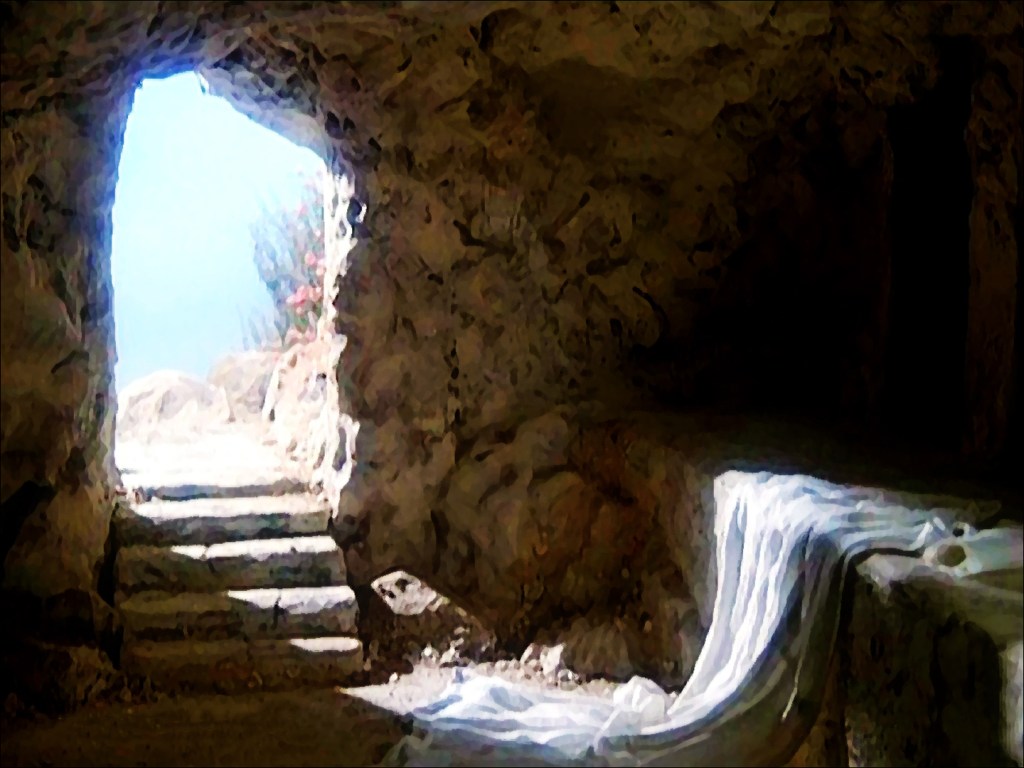
But Jesus gave them immediate resurrection while also pointing them to the reality of the greater day of resurrection that they would still need to look forward to and hope in. We too must cling to this very same hope even without our own personal experience with an immediate healing or resurrection. Jesus proved to Mary and Martha, and by extension to us as well, that He is able to raise the dead—because He raised Lazarus from the dead, and He rose from the grave by His own power.
So the next time you find yourself doubting God’s love or not understanding how such pain could bring God glory, remember Lazarus. You might never understand God’s reasoning, but you must know this—God desires to be glorified and His love for us is infinite. Both are true and both are never super versed by His perfect plans.
In 1519, Hernan Cortez left Cuba and landed on the eastern shores of what is now known as Mexico. After a rough voyage to their landing, the sailors became discouraged as they saw the conditions they would have to encounter. Not only hunger and thirst, but jungles, wild animals and the ‘bloodthirsty’ Aztecs. Knowing the murmuring that was spreading throughout the ranks and perceiving an attempt to flee back to Spain, Cortez had the ships burned. There was no returning. They now had no other option. They would conquer or they would die trying.
Pride is an insidious thing, and it is easy to recognize in others while being blind to it in ourselves. A proud Christian leader is an exceptionally ugly thing.
In 1519, Hernan Cortez left Cuba and landed on the eastern shores of what is now known as Mexico. After a rough voyage to their landing, the sailors became discouraged as they saw the conditions they would have to encounter. Not only hunger and thirst, but jungles, wild animals and the ‘bloodthirsty’ Aztecs. Knowing the murmuring that was spreading throughout the ranks and perceiving an attempt to flee back to Spain, Cortez had the ships burned. There was no returning. They now had no other option. They would conquer or they would die trying.
Genesis 23:1–4 (ESV): Sarah lived 127 years; these were the years of the life of Sarah. And Sarah died at Kiriath-arba (that is, Hebron) in the land of Canaan, and Abraham went in to mourn for Sarah and to weep for her. And Abraham rose up from before his dead and said to the Hittites, “I am a sojourner and foreigner among you; give me property among you for a burying place, that I may bury my dead out of my sight.”
Abraham, filled with grief did not pack up and return home, but rather made the final commitment to the promises of God and bought a piece of land to bury his wife.
Burial was done in the native land. When Abraham bought this land he was renouncing his homeland in Mesopotamia and declaring that this Promised Land was where he and his ancestors intended to live and die according to the promises of God.
Not only was Sarah buried in this cave, but also Abraham (25:9), Isaac and Rebekah (49:29-31), and Jacob and Leah (50:13).
In our lives, as we struggle on in this Pilgrim’s journey, how many times have you been tempted to turn back? How about being tempted to forget all about living a holy life and begin to think seriously about your desire to chuck it all and dive headlong into sin? Maybe it’s a thought to throw away your marriage vows in defeat because divorce looms as such an easy escape?
Whatever it is that looks so tempting out there, as you look longingly back at your old life and you wish you could go back, don’t. Burn those ships. There is no going back. God has a plan that entails victory.
His plan brings great joy. Hard work, yes. Struggle? Yes. Trials? Yes. Dangers? Yes. But what have you ever received that was of real value with little effort? The treasures of heaven far surpass the greatest gold deposits in the world.



 Always Reforming