A few nights ago I awoke with the aches and pains of a sickness I have been fighting for a few days. Unable to sleep, I started to reflect upon all the friends and loved ones that are struggling with pain and suffering to a much greater degree. I thought about those who are facing a crumbling marriage, the loss of a spouse, the onset of a disease that will take their life. I lay in the dark and considered the deep comfort that we have in Christ.
Joining a denomination or going at it alone are not the only options for churches, pastors, leaders, and ministries.
Maintaining doctrinal fidelity and alignment is critical when seeking to work with others to accomplish Great Commission objectives.
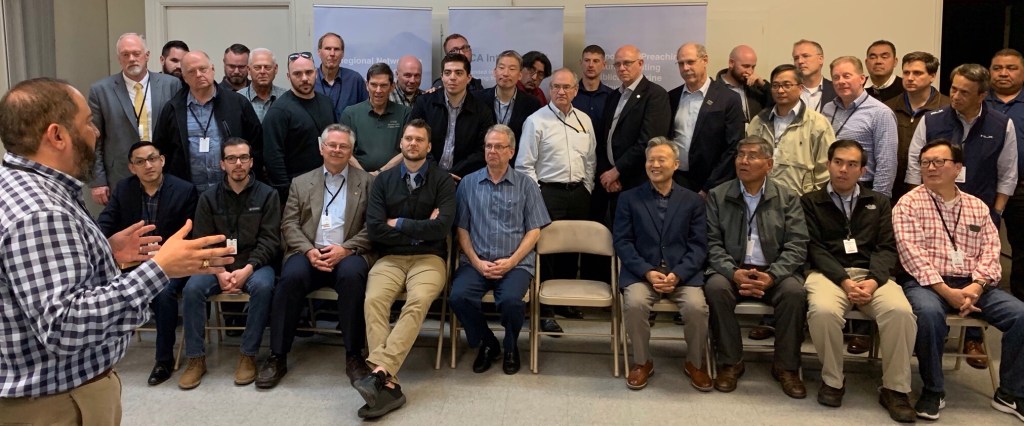
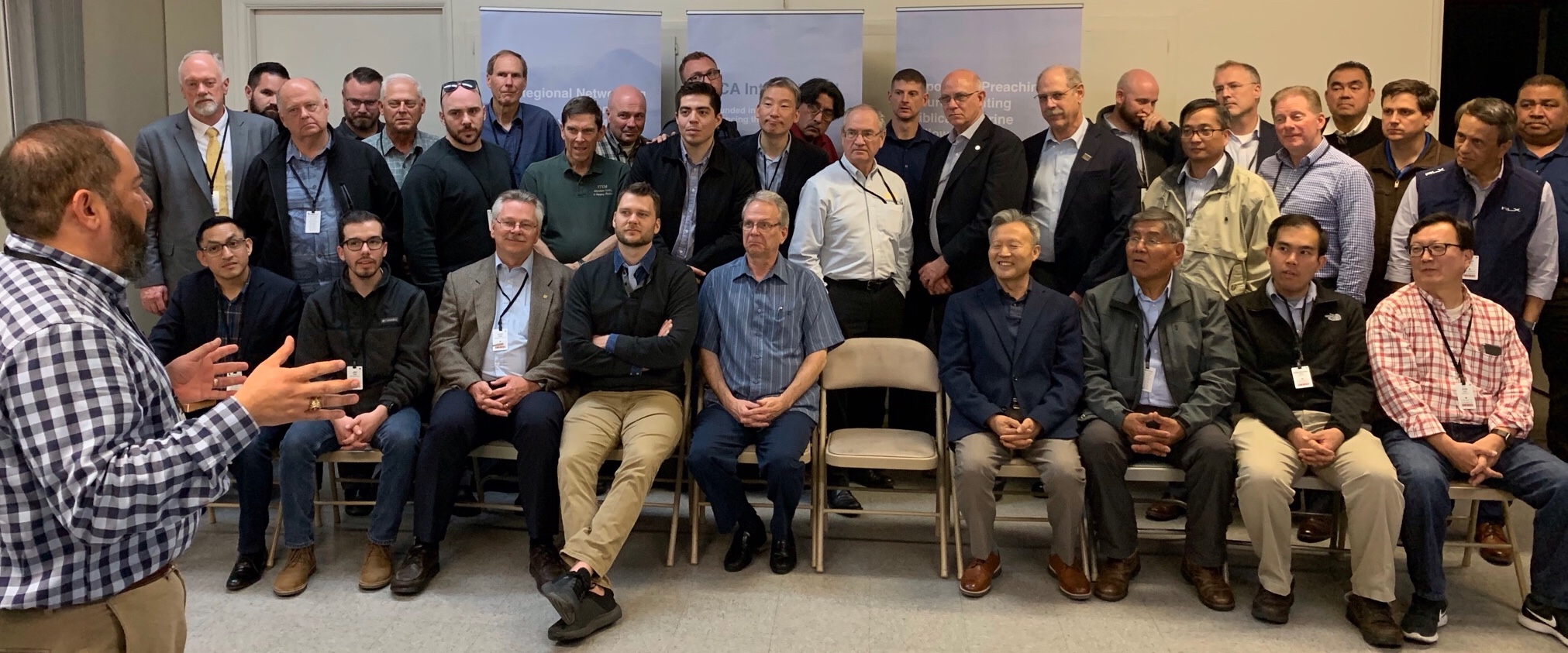
IFCA International was founded in 1930 to fight against the onslaught of theological liberalism growing in denominational churches, mission agencies, and seminaries.
Listen to a podcast I was invited to record with some fellow pastors a few months ago as they ask me more about IFCA International. To find out more, go to http://www.IFCA.org.
“Husbands, love your wives, as Christ loved the church and gave himself up for her, that he might sanctify her, having cleansed her by the washing of water with the word, so that he might present the church to himself in splendor, without spot or wrinkle or any such thing, that she might be holy and without blemish. In the same way husbands should love their wives as their own bodies. He who loves his wife loves himself. For no one ever hated his own flesh, but nourishes and cherishes it, just as Christ does the church, because we are members of his body. “Therefore a man shall leave his father and mother and hold fast to his wife, and the two shall become one flesh.” This mystery is profound, and I am saying that it refers to Christ and the church. However, let each one of you love his wife as himself, and let the wife see that she respects her husband.”
(Ephesians 5:25–33, ESV)
With A Sacrificial Love (Ephesians 5:25)
“Just as Christ also loved the Church and gave Himself up for her”
Sacrificial love was demonstrated on the cross.Christ died for unlovable sinners while we were in the mire of our sins and enemies with God. Romans 5:7-8 says, “For one will hardly die for a righteous man; though perhaps for the good man someone would dare to even die. But God demonstrated His own love toward us, in that while we were yet sinners, Christ died for us.” Husband, this means that you are commanded to love your wife sacrificially even when you think that she is unworthy of such radical love.
Sacrificial love is a willingness to serve others. Christ demonstrated a servant’s attitude that was willing to give himself completely and totally to demonstrate his love. We can sometimes believe that we would be willing to give our lives for our wives, yet we fail in the everyday duties of serving our wife and family as Christ did. John 13:14 reminds us of the words of Christ, “If I then, the Lord and the Teacher, washed your feet, you also ought to wash one another’s feet.” This further illustrates Paul’s point of mutual submission in Ephesians 5:21. In Philippians 2:7 we see our Savior himself setting the example for us, he who…“emptied Himself, taking the form of a bond-servant, and being made in the likeness of men.”
Sacrificial love is a willingness to lay down you own life for another. First John 3:16 describes love not in romantic terms, but in radical sacrifice. It says, “We know love by this, that He laid down his life for us; and we ought to lay down our lives for the brethren.”
With A Purifying Love (Ephesians 5:26-27)
Purifying love desires the best for the wife and wants to see her pure and undefiled. Husbands who discourage their wives in Bible reading, church attendance, serving in ministry, going to church functions where she can be edified and grow in Christ are undercutting this type of love. Husbands who encourage their wives to get involved in sin to allay their own guilt are also guilty of pulling down their house with their own hands. They are like those described in Romans 1:32 “they not only do the same, but also give hearty approval to those who practice them.”
Purifying love is exemplified in:
Husbands who are the spiritual leaders in their homes. (Eph. 5:23; 1Cor. 11:3; 14:35)
The husband leads by example-He is a godly man growing in maturity and obedience.
Time spent in the word and prayer as a family (Eph. 6:4)
Time together at church worshipping together (Heb. 10:25; Deut 6:7)
Encouraging involvement in ministry and other activities
Confronting and confessing sin in loving and biblical manner (James 5:16)
With A Caring Love (Ephesians 5:28-30)
This is a love that not only sacrifices and purifies, but nurtures and embraces. Does this passage teach that we need to love ourselves before we can love others? No. It says we already love ourselves. Those who claim to hate themselves really don’t.
We feed ourselves.
We clothe ourselves.
We clean our bodies.
We avoid pain and abuse.
We protect ourselves from danger.
We give ourselves shelter from the elements
Nurturing can include providing in many ways:
Providing for the family by working hard at your job.
Providing housing, food and clothing (physical needs).
Providing security and protection.
Providing love and affection.
Providing attention and shared experiences.
With An Unbreakable Love (Ephesians 5:31-33)
A love that no man or woman can separate. This means, husbands that are still hanging on to their mama’s apron need to cut the strings. Wives that are still “Daddy’s girl” need to cling to their husband instead.
You need to cling to one another in the storms of life understanding that divorce is not an option. If you leave even the option of divorce as a possibility, that crack will widen when difficult times come.
Separation should be as impossible as Christ separating from His Church-Rom 8:38, 39.
“Praise the Lord! Blessed is the man who fears the Lord, who greatly delights in his commandments!” (Psalm 112:1, ESV)
There used to be a time when people would speak in reverential tones of certain men and women as “God fearing.” This person was known for living a life that was pleasing to God, and was utterly trustworthy and faithful. You would not find a God-fearing man or woman in the company of certain people, or involved in sinful activities and conversation.
God-fearing people were thought of this way because society in general knew what the Bible said. They knew what God expected of men, but they knew that most people only paid lip-service to what the Bible said. But a God-fearing man or woman was different.
Easton’s Bible Dictionary defines the fear of the Lord like this: “It is a fear conjoined with love and hope, and is therefore not slavish dread, but rather filial [fatherly] reverence.”
We notice here a mixture of fear and love, and it is connected to a fatherly love which is co-mingled with respect. Charles Bridges defined fear of the Lord in a similar manner. He wrote, “[The fear of the Lord is] that affectionate reverence, by which the child of God bends himself humbly and carefully to his Father’s law.”[1]
Bridges, like Easton’s definition, uses the Father and child imagery to help define the fear of the Lord, writing of the child of God and his heavenly Father. This image of God as Father is replete throughout the Bible.
Fear the Father as Creator
In Deut. 32:6 it says, “Do you thus repay the Lord, you foolish and senseless people? Is not he your father, who created you, who made you and established you?” (ESV). Just as a father provides, protects, and leads his family, so too the Lord had done the same for Israel. But shockingly, Moses’ words reveal that Israel was acting like an ungrateful and rebellious child that has no fear of breaking his rules nor of disrespecting him before the watching world.
The prophet Isaiah also testified against this lack of the fear of the Lord in Israel at a much later time. In Isaiah 1:2 the prophet brought the Word of the Lord saying, “Hear, O heavens, and give ear, O earth; for the Lord has spoken: “Children have I reared and brought up, but they have rebelled against me.” (ESV). Notice what the Lord says here—he has reared and brought them up. This reality should have brought him that fear we are looking at. They should have loved and respected him, but they did not.
In Isaiah 64:8,the prophet used the father metaphor alongside another picture of God as a Potter. In this passage, it says, “But now, O Lord, you are our Father; we are the clay, and you are our potter; we are all the work of your hand.” (ESV). This text looks forward to the coming Millennial Kingdom when the heart’s of God’s people shall turn and embrace the Messiah that they have rejected.
We see in these words the recognition that the Lord has made them and he is free to do with them as he sees fit. One day Israel will humble itself before the Lord in national contrition and joyful submission. God can do what he wants because he is not only Father, but he is Potter, who has made the clay into whatever he sees fit.
Fearing the Father as Wisdom
Probably most familiar to us is this aspect of the fear of the Lord as the beginning of wisdom. Proverbs 1:7 says, “The fear of the Lord is the beginning of knowledge; fools despise wisdom and instruction” (ESV). When we consider the fear of the Lord as Father and Creator, we can better see why to reject the Lord and His commands is foolish. A child, who has little strength, wisdom, experience, power, and influence is foolish to put off the care and counsel of a father who gives these to his children.
When the Lord spoke to Job and began prodding him to answer his questions, like a child who quickly has learned that he is over his head, he simply put his hand over his mouth. This is wisdom, knowing that the Father knows best and that our finite minds cannot begin to grasp his infinite plans for us.
Fearing the Lord as Judge
This is very different from the idea of fearing the Lord as Father and Creator. It is the fear that comes when a wayward child has been disobedient and has turned aside from the father’s ways. It is also the fear that does not come from a child of God, but from the fool that despises the Lord and his commands. It is not a true and pure reverential fear mixed with love, for there is no such love in the rebellious creature. This fear is a craven, slavish fear that the disobedient slave has when he fears his master will discover that he has been stealing from him secretly. Except our Lord is not blind to those that have offended him.
An example of the wayward who fear the Lord is found in Ezra 10, where the people have come to understand their disobedience in intermarrying with the pagan nations around them, something God had expressly forbidden Israel from doing. In verses 1-4 we read that the fear of the Lord (“trembling” in v. 3) has led to repentance and obedience. But the wicked fear the Lord in a different way, a way which is fearful of judgment to a point, but will not lead to any true changes in their lives.
Belshazzar did not repent when he saw the hand of God writing on the wall. He trembled in fear, but did not turn from his sin (Dan 5:9). When Paul preached the gospel before Felix, the Acts 24:25 says he was “alarmed” about the coming judgment, but he did not repent. And when James speaks about the demons believing and shuddering, we do not say that they have repented of their wickedness (James 2:19)!
Proverbs 28:1 says, “The wicked flee when no one pursues, but the righteous are bold as a lion” (ESV). The wicked flee from a judgment that will one day overcome them. They cannot escape the Lord’s righteous judgment. But the righteous do not flee the Lord even though we fear him. He fears him with reverence as our Father and Creator.
Fear and love meet in the fear of the Lord. He is our Father, Creator, and God. These should endear him to us and motivate our hearts toward worship. If they don’t, if we need manipulation, fear of judgment or punishment, we are not children, but slaves. Children don’t have that sort of fear of a righteous Father. They love him, respect him and desire to please him.
[1] Quoted by Bruce Waltke in NICOT, Proverbs 1-15, p. 101.
Joining a denomination or going at it alone are not the only options for churches, pastors, leaders, and ministries.
Maintaining doctrinal fidelity and alignment is critical when seeking to work with others to accomplish Great Commission objectives.
IFCA International was founded in 1930 to fight against the onslaught of theological liberalism growing in denominational churches, mission agencies, and seminaries.
Listen to a podcast I was invited to record with some fellow pastors a few months ago as they ask me more about IFCA International. To find out more, go to http://www.IFCA.org.



 Always Reforming