Don’t Cover Your Cracks with Plaster

A few nights ago I awoke with the aches and pains of a sickness I have been fighting for a few days. Unable to sleep, I started to reflect upon all the friends and loved ones that are struggling with pain and suffering to a much greater degree. I thought about those who are facing a crumbling marriage, the loss of a spouse, the onset of a disease that will take their life. I lay in the dark and considered the deep comfort that we have in Christ.

The Christian life is not an easy one, and may even be fraught with greater struggles because of our commitment to follow Christ whatever the cost. But there is no accounting for the presence of Christ in the midst of these struggles.

Dear brothers and sisters in Christ, the world is watching. Please do not show them a perfect, polished life free of any pain or sorrow. Such a life does not exist in this broken world. Show them that you too are cracked and flawed, just as they are. Show them that you too struggle with weaknesses and doubts. And then show them that our God sent his Son for us, to bring us safely to his promised land. He gives his Spirit so that as we sit in pain and doubt we will know his supernatural presence and find comfort.

As you listen to the song below, remember that we must sometimes fight for faith to know the joy of the Lord—and in the end, Jesus will be victorious. Like Job, we may not always understand, but we trust.

Moralism is a False Gospel (weekend repost)

Is salvation merely a message of “do better?” Is Christianity simply a moralistic religion that teaches that all we need to do is obey God? That is what the self-righteous Pharisees thought, and it is what many people in churches think. To them, Christianity is a list of rules that can be kept–albeit with a lot of sacrifice. Don’t think so? How many times have you heard someone say their wayward son or daughter “just needs to get back to church?” Is that all they need? Is that what Jesus taught?

Read the complete post here: Moralism is a False Gospel

A Tool to Sharpen Your Preaching (weekend repost)

If we want to improve in any skill, we must practice. This axiom is also true for preaching. If you don’t get many opportunities to preach, them you won’t be able to grow as an expositor. But there is an additional tool beyond practice that is also needed. As a matter of fact, it goes hand in hand with practice. It’s feedback. We need help with seeing our blindspots and our weaknesses in our sermons and delivery. One good place to get helpful feedback is from our church–those people that love us and want us to grow in our skills.

Read the full post and see the sermon evaluation form here: A Tool To Sharpen Your Preaching

Moralism is a False Gospel

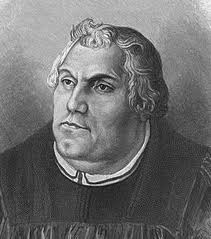
Martin Luther.jpg

Is salvation merely a message of “do better?” Is Christianity simply a moralistic religion that teaches that all we need to do is obey God? That is what the self-righteous Pharisees thought, and it is what many people in churches think. To them, Christianity is a list of rules that can be kept–albeit with a lot of sacrifice. Don’t think so? How many times have you heard someone say their wayward son or daughter “just needs to get back to church?” Is that all they need? Is that what Jesus taught?

In Romans 1:17, the Apostle Paul wrote, “For in it the righteousness of God is revealed from faith for faith, as it is written, “The righteous shall live by faith.”” (Romans 1:17, ESV). This text traumatized Martin Luther before his conversion to Christ. Here was a man that sincerely wanted salvation. He had dedicated his life to holy living in a monastic community where he sacrificed on a daily basis. Yet his soul was tortured. Here are Luther’s own words, written a year before his death on March 5, 1545 following a long life of joyful blessing in true salvation through Jesus Christ.

I had indeed been captivated with an extraordinary ardor for understanding Paul in the Epistle to the Romans. But up till then it was … a single word in Chapter 1 [:17], “In it the righteousness of God is revealed,” that had stood in my way. For I hated that word “righteousness of God,” which according to the use and custom of all the teachers, I had been taught to understand philosophically regarding the formal or active righteousness, as they called it, with which God is righteous and punishes the unrighteous sinner.

Though I lived as a monk without reproach, I felt that I was a sinner before God with an extremely disturbed conscience. I could not believe that he was placated by my satisfaction. I did not love, yes, I hated the righteous God who punishes sinners, and secretly, if not blasphemously, certainly murmuring greatly, I was angry with God, and said, “As if, indeed, it is not enough, that miserable sinners, eternally lost through original sin, are crushed by every kind of calamity by the law of the decalogue, without having God add pain to pain by the gospel and also by the gospel threatening us with his righteous wrath!” Thus I raged with a fierce and troubled conscience. Nevertheless, I beat importunately upon Paul at that place, most ardently desiring to know what St. Paul wanted.

At last, by the mercy of God, meditating day and night, I gave heed to the context of the words, namely, “In it the righteousness of God is revealed, as it is written, ‘He who through faith is righteous shall live.’ ” There I began to understand [that] the righteousness of God is that by which the righteous lives by a gift of God, namely by faith. And this is the meaning: the righteousness of God is revealed by the gospel, namely, the passive righteousness with which [the] merciful God justifies us by faith, as it is written, “He who through faith is righteous shall live.” Here I felt that I was altogether born again and had entered paradise itself through open gates. Here a totally other face of the entire Scripture showed itself to me.… And I extolled my sweetest word with a love as great as the hatred with which I had before hated the word “righteousness of God.” Thus that place in Paul was for me truly the gate to paradise. [Emphasis added]

The “gates of paradise” were opened up to Luther because he no longer depended upon his own law-keeping to satisfy the perfect demands of God. He saw salvation as a gracious act of God alone. Christ was perfectly righteous, fulfilling the whole law in our place. He died in our place and we are justified because of his perfect life and substitutionary death.

The hamster wheel of self-righteous deeds done in order to save ourselves is endless and endlessly disappointing. But the worst thing is that it does not end in heaven, but hell. The one who rejects the perfect finished work of Christ on the cross in favor of his or her imperfect works should expect nothing more, and will get nothing less.

Don’t point people to hell with “do better” sermons. Don’t say that your lost neighbor needs to be invited to church when you need they need to be regenerated by Christ. Don’t confuse fruits of righteousness with earning points with God so he will somehow love and favor you more.

Christ alone is enough. Faith in him alone saves. This is all “marvelous, infinite, matchless grace.”

Do’s and Don’t’s of Sermon Introductions

Do not:

  1. Make your introduction disproportionate to the sermon. Your intro is like a porch to your sermon (the house). Make the porch fit the house.
  2. Cram details into the sermon that should more properly be placed into the sermon under a main or sub-point.
  3. Avoid eye contact or read your intro. Eye contact is important to engage your listeners. Know your intro so well that you will not need to read it. With that said, lengthy quotes are seldom appropriate in an introduction.
  4.  Introduce your first point, or a sub-point or idea in your sermon. This is confusing. Introduce the main point, which should cover your proposition and outline.
  5. Introduce the book, genre, author or audience. This material is background, but not the main idea of the text.

Do:

  1. Be clear, and concise. Make an impact that will leave your listener wanting more.
  2. Be creative. Introducing every sermon in the same manner gets as tedious as a bologna sandwich every day for lunch. Mix it up.
  3. Be careful in your use of sensational or shocking introductions. They may distract from the message proper, and if over-done will desensitize your listeners over time.
  4. Be brief. Don’t repeat yourself or use multiple illustrations. Get to the main idea and transition into your proposition as quickly as possible. Your job is to exposit the text—so move on to it!
  5. Be energetic. Nothing invites a wandering mind and a good nap than a boring preacher.