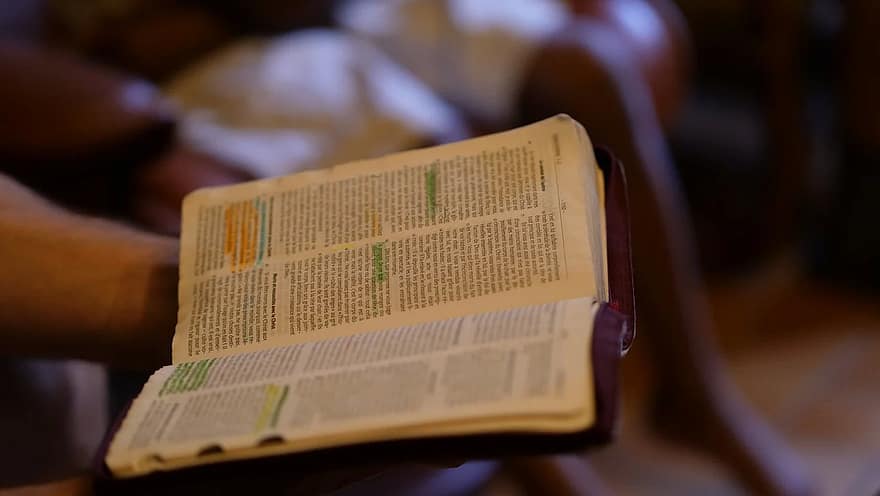
Preparing Your Heart to Worship

Praise the Lord! Praise, O servants of the Lord, praise the name of the Lord! Blessed be the name of the Lord from this time forth and forevermore! From the rising of the sun to its setting, the name of the Lord is to be praised!

(Psalm 113:1–3, ESV)

What does the Bible mean when it extends a call to worship? Is it talking about quiet, solemn, personal times of devotion, or does it mean corporate praise with brothers and sisters in church? Well, both. As a matter of fact, in many ways, we can’t define “praise” in the context of a church service until we have understood how it must impact our heart attitude toward God on a personal level.

God, speaking through the prophet Malachi, despised the worship of his people. He said in Malachi 1:10, “Oh that there were one among you who would shut the doors, that you might not kindle fire on my altar in vain! I have no pleasure in you, says the Lord of hosts, and I will not accept an offering from your hand.”  The people’s hearts were not right with God, so no matter what they sacrificed, it was not acceptable to him.

I like what Steve Lawson wrote in regard to Psalm 113:1. The word ‘praise,’ he said, “…carries the idea of an exuberance, radiance, jubilance, or celebration. It means to light up for God, to be radiant for God, to be shining forth for God, to boast in him, to brag in him.”[1]

That’s a great definition because it captures the joyfulness of praise. So, how can we get that back if it is missing, and how can we stoke the fire if it is present in us, but we want our passion to burn hotter? Let’s look at why the Lord is worthy of praise:

  • His Covenant (v. 1a)

The first line of verse 1 is sometimes given as Hallelujah which is the Hebrew word translated “Praise the LORD.” The “Yah” part is a shortened version of the holy name of God, “Yahweh.” This you’ll remember, is his covenant name, given to Moses at the burning bush by the Lord.

Why should we give praises to the Lord? Because he is our Lord. He has made covenant promises with his people, and of all people on the earth, we who are his children should give the loudest praises to him.

John Calvin wrote, “This psalm contains abundant reasons for all men without exception to praise God. The faithful alone being endued with spiritual perception to recognize the hand of God, the prophet addresses them in particulars.[2]

What Calvin meant was that God commands men everywhere to give praises to God, but in their sin-filled blindness, they can’t see God the way we can. So we, who have been forgiven and set free from our bondage to sin, should give praise all the more because of this!

  • His Commitment (v. 1b)

The second line of v. 1 calls the “servants of the LORD” to praise God. If we are servants, that makes him our what? Master!

Later on, in the last part of the psalm, the psalmist demonstrates in greater detail the kind of things that the Master does for his servants—things such as lifting us up from the dust and ash heap of sin and death and placing us upon thrones. But even before we think about that aspect, we must remember that we are his servants because he redeemed us from our sin.

As his servants, we are called to praise our Master. Our Lord is so good to us. The Israelites traditionally sang this psalm and psalm 114 at the beginning of the Passover meal. As they retold the account of God’s great salvation from the hands of the Egyptians, they would remember how great and good God really is!

You know, the Lord didn’t have to commit himself to Israel, nor to the Church. He did so freely. Christ bound himself to His Bride willfully. It wasn’t a shotgun marriage! We aren’t as lovely as we need to be, but Christ keeps his commitment to us. O how we need to worship him!

  • His Character (v. 1c)

Notice the last praise of verse 1 is a call to praise “the name of the LORD.” The “name of the LORD” is a shorthand way of speaking about the character of God. His name encapsulates all that he is.

When you read you Bible, you read who this God is that loved and saved us. He is merciful and compassionate. Just ask Jonah! He is forgiving and kind—remember the woman caught in adultery?

He is holy, righteous, and just, and will come with the full wrath and fury he has promised. We see that in the way Christ suffered on the cross—the very punishment that was meant for you and me.

We see love on that cross as well, don’t we? Is your heart beginning to warm with praises toward our God? Tomorrow is the Lord’s Day. I pray the our voices and hearts will resonate with praise that will ascend to heaven and give the honor that is due God’s name.


[1] Steve Lawson, Holman Old Testament Commentary, “Psalms 76-150”, p. 205.

[2] John Calvin, Psalm 93-150, p. 331.

The Soon-Crushed Serpent

I appeal to you, brothers, to watch out for those who cause divisions and create obstacles contrary to the doctrine that you have been taught; avoid them. For such persons do not serve our Lord Christ, but their own appetites, and by smooth talk and flattery they deceive the hearts of the naive. For your obedience is known to all, so that I rejoice over you, but I want you to be wise as to what is good and innocent as to what is evil. The God of peace will soon crush Satan under your feet. The grace of our Lord Jesus Christ be with you.

Romans 16:17–20, ESV

This morning as I was getting into my car, I noticed a large weed growing at the edge of my front lawn. Not far was a large patch of clover that has continued to spread throughout my yard. As I began to look around, I began to notice more and more weeds. I take a bit of pride in my yard, and the battle against weeds seems to be never ending. I had a small shrub die recently, and I can’t figure out why, but I never tend to the weeds and they still flourish. All of this reminds me of the curse of sin.

As the Apostle Paul closed out his letter to the Romans, he thanked a litany of saints that had been a blessing and encouragement to him in the ministry of the gospel. However, in verses 17-20, after having thanked the hard workers in the church, Paul diverted his words to address the danger of false teachers who will work to break up that unity through their deceptive speech that makes it seem like they care for the church, but in reality they only care about themselves.

I don’t know of a pastor that hasn’t come face to face with a false teacher who has sought to divide the church, and many times under the guise of what is best, in their eyes, for everyone. As a pastor, it hurts to watch this poisonous deception spread like weeds in the hearts of those who listen to the smooth words of these liars. Paul had seen it happen, and he warned the church to watch out for this among themselves as well. He knew that when division comes, the work will stop. Satan knows this too.

Today I asked my wife to call a company to come and spray weed killer and fertilizer on our lawn. The weeds will be kept at bay while the grass will have time to thicken and grow stronger roots, enabling it to fight off the weeds as it grows more robust. But the fight against the weeds will never end…that is until the Lord Jesus returns.

Paul sees this as well. Paul wrote, “The God of peace will soon crush Satan under your feet…”(v. 20). The “peace” is the eternal peace given to the children of God through the atoning work of Christ. There will be no peace accord with the enemy. This God who brings peace through Christ will crush Satan, that serpent of old, not only under the feet of Christ, once and for all, but he will crush Satan under our feet as well. We will share in the victory that was won at the cross and which culminates at the Second Coming.

So for now, we fend off the brood of vipers, and we seek the welfare of the church through the fertilizer of the Word, knowing that it will help keep the liars at bay. But we also recognize that until the Serpent-Crusher comes to make all things right, we can take courage in knowing that he has already won the victory through the cross of Jesus Christ.

If You Ask God For Help, Make Sure You Aren’t Guilty of This…

Oh give thanks to the Lord, for he is good, for his steadfast love endures forever! Let the redeemed of the Lord say so, whom he has redeemed from trouble

(Psalm 107:1–2, ESV)

The pattern of Psalm 107 is particularly easy to see in the English Standard Version with the word “Some” in vv. 4, 10, 17, 23. Each section reveals a situation that “some” people encounter in life:

  • Some wander in the wilderness and are doomed to death (vv. 4-9)
  • Some are enslaved and sit in darkness. (vv. 10-16)
  • Some have invited destruction and death as the consequence of their sin (vv. 17-22)
  • Some faced near death as they went about their dangerous vocation as sailors upon story seas (vv. 23-30).

In every instance, whether self-inflicted or providential, the Lord responded with “steadfast love” toward his people because he is the faithful, covenant-keeping God. That is how the Lord God Almighty acted toward Israel, and that is how he responds to his Bride, the Church.

The question for you, if you are a Christian: how do you respond when God has acted? So many times we are vocal in our cries, our needs, and our complaints, and yet we are silent in our praises to the Lord for his goodness to us. We call people, we post to Facebook, we tell our church prayer groups and we tell friends of our need. But when God answers? Crickets.

As verses 1-2 say, let us give thanks to the Lord for his goodness, and let all those who are Redeemed, say so! What is your reason for giving thanks? And have you been as vocal in your praise as you have been in your complaint and cries for help?

I invite you to share your praises in the comments how the Lord has recently answered your prayers so that you might encourage others who are still seeking answers.

The Glory of God in Saving Sinners- Psalm 106

“Our fathers, when they were in Egypt,
did not consider your wondrous works;
they did not remember the abundance of your steadfast love,
but rebelled by the sea, at the Red Sea.
Yet he saved them for his name’s sake,
that he might make known his mighty power.”
(Psalm 106:7–8 (ESV))

Reflecting on the rebellious heart of the nation of Israel, the psalmist freely admits that they did not deserve salvation. After seeing the amazingly powerful hand of God in the ten plagues, Israel still did not place its faith in the Lord.

In Exodus 14:10-12, we read of the response of the people:

“When Pharaoh drew near, the people of Israel lifted up their eyes, and behold, the Egyptians were marching after them, and they feared greatly. And the people of Israel cried out to the Lord. They said to Moses, “Is it because there are no graves in Egypt that you have taken us away to die in the wilderness? What have you done to us in bringing us out of Egypt? Is not this what we said to you in Egypt: ‘Leave us alone that we may serve the Egyptians’? For it would have been better for us to serve the Egyptians than to die in the wilderness.”

The Hebrew word which is translated by most Bibles as “yet” or “nevertheless” points to the Lord’s action in spite of Israel’s rebellious spirit. The reason for his decision to save them was “for his name’s sake…” Although this wasn’t the reason that these rebels surmised as why the Lord saved them. The commentator H.C. Leupold states,

“For the first reaction of the nation when danger began to threaten at the shores of the Red Sea was to raise the cry that God had brought the Israelites out of Egypt in order to slay them. That can scarcely be classed as gratitude for the mighty works that He had done in their behalf.”—H. C. Leupold, Exposition of the Psalms (Grand Rapids, MI: Baker Book House, 1959), 746.

So, why did the Lord save them? And even more important for us, why did he save you or me? Why does God save, not just these, but any sinful person? What is his ultimate purpose? It is not first and foremost for the relief of our misery or for our happiness. These are results, yes, but not the Lord’s primary concern. His ultimate purposes are doxological–that he might receive glory and that he would act according to his holy, merciful, and righteous character. His character is on full display as the powerful and merciful God, and this is seen in his saving grace.

We, who are saved in Christ, are trophies of his grace. We are the manifestation of the love of God. But even more so, we can look at what the Lord has done in salvation and stand in amazement at what an amazing God he truly is!

Don’t Forget to Look Up

But you, O Lord, are enthroned forever; you are remembered throughout all generations.” (Psalm 102:12, ESV)

Psalm 102 begins with great misery and pain. The superscription on this psalms reads: “A prayer of one afflicted, when he is faint and pours out his complaint before the Lord.”

As you read through this psalm one gets a great sense of his pain and anguish, which appears to be spiritual, emotional, and even physical. He groans, struggles with insomnia, weeps, and feels his body engulfed in fever and suffering so great that he cannot eat.

There are many of God’s people who can identify with such suffering. But what is the solution for the man or woman of God in such trying times? Here in America, it might be the time to see a physician or a psychologist. One might be given medications to help with the sleep and pain. Perhaps, a self-help group would be recommended so that the suffering might console one another.

But the psalmist has a different route. It stands out vividly beginning in verse 12 and begins with a strong contrast, “But you, O Lord…” In contrast to whatever is happening in our human experience on earth, there is another reality as well that is occurring in heaven: the Lord is enthroned forever. This is not simply about the duration of is reign, but about the permanency and the settled nature of it as well. The Lord has not been unseated. There has not been a coup in heaven whereby the demons have grappled control of the throne of God. No, he is still there.

The following verses build upon this hope-filled truth. If he is there, then he can hear. And if he can hear, he can answer. The Lord is glorious, and he will judge the wicked. He can see everything and he hears our cries. He still is worthy of praise and glorious. Although our suffering is difficult, this meditation on the fuller reality above our circumstances helps us to realize that the Lord God is fully aware, fully powerful to act, and still loves and cares for his people.

And even though our suffering may be prolonged, and even might usher us into the Lord’s presence, there is yet hope. The psalmist closes his song with these words that reach beyond this life and into eternity: “They will perish, but you will remain; they will all wear out like a garment. You will change them like a robe, and they will pass away, but you are the same, and your years have no end. The children of your servants shall dwell secure; their offspring shall be established before you.” (Psalm 102:26–28, ESV)

One day, we will no longer experience the pains and trials of this life. One day all danger will have passed and every threat will be gone. One day, we will be with the Lord who is eternal, and we shall be like him. But even better, we shall be with him. So, the next time you’re days are dark and seem to be without much hope, don’t forget to look up, and remember that there is more happening than meets the eye.