Sitting with the Scoffers or the Wise?

“How blessed is the man who does not walk in the counsel of the wicked, Nor stand in the way of sinners, Nor sit in the seat of scoffers! But his delight is in the law of Yahweh, And in His law he meditates day and night. And he will be like a tree firmly planted by streams of water, Which yields its fruit in its season And its leaf does not wither; And in whatever he does, he prospers.” Ps 1:1–3 (LSB)

I believe that Psalm 1 sits at the beginning of the sacred psalter because it lays before its readers (and singers) a theme that is apparent throughout—that there are two significant influences upon the hearts of man, the influence of the wicked and the godly.

The blessed man or woman has discriminating tastes in what comes into his or her mind and heart. Discernment means that the godly do not give space to the counsels of those who hate God and His word. They don’t travel with them, nor stand and converse, nor will they sit and take counsel together. The blessings of the righteous are not simply that they receive the Word (His law) and meditate upon them. Yes, this is true. But the blessings also include the omission of the poisonous influences of the wicked as well.

This is essential for many modern Christians to consider because we often like to “have our cake and eat it too,” as the saying goes. In an outmoded time and place, Christians used to speak and write about the need for Christians to be “consecrated.” By this, they meant that followers of Christ were to be set apart and declared holy. As unattainable as it might be, perfect purity was still longed for and sought after. I don’t remember when I last heard a sermon on consecration, nor did I hear another Christian reference this seemingly antiquated idea.

Has “consecration” been rightly relegated to the dustbin of concepts we have “grown out of” as modern Christians who fear being called “fundamentalists” more than being called “worldly?” Have we matured to the point when we can have a heaping dose of wicked counsel alongside a large scoop of sound doctrine and be unharmed?

This type of thinking reminds me of a video I recently saw of two boys bailing water out of a sinking boat. One was bailing the water out of the boat, while the other was unintentionally adding water to another part of the little boat. No matter how hard they tried, they couldn’t get the boat to stay afloat.

Let’s be honest. I have heard Christians claim that they can watch filthy things at the movies and on TV and that it doesn’t affect them spiritually. Maybe they are somehow stronger spiritually than most. But Psalm 1 seems to say that the blessed one won’t do that. They won’t sit down with the ones who will mock Christ and learn from them. They won’t walk with the ones who justify sin. And they won’t stand as if one of the unregenerate and converse as if our worlds and eternal destinies are the same—because they aren’t.

I’m not advocating for a legalistic set of rules and acceptable practices for Christians. That’s been done and has failed miserably. But I am saying that some of us need to consider what we permit to influence our thinking and lifestyles. We can’t hope to be totally separated, as the Amish have tried and failed, because that isn’t what Christ has called us to do. We can’t escape the world by isolationism. Instead, we need to be set apart as holy, preferring the company of God and His people and the Word to the company and wisdom of this world. By this, I don’t mean we physically separate or stay apart from interacting with our unbelieving neighbor. We dare not do that for the sake of the gospel and for the influence of this world. However, there is a big difference between engaging with people as Jesus did and engaging in their sinful activities, which Jesus did not do.

I think as we do this, we will see our lives, our families, and our churches grow more spiritually healthy and vibrant, like trees planted by streams of water. And as we grow in spiritual health, the taste of the world’s wisdom will begin to fade away and lose its allure.

The Blessings of Hardship

“And you shall remember all the way which Yahweh your God has led you in the wilderness these forty years, that He might humble you, testing you, to know what was in your heart, whether you would keep His commandments or not. And He humbled you and let you be hungry and fed you with manna which you did not know, nor did your fathers know, that He might make you know that man does not live by bread alone, but by everything that proceeds out of the mouth of Yahweh.” (Deuteronomy 8:2–3, LSB)

Who would choose to be “humbled?” I wouldn’t and apparently Israel didn’t choose this path either, but the Lord God chose it for them as He led the people through the wilderness and forty long years of lessons for the greater good of His people.

The word “humble” can stir up different connotations in people’s minds. You might picture a quiet person, someone who looks down at the floor to avert their eyes away from direct contact. Perhaps they are poorer, and a little ashamed of their status in life. Whatever your picture of humility might be, the word used in Deuteronomy 8:2-3 would better be understood as “humiliated.” The Hebrew verb (‘nh) can refer to one who is “bowed down, afflicted, wretched, emaciated.” Such a person fits with the person who is described above–except the passage above states that it was the Lord who actively brought about this humiliation. It is connected to the testing of Israel for the Lord to know the true condition of their heart as a nation.

There is a lot to unpack here, such as why God, who knows all things, would seek to discover the heart condition of His people. What I want to focus on has to do with the fact that God actively allowed the hardship and difficult conditions of Israel in their forty years of wandering in the wilderness. Why would He do that?

During that time, Israel needed to learn some lessons that can only be learned by experience. The people had been in Egypt as slaves for a long time and they had picked up some bad habits and practices. Although God had promised their forefather Abraham that He would save them out of slavery, they had grown accustomed to their situation and dependence upon their captors. Their exposure to the gods of Egypt also apparently had an impact upon them as well since they seemed alarmingly prepared to put pagan gods in the place of their God, as they did with the golden calf incident.

In addition to their longing to return to slavery in Egypt, they had also become proficient in discontentment and complaining. As slaves, we would think that they would be happy to be free, but the biblical record shows that this wasn’t the case. Even as slaves, they felt their lives were easier than they were in their freedom.

To help rid them of these sinful habits and attitudes, the Lord gave put them in a place where they had nothing. No homeland, no farmland, no buildings, no water, no food, no clothes, nothing. When they became hungry, they couldn’t go to the garden, the river, or the market. When they became thirsty, they couldn’t go to the well or the river. They could not plant crops because they constantly were on the move, and the wilderness was inhospitable and waterless. When they cried that it was better in Egypt, this wasn’t an exaggeration.

But the people of Israel needed to have everything taken away so they could be “bowed down, afflicted, wretched, emaciated.” As weak and broken people, they were needy. Even in their slavery, they were a proud people. Don’t believe me? When Jesus told the Jews that the truth would make them free, they answered this way: “They answered Him, ‘We are Abraham’s seed and have never yet been enslaved to anyone. How is it that You say, You will become free?’” (John 8:33, LSB). Never been enslaved? They had been enslaved many times! But to the proud people of Israel, their physical captivity did not reflect their outlook.

This was why God needed to humble them. Their hunger and thirst made them dependent in a way that they had not been dependent upon their Egyptian masters. But their Master, the Lord God was using this humiliation for their greater good. When they needed water, He richly supplied it. When they needed food, He gave it to them daily. He did not allow their clothing or shoes to wear out for their entire captivity, and He gave them godly leaders in Moses, Aaron, and the elders of Israel.

The lessons learned in the wilderness were more than the fact that God supplied their needs. The biggest lesson that they were taught, and one we need to learn as well, is that we need God. Not “need,” like we need wifi internet service. No, “need” like we need oxygen to breathe. We are dependent upon Him moment by moment for everything. And for life, this especially means we need to hear from Him, from “everything that proceeds from the mouth of Yahweh.” And if that requires going through some humbling circumstances so He can get our attention, we shouldn’t grumble and complain, but rather we should thank Him for the fact that He cares for us so much that He pursues us even when we have become distracted by so many other things in this world.

Here is a fountain filled with blood: use it, saint, use it.

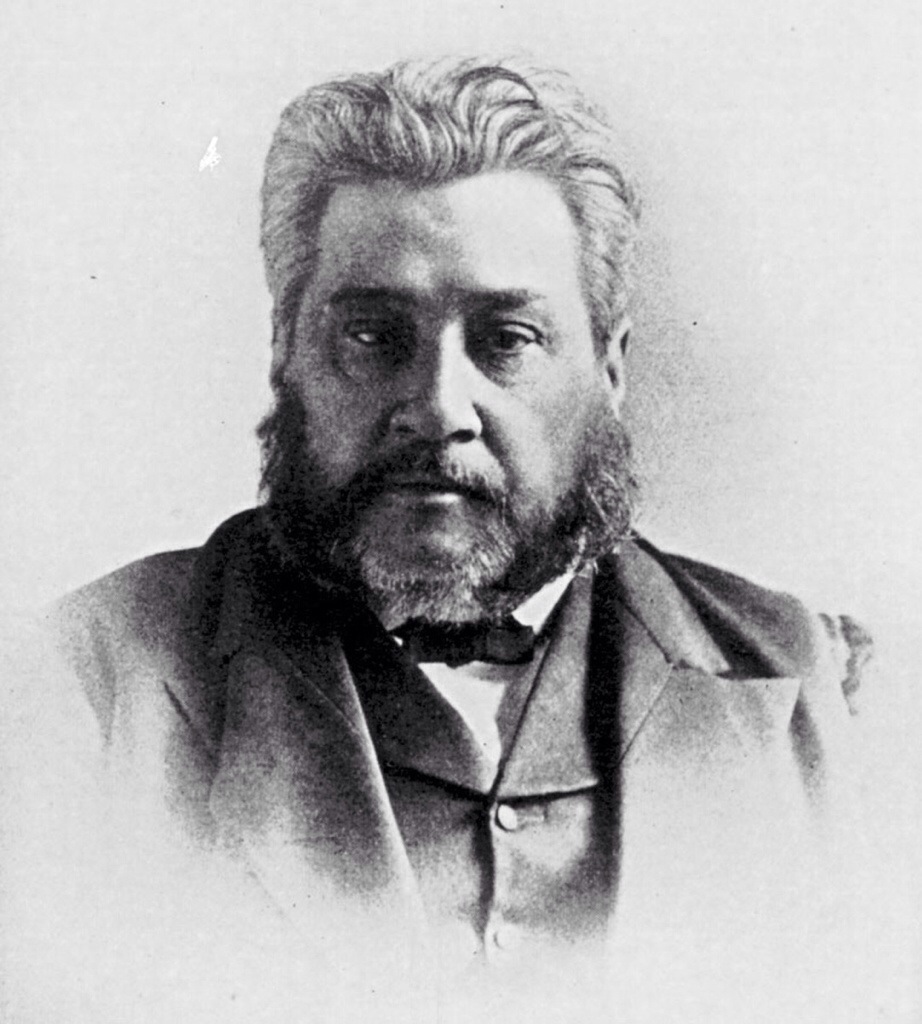
C. H. Spurgeon.jpg

“A very present help.” — Psalm 46:1

Covenant blessings are not meant to be looked at only, but to be appropriated. Even our Lord Jesus is given to us for our present use. Believer, thou dost not make use of Christ as thou oughtest to do. When thou art in trouble, why dost thou not tell him all thy grief? Has he not a sympathizing heart, and can he not comfort and relieve thee? No, thou art going about to all thy friends, save thy best Friend, and telling thy tale everywhere except into the bosom of thy Lord. Art thou burdened with this day’s sins? Here is a fountain filled with blood: use it, saint, use it. Has a sense of guilt returned upon thee? The pardoning grace of Jesus may be proved again and again. Come to him at once for cleansing. Dost thou deplore thy weakness? He is thy strength: why not lean upon him? Dost thou feel naked? Come hither, soul; put on the robe of Jesus’ righteousness. Stand not looking at it, but wear it. Strip off thine own righteousness, and thine own fears too: put on the fair white linen, for it was meant to wear. Dost thou feel thyself sick? Pull the night-bell of prayer, and call up the Beloved Physician! He will give the cordial that will revive thee. Thou art poor, but then thou hast “a kinsman, a mighty man of wealth.” What! wilt thou not go to him, and ask him to give thee of his abundance, when he has given thee this promise, that thou shalt be joint heir with him, and has made over all that he is and all that he has to be thine? There is nothing Christ dislikes more than for his people to make a show-thing of him, and not to use him. He loves to be employed by us. The more burdens we put on his shoulders, the more precious will he be to us.

“Let us be simple with him, then,

Not backward, stiff, or cold,

As though our Bethlehem could be

What Sinai was of old.”

Morning and Evening, May 3, Evening

Our Immediate Blessings From the Resurrection (John 20:19-29)

The-Empty-Tomb

Because of Jesus’ death and resurrection, all of God’s children will be raised again, in the twinkling of an eye, and we will be transformed from dead corpses to living, breathing, glorified, never-to-die again living people. What a glorious day that will be. But did you know that there are blessings that were given to us and that we can enjoy here and now because of Jesus’ resurrection?

1. The Resurrection Dispels Fear, and Replaces It with Peace (vv. 19-21a)

Verse 19 tells us that it is the evening of the resurrection. Most of us are going to celebrate the resurrection today. But the first Easter Sunday was not filled with Christians celebrating—they were hiding. They had locked the doors behind them, fearful and unsure about what to do. The reports the women brought back were confusing, to say the least and they had no idea if the religious leaders were cooking up another plot to purge Jerusalem of the followers of Jesus. So it is not surprising to find them huddled together for safety, locked in a room. But doors and locks can’t stop Jesus. We are not alone, he is still with us.

In John 14:19, Jesus had told them, “Yet a little while and the world will see me no more, but you will see me. Because I live, you also will live.”

For a little while (3 days) they did not see Jesus. But now they saw him. He appeared right before their eyes so that there was no doubt that he was alive. And what were his first words to the gathered saints? “Peace be with you.” Jesus knew the turmoil that raged inside their hearts. And just as he could calm the wind and the waves with is words, his presence among them also brought peace. As Paul reminds us, “If God is for us, who can be against us?” (Rom 8:31). Jesus is alive. He still dispels fear and offers peace to us. His resurrection conquers the fear of death and the wrath to come. It promises all who will repent of their sins and turn to Christ in faith that he will give to them peace with God. God will give forgiveness of sins and shower his love upon those who trust in him alone.

2. The Resurrection Disperses the Faithful (vv. 21b-22)

You know, I’ve seen death separate many families, including my own. In many families, a mother or grandmother is like the glue that keeps everyone together, especially during the holidays. But when she dies, often the family begins to drip apart from one another. It’s a sad reality. Death disperses a family.
But here is a curious result not of death, but of Jesus’ resurrection. His resurrection caused his disciples to disperse. Christ’s death and resurrection brought satisfaction for God’s wrath against our sin. His saving work was done. But the work of the disciples had only begun. Jesus had done his work on the cross, but the disciples would need to go into the world and share the message of the gospel with sinful men. And from the point of view of these terrified disciples, that must have seemed like an impossible task. But Jesus had given them his peace and promised the Holy Spirit. His words pointed forward 40 days to the Day of Pentecost when the Spirit would bring power and boldness for the Great Commission.

With confidence in the risen Lord, the Church now moves from a safe place to boldly declare the truth of Jesus Christ. God the Father sent Jesus on a mission—he had an aim and a purpose—and so do all his disciples.
Acts 1:8 says, “But you will receive power when the Holy Spirit has come upon you, and you will be my witnesses in Jerusalem and in all Judea and Samaria, and to the end of the earth.” We have a mission and the power to carry this mission out-the Holy Spirit. Jesus is alive and we ought to tell someone!

3. The Resurrection Dispenses Forgiveness (v. 23)

This verse can be misunderstood to teach that Jesus is giving to Christians the right to forgive sins. But only God has the power and prerogative to do that. So what is he talking about? Jesus is telling his disciples that when we disperse into the world with the gospel message, it is that message that points people to Jesus—the only one who can forgive and wash away the stains of sin and guilt. If the gospel message is received with faith in Christ alone, God will assuredly forgive the sins of those who receive the message as delivered by Jesus’ faithful disciples.

But the opposite is true as well. If acceptance of the gospel delivered by Christians is acceptance and forgiveness by God, then we need to realize that when the messengers and their message are rejected, that God and his Son’s sacrifice are also being rejected. Forgiveness of sins and peace with God are also rejected.

Do you remember those things called typewriters? For you kids out there, those were keyboards and printers all wrapped into one. If you remember typewriters, then you remember that there was no “back” button and you probably remember “White Out.” It was that magical bottle of white liquid that could be brushed over a typing error. Then you could go back and type little there was no error.

Forgiveness is like whiteout. This world doesn’t offer “do-overs,” but God does. Jesus’ blood is like “white-out” for your soul. It covers over all your sins and makes it like you never sinned…ever! Jesus’ death on the cross bought that forgiveness!

4. The Resurrection Deepens Flimsy Faith (vv. 24-28)

Thomas is probably most famous for this embarrassing incident. He had missed the earlier appearance of Jesus to the other disciples and having heard their story he had his doubts. And before we jump on poor Thomas, think about what we are talking about here.

My friend lost his grandfather a couple of weeks ago. I went to his funeral. But what if someone told me that good old Bill had just been by the house and I just missed him? “Come on,” I’d say. “Dead people stay dead. He’s up in Rose Hills. Nobody leaves the cemetery. Nobody.” They don’t lock the gates of Green Hills Memorial Park to keep people in, do they? So, when Thomas has his doubts, I can totally understand. And it wasn’t just a lack of faith. Nobody expected Jesus to rise again. So, his doubt is understandable.

But as we read, Jesus did rise again and he showed up again among the disciples, but this time when Thomas was there. And again he had to calm them and give them his peace. After all, Jesus once again appeared back from the dead and in a locked room.

How many of us have had thoughts of doubt and a lack of faith? We’ve doubted the goodness and kindness of God. We’ve doubted his ability or willingness to forgive our sins. We’ve doubted his love for us. We’ve doubted his power to heal or his power to answer our prayers. So, are we really in a position to point fingers at Thomas?

But to his credit, Thomas’ lack of faith melted away. Look again at verse 28. Although we don’t know any more about Thomas, Church tradition says that Thomas continued to preach the gospel and went as far away as Kerala, India where he brought the gospel to a group that today are called Nasrani or Saint Thomas Christians. Thomas’ flimsy faith was made solid by the resurrection of Christ. Although we cannot see Christ in the flesh as the disciples did, we shall one day see him clearly: “For now we see in a mirror dimly, but then face to face. Now I know in part; then I shall know fully, even as I have been fully known” (1Cor. 13:12 ).

By focusing on the reality of the cross and the resurrection of Jesus Christ, our faith is bolstered and we are placed back on track.