Rest in Jesus Christ


“My people shall dwell in quiet resting places.”
— Isaiah 32:18

 
Peace and rest belong not to the unregenerate, they are the peculiar possession of the Lord’s people, and of them only. The God of Peace gives perfect peace to those whose hearts are stayed upon him. When man was unfallen, his God gave him the flowery bowers of Eden as his quiet resting places; alas! how soon sin blighted the fair abode of innocence. In the day of universal wrath when the flood swept away a guilty race, the chosen family were quietly secured in the resting-place of the ark, which floated them from the old condemned world into the new earth of the rainbow and the covenant, herein typifying Jesus, the ark of our salvation.

—Charles Spurgeon, Morning and Evening, Dec 9 Eve.

Theological Commitments of the Biblical Gospel: Unable to Resist God’s Calling

Dragged against your free will?

Resistance to the Gospel

If a person is elect, what assures that they will actually answer this divine call? The Arminian/semi-Pelagian, seeing everything through the lens of libertarian free-will, assumes that man can walk away from the drawing of the Spirit of God. But clear and straightforward passages such as the so-called “golden chain of redemption” in Rom 8:28-30 show that the process once begun by God cannot be thwarted:

And we know that for those who love God all things work together for good, for those who are called according to his purpose. For those whom he foreknew he also predestined to be conformed to the image of his Son, in order that he might be the firstborn among many brothers. And those whom he predestined he also called, and those whom he called he also justified, and those whom he justified he also glorified.” (Romans 8:28–30, ESV)

Again, if the Lord God is sovereign in all things, he must have the power to overcome the deadness of sin and the resistance that inevitably comes from the naturally sinful desires of the elect before they are regenerate. The one who rejects the irresistible calling of God point to the observable reality of those who on a daily basis reject the gospel call of the evangelist.

But this general or universal declaration of the world to be saved is not the call of salvation we are speaking of here. This universal call is, of course rejected every day by many. We are speaking here of the “electing call” of God. This is the act of the Spirit of God moving, changing, provoking the will of the sinner so that all at once he sees his guilt before a holy God and his spiritual predicament, he also sees his need for a Savior, and he sees the beauty of Christ and how irresistible the call to come and drink of the living waters is. 

Dr. Lloyd-Jones says of this doctrine:

And again I could refer you to Ephesians 1:18 and to 1 Thessalonians 1:5 once more, and to Philippians 2:13. In other words, there are proofs positive of this statement that it is the internal operation of the Holy Spirit upon the soul and the heart of men and women that brings them into a condition in which the call can become effectual. And when the Spirit does it, of course, it is absolutely certain, and because of that some people have used the term—which I do not like myself—irresistible grace. I do not like the term because it seems to give the impression that something has happened which has been hammering at a person’s will and has knocked him down and bludgeoned him. But it is not that. It is that the Holy Spirit implants a principle within me which enables me, for the first time in my life, to discern and to apprehend something of this glorious, wondrous truth. He works upon my will. ‘It is God that worketh in you both to will and to do.’ He does not strike me; He does not beat me; He does not coerce me. No, thank God, what He does is operate upon my will so that I desire these things and rejoice in them and love them. He leads, He persuades, He acts upon my will in such a way that when He does, the call of the gospel is effectual, and it is certain, and it is sure. God’s work never fails, and when God works in a man or woman, the work is effective. [1]

When Paul and Silas approached the women who worshipped by the river in Philippi, it says in Acts 16:14 that “The Lord opened [Lydia’s] heart to pay attention to what was said by Paul.” The Lord did not destroy her volition, but as the Sovereign Lord, he overcame her inability to see and understand and believe so that she paid attention to the gospel and believed.

Those who say that they believe in the sovereignty of God yet, because of love, God allows man to have a free will to choose or reject him is biblically, theologically and logically flawed. If God gives up his sovereignty in the area of salvation, he is not truly sovereign, because God cannot ordained the end without ordaining the means. God’s saving grace overcomes the internal resistance by changing the will of those whom he will save so that they have ears to hear and eyes to see and a heart to behold the glories of Christ, the One who died to set them free from their sins.

[1] David Martyn Lloyd-Jones, God the Holy Spirit (Wheaton, IL: Crossway Books, 1997), 73.

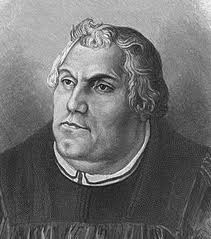
Just Do Better…Tell that to Martin Luther!

Martin Luther.jpg

Is salvation merely a message of “do better?” Is Christianity simply a moralistic religion that teaches that all we need to do is obey God? That is what the self-righteous Pharisees thought, and it is what many people in churches think. To them, Christianity is a list of rules that can be kept–albeit with a lot of sacrifice. But is that what Jesus taught?

In Romans 1:17, the Apostle Paul wrote, “For in it the righteousness of God is revealed from faith for faith, as it is written, “The righteous shall live by faith.”” (Romans 1:17, ESV). This text traumatized Martin Luther before his conversion to Christ. Here was a man that sincerely wanted salvation. He had dedicated his life to holy living in a monastic community where he sacrificed on a daily basis. Yet his soul was tortured. Here are Luther’s own words, written a year before his death on March 5, 1545 following a long life of joyful blessing in true salvation through Jesus Christ.

I had indeed been captivated with an extraordinary ardor for understanding Paul in the Epistle to the Romans. But up till then it was … a single word in Chapter 1 [:17], “In it the righteousness of God is revealed,” that had stood in my way. For I hated that word “righteousness of God,” which according to the use and custom of all the teachers, I had been taught to understand philosophically regarding the formal or active righteousness, as they called it, with which God is righteous and punishes the unrighteous sinner.

Though I lived as a monk without reproach, I felt that I was a sinner before God with an extremely disturbed conscience. I could not believe that he was placated by my satisfaction. I did not love, yes, I hated the righteous God who punishes sinners, and secretly, if not blasphemously, certainly murmuring greatly, I was angry with God, and said, “As if, indeed, it is not enough, that miserable sinners, eternally lost through original sin, are crushed by every kind of calamity by the law of the decalogue, without having God add pain to pain by the gospel and also by the gospel threatening us with his righteous wrath!” Thus I raged with a fierce and troubled conscience. Nevertheless, I beat importunately upon Paul at that place, most ardently desiring to know what St. Paul wanted.

At last, by the mercy of God, meditating day and night, I gave heed to the context of the words, namely, “In it the righteousness of God is revealed, as it is written, ‘He who through faith is righteous shall live.’ ” There I began to understand [that] the righteousness of God is that by which the righteous lives by a gift of God, namely by faith. And this is the meaning: the righteousness of God is revealed by the gospel, namely, the passive righteousness with which [the] merciful God justifies us by faith, as it is written, “He who through faith is righteous shall live.” Here I felt that I was altogether born again and had entered paradise itself through open gates. Here a totally other face of the entire Scripture showed itself to me.… And I extolled my sweetest word with a love as great as the hatred with which I had before hated the word “righteousness of God.” Thus that place in Paul was for me truly the gate to paradise. [Emphasis added]

The “gates of paradise” were opened up to Luther because he no longer depended upon his own law-keeping to satisfy the perfect demands of God. He saw salvation as a gracious act of God alone. Christ was perfectly righteous, fulfilling the whole law in our place. He died in our place and we are justified because of his perfect life and substitutionary death.

The hamster wheel of self-righteous deeds done in order to save ourselves is endless and endlessly disappointing. But the worst thing is that it does not end in heaven, but hell. The one who rejects the perfect finished work of Christ on the cross in favor of his or her imperfect works should expect nothing more, and will get nothing less.

Theological Commitments of the Biblical Gospel: The Atonement

Atonement: The Heart of the Gospel

Our theological term “atonement” comes from the Anglo-Saxon root that means “to be at one with another” and was over time shortened to  ‘atonement” (at-one-ment). It is the reconciliation of God to man and man to God that comes through the vicarious (meaning, in our place) penal (meaning it was the wrath of God poured out as the justified penalty for our sins) substitutionary (meaning that it was not for Christ’s sin, but for the sin of others) death of Christ.

But for whom did Christ die? Did he die for the whole world or did he die only for his elect? The answer is for both. When we are talking about the death of Christ, we need to be aware of precision. We are not saying that Christ’s death was unable to save all people that have every existed—that would be to say that the blood of Christ was insufficient in power and ability. But if we were to say that Christ’s death was effective in saving all people that have ever existed, we would fall into that heresy called “universalism.”

Minimally, we cannot deny that Christ’s death was both sufficient and effective for the elect. This is not debated by any who hold to the biblical doctrines of grace. But did Christ’s death on the cross have any effect upon the non-elect—those who would never come to a saving faith in Jesus Christ? Yes.

On 1Tim 4:10, the MacArthur Study Bible notes say in part,

The simple explanation is that God is the Savior of all men, only in a temporal sense, while of believers in an eternal sense. Paul’s point is that while God graciously delivers believers from sin’s condemnation and penalty because He was their substitute (2 Cor. 5:21), all men experience some earthly benefits from the goodness of God. Those benefits are: 1) common grace—a term that describes God’s goodness shown to all mankind universally (Ps. 145:9) in restraining sin (Rom. 2:15) and judgment (Rom. 2:3–6), maintaining order in society through government (Rom. 13:1–5), enabling man to appreciate beauty and goodness (Ps. 50:2), and showering him with temporal blessings (Matt. 5:45; Acts 14:15–17; 17:25); 2) compassion—the broken-hearted love of pity God shows to undeserving, unregenerate sinners (Ex. 34:6, 7; Ps. 86:5; Dan. 9:9; Matt. 23:37; Luke 19:41–44; cf. Is. 16:11–13; Jer. 48:35–37); 3) admonition to repent—God constantly warns sinners of their fate, demonstrating the heart of a compassionate Creator who has no pleasure in the death of the wicked (Ezek. 18:30–32; 33:11); 4) the gospel invitation—salvation in Christ is indiscriminately offered to all (Matt. 11:28, 29; 22:2–14; John 6:35–40; Rev. 22:17; cf. John 5:39, 40). God is, by nature, a saving God. That is, He finds no pleasure in the death of sinners. His saving character is revealed even in how He deals with those who will never believe, but only in those 4 temporal ways.[5]

The Canons of Dort, Articles 3 & 4 (Second Head of Doctrine) say this:

“The death of the Son of God is the only and most perfect sacrifice and satisfaction for sin, and is of infinite worth and value, abundantly sufficient to expiate the sins of the whole world.[6]” And “This death is of such infinite value and dignity because the person who submitted to it was not only really man and perfectly holy, but also the only begotten Son of God, of the same eternal and infinite essence with the Father and the Holy Spirit, which qualifications were necessary to constitute Him a Savior for us; and, moreover, because it was attended with a sense of the wrath and curse of God due to us for sin.[7]

These statements are in complete agreement with the biblical record. Christ’s death on the cross is only salvific for the elect, but his death also gives benefits to the whole world. The Orthodox Presbyterian Church agrees with this, stating,

“In Reformed parlance we speak of “common grace” as God’s goodness even to those who are destined to be lost (Romans 2:4-5; Matthew 5:45). God’s goodness to reprobate sinners may be considered the product of the cross. In that sense it might be said that Jesus died for all mankind. But saving grace is called “special grace.” And whatever we may say of benefits flowing from the cross, Christ did NOT die to save those whom He willed to pass over unto deserved condemnation!”[8] 

So, why is this so important for us to know? Well first, because it is the nature of the gospel. Christ died to save others. But whom? Some go so far as to reject even saying that Jesus died for the world, in spite of the fact that the Bible clearly says so. But saying this does not mean that all will be eternally saved, nor does it embrace universalism or the heresy called Pelagianism.

You can say that Jesus died for the world! At the same time, we know that not all the world will be eternally saved. Secondly, we need to be honest about several verses in our Bibles that say that Christ’s death did something beyond saving the elect.

We can’t say that it means that the world was justified and redeemed, but we can see that there are temporal types of salvation that were won by Christ. This isn’t something we need to deny. If we do, we deny the fulness of the glory of Christ’s atoning work on the cross. And finally, we need to know this because we need to study the hard things of the Word and strive to be as accurate as possible, wrestling with the truth, and not denying those bothersome bits that don’t fit well into our thinking.

[5] John MacArthur Jr., ed., The MacArthur Study Bible, electronic ed. (Nashville, TN: Word Pub., 1997), 1867.

[6] Historic Creeds and Confessions, electronic ed. (Oak Harbor: Lexham Press, 1997).

[7] Historic Creeds and Confessions, electronic ed. (Oak Harbor: Lexham Press, 1997).

[8] From http://www.opc.org/qa.html?question_id=284
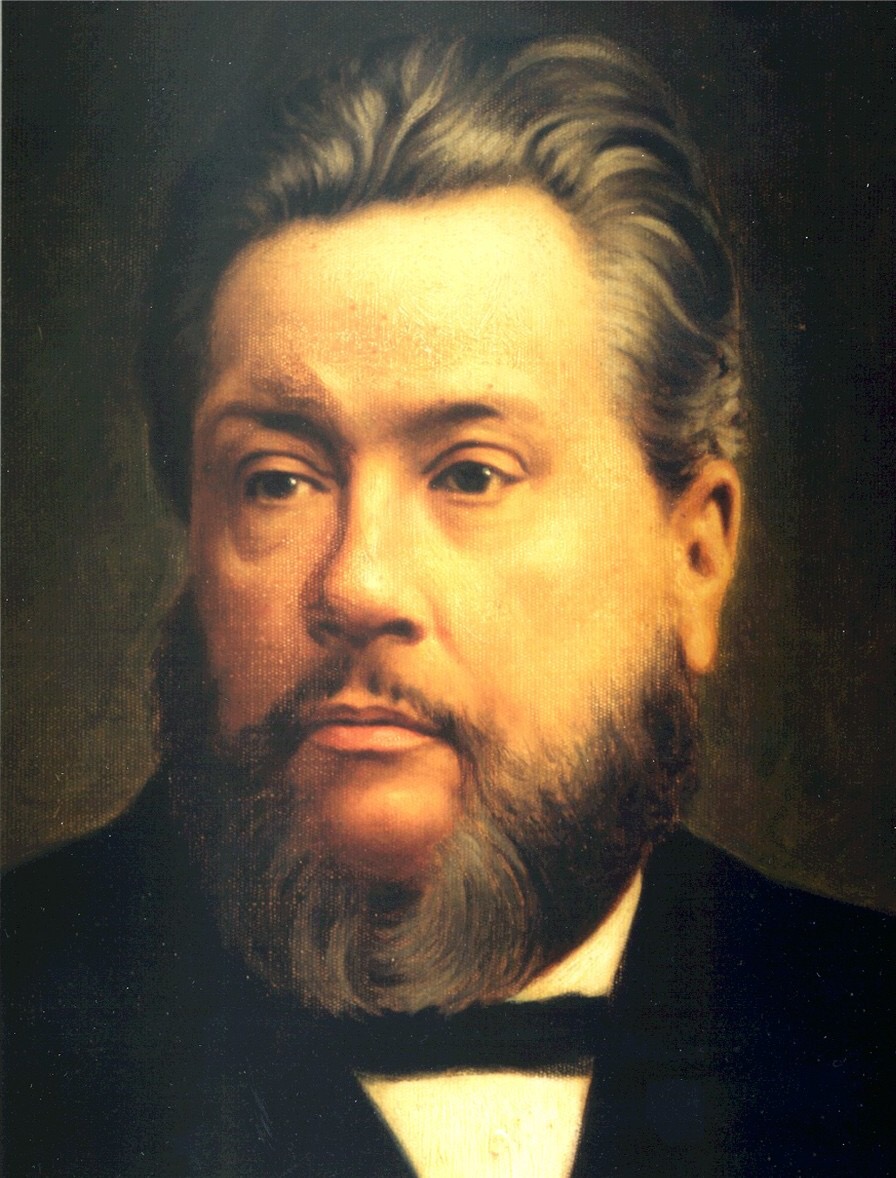
The Value of Faith in Christ

20140727-070937-25777643.jpg

“One grain of this faith is worth more than a diamond the size of the world—yes, though you should thread such jewels together, as many as the stars of heaven for number, they would be worth nothing compared with the smallest atom of faith in Jesus Christ, the eternal Son of God!”

—CH Spurgeon