Joining a denomination or going at it alone are not the only options for churches, pastors, leaders, and ministries.
Maintaining doctrinal fidelity and alignment is critical when seeking to work with others to accomplish Great Commission objectives.
IFCA International was founded in 1930 to fight against the onslaught of theological liberalism growing in denominational churches, mission agencies, and seminaries.
Listen to a podcast I was invited to record with some fellow pastors a few months ago as they ask me more about IFCA International. To find out more, go to http://www.IFCA.org.
Joining a denomination or going at it alone are not the only options for churches, pastors, leaders, and ministries.
Maintaining doctrinal fidelity and alignment is critical when seeking to work with others to accomplish Great Commission objectives.
IFCA International was founded in 1930 to fight against the onslaught of theological liberalism growing in denominational churches, mission agencies, and seminaries.
Listen to a podcast I was invited to record with some fellow pastors a few months ago as they ask me more about IFCA International. To find out more, go to http://www.IFCA.org.
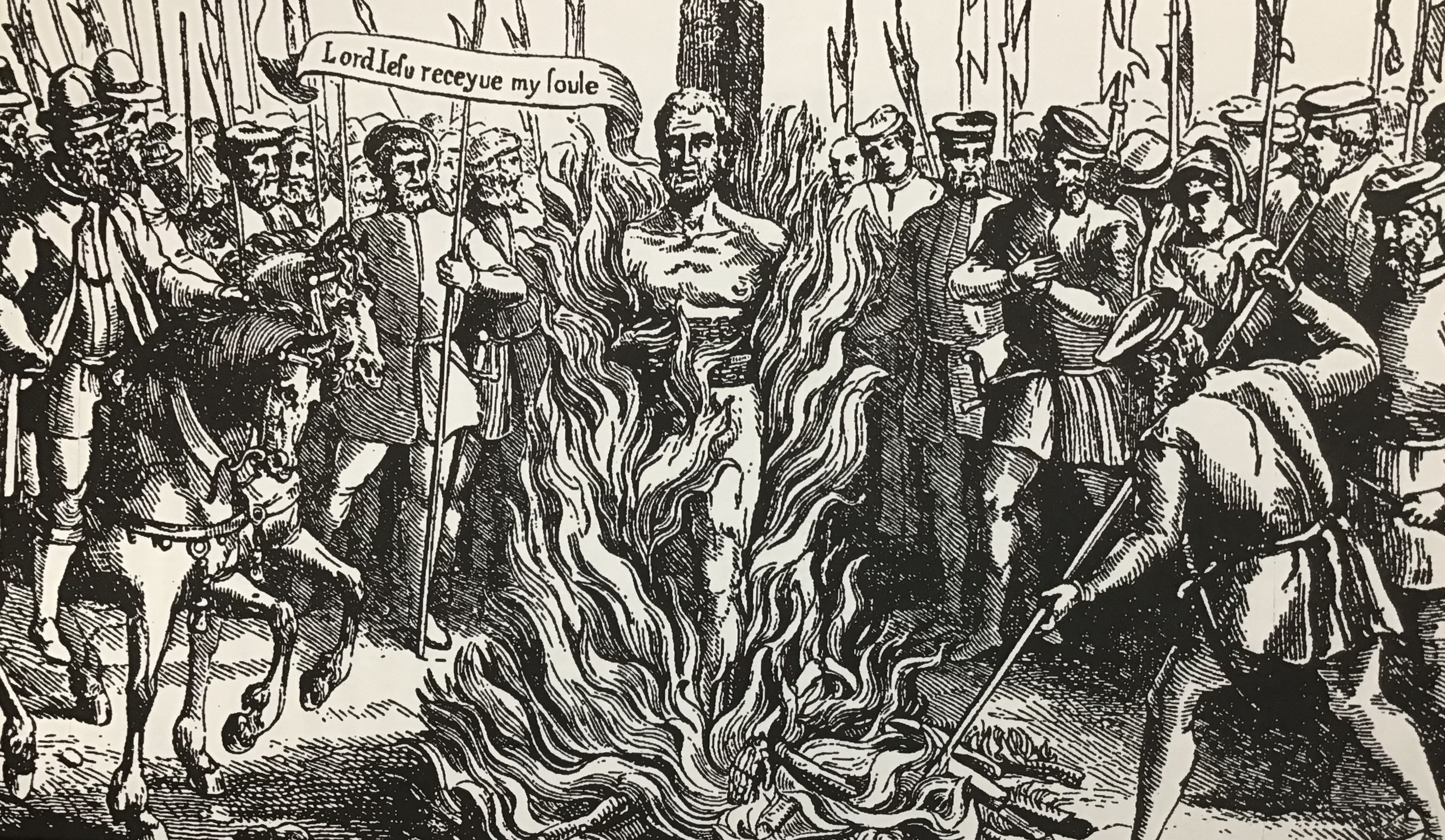
Bishop John Hooper burned at the stake by the order of Queen Mary Tudor
Some claim that since whether one is Amil, Premil, Postmil, is not an issue of salvation, and therefore should be left out of a church doctrinal statement. I think I addressed this in the last post, but I will say this: If we are only going to include universal truths that all Christians agree upon from every communion and tradition, we will indeed have a very small statement.
If we are honest, we would have to admit that many churches in the U.S. are not growing from conversions but from transfers from other churches. I’ll admit that there are some valid reasons for a Christian to leave one church to attend another, but the Great Commission isn’t about shuffling believers from one church to another. There are many things a church can do to bolster its outreach, but one that is consistently missed in the vast majority of churches today is evangelistic visitation. What is that you ask? Keep reading and I’ll explain.
Every Saturday for many years there were at least two people from Grace Baptist Church that would go out to share the gospel with our community—myself and one of our deacons named Everett. Some Saturdays there were others that would join us, but many times it was just the two of us. Everett and I shared Christ with gang members, homeless people in the park, people in half-way houses, and everyday people that look like you and me.
We had dogs chase us, people scream at us, a couple of doors slammed in our faces, and even a few people that I am convinced were demon possessed. Although we visited door to door in order to hopefully share Christ with our neighbors, we found that this method wasn’t too successful. Instead we found that evangelistic visitation was far more productive.
Whenever a person visited our church, they would receive a bulletin and a small visitor’s card that we asked them to fill out as a record of their visit. These cards were placed in the offering plate when the offering was received. When the deacons counted the offering, they would take out these cards and give them to me for follow up.
In my discussions with many pastors and church leaders, many churches don’t do anything to record visitors anymore. I’m not sure why, but they don’t seem to even collect a card to record visitors. In my many visits to different churches, most didn’t request a card to be filled out, and of those that I have filled out, only one has ever done something with it.
On Tuesday when I came into the office, I would send out a welcome letter thanking the visitor for coming. If they wrote the name of who invited them on their visitor card, I would include that as well. Sometimes I would call the friend of our visitor and ask them some questions to find out more about what brought them to our church.
But my follow up didn’t stop there. On the following Saturday, Everett and I would take that card and drive over to the visitor’s house to pay them a visit. Yes, you read that right! We actually showed up at their front door! When we did this, we followed a few rules that worked for us:
1. We only visited on Saturdays from 10am-12pm. This is because before 10 some people were sleeping in and after noon they would be leaving for the day. Three day holidays were almost worthless as far as visiting goes.
2. We took a church flyer or business card with us to leave if they didn’t answer the door. We wanted our visitor to know we came by and missed them. A quick note on a church invite flyer or the back of my business card was slipped in the door jamb for the visitor to find when they returned home.
3. We didn’t call to make an appointment. We found that when we made arrangements we would often find nobody home. It was better to surprise our visitors. Even so, the vast majority were happy to see us.
4. We thanked them for their visit and asked if they had any questions about what they heard. Their visit showed us that they had some interest in church and the Bible. Our conversation helped us determine if the visitors were Christians or needed to hear the gospel.
5. We made sure to express that we were there because we had an important message that we wanted them to hear. We assumed God had sent us as His messengers and we were not ashamed, but bold ambassadors for Christ.
6. We invited them to come back Sunday (the next day). Many people were shocked that the man that preached the sermon had taken the time to personally visit them. This impression made them more open to come back, and it showed them in a tangible way that we truly cared for them.
Having successfully visited our visitor, we usually asked them if we could pray for them and if they had any special prayer needs. The visit often ended with smiles, laughs, and a new relationship begun. Of all the people that returned a second time, many were those that had been visited by someone in our church.
When you think about what connected you to your church, what sticks out the most? What were the things that turned you off about visiting a new church?
Bishop John Hooper burned at the stake by the order of Queen Mary Tudor
In his soul-stirring book, Light From Old Times, J.C. Ryle puts before his reader reminders of the courageous men and women who gave their lives for the truth of the Word of God. Wycliffe, Cranmer, Latimer, Ridley, Bradford, Rogers, and Hooper, among many others, died for refusing to cast aside their conviction of what the Scriptures teach in order to spare their mortal bodies.
The other day I wrote a post in regard to some churches that have diminished views of eschatology as is evidenced in their doctrinal statement. Some claim that since whether one is Amil, Premil, Postmil, is not an issue of salvation, and therefore should be left out of a church doctrinal statement. I think I addressed this in the last post, but I will say this: If we are only going to include universal truths that all Christians agree upon from every communion and tradition, we will indeed have a very small statement.
But this view ignores two realities. First, it mixes the distinction between the universal church and the local expression of the church. Yes, to be included in the universal church we need to ascribe to the gospel as delivered once for all the saints. But the local church, with local pastors and elders will understand very important doctrines and practices very differently from many other local assemblies, that are also a part of the Church Universal.
This simplistic and even naive view wants to act as if anything that is not necessary and primary is not important to express and defend within the local church. Every church makes distinctions in what they believe and how they express their theology in practice. The only way to avoid doing so is to continually water down belief and practice to the lowest common denominator so that whatever you do, so long as you are under the banner of “Christian,” is acceptable. However, in practice, the church that doesn’t write down what they believe and practice does take a stand, but they don’t have it written down.
The second reality often ignored is the fact that not only are secondary and even tertiary issues important to delineate in a doctrinal statement, but their are even good reasons for division. In Ryle’s Light From Old Times, he points out the great division that existed during the Reformation in Europe and England over the issues of baptism and the Lord’s Supper. Again, those who would prefer unity over doctrine, would say that this is unfortunate. But history shows that the doctrinally astute understand that these issues matter immensely, and may even be worth dying for if we are convinced by Scripture and conscience.
For the one who would say that secondary and tertiary issues are not important enough to divide over, I would ask whether they have women pastors and elders in their churches, whether they practice infant baptism and believer’s baptism, and by what theological basis do they affirm their practices? Does this non-committal church worship on the Sabbath or on Sunday? Do they partake of the Lord’s Supper without any explanation of the significance? If they do explain, which view do they take? Is it “potluck” and everyone brings their view to the table? Does this sound like unity? Does it sound like nit-picking and division since none of the views would keep a person out of heaven? To me, it sounds like formalized chaos and would break down in actual practice.
We live in a wishy-washy age, but we don’t need anymore wishy-washy leaders in the Church. We need men with lion-hearts and backbone. We need men who will speak with grace, but never depart from truth. We need men who will stand on what they believe and not allow their churches to slink down to the lowest common denominator in its doctrine, and especially under the false guise of “unity.” Doctrine is worth defending. It is even worthy dying for. True, not every hill is worth dying on. But that doesn’t mean we can’t have firm commitments, nor that good men can’t disagree and still be brothers at arms in the fight for truth.
May the Lord restore us to a place where we can have distinction and unity. That we recognize the universal church as all those who subscribe to the basic tenants of the Christian faith, and yet the critical importance of the local church is never downplayed or discounted, but seen as the place where further doctrinal detail is hammered out in the everyday life of Christ’s disciples.


 Always Reforming