Our Great Resurrection Hope (part 4)

He is risen! On this beautiful Resurrection Sunday morning, there is eternal hope for every believer in Christ Jesus. Although they are fun, the easter egg hunts, baskets, pretty Spring dresses, and bunnies cannot compare to the joy that rises in the heart of those who have placed their trust in Christ. In this final post of our great resurrection hope, we will look at the crushing of the enemy and the final victory that we are assured. Our hope is not a wishful thinking but an assured confidence.

In Part 1, we learned that Christ’s Resurrection Guarantees the Christian’s Resurrection, and in Part 2, we saw that Christ’s Resurrection Reverses the Curse of Humanity, and in Part 3, we saw that Christ’s Resurrection Gives Hope for the Future. Let us look at Paul’s words in 1Corinthians 15:24-26 as we consider the fourth reason this day is one of such great hope.

Then comes the end, when he delivers the kingdom to God the Father after destroying every rule and every authority and power. For he must reign until he has put all his enemies under his feet. The last enemy to be destroyed is death.

(1 Corinthians 15:24–26, ESV)

Christ’s Resurrection Guarantees the Defeat of Every Enemy of Christ (vv. 24-26)

When Jesus Christ died upon the cross, he set into motion the assured and final victory over every enemy of God. This includes Satan and the demons and every human being that have rebelled against God. (v. 24)

Jesus Christ will destroy every rule, and every authority and power that will not submit to him. Not a single enemy of God will remain. His reign will last until every enemy is conquered and put under his feet (v. 25)

The final enemy shall be death (v. 26). Until the resurrection of Jesus Christ, death was the undefeated champion of every fight fought. Nobody faces death and walks away. Some might escape for a few more days or even years, but death always wins. But in Jesus Christ, death has met its match. Jesus Christ is stronger than death.

The great enemy of mankind that began in the Garden will finally be stopped. All the dead who have trusted in Christ will have been raised from the dead and transformed into glorified bodies, just like Jesus has been. There will be no more death at all.

The death of death will have come because of the death of Christ. All things will be made right.

This is the hope we have in Christ. This is what the resurrection means to Christians. It directly affects each of of us.

Charles Haddon Spurgeon said, “Death in its substance has been removed, and only the shadow of it remains.… Nobody is afraid of a shadow, for a shadow cannot block a man’s pathway for even a moment. The shadow of a dog can’t bite; the shadow of a sword can’t kill.” Christ Himself took the full force of death’s destroying power by dying and paying for our sin, then rising from the grave. Trusting Jesus may not remove death’s shadow, but remember, shadows can’t hurt us.”[1]

The resurrection reminds us of this truth. We are more than conquerors in Christ Jesus. We have nothing to fear, even death itself. We shall be raised from the dead, because Christ lives!

And all the enemies of God shall be dealt with as well.

That leads me to ask a question of you this morning. Do you have this hope in the resurrection of Jesus Christ? That would depend upon whether you have placed your faith and trust in him.

Jesus’ resurrection guarantees the resurrection of his followers. But it does something else. It points to the fact that he always keeps his promises. Jesus promised that he would rise from the dead. And he promised that he would come back. Not just to raise his disciples from the dead, but also to judge the unrighteous.

So, this Easter, what have you placed your hope in? Is it in the salvation in Jesus Christ or is it in yourself? Only salvation in Christ offers the great hope that we have this morning. Everything else is like a hollow chocolate bunny.


[1] https://bible.org/illustration/nobody-afraid-shadow

Christ’s Intense Love in the Storms of Life

Jesus Lover of My Soul— Charles Wesley (1740)

Jesus, lover of my soul, let me to Thy bosom fly,

While the nearer waters roll, while the tempest still is high.

Hide me, O my Savior, hide, till the storm of life is past;

Safe into the haven guide; O receive my soul at last.


Other refuge have I none, hangs my helpless soul on Thee;

Leave, ah! leave me not alone, still support and comfort me.

All my trust on Thee is stayed, all my help from Thee I bring;

Cover my defenseless head with the shadow of Thy wing.


Wilt Thou not regard my call? Wilt Thou not accept my prayer?

Lo! I sink, I faint, I fall—Lo! on Thee I cast my care;

Reach me out Thy gracious hand! While I of Thy strength receive,

Hoping against hope I stand, dying, and behold, I live.


Thou, O Christ, art all I want, more than all in Thee I find;

Raise the fallen, cheer the faint, heal the sick, and lead the blind.

Just and holy is Thy Name, I am all unrighteousness;

False and full of sin I am; Thou art full of truth and grace.


Plenteous grace with Thee is found, grace to cover all my sin;

Let the healing streams abound; make and keep me pure within.

Thou of life the fountain art, freely let me take of Thee;

Spring Thou up within my heart; rise to all eternity.

Theological Commitments of the Biblical Gospel: Preserving True Saints to the End

eternal-security

Preservation of the True Saints

This doctrine will have an impact when we come across a person (whether inside or outside of the church) who says that they received Christ as Savior at an earlier time, but that they have “backslidden” or lost their salvation and need to be saved again (or similarly, “rededicate my life to Christ”). But as we are assured in Rom 8:28-39 and other passages (Jn 6:37; 10:27-29; 17:12; 18:9; 1Cor 1:8-9; Phil 1:6; 1Thess 5:23-24; 2Thess 3:3; 2Tim 1:12; 4:18; Heb 7:25), our assurance of salvation is based upon the bedrock of the gospel. This is primary.

But a close corollary that cannot be missed is the need to walk in newness of life (Rom 6:4), bearing fruit in keeping with repentance (Matt 3:8), renewing our minds to conform to Christ (Rom 12:1-2; Col 3:10), putting off the old self, putting indwelling sin to death and putting on the new man(Rom 6:6; Eph 4:2; Col 2:11; 3:9), walking in the Spirit and not in the flesh (Rom 8:4; Gal 5:25).

All of these together, and more, mean that a person redeemed by Christ is a new creation and should not walk in their former manner of life. If that has not happened, then that person may need salvation for the first time and has not come to grips with the fulness of the truth of the gospel. Another possibility is that they are a true believer, but they have been disobedient to the Lord for an extended period of time, are immature, and in need of loving correction and to be discipled.

The bottom line is this: many of those in America who profess to be Christians know little to nothing about the true gospel and are in need of salvation. Some have been “Christianized” through exposure to the church, but their lives demonstrate a rebellion to our King. They too must be evangelized.

Those who are sincere and broken will need further conversation and observation to conclude their spiritual state, along with many gospel conversations that will either bring them to Christ or bring them to stability and point them toward maturity.

God and the Fool

foolishness

“The fool says in his heart, “There is no God.” They are corrupt, doing abominable iniquity; there is none who does good. God looks down from heaven on the children of man to see if there are any who understand, who seek after God. They have all fallen away; together they have become corrupt; there is none who does good, not even one.” (Psalm 53:1–3, ESV)

These words, quoted by the Apostle Paul in the third chapter of his letter to the Romans, are a stark reminder that the spirituality of this age that we live in is not a genuine seeking for the One true God, but rather is a seeking after another idol that can alleviate the void that is felt outside of God.

Even though the fool says in is heart that there is no God, his claim is contrary not only to the facts, but his raging against the God that he says does not exist shows that he does not believe his own words.

From God’s perspective, as he looks not only down on humanity, but looks into the darkened hearts of men, he does not see anyone who truly desires a relationship with him. Truth be told, humankind would be completely satisfied in pushing their Creator out of the picture totally—filling the void of their soul with anything else that they can find or create. In our futility and desperation, we have grown in our corruption. We even claim to be morally good, while God’s own estimation is much different.

Without the saving grace of Jesus Christ, we are living in a mass delusion. We are living as if there is no God, as if there was no moral standard except for the one that we have made, and that we are good according to our arbitrary standards. No wonder God calls us fools.

Jesus Christ is our only hope. He is the answer to our greatest need. He is our Creator, our Savior and Justifier. He takes out the hardened heart in men that is like stone, and he gives us a new heart that is tender toward him. He puts his Spirit in us so that we can grieve once again over our foolishness, and rejoice over the forgiveness that we have received. He gives us eyes to see his beauty and the beauty around us and ears to hear his voice as he calls and leads us.

Do you know this Jesus? He is God. He is Savior and Lord. He is calling to sinners and fools to depart from your sin and folly and call out to him for mercy. He will surely give it.

Just Do Better…Tell that to Martin Luther!

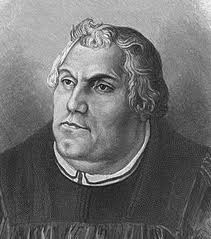
Martin Luther.jpg

Is salvation merely a message of “do better?” Is Christianity simply a moralistic religion that teaches that all we need to do is obey God? That is what the self-righteous Pharisees thought, and it is what many people in churches think. To them, Christianity is a list of rules that can be kept–albeit with a lot of sacrifice. But is that what Jesus taught?

In Romans 1:17, the Apostle Paul wrote, “For in it the righteousness of God is revealed from faith for faith, as it is written, “The righteous shall live by faith.”” (Romans 1:17, ESV). This text traumatized Martin Luther before his conversion to Christ. Here was a man that sincerely wanted salvation. He had dedicated his life to holy living in a monastic community where he sacrificed on a daily basis. Yet his soul was tortured. Here are Luther’s own words, written a year before his death on March 5, 1545 following a long life of joyful blessing in true salvation through Jesus Christ.

I had indeed been captivated with an extraordinary ardor for understanding Paul in the Epistle to the Romans. But up till then it was … a single word in Chapter 1 [:17], “In it the righteousness of God is revealed,” that had stood in my way. For I hated that word “righteousness of God,” which according to the use and custom of all the teachers, I had been taught to understand philosophically regarding the formal or active righteousness, as they called it, with which God is righteous and punishes the unrighteous sinner.

Though I lived as a monk without reproach, I felt that I was a sinner before God with an extremely disturbed conscience. I could not believe that he was placated by my satisfaction. I did not love, yes, I hated the righteous God who punishes sinners, and secretly, if not blasphemously, certainly murmuring greatly, I was angry with God, and said, “As if, indeed, it is not enough, that miserable sinners, eternally lost through original sin, are crushed by every kind of calamity by the law of the decalogue, without having God add pain to pain by the gospel and also by the gospel threatening us with his righteous wrath!” Thus I raged with a fierce and troubled conscience. Nevertheless, I beat importunately upon Paul at that place, most ardently desiring to know what St. Paul wanted.

At last, by the mercy of God, meditating day and night, I gave heed to the context of the words, namely, “In it the righteousness of God is revealed, as it is written, ‘He who through faith is righteous shall live.’ ” There I began to understand [that] the righteousness of God is that by which the righteous lives by a gift of God, namely by faith. And this is the meaning: the righteousness of God is revealed by the gospel, namely, the passive righteousness with which [the] merciful God justifies us by faith, as it is written, “He who through faith is righteous shall live.” Here I felt that I was altogether born again and had entered paradise itself through open gates. Here a totally other face of the entire Scripture showed itself to me.… And I extolled my sweetest word with a love as great as the hatred with which I had before hated the word “righteousness of God.” Thus that place in Paul was for me truly the gate to paradise. [Emphasis added]

The “gates of paradise” were opened up to Luther because he no longer depended upon his own law-keeping to satisfy the perfect demands of God. He saw salvation as a gracious act of God alone. Christ was perfectly righteous, fulfilling the whole law in our place. He died in our place and we are justified because of his perfect life and substitutionary death.

The hamster wheel of self-righteous deeds done in order to save ourselves is endless and endlessly disappointing. But the worst thing is that it does not end in heaven, but hell. The one who rejects the perfect finished work of Christ on the cross in favor of his or her imperfect works should expect nothing more, and will get nothing less.