Sitting with the Scoffers or the Wise?

“How blessed is the man who does not walk in the counsel of the wicked, Nor stand in the way of sinners, Nor sit in the seat of scoffers! But his delight is in the law of Yahweh, And in His law he meditates day and night. And he will be like a tree firmly planted by streams of water, Which yields its fruit in its season And its leaf does not wither; And in whatever he does, he prospers.” Ps 1:1–3 (LSB)

I believe that Psalm 1 sits at the beginning of the sacred psalter because it lays before its readers (and singers) a theme that is apparent throughout—that there are two significant influences upon the hearts of man, the influence of the wicked and the godly.

The blessed man or woman has discriminating tastes in what comes into his or her mind and heart. Discernment means that the godly do not give space to the counsels of those who hate God and His word. They don’t travel with them, nor stand and converse, nor will they sit and take counsel together. The blessings of the righteous are not simply that they receive the Word (His law) and meditate upon them. Yes, this is true. But the blessings also include the omission of the poisonous influences of the wicked as well.

This is essential for many modern Christians to consider because we often like to “have our cake and eat it too,” as the saying goes. In an outmoded time and place, Christians used to speak and write about the need for Christians to be “consecrated.” By this, they meant that followers of Christ were to be set apart and declared holy. As unattainable as it might be, perfect purity was still longed for and sought after. I don’t remember when I last heard a sermon on consecration, nor did I hear another Christian reference this seemingly antiquated idea.

Has “consecration” been rightly relegated to the dustbin of concepts we have “grown out of” as modern Christians who fear being called “fundamentalists” more than being called “worldly?” Have we matured to the point when we can have a heaping dose of wicked counsel alongside a large scoop of sound doctrine and be unharmed?

This type of thinking reminds me of a video I recently saw of two boys bailing water out of a sinking boat. One was bailing the water out of the boat, while the other was unintentionally adding water to another part of the little boat. No matter how hard they tried, they couldn’t get the boat to stay afloat.

Let’s be honest. I have heard Christians claim that they can watch filthy things at the movies and on TV and that it doesn’t affect them spiritually. Maybe they are somehow stronger spiritually than most. But Psalm 1 seems to say that the blessed one won’t do that. They won’t sit down with the ones who will mock Christ and learn from them. They won’t walk with the ones who justify sin. And they won’t stand as if one of the unregenerate and converse as if our worlds and eternal destinies are the same—because they aren’t.

I’m not advocating for a legalistic set of rules and acceptable practices for Christians. That’s been done and has failed miserably. But I am saying that some of us need to consider what we permit to influence our thinking and lifestyles. We can’t hope to be totally separated, as the Amish have tried and failed, because that isn’t what Christ has called us to do. We can’t escape the world by isolationism. Instead, we need to be set apart as holy, preferring the company of God and His people and the Word to the company and wisdom of this world. By this, I don’t mean we physically separate or stay apart from interacting with our unbelieving neighbor. We dare not do that for the sake of the gospel and for the influence of this world. However, there is a big difference between engaging with people as Jesus did and engaging in their sinful activities, which Jesus did not do.

I think as we do this, we will see our lives, our families, and our churches grow more spiritually healthy and vibrant, like trees planted by streams of water. And as we grow in spiritual health, the taste of the world’s wisdom will begin to fade away and lose its allure.

Finding Hope in Chaos: Isaiah 6:1 Reflection

In the year of King Uzziah’s death I saw the Lord sitting on a throne, high and lifted up, with the train of His robe filling the temple.” (Isaiah 6:1, LSB)

Over the last couple of days, I have watched as the world ponders what could have been, and what might be.

  • A former US President and current candidate for the United States Presidency was almost assassinated.
  • Today, the headlines are swirling around a major tech upheaval as computer systems all over the world are causing problems for airlines, 911 emergency systems, banking, and a host of other issues related to our hyper-networked world.
  • And if that wasn’t enough, the calls for the current President of the United States to step out of the race due to growing concerns within the Democratic party over his ability to win his race against Donald Trump.

If I may, I want to jump back to the days that the words of Isaiah were written to connect some dots for my Christian readers. King Uzziah’s fall is described in 2 Chronicles 26:16-23. Although this king of Judah had started off well, his latter days were lived in the hous of a leper because he forgot who he was before God. This is a point we all need to watch for in our own lives. Our success is a matter of God’s grace upon us, and we need to watch our own hearts lest we well up with pride, the downfall of so many.

However, a more significant point touched my heart this morning as I meditated on the current events in our world, particularly in the US. The downfall and death of Uzziah must have been a shocking blow to the kingdom. This king, who was undoubtedly loved because of his faithfulness and care for his people, reigned over his kingdom for 52 years, taking the throne at the tender age of 16 (2Chron 26:3). America has never had a president reign in office for anywhere close to that time. The news of how he was stricken by God with leprosy in judgment must have been a severe blow to the nation, and then his eventual death must have brought the whole kingdom into a deep sense of mourning.

But Isaiah 6:1 is a passage that we need to ponder for our days. We could insert our own national calamities…

  • “In the year that Donald Trump was almost assassinated…”
  • “In the year that computer systems crashed and left our nation paralyzed…”
  • “In the year that two planes were flown into the twin towers in New York city…”
  • “In the year that…”

Who knows what will come tomorrow or next week? It seems like so much is coming quickly that we hardly have any time to breathe. How does the Christian faith deal with such chaotic times? Let’s read the rest of Isaiah 6:1: “I saw the Lord sitting on a throne, high and lifted up, with the train of His robe filling the temple.

While the kingdom of Judah was reeling in national grief and possibly confusion and fear for what would happen next, we read that the Lord God was sitting upon His throne, exalted. How does the Christian faith deal with an assassination attempt, a tech meltdown, a coup, war, a terrorist attack, or any other tragedy and upheaval that might come? We look to the heavens and recognize that our God is still in control and that He never lost it.

I am praying for America–for our current President, Vice President, and every other elected official. I am also praying for the many candidates who are running for office, including former President Donald Trump. I’m not simply praying for healing and protection for Donald Trump, but I recognize that all men will die one day in some manner. I am praying that America will look beyond the red, white, and blue into the heavens above and see that there is a Throne and He who is sitting on it is still in control. No matter what happens here in America or elsewhere on this planet–He knows, and He rules over it all. I pray that our president–whoever he is, bows his head in humble submission, recognizing that his every breath is given to him as a gift from God, and He alone sustains and removes it.

So, dear Christian friend, don’t fret. God is firmly seated upon His throne. No matter what comes, place your trust–not in men, nations, money, political parties, or any other idol–no, put your trust in Jesus Christ because He alone holds all power and authority.

Placing Our Hope in God Alone (weekend repost)

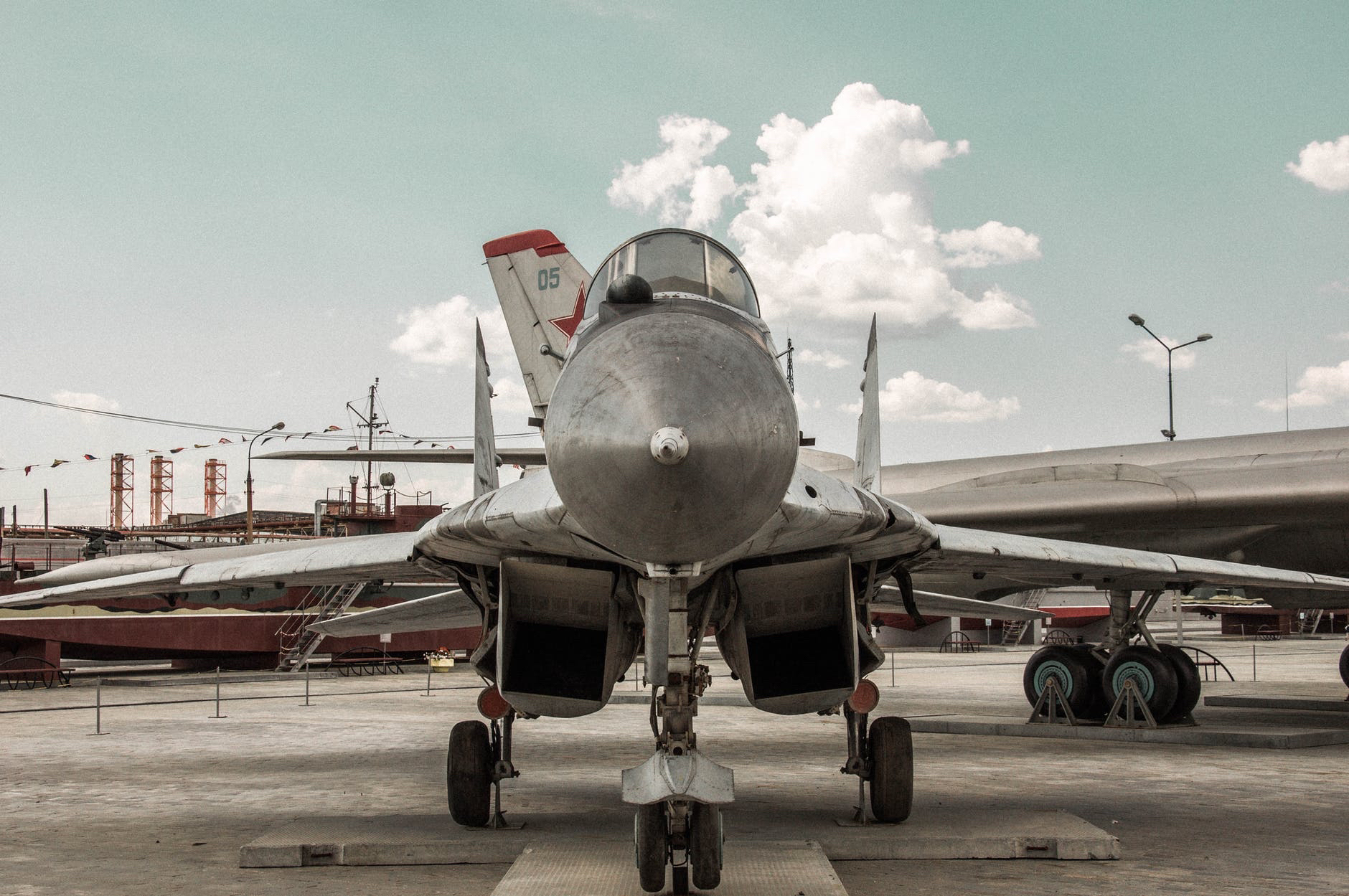
A few years ago I had the opportunity to walk through the National Museum of the US Air Force in Dayton, OH. Moving from one hangar to the next I saw the evolution of aircraft from the Wright brother’s first plane to the modern surveillance drones of today.

It isn’t hard to be in a place like that and not have an overwhelming sense of patriotism as I see the military defense weapons and aircraft that our nation has used in the defense of our country and many other countries all around the world. Seeing these beautiful machines and their sheer size made me feel a little sorry for anyone that stood against them in a battle.

Read the rest of this post here: Placing our Hope in God Alone

Placing our Hope in God Alone

“The king is not saved by his great army; a warrior is not delivered by his great strength. The war horse is a false hope for salvation,
and by its great might it cannot rescue.” Ps 33:16-17

A few years ago I had the opportunity to walk through the National Museum of the US Air Force in Dayton, OH. Moving from one hangar to the next I saw the evolution of aircraft from the Wright brother’s first plane to the modern surveillance drones of today.

It isn’t hard to be in a place like that and not have an overwhelming sense of patriotism as I see the military defense weapons and aircraft that our nation has used in the defense of our country and many other countries all around the world. Seeing these beautiful machines and their sheer size made me feel a little sorry for anyone that stood against them in a battle.

It makes me think about how Pharaoh felt about his horses and chariots, and the king of Babylon about his weapons of war. The same can be said about the Medo-Persians, Greeks, and Romans at different parts of world history. Whether the weapons are spears, swords, arrows, or chariots, tanks, and airplanes, our hearts can become fooled into thinking that it is the weapon and strategies that win the war. Sometimes we think we can simply outnumber the enemy with more soldiers, more money, more missiles, and more technologies. This is heady stuff and it can divert the attention of a nation away from their inherent weakness and need for God.

In Psalm 33, the unnamed psalmist recognized this prideful blindspot and seeks to refocus the attention of the worshippers of Yahweh. The king, he writes, is not saved by his army-no matter how great. A read through the Chronicles and any history book will give credence to this reality. Kings are overthrown, betrayed, killed in battle, poisoned, and even killed by their own sons in a grab of power. King David himself survived an attempted coup by his own son. Some rulers are better than others, but no ruler can exist without God’s help. The Lord puts the man on the throne or behind the desk, but it is God alone who keeps him there, and it is God who removes him.

The psalmist also recognized that the same is true about those warriors that seem unbeatable in battle. We laud those warriors that fight valiantly and bring to our nation victory over the enemy. Stories are told of campaigns where all hope was lost and then the hero emerged and snatched victory out of the jaws of defeat. But even the greatest hero among our warriors should not be hoped upon more than our God. Do not forget men like the mighty Goliath who boasted in his mighty size and ability to defeat Israel, even defying the Lord with mockery. That warrior’s great strength could not deliver him when a boy with a sling brought him to his death on the battlefield.

The warhorse was a great advantage to any ancient kingdom that sought to be a military powerhouse. The war horse was large, brave, and strong. He could charge into a mob of warriors with courage and bowl over those in his path, allowing his rider to swing his longsword or thrust his spear into the melee while remaining out of reach by the foot soldier. Any army that had a cavalry was an almost unstoppable force. Almost.

Knowing the confidence that men put in warhorses, he commanded that the kings of Israel were not to amass large numbers of them knowing that it would easily allow the king to seek confidence in his cavalry and not place his trust in the Lord. In modern weaponry, confidence is placed in ships, drones, fighter jets, missiles, and many other weapons that can unleash “shock and awe” in our enemies.

The writer of Psalm 33:16-17 should be heard. Anything we place our confidence in outside of God can and will fail. It is inevitable. As a matter of fact, it is worse than failure. These things that we place above our trust in God are an affront to Him, and they will not only fail but they will also be brought low as they have become a challenge to God for supremacy in our hearts. He will not allow anything else in His place.

We Will Not Be Silent and We Will Not Bow Down

“In a time of universal deception, telling the truth is a revolutionary act. Let us determine that we will not be shamed into silence or inaction. We will speak, and like Shadrach, Meshach, and Abednego in the book of Daniel, let us resolve that we will not bow.”

Erwin Lutzer, We Will Not Be Silenced, 38.

It is interesting to read about the Apostle Paul’s experience in Jerusalem in Acts 21-26. In these chapters, Paul is constantly allowed to share with different audiences his testimony in one way or another. Incredibly, in many instances, he isn’t allowed to finish his explanation of why he believes in Jesus Christ.

At first, Paul is seized while worshipping in the temple and dragged outside of the temple grounds so he can be stoned to death. By the providence of God, he is rescued by Roman soldiers whom he asks for permission to speak to the angry mob because they don’t seem to agree about why they want to kill him. But before Paul finishes his explanation, the crowd erupts in rage and he is once again needing to be rescued by the Roman soldiers and carried away to safety.

Again and again, Paul speaks: to the Sanhedrin, to Felix the Governor, before Felix’s wife Drusilla. Following Felix, Paul was allowed to speak to the incoming Governor Festus, and in frustration and to seek justice, he finally appealed to Caesar himself.

In each of these interactions, Paul spoke the truth—whether about his beliefs, his experiences, the deception of his enemies, or the truth of the gospel message and Jesus Christ. And in each opportunity, he found that most of those that called him to speak the truth were not actually interested in hearing the truth. And he also found that when he spoke the truth, those who claimed to want to hear the truth did not actually want the truth spoken. Many responded with violence and murder.

Dear Christian, do you not see that this attitude is similar to the one we face in our world today, and it is growing stronger? Many people speak about wanting the truth—but they do not want it when we speak it. Some want a version of the truth that suits them and their version of reality. Some truly want to hear it but are seriously disappointed that it is not what they had hoped. Some respond with calls to silence the truth and truth-speakers.

But like Paul, we cannot be silent. And like Jeremiah before him, we must say, “If I say, “I will not mention him, or speak any more in his name,” there is in my heart as it were a burning fire shut up in my bones, and I am weary with holding it in, and I cannot” Jeremiah 20:9.

In today’s world, telling the truth is a revolutionary act. May we speak the truth no matter what. Don’t forget that we are a city on a hill whose light cannot be hidden.